Tile Screws for Secure Fixing | Hebei Wotu Fastener Manufacturing Co., Ltd.

Tile Screws for Secure Fixing

Tile screws need to hold through a hard, brittle surface without cracking the tile, loosening in the substrate, or leaving a head that interferes with the finished surface. The main decision is not only screw size; it is the match between the tile material, backing material, hole preparation, head style, and corrosion exposure.

For procurement, the safest specification starts with the assembly: ceramic or porcelain tile, wall or floor location, dry or wet area, and what the screw must fasten into behind the tile.

Related Products

Hexagonal Wood Screws

Hexagonal Wood Screws

Brand: Wotu Surface: blue and white zinc plated Specifications: Chinese national standard 6#/8#/10#/12#/16#/20#, rod length 35mm~250mm full range of specifications in stock, supports nonstandard length customization Packaging: 25kg cartons, full pallets packed on wooden pallets, support neutral packaging, private-label customization

Read More
Hex Head Self-Drilling Screw With Bonded Washer

Hex Head Self-Drilling Screw With Bonded Washer

Brand: Hengzuan Surface: blue and white zinc plated, color zinc plated can be customized on request Specifications: in stock 4.2/4.8/5.5/6.3mm mainstream wire diameter, length 20mm~165mm full range of specifications, nonstandard rod length, drill point size can be customized Packaging: 25kg export cartons, full pallets wrapped with film, supports neutral export packaging, customer private-label customization

Read More
Countersunk Head Blue-White Zinc Plated Self-Drilling Screw (Chinese National Standard: Phillips Countersunk Head Self-Drilling And Self-Tapping Screw GB/T15856.2-2002)

Countersunk Head Blue-White Zinc Plated Self-Drilling Screw (Chinese National Standard: Phillips Countersunk Head Self-Drilling And Self-Tapping Screw GB/T15856.2-2002)

Brand: Hengzuan Surface: blue and white zinc plated, can be customized color zinc plated, black oxide plated Specifications: Comply with GB/T15856.2-2002 Chinese national standard, in stock ST4.2/ST4.8/ST5.5 full range of specifications, length 13mm~75mm optional, supports customized nonstandard rod lengths; drilling adaptation plate thickness 0.7~6mm Packaging: 25kg export cartons, full pallets wrapped with film, supports neutral export packaging, customer private-label customization

Read More
Countersunk Head Blue Zinc Self-Drilling Screw

Countersunk Head Blue Zinc Self-Drilling Screw

Brand: Hengzuan Surface: blue and white zinc plated, can be customized color zinc plated, black oxide plated Specifications: in stock 3.5/3.9/4.2/4.8/5.5 mainstream wire diameter, rod length 13mm~75mm full size range, nonstandard length can be customized as needed Packaging: 25kg export cartons, full wooden pallets wrapped with film, supports neutral export packaging, private-label customization

Read More
Color Zinc Plated Hex Flange Wood Screw With Washer

Color Zinc Plated Hex Flange Wood Screw With Washer

Brand: Hengzuan Surface: color zinc plated, can be customizedblue-white zinc plated Specifications: in stock 4.8/5.5 common wire diameter, rod length 16~125mm full range of specifications, supports nonstandard customized Packaging: 25kg cartons, whole wooden pallets, support neutral packaging, private-label customization

Read More

Key details for specifying screws used through tile

Selection criteria

When comparing tile screws, focus on the complete fastening condition: tile hardness, backing material, head shape, thread engagement, corrosion exposure, and the required finished appearance. These details change the screw choice more than the product name alone.

Criterion What To Check Why It Matters Buyer Tip
Substrate behind the tile Confirm whether the screw will bite into timber, metal stud, masonry plug, cement board, or another backing material. Tile itself should not carry the load. The screw type, thread form, and anchor choice depend on what is behind the tile. What backing material will the screw engage after it passes through the tile?
Drilling method through the tile surface Match the installation plan to the tile type, such as ceramic, porcelain, or natural stone, and confirm whether a pre-drilled clearance hole is required. Hard or brittle tile can crack if the screw is driven directly or if the hole is too tight around the shank. Will the tile be drilled first, and what drill bit and hole size will the installer use?
Head style and visible finish Decide whether the screw head must sit flush, use a washer, fit a bracket, or remain visible as a finished surface. Countersunk heads can stress tile if over-tightened, while pan or washer heads spread load but may stand proud. Should the finished screw head be flush with the fitting, covered, or exposed?
Corrosion exposure Identify if the screws will be used in a bathroom, kitchen, balcony, exterior wall, or other damp location. Moisture and cleaning chemicals can attack unsuitable coatings and cause staining, loosening, or early failure. What coating or stainless material is required for the moisture level and cleaning environment?
Load and fitting type Define what the screw will hold, such as a light trim, mirror clip, shelf bracket, rail, or façade component. A decorative fixing and a load-bearing fixing need different embedment, anchor support, and head bearing area. What is the item being fixed, and will the screw mainly resist pull-out, shear, or vibration?

Choosing tile screws for secure fixing without cracked surfaces

A tile screw is often confused with a general self-tapping screw, but the installation conditions are different. Tile usually needs a clean drilled hole through the surface before the screw can clamp the fixture, bracket, trim, or accessory. Forcing an aggressive thread directly into tile can chip the edge of the hole or create stress cracks.

The fixing strength usually comes from the substrate or anchor behind the tile, not from the tile face itself. That distinction matters because a screw that looks correct by length may still fail if it does not engage enough solid material, if the head concentrates pressure on the tile, or if the finish is unsuitable for moisture exposure.

Start by defining the layers in the assembly. A screw used through tile into timber, cement board, masonry, or metal framing may need a different thread form, point style, and installation method. If an anchor is used, confirm the screw diameter and thread compatibility with that anchor rather than choosing the screw alone.

Head style affects both appearance and stress on the tile. Countersunk heads can sit flush, but they can also wedge into a hard surface if the hole and countersink are not prepared correctly. Pan, wafer, or washer-head designs may spread load better for brackets or accessories, but they remain visible and may need a finish that matches the fixture.

Do not treat length as a simple tile-thickness calculation. The screw must pass through the tile and any adhesive or backing layer, then achieve reliable engagement in the supporting material. Too short can strip or loosen; too long can hit hidden services or bottom out before clamping. Confirm the required clamping stack and the safe depth available before ordering.

For wet rooms, exterior tiled areas, or cleaning environments, ask about material and surface finish suitability. Also confirm whether the application needs a pilot hole, plug, sealing washer, or installation torque guidance. A useful inquiry should include tile type, substrate, fixture thickness, environment, preferred head style, and any drawing or sample screw already in use.

Criteria Importance Description Example Options
Tile and substrate compatibility Critical because the tile is mainly a passage layer; the substrate or anchor normally provides the holding strength. Match the screw and anchor system to the material behind the tile, while allowing for the hardness and brittleness of the tile during drilling. A fixing through porcelain into masonry may require a different arrangement from one through ceramic tile into timber or metal framing.
Installation method and point style High importance because forcing the wrong point through tile can chip the hole or create cracks. Confirm whether the tile needs a separately drilled hole and whether the screw point is intended for the backing material or an installed anchor. Prepare the tile opening first, then select a thread and point suited to the timber, metal, or masonry behind it.
Head style and load distribution High importance where the finished surface or clamping pressure matters. Countersunk heads can provide a flush appearance but need suitable countersink preparation; pan, wafer, or washer-head designs may spread pressure more effectively. Use a flush head where appearance controls the design, or consider a broader head where a bracket must be clamped without concentrating force at the tile.
Length and thread engagement Critical because visible screw length does not show how much thread reaches sound supporting material. Calculate the complete clamping stack, including tile, adhesive or backing, fixture thickness, and anchor depth, while checking the available safe depth. A screw that passes through a thick accessory may leave too little engagement even if its overall length appears adequate.
Material and surface finish Important in wet rooms, exterior tiled areas, and cleaning environments where corrosion exposure can affect service life and appearance. Ask whether the material and finish suit the environment and match the fixture. Confirm any required sealing washer or other moisture-control detail separately. A dry indoor installation and a frequently wet tiled area should not be treated as the same finish-selection problem.

Blog Articles / Reviews

How to Specify Countersunk Head Cross Thick Thread Fiberboard Screws for Furniture Assembly Projects

How to Specify Countersunk Head Cross Thick Thread Fiberboard Screws for Furniture Assembly Projects

Fiberboard screws are selected based on more than screw size alone. For furniture assembly and board-based applications, buyers need to match the screw structure with the characteristics of fiberboard, MDF, and similar engineered wood materials. A suitable specification should consider thread design, head style, screw length, diameter, installation method, and application requirements. For buyers sourcing […]

How Should Buyers Evaluate Self Tapping Screws for Project Procurement?

How Should Buyers Evaluate Self Tapping Screws for Project Procurement?

#4 self tapping screws should not be purchased from the “#4” designation alone. For a usable B2B specification, the buyer still needs the actual screw diameter, thread form or pitch, overall length, substrate, pilot-hole condition, head and drive style, material, surface finish and quantity. This matters because suppliers may use different naming systems. Wotu Fastener’s […]

Why Do Self-Tapping Roofing Screws Leak Even When the Screw Length Looks Correct?

Why Do Self-Tapping Roofing Screws Leak Even When the Screw Length Looks Correct?

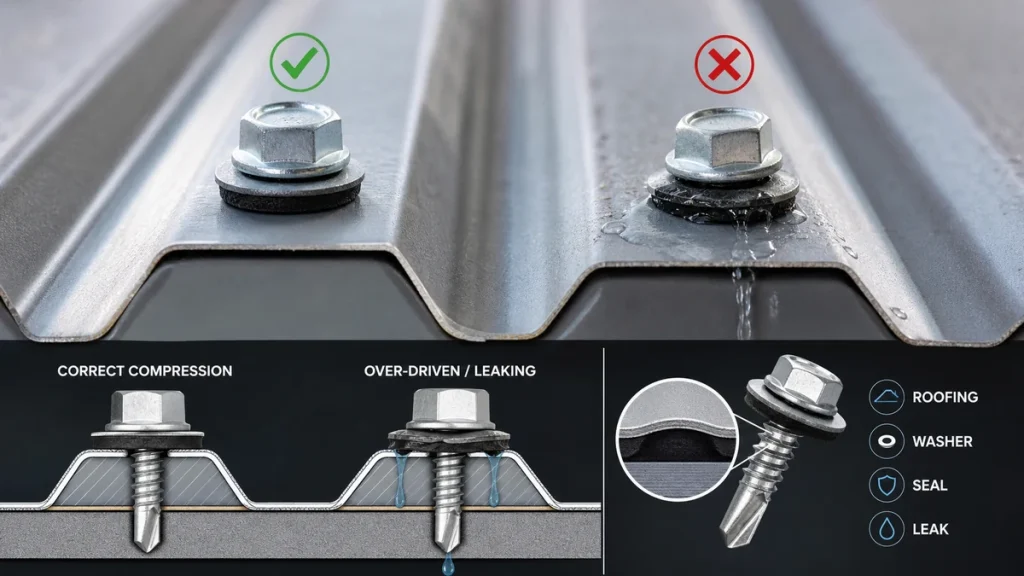
Direct answer: Correct screw length does not guarantee a watertight metal-roof connection. Self tapping roofing screws can leak because of incorrect washer compression, enlarged or stripped holes, insufficient thread engagement, panel movement, or an unsuitable coating-and-washer system. Buyers should diagnose the complete installed connection—including panel profile, support thickness, point type, washer condition, and exposure—rather than […]

What Is the Difference Between Self Drilling and Self Tapping Screws?

What Is the Difference Between Self Drilling and Self Tapping Screws?

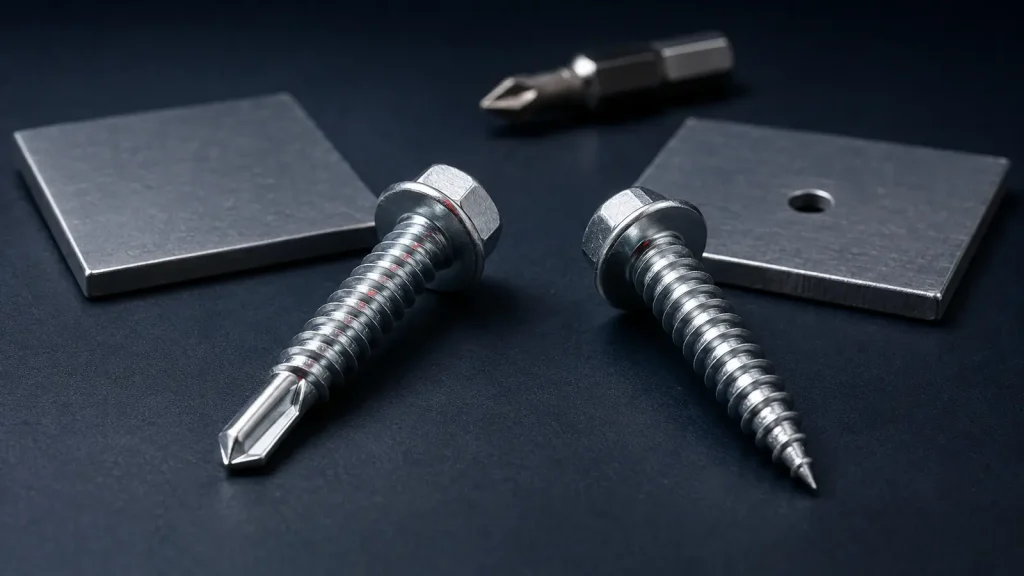
Direct Answer: A self-drilling screw has a drill-shaped point that creates a hole and then forms mating threads in a suitable material. A self-tapping screw forms or cuts mating threads but may require a correctly sized pilot hole. Selection depends on substrate type and thickness, joint stack, point geometry, installation tool, finish and application testing—not […]

Frequently Asked Questions

Can these fasteners be used with both ceramic and porcelain tile?

Both materials can be brittle, but porcelain is generally harder to drill, so the hole-preparation method and bit selection matter. The screw should clamp the fixture through the tile into a suitable anchor or supporting substrate rather than relying on the tile face for holding strength.

Should I use a self-tapping or self-drilling design for a tiled assembly?

Neither design should be assumed to drill safely through the tile itself. A controlled hole is normally prepared through the tile first; the screw type is then chosen for the material behind it, such as timber, metal framing, or a masonry anchor.

Is a countersunk head always the best choice for a flush finish?

Not always. A countersunk head can sit neatly below the surface, but an incorrectly prepared countersink may concentrate force and damage a hard tile; a pan, wafer, or washer-head design can distribute clamping pressure better when a visible head is acceptable.

Does choosing a longer screw provide a stronger fixing?

Only if the additional length produces useful engagement in the supporting material. The length must allow for the tile, adhesive or backing layer, fixture thickness, and anchor requirements without bottoming out or reaching unsafe depth.

What information should I send with a purchase enquiry?

Provide the tile type, substrate behind the tile, fixture or bracket thickness, hole or anchor arrangement, head preference, expected moisture exposure, and required finish. Ask Hebei Wotu Fastener Manufacturing Co., Ltd. to confirm suitable dimensions, thread form, material or coating, and any installation guidance for that assembly.

Leave Your Message

Send the tile material, substrate behind the tile, and the fixture or bracket thickness. If available, include the preferred head style and whether the area is dry, wet, or exterior.