White Screws Selection Guide | Hebei Wotu Fastener Manufacturing Co., Ltd.

White Screws for Visible Assemblies

White screws are chosen when the fastener will remain visible on a white panel, trim piece, cabinet component, fixture, or coated sheet and the finished assembly should look consistent. The main decision is not colour alone: the screw must also suit the material, installation method, joint load, and exposure conditions.

Specify the base screw first—such as a wood screw, self-tapping screw, or self-drilling screw—then define the white finish, head style, drive, diameter, and length. A supplier should confirm whether the finish is applied for appearance only or also intended to provide the corrosion resistance required by the application.

Related Products

Hexagonal Wood Screws

Hexagonal Wood Screws

Brand: Wotu Surface: blue and white zinc plated Specifications: Chinese national standard 6#/8#/10#/12#/16#/20#, rod length 35mm~250mm full range of specifications in stock, supports nonstandard length customization Packaging: 25kg cartons, full pallets packed on wooden pallets, support neutral packaging, private-label customization

Read More
Countersunk Head Cross Blue-White Zinc Plated Drywall Screw

Countersunk Head Cross Blue-White Zinc Plated Drywall Screw

Brand: Hengzuan Surface: blue and white zinc plated Specifications: in stock 3.5/3.9/4.2 mainstream wire diameter, rod length 16mm~80mm full size range in stock, supports nonstandard length customization; fine/coarse tooth types are available Packaging: 25kg export cartons, full pallets wrapped with film, supports neutral export packaging, private-label customization

Read More
Blue-White Zinc Plated Pan Head With Pad Self-Tapping Screw

Blue-White Zinc Plated Pan Head With Pad Self-Tapping Screw

Brand: Hengzuan Surface: blue and white zinc plated Specifications: in stock ST4.2/ST4.8full range of specifications, length 13~50mm in stock, support nonstandard length customization Packaging: 25kg cartons, solid wood packaging, support neutral packaging, private-label customization

Read More
Blue-White Zinc Plated Winged Countersunk Head Self-Drilling Screw

Blue-White Zinc Plated Winged Countersunk Head Self-Drilling Screw

Brand: Hengzuan Surface: blue and white zinc plated, optional color zinc plated, black oxide treatment Specifications: in stock ST3.5/ST4.2/ST4.8 mainstream specifications, rod length 16~50mm full size range, supports nonstandard length customization, suitable for drilling steel sheets 2~5mm Packaging: 25kg cartons, full pallets packed on wooden pallets, support neutral packaging, private-label customization

Read More
White Zinc Plated Hex Head Self-Drilling Screw

White Zinc Plated Hex Head Self-Drilling Screw

Brand: Hengzuan Surface: blue and white zinc plated, optional black oxide, color zinc plated coating Specifications: in stock 4.2/4.8/5.5/6.3mm wire diameter, length 16mm~165mm full size range, supports nonstandard customized rod length Packaging: 25kg export cartons, full-container wooden pallets wrapped with film, supports neutral packaging, private-label customization

Read More
Countersunk Head Blue-White Zinc Plated Self-Drilling Screw (Chinese National Standard: Phillips Countersunk Head Self-Drilling And Self-Tapping Screw GB/T15856.2-2002)

Countersunk Head Blue-White Zinc Plated Self-Drilling Screw (Chinese National Standard: Phillips Countersunk Head Self-Drilling And Self-Tapping Screw GB/T15856.2-2002)

Brand: Hengzuan Surface: blue and white zinc plated, can be customized color zinc plated, black oxide plated Specifications: Comply with GB/T15856.2-2002 Chinese national standard, in stock ST4.2/ST4.8/ST5.5 full range of specifications, length 13mm~75mm optional, supports customized nonstandard rod lengths; drilling adaptation plate thickness 0.7~6mm Packaging: 25kg export cartons, full pallets wrapped with film, supports neutral export packaging, customer private-label customization

Read More

Match the white finish and screw design to the assembly

White screw selection criteria

When comparing white screws, review the thread and point for the substrate, the head shape and drive for installation, the diameter and length for joint design, and the white finish for colour, adhesion, and exposure. Also confirm whether the proposed screw is intended for visible final installation or will be covered after assembly.

Criterion What To Check Why It Matters Buyer Tip
White finish and colour match Ask how the white finish is defined and request a sample against the panel or fitting. A visible colour mismatch can make the fastener stand out, while an unsuitable finish may scratch during driving. Confirm whether the required colour is a standard option or needs an agreed sample before production.
Base material and surface protection Verify the screw material, coating or paint system, and the exposure conditions it is intended to handle. Indoor furniture, damp rooms and outdoor assemblies place different demands on corrosion protection. Describe the installation environment and ask what surface protection is recommended for it.
Head shape and drive recess Match the head to the mating surface and confirm the drive type and bit size used by the installation team. A countersunk head can sit flush in a prepared seat, while the wrong recess or bit can cause slipping and damage to the white finish. Send a drawing or application photo and ask for a sample using the planned driver and bit.
Length, diameter and thread form Provide the material stack-up, pilot-hole details where applicable, and the required thread engagement; verify these against a sample. Correct engagement supports holding power without breaking through the visible face or interfering with hidden components. Ask the supplier to confirm the proposed size for the actual substrate rather than choosing by length alone.

Specify white screws by substrate, exposure, and visible finish

The practical distinction is between a screw with a white surface finish and a screw selected for a white-coloured assembly. A white-coated screw can match the visible surface, but its coating may be damaged by an unsuitable driver, excessive torque, or installation through a hard material. If appearance matters after installation, check the coating adhesion and the finish around the head, not just the nominal colour.

Head geometry also changes the result. A countersunk head can sit flush in suitable materials, while a pan or washer-style head remains visible and may spread pressure differently. Match the head to the workpiece and confirm that the drive recess and coating are suitable for the intended installation process.

Start with the joint and substrate. Wood, fibreboard, plastic, thin sheet metal, and pre-drilled assemblies need different thread forms and points. Self-tapping screws form or cut threads in a prepared hole; self-drilling screws can create their own hole in suitable sheet materials. Choosing by colour while ignoring thread engagement can lead to poor holding power or damage to the workpiece.

Define length from the assembled materials. Include the thickness of the parts being joined, the required engagement, and the space behind the joint. A screw that is too short may not hold securely, while one that is too long can break through a visible surface or interfere with an internal component. Share a drawing, material thickness, or an existing screw sample when the joint is not standard.

Check the finish against the environment and installation. Ask whether the white surface is painted, coated, plated, or otherwise produced, and whether it is intended for indoor or exposed use. Confirm colour consistency, coating adhesion, corrosion-resistance expectations, and whether driving the screw will mark or crack the finish. Do not assume that a white appearance identifies the underlying steel or its protective performance.

Prevent avoidable ordering errors. Specify head type, drive type, nominal diameter, length, point style, base material, finish, packaging, and acceptable appearance variation. For furniture or trim, request a sample or approval piece before a larger order. For a quotation, send the application, substrate and thickness, screw dimensions, expected quantity, and the exposure conditions so the supplier can confirm fit.

Criteria Importance Description Example Options
Substrate and thread form Critical because holding power and installation depend on the material being joined. Match the thread and point to wood, fibreboard, plastic, thin sheet metal, or a pre-drilled assembly. A white finish cannot compensate for an unsuitable base screw. A furniture joint may require a wood or fibreboard screw, while a suitable sheet-metal assembly may call for a self-tapping or self-drilling design.
White finish and exposure Important for both visible appearance and resistance to the conditions around the joint. Compare colour consistency, coating adhesion, resistance to driver damage, and the supplier's stated intended exposure. Do not infer corrosion performance from the white colour. An indoor white cabinet may prioritise colour matching, while an exposed coated-sheet assembly requires closer review of finish durability and corrosion expectations.
Head style Important when the head will remain visible or must sit flush. Choose a countersunk head for a suitable flush installation, or a pan or washer-style head where the screw should remain on the surface or spread pressure differently. A visible trim piece may use a countersunk head if the material accepts it; a thin sheet assembly may need a non-countersunk head.
Length and diameter Critical to joint engagement, clearance, and the risk of breakthrough. Size the screw from the combined material thickness, required engagement, and available space behind the joint. Avoid selecting a dimension solely because it is commonly available. A screw that is too short may not hold the joined parts, while one that is too long may protrude through a panel or contact an internal component.
Installation and finish protection Important for preventing visible damage and ensuring consistent installation. Check the drive type, pilot-hole needs, torque control, and whether the white surface can tolerate the planned installation process. A finish that looks correct before installation may be marked by an unsuitable driver or excessive torque. For a visible furniture panel, compare a drive and coating combination that can be installed without chipping the finish around the head.

Blog Articles / Reviews

How to Specify Countersunk Head Cross Thick Thread Fiberboard Screws for Furniture Assembly Projects

How to Specify Countersunk Head Cross Thick Thread Fiberboard Screws for Furniture Assembly Projects

Fiberboard screws are selected based on more than screw size alone. For furniture assembly and board-based applications, buyers need to match the screw structure with the characteristics of fiberboard, MDF, and similar engineered wood materials. A suitable specification should consider thread design, head style, screw length, diameter, installation method, and application requirements. For buyers sourcing […]

How Should Buyers Evaluate Self Tapping Screws for Project Procurement?

How Should Buyers Evaluate Self Tapping Screws for Project Procurement?

#4 self tapping screws should not be purchased from the “#4” designation alone. For a usable B2B specification, the buyer still needs the actual screw diameter, thread form or pitch, overall length, substrate, pilot-hole condition, head and drive style, material, surface finish and quantity. This matters because suppliers may use different naming systems. Wotu Fastener’s […]

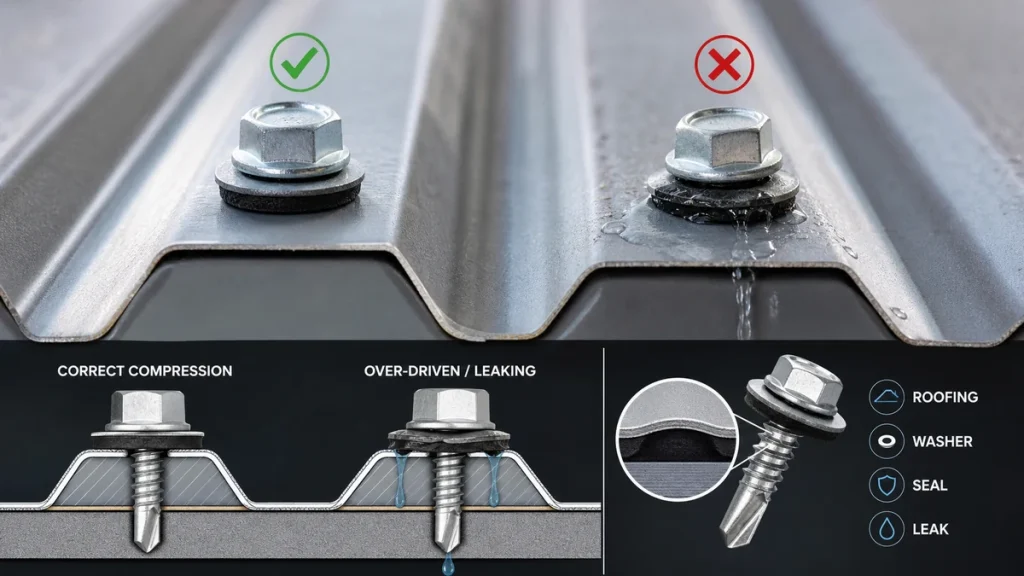
Why Do Self-Tapping Roofing Screws Leak Even When the Screw Length Looks Correct?

Why Do Self-Tapping Roofing Screws Leak Even When the Screw Length Looks Correct?

Direct answer: Correct screw length does not guarantee a watertight metal-roof connection. Self tapping roofing screws can leak because of incorrect washer compression, enlarged or stripped holes, insufficient thread engagement, panel movement, or an unsuitable coating-and-washer system. Buyers should diagnose the complete installed connection—including panel profile, support thickness, point type, washer condition, and exposure—rather than […]

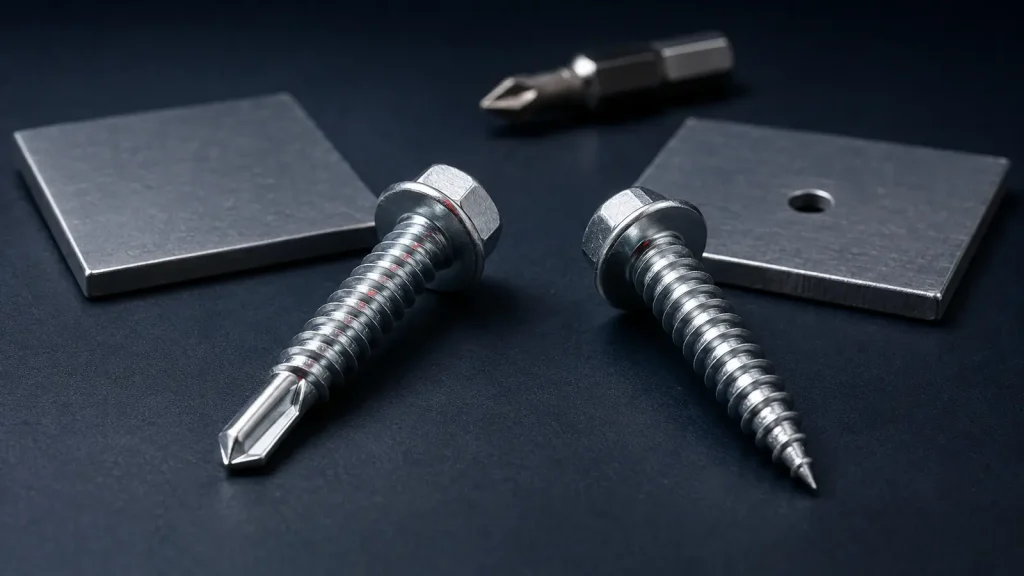
What Is the Difference Between Self Drilling and Self Tapping Screws?

What Is the Difference Between Self Drilling and Self Tapping Screws?

Direct Answer: A self-drilling screw has a drill-shaped point that creates a hole and then forms mating threads in a suitable material. A self-tapping screw forms or cuts mating threads but may require a correctly sized pilot hole. Selection depends on substrate type and thickness, joint stack, point geometry, installation tool, finish and application testing—not […]

Frequently Asked Questions

Are white screws suitable for outdoor assemblies?

They can be suitable, but the white appearance does not identify the underlying material or corrosion protection. Confirm the finish type, coating adhesion, and intended exposure with the supplier, especially for joints exposed to rain, condensation, or coastal conditions.

Should I choose a painted screw or a plated white finish?

A painted or coated finish may provide a closer visual match, while another surface treatment may offer different durability or corrosion-resistance characteristics. Compare colour consistency, adhesion, resistance to installation damage, and the environment rather than choosing by colour alone.

Can any white screw replace a standard wood or self-tapping screw?

No. White describes the visible finish, not the thread form, point, head, or intended substrate. A screw for wood, fibreboard, plastic, thin sheet metal, or a pre-drilled assembly must still provide the appropriate thread engagement and installation method.

When is a countersunk head the better choice?

A countersunk head is useful when the screw should sit flush in a suitable workpiece and the assembly allows a matching countersink. A pan or washer-style head may be preferable when the surface should not be countersunk or when a broader bearing area is needed; confirm the head style against the material and visible finish.

What information should I send when requesting white screws?

Provide the substrate and thickness, joined-material thickness, required diameter and length, point and head style, drive type, exposure conditions, expected quantity, and whether the screw remains visible. An existing screw sample, drawing, or approval piece can help confirm fit and colour before a larger order.

Leave Your Message

Tell us the material and thickness being joined, the required screw diameter and length or an existing sample, and whether the screws will be visible indoors or exposed to weather. Also note the preferred head and drive style if appearance is important.