Blind Rivet Nut Selection | Hebei Wotu Fastener Manufacturing Co., Ltd.

Blind rivet nut selection for sheet assemblies

A blind rivet nut gives you a load-bearing internal thread in sheet metal, tube, extrusion, plastic, or composite panels where the back side is hard to reach. The main decision is not only thread size; the body style, head style, material, and grip range all affect pull-out strength, spin resistance, panel marking, and installation consistency.

For enclosure panels, vehicle bodies, racks, appliance frames, and fabricated sheet assemblies, the right blind rivet nut can replace welding, tapping, or loose back-side nuts. The wrong choice can rotate in the hole, deform a thin panel, or leave the mating screw sitting proud.

Related Products

Hex nut DIN934-1987 (A/B accuracy classification)

Hex nut DIN934-1987 (A/B accuracy classification)

Brand: Wotu Standard basis: German standard DIN934-1987, metric coarse thread/fine thread universal thread Surface: 304 stainless steel Specifications: M6~M24 full range of specifications Supporting equipment: same specification bolts, flat washer, spring washer complete set of shipment Packaging: 25kg standard carton, whole wooden pallet packaging

Read More
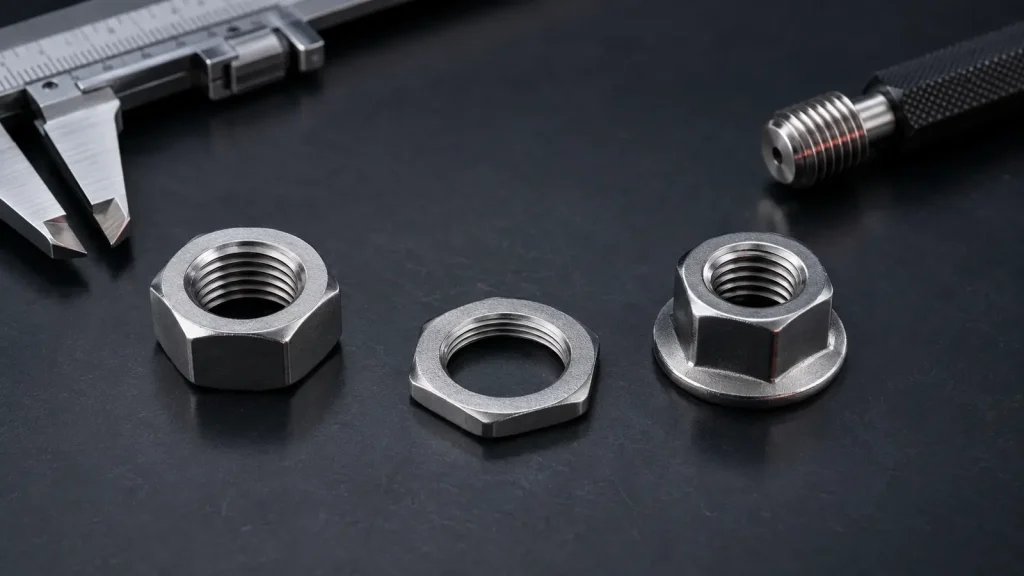
Hex thin nut

Hex thin nut

Brand: Wotu Surface: zinc plated Specifications: in stock M8~M64 full standard specifications, covering precision, machinery, and steel structure full size range, supporting nonstandard tooth pitch and customized thickness Matching: Can be matched with bolts of corresponding specifications, flat washer, spring washer complete set of shipment Packing: packed in 25kg cartons and packed on wooden pallets.

Read More
Hex nut (Chinese national standard GB52-1976)

Hex nut (Chinese national standard GB52-1976)

Brand: Wotu Surface: 304 stainless steel Specifications: in stock M6~M24 full standard metric specifications, supports nonstandard pitch, thickening/customized Matching: Can be matched with bolts of corresponding specifications, flat washer, spring washer complete set of supporting shipment Packaging: 25kg cartons, whole wooden pallets

Read More
Hex flange nut (Chinese national standard GB/T6177.1-2000)

Hex flange nut (Chinese national standard GB/T6177.1-2000)

Brand: Wotu Surface: zinc plated Specifications: in stockM6/M8/M10/M12/M14/M16/M20 Chinese national standardfull range of specifications, support nonstandard thickness, tooth pitch customized Matching: can be matched with bolts of the same specification, flat washer, spring washer complete set of shipment Packaging: 25kg cartons, whole wooden pallets

Read More
Grade 8/Grade 10 High-strength Black Oxide Hex Nut (DIN934/GB Chinese National Standard Thickened Nut)

Grade 8/Grade 10 High-strength Black Oxide Hex Nut (DIN934/GB Chinese National Standard Thickened Nut)

Brand: Wotu Surface: quenching and tempering heat treatment + high temperature black oxide anti-rust treatment Specifications: Comply with DIN934, GB/T6170 standards, in stock M6-M48 full range of specifications, nonstandard sizes can be customized Packaging: 25kg carton/woven bag inner packaging, whole wooden pallet wrapped with film for export packaging, supports neutral/private-label customization packaging

Read More
Chinese National Standard / German Standard Hex Nut (thick Nuts, Thin Nuts, Flange Nuts, Multiple Categories)

Chinese National Standard / German Standard Hex Nut (thick Nuts, Thin Nuts, Flange Nuts, Multiple Categories)

Brand: Wotu Surface: color zinc plated, blue-white zinc plated, black oxide, hot-dip galvanized, various surface treatments available Specifications: Comply with DIN934, GB/T6170, GB/T6172.1, GB/T6177.1 standards, in stock M6-M64 full range of specifications, support nonstandard customized Packaging: woven bag inside/25kg export carton, full-container wooden pallet wrapped with film, supports private-label, neutral export packaging

Read More

Key rivet nut choices for sheet and tube assemblies

Rivet nut selection criteria

Selection should focus on body style, head style, thread size, grip range, material, finish, and the installation method available in your workshop or production line. If the assembly will be serviced often, give extra attention to torque resistance and thread durability rather than choosing the lowest-profile option by appearance alone.

Criterion What To Check Why It Matters Buyer Tip
Thread size, pitch and thread standard Match the rivet nut thread to the mating bolt and confirm the drawing or sample uses the same pitch and tolerance. A correct nominal diameter with the wrong pitch will not assemble; thread mismatch can also cause cross-threading or weak engagement. Can you confirm the thread designation, pitch and applicable standard for the required bolt?
Grip range for the parent material Measure the joined material thickness, including coatings, and compare it with the rivet nut’s stated grip range. A nut outside its grip range may not form correctly, may spin during tightening, or may leave insufficient clamping strength. What is the minimum and maximum material thickness at the installation hole?
Body shape and anti-rotation feature Compare round, hexagonal or other body forms with the hole shape and the available clearance behind the panel. The body design affects resistance to spinning, hole preparation and suitability for thin sheet or restricted access. Should the assembly use a round body, hex body or another anti-rotation style?
Nut material and surface finish Match the base material and finish to the panel, bolt material, humidity and exposure described in the application. Material compatibility affects corrosion risk, thread durability and the joint’s service life. Which panel and bolt materials will be joined, and what environmental exposure should the finish withstand?
Installation tool and mandrel compatibility Confirm that the installation tool accepts the rivet nut’s thread, body size and grip range, and can reach the installation location. The correct tool and mandrel are needed to form the nut without damaging the thread or deforming the panel. Which installation tool will be used, and can you confirm its compatible thread and rivet-nut range?

Selecting a blind rivet nut that will not spin, crush, or sit too high

The most important distinction is between a rivet nut that only needs to clamp securely and one that must resist torque during repeated screw removal. Round-body rivet nuts can work well in many drilled holes, but knurled, ribbed, splined, or hex-body designs usually give better resistance to spinning in softer or thinner materials. A hex body needs a matching hex hole, so it adds hole-preparation work but can be a better fit where service access is frequent.

Head style also changes the assembly. A flat head spreads load and is forgiving on many panels, while a countersunk or reduced head can sit closer to flush when surface clearance matters. Closed-end designs help limit entry of dust or liquid through the thread, while open-end designs suit longer screws or variable joint stack heights.

Start with the parent material and access condition. Sheet thickness, hole shape, and whether the joint is metal, plastic, composite, or coated material will narrow the suitable body type. Very thin panels often need careful matching of grip range and setting force so the insert collapses correctly without crushing or dimpling the surface.

Choose the thread and material as a system, not as separate items. Steel rivet nuts are common for general assemblies, stainless steel may be preferred where corrosion resistance matters, and aluminum can reduce galvanic or weight concerns in some applications. Confirm the mating screw material and finish so the joint does not seize, corrode prematurely, or damage the installed thread.

Avoid choosing only by nominal thread size. Two rivet nuts with the same thread can require different hole sizes, grip ranges, setting tools, and installation strokes. If the hole is already designed, confirm the body diameter and head diameter before purchasing. If the hole is not fixed yet, decide whether the added anti-rotation benefit of a hex or knurled body justifies the extra tooling or hole-making step.

For a useful inquiry, prepare the thread size, panel material and thickness, access condition, preferred material or finish, and whether the insert must be open-end, closed-end, flush, or high anti-rotation. A drawing, sample photo, or installed-joint description will make the recommendation more precise.


Criteria Importance Description Example Options
Body style and anti-rotation High when screws will be removed repeatedly or the panel is soft and thin. Round bodies are often simpler for standard drilled holes, while knurled, ribbed, splined, or hex bodies can provide greater resistance to spinning. Hex bodies may require more involved hole preparation. A removable equipment cover may favor a knurled or hex body over a plain round body when rotation during service is a concern.
Head style Important when surface clearance, panel marking, or load distribution affects the assembly. Flat heads provide a visible bearing surface, while countersunk or reduced heads can sit closer to the panel surface. The panel thickness and mating component must allow the selected head to seat correctly. A flat-head design may suit a bracket on a concealed panel, while a countersunk design may be considered where a protruding head interferes with a cover.
Open-end versus closed-end construction Important when screw length, internal clearance, dust, or liquid entry matters. Open-end inserts offer more flexibility for longer screws and variable stack heights. Closed-end inserts restrict the threaded passage and may be preferable when limiting access through the panel is useful. An open-end insert may suit a joint with spacers of changing thickness; a closed-end version may suit an enclosure where the rear opening should be limited.
Material and finish Important for corrosion exposure, weight, compatibility with the mating screw, and the parent material. Steel, stainless steel, and aluminum can present different trade-offs in strength, corrosion resistance, weight, and compatibility. The insert, screw, panel, and surrounding environment should be considered together. A buyer may compare stainless steel with aluminum for a corrosion-sensitive assembly, then confirm compatibility with the panel and screw finish.
Grip range and installation method Critical because a correct thread size does not ensure a correct fit in the panel. The insert must match the material thickness and hole condition so it collapses and clamps without crushing the panel or leaving a loose joint. Confirm the required hole size, setting tool, and installation process before ordering. Two inserts with the same nominal thread can require different hole sizes, grip ranges, or setting tools, so the existing panel thickness should be specified.

Product Selection

Related Options

For a sheet metal enclosure, a flat-head open-end rivet nut may be suitable when general fastening access is the priority; for a removable cover or bracket that sees repeated screw changes, a knurled or hex-body rivet nut may be a better starting point. The best fit depends on the panel, hole preparation, and installation tool rather than thread size alone.

Blog Articles / Reviews

Hex Thin Nut vs Standard Hex Nut: Which Fits Space-Limited or Locking Assemblies?

Hex Thin Nut vs Standard Hex Nut: Which Fits Space-Limited or Locking Assemblies?

Direct Answer: Choose a hex thin nut when reduced nut height is genuinely required by the assembly or when the engineering design specifies it as part of a locking arrangement. Choose a standard hex nut when full nut height, normal thread engagement, and the specified load-bearing function are required. Buyers should compare nut height, thread […]

How Should Buyers Select Chinese and German Standard Hex Nuts?

How Should Buyers Select Chinese and German Standard Hex Nuts?

Direct Answer: Select a hex nut by the exact standard number and edition, thread diameter and pitch, nut style, property class, material, finish, mating bolt and acceptance method. “Chinese standard” or “German standard” alone is not a complete specification. Regular, thick, thin and flange nuts can differ in geometry and load behavior, so buyers should […]

Frequently Asked Questions

Can these inserts be used in thin sheet metal, plastic, or composite panels?

They can be suitable when the body style, grip range, and installation force match the parent material. Thin or soft panels need particular care because an incorrectly sized insert can crush the material, deform the hole, or fail to clamp securely.

When is a hex or knurled body preferable to a round body?

A hex or knurled body is generally worth considering when the joint must resist rotation during repeated screw removal or tightening. A round body may simplify hole preparation, while a hex body can require a matching hexagonal hole and more controlled preparation.

Does a larger thread automatically provide a stronger assembly?

No. Joint performance also depends on the parent material, panel thickness, grip range, body shape, hole quality, and installation method. An insert with a larger thread can still spin or damage a thin panel if these factors are mismatched.

Should I choose an open-end or closed-end design?

Open-end designs accommodate longer screws and changing joint stack heights. Closed-end designs can help limit the passage of dust or liquid through the threaded insert, but the available screw length and internal clearance must be checked before ordering.

What information should I include in a purchase enquiry?

Provide the thread size, parent material, material thickness, hole condition or required hole size, and expected service load or frequency of screw removal. Also state the preferred head style, body style, material or finish, open- or closed-end format, and the installation tool available.

Leave Your Message

Share the thread size, panel material and thickness, and whether you need open-end, closed-end, flat-head, countersunk, round-body, knurled, or hex-body rivet nuts.