Drill Style for Self-Drilling Screws | Hebei Wotu Fastener Manufacturing Co., Ltd.

Drill Style Selection for Self-Drilling Screws

Choosing the right drill style for a fastening job starts with the joint, not the screw name. For metal-to-metal work, a self-drilling screw can form its own entry hole while the threads engage the material, reducing the need for a separate drilling step.

The key decision is the point style, head and drive, coating, and length that suit the material stack and the required finish. A suitable combination can improve installation consistency and reduce stripped drives, poor seating, and unnecessary rework.

Related Products

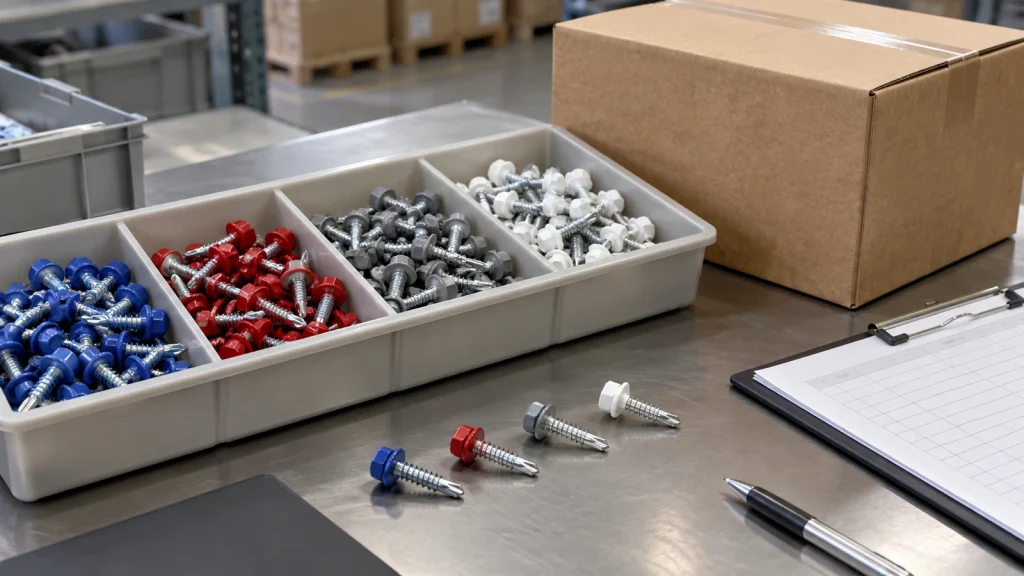
Chinese-standard Color Nylon Head Hex Self-Drilling Screw

Chinese-standard Color Nylon Head Hex Self-Drilling Screw

Brand: Hengzuan Surface: screw color zinc plated, head color nylon protective cap, multiple colors available Specifications: Chinese national standard ST5.5, ST6.3 mainstream caliber, rod length 25mm~125mm full range of specifications in stock, supports nonstandard length customization, suitable for drilling steel sheet thickness 2~6mm Packaging: 25kg cartons, full pallets packed on wooden pallets, support neutral packaging, private-label customization

Read More
Hex Head No. 5 Point Self-Drilling Screw

Hex Head No. 5 Point Self-Drilling Screw

Brand: Wotu Surface: blue and white zinc plated, customized color zinc plated, Dacromet anti-corrosion coating available Specifications: ST5.5, ST6.3 mainstream specifications, rod length 20mm~125mm, full size range in stock, support nonstandard customization, drilling to adapt to steel sheet 2-6mm Packaging: 25kg cartons, whole wooden pallets

Read More
Wafer Head Self-Drilling Screw

Wafer Head Self-Drilling Screw

Brand: Hengzuan Surface: blue and white zinc plated, can be customized color zinc plated, black oxide plated Specifications: Comply with GB/T15856.2 Chinese national standard, in stock ST3.5/ST4.2/ST4.8/ST5.5 mainstream wire diameter, rod length 13mm~50mm full range of specifications, nonstandard length customization on demand, drilling applicable plate thickness 2~5mm Packaging: 25kg export cartons, full pallets wrapped with film, supports neutral export packaging, private-label customization

Read More
Countersunk Head Blue-White Zinc Plated Self-Drilling Screw (Chinese National Standard: Phillips Countersunk Head Self-Drilling And Self-Tapping Screw GB/T15856.2-2002)

Countersunk Head Blue-White Zinc Plated Self-Drilling Screw (Chinese National Standard: Phillips Countersunk Head Self-Drilling And Self-Tapping Screw GB/T15856.2-2002)

Brand: Hengzuan Surface: blue and white zinc plated, can be customized color zinc plated, black oxide plated Specifications: Comply with GB/T15856.2-2002 Chinese national standard, in stock ST4.2/ST4.8/ST5.5 full range of specifications, length 13mm~75mm optional, supports customized nonstandard rod lengths; drilling adaptation plate thickness 0.7~6mm Packaging: 25kg export cartons, full pallets wrapped with film, supports neutral export packaging, customer private-label customization

Read More
Countersunk Head Blue Zinc Self-Drilling Screw

Countersunk Head Blue Zinc Self-Drilling Screw

Brand: Hengzuan Surface: blue and white zinc plated, can be customized color zinc plated, black oxide plated Specifications: in stock 3.5/3.9/4.2/4.8/5.5 mainstream wire diameter, rod length 13mm~75mm full size range, nonstandard length can be customized as needed Packaging: 25kg export cartons, full wooden pallets wrapped with film, supports neutral export packaging, private-label customization

Read More

Compare drill point, head and finish options

Drill style selection

Compare drill point geometry, thread form, length, head and drive, washer requirements, finish, and packaging. The right choice depends on how the screw enters the joint, how much thread must engage, how the head must seat, and how the finished assembly will be exposed and serviced.

Criterion What To Check Why It Matters Buyer Tip
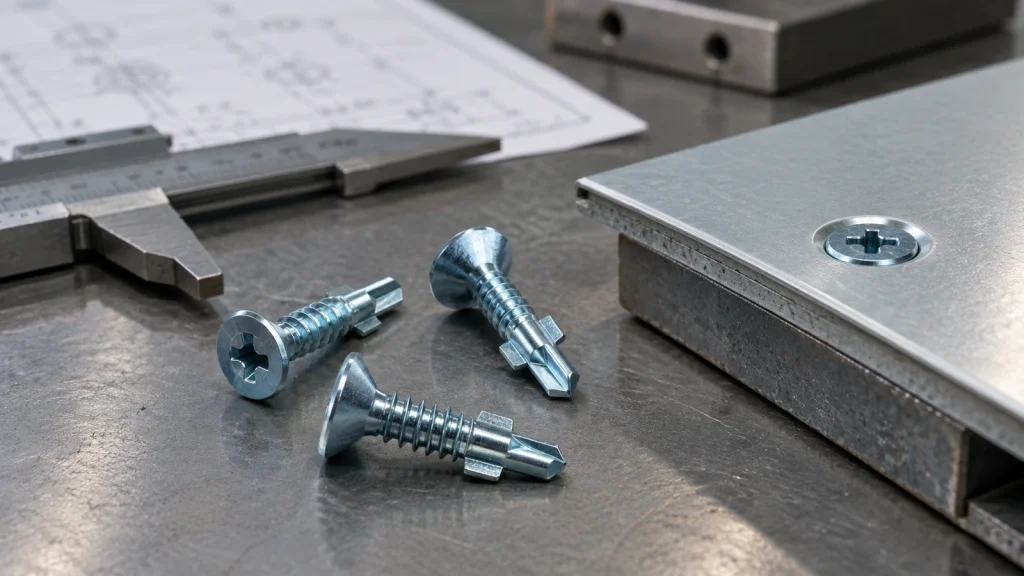
Drill-point shape and style Ask for a drawing or product image showing the point, such as a standard drill point, extended point, or winged point. The point affects how the screw starts, cuts through the material, and handles layered or pre-drilled assemblies. Describe the materials and layer arrangement, then ask which drill-point style is intended for that joint.
Material stack and total thickness Provide the material types, thickness of each layer, and whether the screw must pass through insulation, cladding, or a gap. A point suited to thin sheet may not cut or engage correctly through a thicker or mixed-material stack. Ask the supplier to confirm the suitable point length and working range for your exact assembly.
Thread form behind the drill point Compare the thread pattern and unthreaded section shown on the drawing or sample. Thread geometry affects engagement, clamping, and whether the screw is intended for metal-to-metal, metal-to-wood, or another joint. State the base material and required joint type instead of requesting a drill style by name alone.
Head, drive, and washer arrangement Confirm the head profile, drive recess, washer requirement, and clearance around the installation tool. These details affect seating, access, clamping, and the finished appearance of the fastening point. Send a joint photo or assembly drawing and ask the supplier to confirm the complete screw configuration.
Finish and exposure conditions Ask which coating or finish is available and whether it matches the joint's indoor, outdoor, or corrosive environment. The drill point may perform correctly while the surrounding fastener finish is unsuitable for the service conditions. Describe moisture, weather, and contact with dissimilar metals before comparing finish options.

Choose the right screw style for your material stack

A self-drilling screw has a drill-point tip designed to penetrate the material, while a self-tapping screw normally requires a prepared hole or a material that can be pierced and threaded by its tip. That distinction matters most when the assembly includes sheet metal, overlapping metal parts, or a repeated installation process.

Do not select by point style alone. Confirm the combined material thickness, whether the screw must clamp a second layer, the clearance around the head, and the exposure to moisture or chemicals. A screw that drills effectively may still be unsuitable if its head, thread engagement, or corrosion protection does not match the joint.

Match the point to the material. Start by identifying the materials being joined and their combined thickness. A self-drilling point may suit metal-to-metal fastening, while a self-tapping design or a pre-drilled assembly may be more appropriate for other substrates. Ask for guidance if the joint includes hard sections, thin sheet, insulation, or several layers.

Choose the head and drive for the finished joint. Hex-head styles can support tool access and visible clamping, while other head shapes may provide a lower profile or a different appearance. Check the available installation tool, required seating position, washer or sealing needs, and access to the fastener before ordering.

Specify protection for the service environment. Coating and finish should reflect humidity, outdoor exposure, contact with dissimilar metals, and any chemicals present. A decorative color or finish should not be treated as proof of corrosion performance. Confirm the intended environment and the finish requirements with the supplier.

Make the enquiry testable. Send a drawing or clear joint description with the materials, combined thickness, preferred head and drive, finish, estimated quantity, and application environment. Also ask what product standard, inspection information, or sample approval process applies to the proposed screw.

Criteria Importance Description Example Options
Point style Usually the first technical decision The point determines whether the screw can create its own entry hole and how well it starts in the material. The wrong point can cause slow drilling, wandering, poor thread engagement, or damaged tips. A metal-to-metal assembly may call for a self-drilling point, while a pre-drilled assembly may suit a self-tapping style.
Material stack and thickness Critical for fit and installation consistency The screw must drill through the layers and leave enough threaded section to clamp the joint. Thin sheet, overlapping metal, insulation, and mixed materials can require different screw geometry. Two thin steel sheets need a different selection approach than a panel fixed through a spacer into a thicker base.
Head and drive style Important for tool access, seating, and finished appearance The head shape affects clamping area, clearance, and visibility. The drive must match the installation tool and torque control used in production or on site. A hex head can be practical where socket access is available, while a lower-profile head may be preferred where surface clearance matters.
Coating and finish Important where exposure or appearance matters Finish selection should reflect humidity, outdoor use, chemical exposure, contact with other metals, and appearance requirements. Decorative color should not be treated as a substitute for a specified protective finish. A visible indoor assembly may prioritize appearance, while an exposed panel joint may require a finish chosen for the environment.
Washer or sealing requirement Important for panels, cladding, and weather-exposed joints Some applications need a washer for load distribution, sealing, or surface protection. The washer choice should match the head style, panel material, and exposure conditions. A fastener used on a roof or exterior panel may need a sealing washer, while an internal bracket joint may not.

Blog Articles / Reviews

What Should an RFQ Include When Sourcing Dacromet Hex Head Self-Drilling Screw?

What Should an RFQ Include When Sourcing Dacromet Hex Head Self-Drilling Screw?

When sourcing dacromet hex head self drilling screw, a complete RFQ should define the application, screw configuration, coating requirement, dimensions, and supplier confirmation requirements. Buyers often receive different quotations because suppliers may interpret coating, size, drilling capability, or packaging scope differently. Before preparing a project inquiry, buyers can review the available fastener product categories to […]

What Is the Difference Between Self Drilling and Self Tapping Screws?

What Is the Difference Between Self Drilling and Self Tapping Screws?

Direct Answer: A self-drilling screw has a drill-shaped point that creates a hole and then forms mating threads in a suitable material. A self-tapping screw forms or cuts mating threads but may require a correctly sized pilot hole. Selection depends on substrate type and thickness, joint stack, point geometry, installation tool, finish and application testing—not […]

What RFQ Details Matter When Ordering Blue Zinc Winged Self-Drilling Screws?

What RFQ Details Matter When Ordering Blue Zinc Winged Self-Drilling Screws?

When ordering a blue zinc self drilling screw with a winged, countersunk configuration, diameter and length are not enough to define the application. The RFQ should identify the materials being connected, upper-material thickness, steel-substrate thickness, total material stack, required countersunk seating, screw diameter, total length, drill-point condition, wing geometry, surface treatment, installation method, quantity and […]

What Should Buyers Confirm When Ordering Color Nylon Head Hex Self-Drilling Screws?

What Should Buyers Confirm When Ordering Color Nylon Head Hex Self-Drilling Screws?

When ordering a chinese standard color nylon head hex self drilling screw, the RFQ should define more than a color name. Buyers should confirm the exact color reference, nylon head or cap configuration, base screw diameter and length, steel-sheet condition, metallic screw finish, visible-face requirement, color approval method, batch-consistency check and packaging or SKU separation. […]

Rust Prevention Tips for Self-Drilling Screws

Rust Prevention Tips for Self-Drilling Screws

As we all know, the simplest way to prevent self-drilling screws from rusting is to properly isolate the screws from moisture-containing and humid environments. This can be achieved through selective application of protective coatings and sealants, or by purchasing specially formulated rust-resistant or rust-proof screws. This is why many businesses and households have rust prevention […]

Frequently Asked Questions

Is a self-drilling screw always better than a self-tapping screw?

No. A self-drilling screw is useful when the point needs to create the entry hole, especially in many sheet metal assemblies. A self-tapping screw may be the better choice when the hole is already prepared, when the material needs more controlled thread formation, or when the joint design does not suit a drill-point tip.

What information changes the screw style recommendation?

The most important details are the materials being joined, the combined thickness, the number of layers, and whether the screw must pass through one layer before clamping another. Head clearance, installation tool access, washer needs, and exposure to moisture or chemicals can also change the recommended style.

Can one drill point work for every metal thickness?

No. Drill point geometry must suit the thickness and hardness of the material stack. A point that works well in thin sheet may not drill cleanly in a thicker or harder assembly, while an oversized point can reduce useful thread engagement in thin material.

Does a colored or plated finish prove that the screw is corrosion resistant?

Not by itself. A finish can affect appearance, handling, and corrosion behavior, but the required protection depends on the service environment. Confirm the coating type, intended exposure, and any inspection or sample approval process before placing an order.

What should be included in an enquiry for this type of fastener?

Send the material stack, combined thickness, preferred head and drive, required length range, finish, washer or sealing requirements, and expected use environment. If the screw will be used in a repeated production process, include the installation method and any sample testing expectations.

Leave Your Message

Tell us the materials and combined thickness being joined, the preferred head or drive style, and the coating or service environment required.