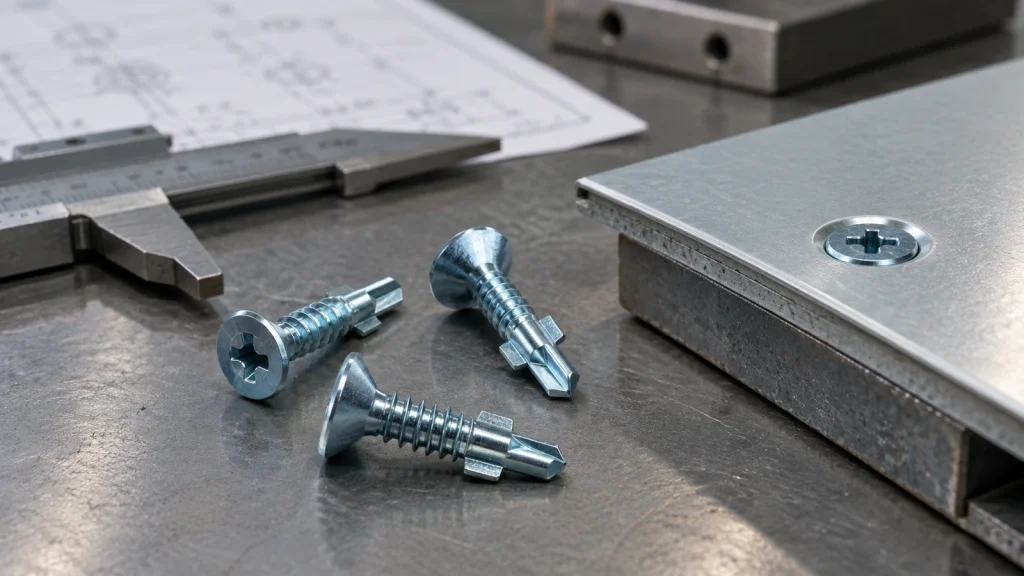
The main distinction is between a self-drilling point and a sharp self-tapping point. A self-drilling screw has a cutting tip intended to penetrate a specified metal stack without a separately drilled pilot hole; a self-tapping screw normally needs a prepared hole or a material that its tip can pierce and form.
Winged drill styles are a separate choice for some wood-to-metal assemblies. The wings create clearance through the wood before the point reaches the metal, then should not remain as the working thread in the steel. Confirm the complete material combination before selecting this style.
Match the point to the material stack. State whether the screw will pass through sheet metal, join metal to metal, or cross wood before entering steel. A point that is suitable for thin sheet may not be suitable for a thicker or layered assembly. If the stack varies, provide the minimum and maximum material condition for review.
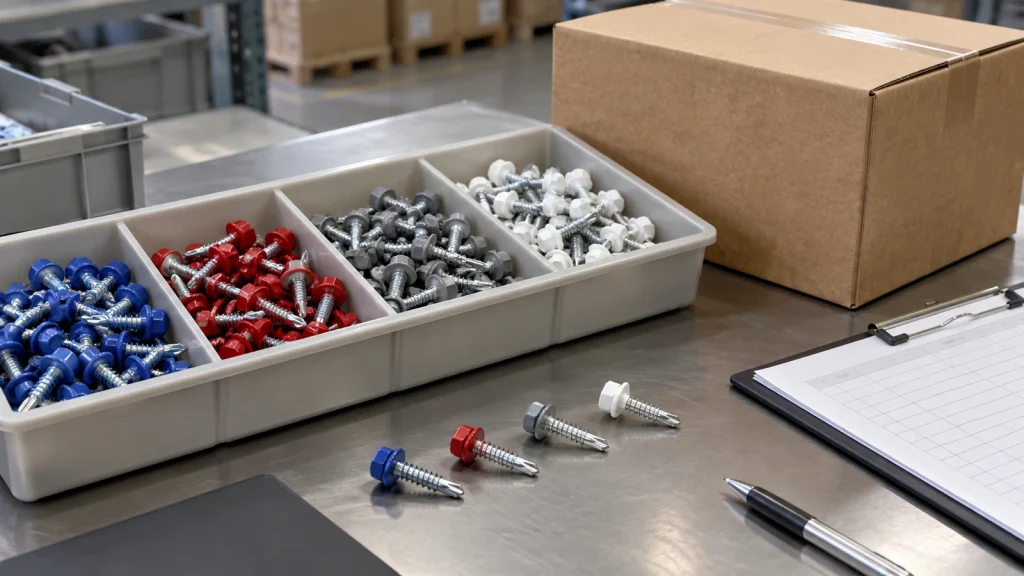
Check the head and sealing requirement separately. Drill style controls penetration, but the head controls driving access, clamping and appearance. A hex washer head may suit exposed panel work, while another head form may be preferred where a flush surface matters. For exterior or weather-exposed joints, specify whether a sealing washer or another sealing arrangement is required.
Do not treat coating as a substitute for application fit. Zinc or other surface finishes may support corrosion resistance, but the appropriate finish depends on exposure, contact materials and the required appearance. Confirm compatibility where dissimilar metals, moisture or aggressive environments are present.
Make the next enquiry specific. Send a drawing or sample if possible, together with the material layers, desired drill style, screw diameter and length, head and drive preference, finish, and estimated quantity. Ask the supplier to confirm the intended material range and whether the proposed point has been assessed for the complete assembly.