Galvanized Iron Roofing Sheet Selection Guide | Hebei Wotu Fastener Manufacturing Co., Ltd.

Galvanized Iron Roofing Sheet

A galvanized iron roofing sheet is usually chosen for sheds, warehouses, workshops, farm buildings and light industrial roofs where corrosion resistance, weight and installation speed all matter. The main decision is not only the sheet itself, but how the sheet, roof frame and fasteners work together so the roof stays tight after wind, heat movement and rain.

For buyers comparing roof sheets or planning installation materials, confirm the sheet profile, base metal thickness, zinc coating type, roof structure and matching roofing screws before ordering. A suitable sheet can still leak or loosen if the screw type, washer contact and drilling method do not match the panel and support material.

Related Products

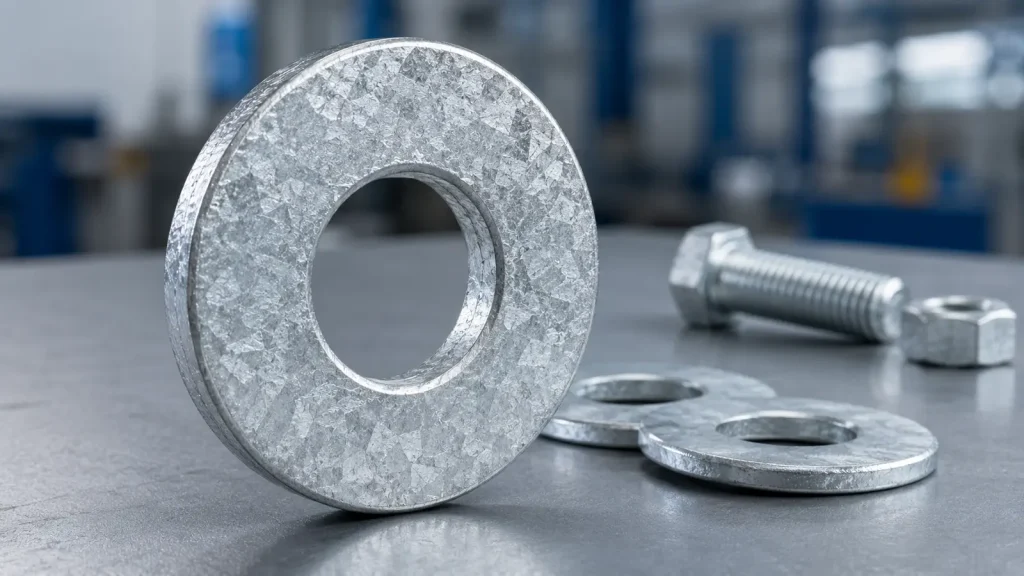
Hot-Dip Galvanized Chinese National Standard Flat Washer (GB/T97.1A Level Flat Washer)

Hot-Dip Galvanized Chinese National Standard Flat Washer (GB/T97.1A Level Flat Washer)

Brand: Wotu Surface: overall hot-dip zinc plated anti-corrosion treatment, optional blue-white zinc plated, color zinc plated, black oxide Specifications: Execute GB/T97.1-2002 Chinese national standard, in stock M6-M64 full range of specifications, inner diameter, outer diameter, thickness strictly comply with Chinese national standard parameters, support nonstandard size customized Packaging: 25kg woven bag / export carton packaging, full pallets wrapped with film, supports private-label customization

Read More
Hot-Dip Galvanized Hex Head Bolt (DIN931 Half Thread / DIN933 Full Thread / GB30 Chinese National Standard Bolt, Can Be Equipped With Nut And Washer Set)

Hot-Dip Galvanized Hex Head Bolt (DIN931 Half Thread / DIN933 Full Thread / GB30 Chinese National Standard Bolt, Can Be Equipped With Nut And Washer Set)

Brand: Wotu Surface: overall hot-dip zinc plating treatment Specifications: Comply with DIN and GB standards, in stock M6-M48 full range of specifications, length 20mm-300mm, supports nonstandard customized. Packaging: woven bag inside / 25kg export carton, film-wrapped wooden pallet; supports neutral packaging and customer private-label customization.

Read More
Hot-Dip Galvanized Hex Nut (DIN934 Thickened/GB Thin Nut In Multiple Specifications)

Hot-Dip Galvanized Hex Nut (DIN934 Thickened/GB Thin Nut In Multiple Specifications)

Brand: Wotu Surface: high temperature hot dip zinc plated surface treatment Specifications: Comply with DIN934, GB/T6170, GB/T6172.1 Chinese national standard German standard, in stock M6-M64 full range of specifications, length is nonstandard customized as required Packaging: 25kg woven bag/export carton, full-container wooden pallet wrapped with film, supports neutral packaging, private-label customization

Read More
Chinese-standard Color Nylon Head Hex Self-Drilling Screw

Chinese-standard Color Nylon Head Hex Self-Drilling Screw

Brand: Hengzuan Surface: screw color zinc plated, head color nylon protective cap, multiple colors available Specifications: Chinese national standard ST5.5, ST6.3 mainstream caliber, rod length 25mm~125mm full range of specifications in stock, supports nonstandard length customization, suitable for drilling steel sheet thickness 2~6mm Packaging: 25kg cartons, full pallets packed on wooden pallets, support neutral packaging, private-label customization

Read More
Hex Head Self-Drilling Screw With Cup Washer

Hex Head Self-Drilling Screw With Cup Washer

Brand: Hengzuan Surface: color zinc plated Specifications: in stock ST5.5/ST6.3 regular diameter, rod length 19mm~75mm in stock, supports nonstandard customized, suitable for drilling steel sheet thickness 2~5mm Packaging: carton packaging, full pallets wooden pallet packaging, support neutral packaging, private-label customization

Read More
U-bolt ( / U-bolt, M10/M12/M16/M20/M24 multiple specifications)

U-bolt ( / U-bolt, M10/M12/M16/M20/M24 multiple specifications)

Brand: Wotu Surface: natural black oxide / hot-dip galvanized / blue-white zinc plated, multiple processes available Specifications: Based on common industry drawing parameters, suitable for pipe diameter 25mm~139.7mm, screw diameter M10~M24, total length can be nonstandard customized Matching: can be matched with nut, flat washer and spring washer of the same specifications for complete shipment Packaging: Bundling and packaging + 25kg export carton, full-container wooden pallet wrapped with film, supports private-label export packaging

Read More

Roof sheet and fastener details to compare before ordering

Roofing material selection notes

When reviewing materials for a galvanized iron roofing sheet installation, compare the roof sheet profile, coating requirement, support material and compatible screw assembly together. The sheet may be the visible product, but the fixing method often determines whether the finished roof resists leaks, loosening and corrosion at penetrations.

Criterion What To Check Why It Matters Buyer Tip
Base steel thickness and sheet profile Confirm the stated base-metal thickness, rib or corrugation profile, effective cover width, and sheet length against the drawing or sample. Thickness and profile affect stiffness, overlap, drainage, handling, and compatibility with the supporting structure. Ask: “Can you provide the profile drawing and confirm whether the quoted thickness excludes the zinc coating?”
Galvanizing method and coating information Ask whether the sheet is electro-galvanized or hot-dip galvanized, and request the applicable coating designation or inspection record. The coating process and amount influence corrosion protection, cut-edge behaviour, appearance, and suitability for the roof environment. Ask: “What coating designation applies, and how is coating coverage checked on the supplied sheets?”
Roof layout and overlap fit Compare the sheet’s effective cover width, side-lap arrangement, end-lap needs, and available lengths with the roof plan. A nominal sheet width is not the installed coverage; incorrect overlaps can increase waste and create leakage risks. Send the roof slope, panel layout, and required lengths, then ask for a coverage calculation before ordering.
Fastener, washer, and support compatibility Match the screw type, length, thread, drilling point, and washer to the sheet profile and whether the support is steel or timber. An unsuitable fastener can damage the sheet, fail to secure the panel, or allow water around the fixing point. Ask: “Which self-tapping or self-drilling screw and washer combination is intended for this sheet and our support material?”
Edges, cut pieces, and site handling Confirm how cut edges, punched holes, protective film, stacking, and handling marks are treated or protected. Damage to the zinc coating and trapped moisture during storage can accelerate corrosion before installation. Ask for recommended storage and touch-up guidance, especially if the roof requires many field cuts.

Choosing galvanized roofing sheet fixings that suit the roof structure

The practical difference to check first is whether the roofing sheet will be fixed to steel purlins, timber battens or another support. That choice affects the screw point, thread form and drilling behavior. A fastener that works on thin steel may not hold correctly in timber, and a screw selected only by length can still give poor clamping or washer sealing.

Another important distinction is between the sheet’s corrosion protection and the fastener’s corrosion protection. Galvanized roofing sheets are exposed across a large surface, while screws have cut edges, heads and washers that concentrate load and water contact. Matching the roof sheet with compatible roofing screws and sealing washers reduces avoidable leaks and premature rust around fixing points.

Start with the roof design, not the sheet name. Tell the supplier the sheet profile, lap direction, roof pitch, span support and whether the panels will face coastal air, industrial pollution or normal inland weather. These details change the practical choice of coating, sheet form and fixing pattern.

Do not treat all galvanized iron roofing sheets as interchangeable. Corrugated, trapezoidal and ribbed profiles sit differently on supports and need different fixing positions. The wrong screw location can deform the sheet, leave the washer uneven or create a path for water at side laps and end laps.

Match the fastener to the support material. For steel structures, check the drilling point and thread engagement. For timber, check holding strength and thread type. For either case, the washer must compress enough to seal without being crushed. Over-tightening is a common mistake because it can split or distort the sealing washer.

A useful next step is to send the roof sheet profile, support material, expected environment and any required coating preference. Hebei Wotu Fastener Manufacturing Co., Ltd. can then be asked which roofing screw type, washer style and surface finish should be reviewed for compatibility with the galvanized sheet system.

Criteria Importance Description Example Options
Sheet profile Essential because the profile affects overlap, fixing position, drainage and how the sheet bears on the supports. Compare corrugated, trapezoidal and ribbed forms against the roof layout and the intended fixing locations. A profile that does not suit the support arrangement can leave uneven laps or poorly seated washers. A simple shed roof may use a corrugated profile, while a larger workshop may require a ribbed or trapezoidal profile selected for its roof layout.
Support material Essential because screws that suit steel purlins may not provide the right thread engagement in timber battens. Confirm whether the panels will be fixed to steel, timber or another substrate. Check the screw point, thread form, holding behavior and length together. A self-drilling point may be reviewed for steel supports, while a thread designed for timber may be considered for timber battens.
Corrosion exposure and coating High for roofs exposed to coastal air, industrial pollution, high humidity or other aggressive conditions. Compare the sheet's zinc coating or other surface protection with the environment. Review the fastener, washer and cut-edge protection as well, because a protected sheet does not automatically protect the entire fixing assembly. A roof near salt air may require closer review of coating compatibility and fastener protection than a roof in a normal inland environment.
Fastener and washer compatibility Critical for preventing leaks, sheet deformation and loosening around penetrations. Check screw length, point type, thread, head, washer material and sealing behavior as a complete assembly. Over-tightening can damage the washer or distort the panel, while insufficient tightening can leave an unreliable seal. A roofing screw with a suitable sealing washer should sit squarely on the profile without crushing the washer or leaving a visible gap.
Alternative roof material Important when weight, appearance, maintenance or surface finish matters as much as basic roof coverage. Compare galvanized sheet with prepainted steel or aluminum using the same criteria: support arrangement, fastening compatibility, exposure, appearance and total installation requirements. A buyer prioritizing a colored finish may compare prepainted steel, while a buyer prioritizing lower panel weight may also review aluminum and its different fastening considerations.

Product Selection

Related Options

For a warehouse or workshop roof, the priority is usually a watertight fixing point that holds through vibration, heat expansion and weather exposure. In that use case, the buyer should compare roofing screws by point type, thread fit, washer quality and corrosion protection rather than selecting only by screw length or head appearance.

Blog Articles / Reviews

Which Self-Tapping Roofing Screw Specification Fits Metal Panels on Steel or Timber?

Which Self-Tapping Roofing Screw Specification Fits Metal Panels on Steel or Timber?

The correct self-tapping roofing screw depends on the complete panel-and-substrate stack-up. Steel supports typically require a point and thread matched to the support thickness and any pilot-hole requirement; timber supports require a wood-appropriate thread and sufficient embedment. In both cases, buyers must define diameter, length, head, sealing washer, material or coating, environment, pull-out requirements, and […]

Why Do Self-Tapping Roofing Screws Leak Even When the Screw Length Looks Correct?

Why Do Self-Tapping Roofing Screws Leak Even When the Screw Length Looks Correct?

Direct answer: Correct screw length does not guarantee a watertight metal-roof connection. Self tapping roofing screws can leak because of incorrect washer compression, enlarged or stripped holes, insufficient thread engagement, panel movement, or an unsuitable coating-and-washer system. Buyers should diagnose the complete installed connection—including panel profile, support thickness, point type, washer condition, and exposure—rather than […]

What Should Buyers Check Before Ordering Hot-Dip Galvanized Flat Washers?

What Should Buyers Check Before Ordering Hot-Dip Galvanized Flat Washers?

A hot-dip galvanized flat washer should be purchased as a defined joint component, not simply as an M-size metal disc. A usable specification identifies the dimensional standard and series, nominal size, inside and outside diameters, thickness, product grade, hardness or mechanical requirement, base material, coating requirement and the bolt, nut and bearing surface with which […]

Self-drilling screw trivia – Are there hot-dip galvanized self-drilling screws?

Self-drilling screw trivia – Are there hot-dip galvanized self-drilling screws?

No, there are no hot-dip galvanized self-drilling screws. Hot-dip galvanizing involves heating the screw at high temperatures to adhere a zinc layer to its surface. This high temperature affects the hardness of the screw, so hot-dip galvanized self-drilling screws are not available. Why do some customers look for hot-dip galvanized self-drilling screws? This is because […]

The Widespread Application of Hot-Dip Galvanized Bolts in Daily Life

The Widespread Application of Hot-Dip Galvanized Bolts in Daily Life

Hot-dip galvanized bolts are widely used in daily life, especially due to their advantages, which have led to their rapid development in the market and widespread consumer appeal. So what are the specific advantages of hot-dip galvanized bolts in use? Today, Hebei Wotu Fastener Manufacturing Co., Ltd. will discuss this with you. 1. Due to […]

The Widespread Application of Hot-Dip Galvanized Bolts in Daily Life

The Widespread Application of Hot-Dip Galvanized Bolts in Daily Life

Hot-dip galvanized bolts are widely used in daily life, especially due to their advantages, which have led to their rapid development in the market and widespread consumer appeal. So what are the specific advantages of hot-dip galvanized bolts in use? Today, Hebei Wotu Fastener Manufacturing Co., Ltd. will explain. 1. Due to its special surface […]

Frequently Asked Questions

Is a galvanized roofing sheet suitable for a warehouse or farm building?

It can suit many sheds, warehouses, workshops and farm buildings, provided the profile, thickness, support spacing and corrosion protection match the roof design. For coastal or polluted environments, ask for coating details and confirm that the sheet and fasteners are suitable for the exposure.

Should I compare galvanized sheet with prepainted steel or aluminum?

Yes, if appearance, weight, corrosion exposure or maintenance are important. Prepainted steel offers a different surface finish, while aluminum changes the weight and fastening considerations; compare the complete roof system rather than the sheet material alone.

Does a galvanized surface prevent every roofing leak?

No. Galvanizing protects the sheet surface from corrosion, but leaks commonly originate at fastener penetrations, side laps, end laps or poorly compressed washers. Correct screw selection, positioning and installation are still necessary.

How do I choose fixings for steel purlins versus timber battens?

Tell the supplier what supports the sheet because steel and timber require different thread engagement and drilling behavior. The screw point, thread form, length and sealing washer should be reviewed as one assembly, not selected by length alone.

What information should I send before requesting a quotation?

Provide the sheet profile, support material, roof pitch, approximate coverage, project environment and any preference for coating or appearance. If replacing an existing roof, include the cause of leakage or loosening and the current fixing details so compatibility can be assessed.

Leave Your Message

Send the roofing sheet profile, the support material such as steel or timber, and the project environment. If available, include the planned screw size or current leakage/loosening issue so the inquiry can be reviewed more accurately.