JSW Sheet Selection | Hebei Wotu Fastener Manufacturing Co., Ltd.

JSW sheet selection for fabrication, roofing and cladding

JSW sheet is usually requested as a branded steel sheet for fabrication, roofing, cladding, enclosures, ducting, brackets or general industrial work. The important buying decision is not the name alone; it is the exact sheet type, grade, surface finish and tolerance that fit the part or application.

If you are asking Hebei Wotu Fastener Manufacturing Co., Ltd. about JSW sheet, send the intended use and required specification first. That makes it easier to confirm whether the material, finish and supply route can match your project instead of quoting an unsuitable sheet.

Related Products

Hex thin nut

Hex thin nut

Brand: Wotu Surface: zinc plated Specifications: in stock M8~M64 full standard specifications, covering precision, machinery, and steel structure full size range, supporting nonstandard tooth pitch and customized thickness Matching: Can be matched with bolts of corresponding specifications, flat washer, spring washer complete set of shipment Packing: packed in 25kg cartons and packed on wooden pallets.

Read More
Wafer Head Self-Drilling Screw

Wafer Head Self-Drilling Screw

Brand: Hengzuan Surface: blue and white zinc plated, can be customized color zinc plated, black oxide plated Specifications: Comply with GB/T15856.2 Chinese national standard, in stock ST3.5/ST4.2/ST4.8/ST5.5 mainstream wire diameter, rod length 13mm~50mm full range of specifications, nonstandard length customization on demand, drilling applicable plate thickness 2~5mm Packaging: 25kg export cartons, full pallets wrapped with film, supports neutral export packaging, private-label customization

Read More
Countersunk Head Blue-White Zinc Plated Self-Drilling Screw (Chinese National Standard: Phillips Countersunk Head Self-Drilling And Self-Tapping Screw GB/T15856.2-2002)

Countersunk Head Blue-White Zinc Plated Self-Drilling Screw (Chinese National Standard: Phillips Countersunk Head Self-Drilling And Self-Tapping Screw GB/T15856.2-2002)

Brand: Hengzuan Surface: blue and white zinc plated, can be customized color zinc plated, black oxide plated Specifications: Comply with GB/T15856.2-2002 Chinese national standard, in stock ST4.2/ST4.8/ST5.5 full range of specifications, length 13mm~75mm optional, supports customized nonstandard rod lengths; drilling adaptation plate thickness 0.7~6mm Packaging: 25kg export cartons, full pallets wrapped with film, supports neutral export packaging, customer private-label customization

Read More
Countersunk Head Blue Zinc Self-Drilling Screw

Countersunk Head Blue Zinc Self-Drilling Screw

Brand: Hengzuan Surface: blue and white zinc plated, can be customized color zinc plated, black oxide plated Specifications: in stock 3.5/3.9/4.2/4.8/5.5 mainstream wire diameter, rod length 13mm~75mm full size range, nonstandard length can be customized as needed Packaging: 25kg export cartons, full wooden pallets wrapped with film, supports neutral export packaging, private-label customization

Read More
Hex Head Self-Drilling Screw With Cup Washer

Hex Head Self-Drilling Screw With Cup Washer

Brand: Hengzuan Surface: color zinc plated Specifications: in stock ST5.5/ST6.3 regular diameter, rod length 19mm~75mm in stock, supports nonstandard customized, suitable for drilling steel sheet thickness 2~5mm Packaging: carton packaging, full pallets wooden pallet packaging, support neutral packaging, private-label customization

Read More

Key details to check before specifying JSW sheet

Sheet selection criteria

Relevant selection criteria for JSW sheet include steel grade, hot rolled or cold rolled condition, galvanized or coated finish, thickness, width, length, flatness needs, edge condition and documentation requirements. The right choice depends on how the sheet will be cut, formed, fastened, welded, painted or exposed in service.

Criterion What To Check Why It Matters Buyer Tip
Sheet grade and application fit Confirm the exact steel grade or coating type required for the job, such as structural use, roofing, fabrication, or enclosure work. A JSW sheet can refer to different sheet products, and the wrong grade may bend, corrode, or weld differently than expected. Ask: Which grade, coating, and end use is this sheet being supplied for?
Thickness and tolerance Verify the ordered thickness, acceptable tolerance, and whether the thickness is measured before or after coating. Small thickness differences can affect forming, fastener grip, panel stiffness, and final weight. Ask for the thickness range that will be supplied, not only the nominal thickness.
Coating or surface finish Check whether the sheet is galvanized, color coated, bare steel, or another finish, and inspect the surface protection requirements. The finish affects corrosion resistance, paint adhesion, appearance, and suitability for outdoor or humid environments. Ask: What surface finish is available, and is it suitable for the installation environment?
Sheet size, flatness, and edge condition Confirm length, width, coil-cut or factory-cut format, flatness expectations, and whether edges are slit, sheared, or trimmed. Poor fit or edge condition can slow fabrication, increase scrap, and affect visible panels or assemblies. Share the drawing or cutting plan and ask what size tolerance and edge condition can be supplied.
Traceability and matching with fasteners or assemblies Request the mill details, batch identification, and compatibility with the fasteners, washers, or brackets used in the assembly. Material traceability helps avoid mix-ups, while sheet hardness and coating thickness can affect drilling, sealing, and clamping. Ask: Can the sheet batch be identified, and which fastener type is recommended for this sheet and coating?

Choosing the right sheet type for fabrication, coating and service conditions

The main distinction is between the base material and the surface condition. A hot rolled sheet may suit structural fabrication where appearance is less important, while cold rolled, galvanized or coated sheet is often chosen for tighter surface finish, corrosion resistance or visible panels. Two sheets can both be described as JSW sheet but behave very differently in bending, welding, painting and outdoor exposure.

Buyers should also separate “brand preference” from “technical requirement.” If JSW origin is mandatory, ask for traceability documents and mill details. If equivalent material is acceptable, define the grade, coating, thickness, width and finish so the supplier can check a practical alternative without lowering the performance requirement.

Start with the application. Sheet used for roofing or exterior cladding usually needs a protective coating and a surface that will tolerate weathering. Sheet used for brackets, cabinets or formed parts may need consistent flatness, bendability and a clean finish. If the sheet will be welded, painted, punched or roll formed, mention those operations before price discussions.

Do not specify only “JSW sheet” and thickness. Thickness matters, but grade, coating type, surface finish, edge condition and sheet or coil format can change cost and usability. A low-cost option can become expensive if it cracks during forming, arrives with the wrong finish, or needs extra surface preparation before painting.

For branded material, traceability is a practical purchasing issue. Ask what paperwork can be supplied with the goods, such as mill test information or origin details, if your project requires it. If documents are not required, say so clearly; this can broaden the available options and avoid delays caused by unnecessary paperwork.

The next step is to send a short specification rather than a general enquiry. Include the sheet type or grade if known, thickness and size, coating or finish, quantity, application and destination. If you are unsure of the grade, describe the part, environment and processing method so the supplier can respond with a suitable material question instead of guessing.

Criteria Importance Description Example Options
Brand requirement versus technical specification Important when a project requires traceable material or a named mill A brand name alone does not define the sheet's grade, coating, finish or forming behavior. If the brand is mandatory, documentation becomes part of the purchasing decision; if not, equivalent material may be considered against the same technical requirement. A contract may require JSW origin, while a workshop job may accept any sheet that matches the specified grade, thickness and surface finish.
Hot rolled, cold rolled, galvanized or coated sheet High impact on fabrication, appearance and corrosion resistance Hot rolled sheet is often chosen for general fabrication where surface appearance is less critical. Cold rolled sheet offers a cleaner surface for many formed or visible parts, while galvanized or coated sheet is considered where corrosion protection matters. A hidden bracket may not need the same finish as an exposed cabinet panel or exterior cladding sheet.
Thickness, flatness and dimensional tolerance Critical for cutting, forming, assembly fit and yield Thickness alone is not enough if the sheet will be punched, bent, rolled or fitted into an assembly. Flatness, width, length and tolerance can affect processing efficiency and finished-part accuracy. A sheet used for simple cover plates may allow looser appearance requirements than a sheet used for accurately formed enclosure parts.
Surface finish and post-processing Important when the part will be painted, welded, bonded or visible Surface condition affects paint adhesion, weld preparation, handling marks and final appearance. Coated sheet may need special consideration during welding or cutting, while uncoated sheet may need additional surface treatment. A painted panel should be specified with the required surface condition rather than described only by material name.
Documentation and traceability Relevant for controlled projects, resale, inspection or client approval Some buyers need mill test information, origin details or other traceability records. Others only need material that fits the application. Stating the document requirement early avoids quoting a material that cannot meet the paperwork expectation. An inspected project may require mill documentation, while a non-critical fabrication job may not.

Blog Articles / Reviews

Hex Head Self-Drilling Screws with Cup Washers: Choosing Drill Point and Length

Hex Head Self-Drilling Screws with Cup Washers: Choosing Drill Point and Length

Choosing a hex head self-drilling screw with a cup washer requires more than selecting ST5.5 or ST6.3 and a nominal length. The drilling point must suit the steel it penetrates; the threaded section must engage the intended supporting material; and the head-and-washer assembly must seat correctly on the outer panel. A screw’s drilling capacity is […]

What Is a Fastener? Types, Functions and Industrial Uses

What Is a Fastener? Types, Functions and Industrial Uses

A fastener is a hardware component that mechanically joins or secures parts. Common examples include screws, bolts, nuts and rivets; washers are supporting components used in many fastening assemblies. Some connections can be dismantled by removing threaded fasteners, while others, such as riveted joints, normally require the fastener to be destroyed during removal. In industrial […]

What Should Buyers Confirm When Ordering Color Nylon Head Hex Self-Drilling Screws?

What Should Buyers Confirm When Ordering Color Nylon Head Hex Self-Drilling Screws?

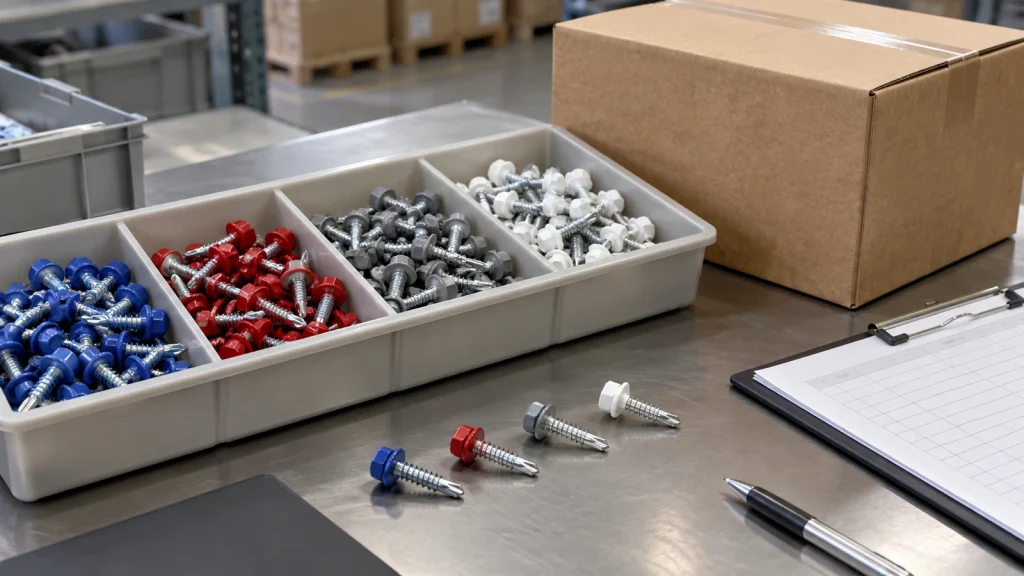
When ordering a chinese standard color nylon head hex self drilling screw, the RFQ should define more than a color name. Buyers should confirm the exact color reference, nylon head or cap configuration, base screw diameter and length, steel-sheet condition, metallic screw finish, visible-face requirement, color approval method, batch-consistency check and packaging or SKU separation. […]

What RFQ Details Matter When Ordering Blue Zinc Winged Self-Drilling Screws?

What RFQ Details Matter When Ordering Blue Zinc Winged Self-Drilling Screws?

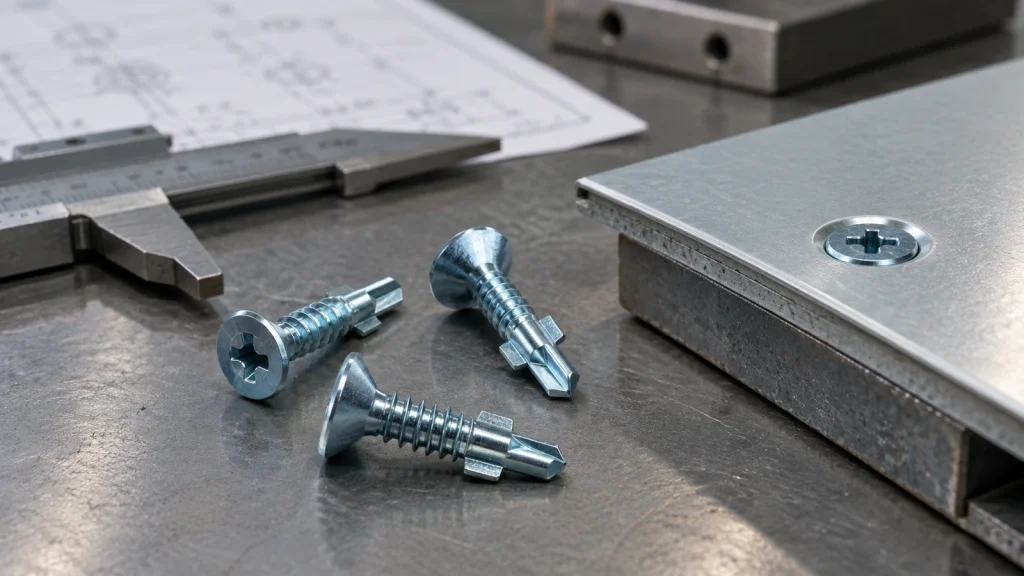
When ordering a blue zinc self drilling screw with a winged, countersunk configuration, diameter and length are not enough to define the application. The RFQ should identify the materials being connected, upper-material thickness, steel-substrate thickness, total material stack, required countersunk seating, screw diameter, total length, drill-point condition, wing geometry, surface treatment, installation method, quantity and […]

What Should Buyers Verify When Comparing Bolt Manufacturers?

What Should Buyers Verify When Comparing Bolt Manufacturers?

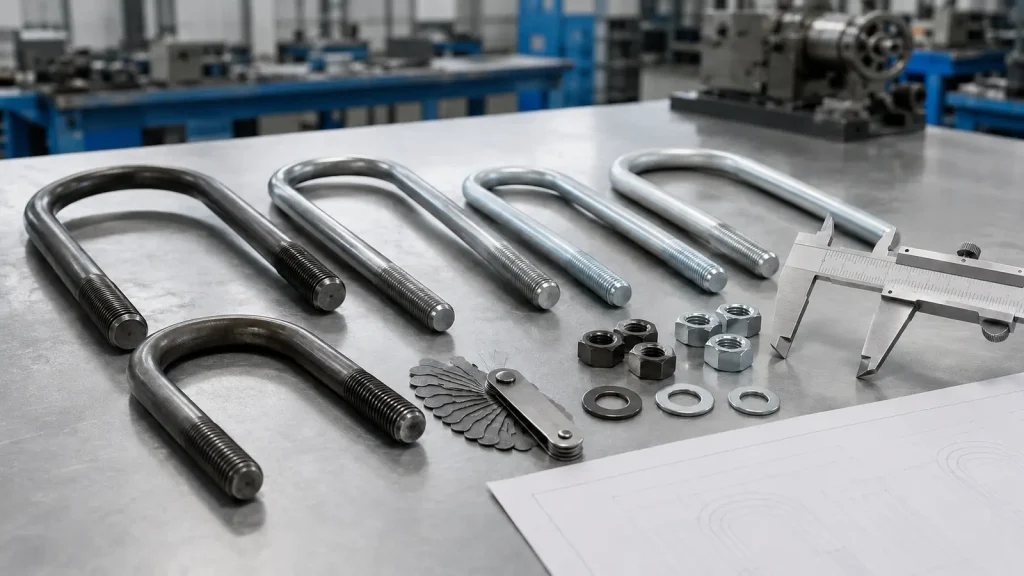
A bolt manufacturer should be evaluated against a defined joint, drawing and acceptance plan—not a product list or unit price alone. Buyers need to verify whether the supplier can manufacture the required geometry, control material and heat-treatment requirements where applicable, manage threads and coatings as one dimensional system, inspect critical characteristics, preserve batch traceability and […]

What Should Buyers Check Before Ordering Hot-Dip Galvanized Flat Washers?

What Should Buyers Check Before Ordering Hot-Dip Galvanized Flat Washers?

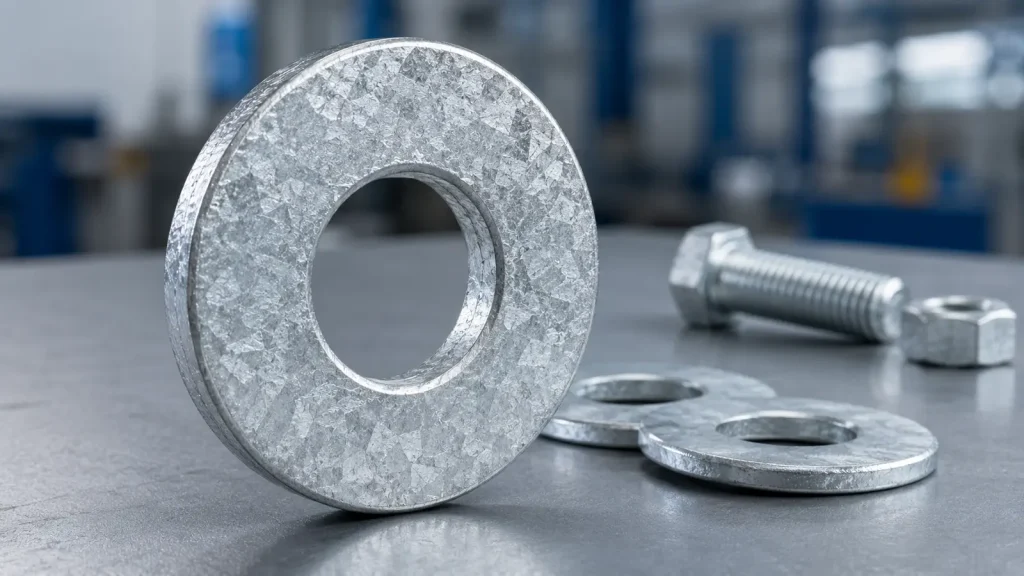
A hot-dip galvanized flat washer should be purchased as a defined joint component, not simply as an M-size metal disc. A usable specification identifies the dimensional standard and series, nominal size, inside and outside diameters, thickness, product grade, hardness or mechanical requirement, base material, coating requirement and the bolt, nut and bearing surface with which […]

Frequently Asked Questions

Is a JSW-branded sheet required, or can an equivalent steel sheet be used?

That depends on the project requirement. If the drawing, contract or client specification names JSW as mandatory, ask what traceability or mill paperwork can be provided. If the brand is preferred but not required, define the grade, thickness, coating and finish so an equivalent material can be checked properly.

Which sheet type is better for outdoor use?

Outdoor applications usually need more than plain steel sheet. Galvanized, coated or otherwise protected sheet is commonly considered where corrosion resistance and weather exposure matter. The correct choice depends on the environment, expected service life, painting plan and whether cut edges will be exposed.

Can the same sheet be used for bending, welding and painting?

Not always. A sheet that welds acceptably may not bend cleanly if the grade, thickness or coating is unsuitable, and some surface finishes need preparation before painting. Tell the supplier how the sheet will be processed so the material can be checked against the fabrication method.

What is the most common mistake when asking for this material?

The common mistake is asking only for the brand name and thickness. Sheet performance also depends on grade, hot rolled or cold rolled condition, coating, surface finish, width, length, flatness and edge condition. Leaving those details open can lead to an offer that looks cheaper but does not work in production.

What details should be sent with an enquiry?

Send the intended application, required grade or sheet type if known, thickness, width and length, coating or finish, quantity and destination. Also state whether JSW origin is mandatory and whether mill test or origin documents are required.

Leave Your Message

Please include the required grade or sheet type, thickness and size, coating or finish, plus the application and quantity. If JSW origin is mandatory, mention the document or traceability requirement.