A nylon insert lock nut suits many general assemblies because the insert adds friction against the bolt thread, but it may not fit high-temperature or harsh chemical conditions. An all-metal lock nut is better for heat and more demanding environments, although it can increase thread wear and usually needs more controlled installation torque.
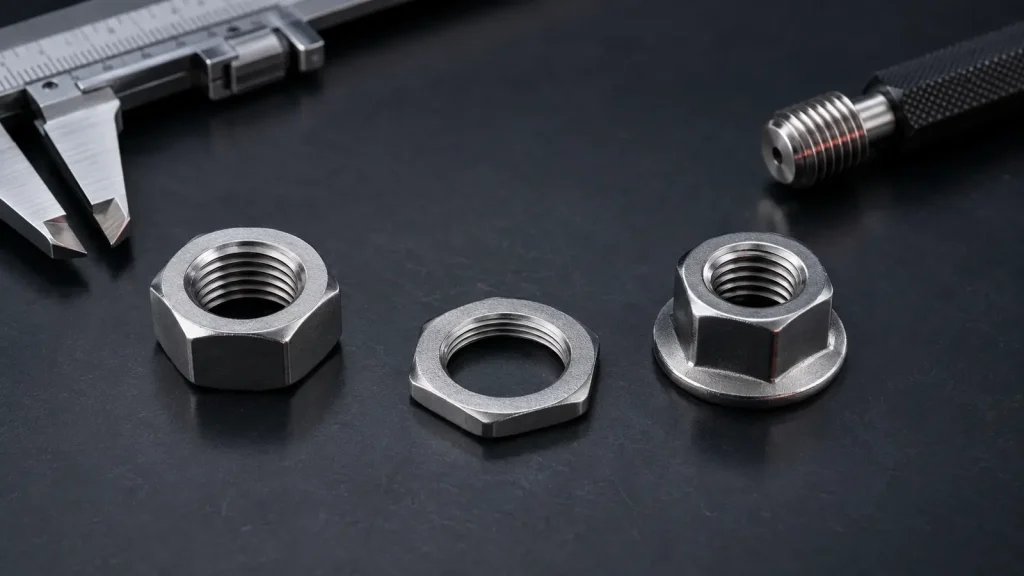
Jam nuts, thin nuts, flange lock nuts, and serrated flange nuts solve different problems. A thin jam nut can save space or lock against a standard nut, while a flange style spreads load and can remove the need for a separate washer in some designs. Serrations add bite, but they can mark the mating surface and may be unsuitable where coatings or soft materials must remain intact.
Start with the joint condition. If the assembly sees vibration, impact, or repeated movement, choose a locking method that maintains resistance after installation rather than relying only on friction from a standard nut. If the joint is static and space is limited, a thin nut or jam nut arrangement may be enough, provided the thread engagement and tightening method are suitable.
Check the service environment before choosing the lock nut type. Nylon insert nuts are common and convenient, but the insert is not the right answer for every heat, chemical, or repeated-use condition. All-metal lock nuts avoid polymer limitations, but buyers should confirm material grade, coating, thread standard, and compatibility with the bolt.
Do not overlook the mating surface. A serrated flange lock nut can resist loosening well on many metal assemblies, but the serrations can damage paint, plating, soft materials, or finished surfaces. A smooth flange lock nut, separate washer, or different locking design may be more appropriate where surface protection matters.
For an inquiry to Hebei Wotu Fastener Manufacturing Co., Ltd., prepare the thread size and standard, material or grade requirement, coating preference, operating environment, and whether the nut will be installed once or removed during maintenance. These details usually change the recommended lock nut type more than the name of the nut alone.