| Locking method and application load |
Confirm whether the nut uses an all-metal prevailing-torque design, a nylon insert, or another locking feature, then compare it with the joint temperature, vibration, and load conditions. |
Different locking methods behave differently under heat, vibration, repeated adjustment, and exposure to chemicals or moisture. |
Ask which locking design is recommended for your joint and whether it is intended for one-time installation or repeated service. |
| Thread size, pitch, and standard |
Match the nut’s thread diameter, pitch, thread direction, and standard to the mating bolt or stud; check a drawing or sample rather than relying on nominal size alone. |
A locking nut with the wrong thread form can bind, fail to seat, or damage the fastener before the joint reaches the required clamping condition. |
Send the bolt or stud specification and ask the supplier to confirm the exact mating thread. |
| Available space and nut profile |
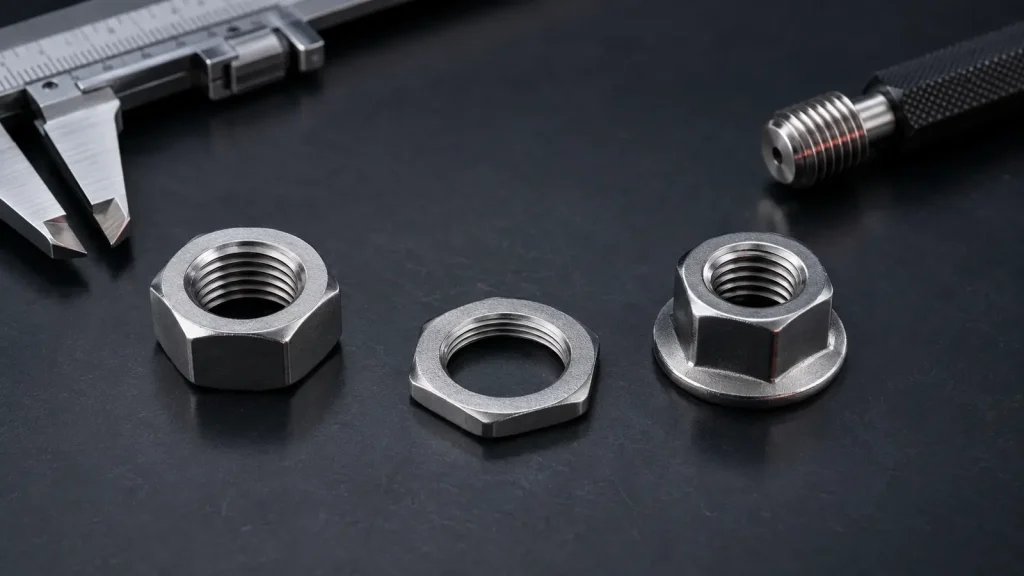
Compare the nut’s height, across-flats size, and locking feature with the wrench clearance and joint envelope. |
A thin nut may fit a restricted space, but reduced height can affect thread engagement and suitability for the joint. |
Provide the available height and tool-access limits, and ask whether a thin or standard hex profile is appropriate. |
| Material and surface finish |
Verify the base material and coating or finish against the mating fastener, operating environment, and required corrosion resistance. |
Material and finish affect corrosion behavior, galling risk, temperature suitability, and compatibility between mating parts. |
Ask for the material and finish details and confirm compatibility with the bolt, washer, and surrounding components. |
| Installation and reuse requirements |
Check the recommended installation method, tightening information, and any stated limits on reuse for the selected locking nut. |
Locking performance can change after installation, removal, or repeated adjustment, so a maintenance joint may need a different choice from a permanent assembly. |
Tell the supplier how often the joint will be opened and ask how locking performance should be checked after reuse. |