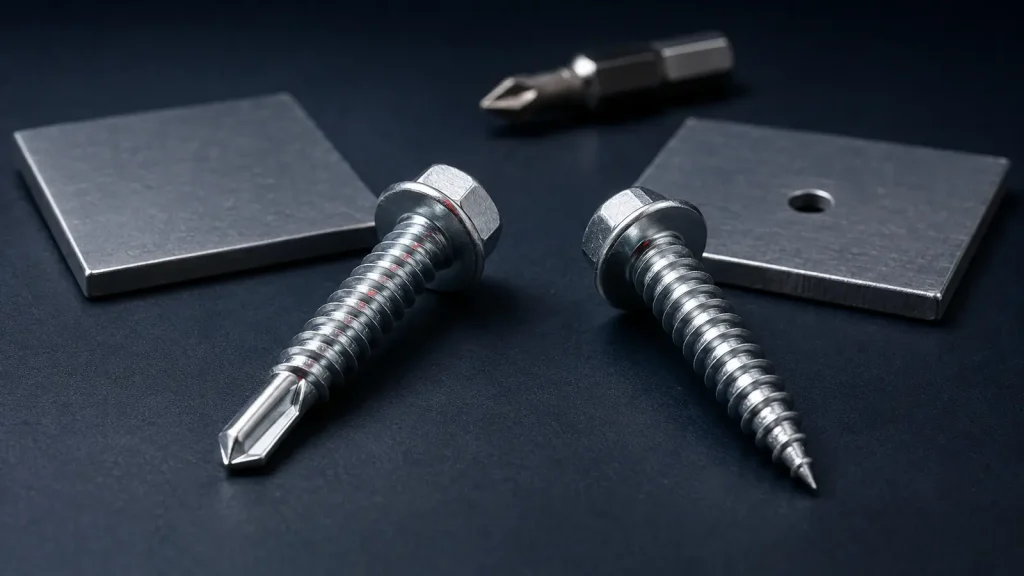
The first point to confirm is what “MS” means in your drawing or purchase note. If it means machine screw, the buyer should define the thread standard, head style, drive type and whether the screw mates with a tapped hole, nut or insert. If it means mild steel screw, the buyer should still define the screw type, because mild steel can be used across different fastener forms.
This matters because a machine screw will not perform like a self-tapping screw in an untapped hole, and a mild steel screw without the right surface treatment may not suit damp, outdoor or corrosive service. A clear specification prevents substitutions that look similar but assemble differently.
Start with the joint, not the screw name. For a tapped metal part, confirm thread size, pitch, length under the head, head form and drive recess. For thin sheet, plastic, timber or fiberboard, check whether a self-tapping, self-drilling or wood/fiberboard screw is actually the better fit.
Head style affects both assembly and appearance. Pan, cheese and round heads leave a raised bearing surface; countersunk heads sit flush but need a matching countersink. A wrong head choice can cause poor seating, surface damage or uneven clamp load even when the thread size is correct.
Material and coating should follow the service environment. Mild steel can be economical for many indoor assemblies, but the finish still matters for storage, handling and corrosion resistance. If the part will be exposed to moisture, chemicals or outdoor weather, ask what coating options are suitable instead of assuming a plain MS screw is enough.
Avoid sending only a short description such as “MS screw 6 mm.” A useful next step is to share the drawing or sample photo, thread size, length, head and drive type, required finish, mating material and application. If the screw replaces an existing part, include the failed sample or describe the assembly problem.