Polycarbonate Sheet Selection Guide | Hebei Wotu Fastener Manufacturing Co., Ltd.

Polycarbonate Sheet for Glazing, Roofing and Guards

Polycarbonate sheet is often chosen for glazing, guards, machine covers, roof panels and outdoor enclosures where impact resistance matters more than glass-like rigidity. The main decision is not only sheet size or thickness; it is matching the sheet type, surface treatment and fixing method to the way the panel will be used.

For an inquiry, the most useful details are the application, exposure conditions and whether the sheet needs to stay clear, diffuse light, resist scratching or carry load between supports.

Related Products

Hex thin nut

Hex thin nut

Brand: Wotu Surface: zinc plated Specifications: in stock M8~M64 full standard specifications, covering precision, machinery, and steel structure full size range, supporting nonstandard tooth pitch and customized thickness Matching: Can be matched with bolts of corresponding specifications, flat washer, spring washer complete set of shipment Packing: packed in 25kg cartons and packed on wooden pallets.

Read More
Wafer Head Self-Drilling Screw

Wafer Head Self-Drilling Screw

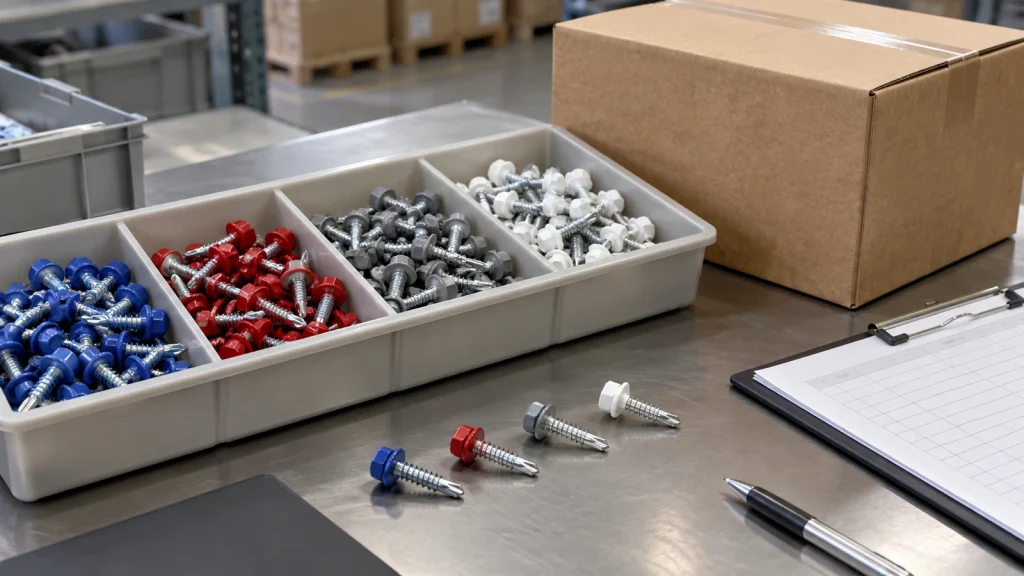
Brand: Hengzuan Surface: blue and white zinc plated, can be customized color zinc plated, black oxide plated Specifications: Comply with GB/T15856.2 Chinese national standard, in stock ST3.5/ST4.2/ST4.8/ST5.5 mainstream wire diameter, rod length 13mm~50mm full range of specifications, nonstandard length customization on demand, drilling applicable plate thickness 2~5mm Packaging: 25kg export cartons, full pallets wrapped with film, supports neutral export packaging, private-label customization

Read More
Countersunk Head Blue-White Zinc Plated Self-Drilling Screw (Chinese National Standard: Phillips Countersunk Head Self-Drilling And Self-Tapping Screw GB/T15856.2-2002)

Countersunk Head Blue-White Zinc Plated Self-Drilling Screw (Chinese National Standard: Phillips Countersunk Head Self-Drilling And Self-Tapping Screw GB/T15856.2-2002)

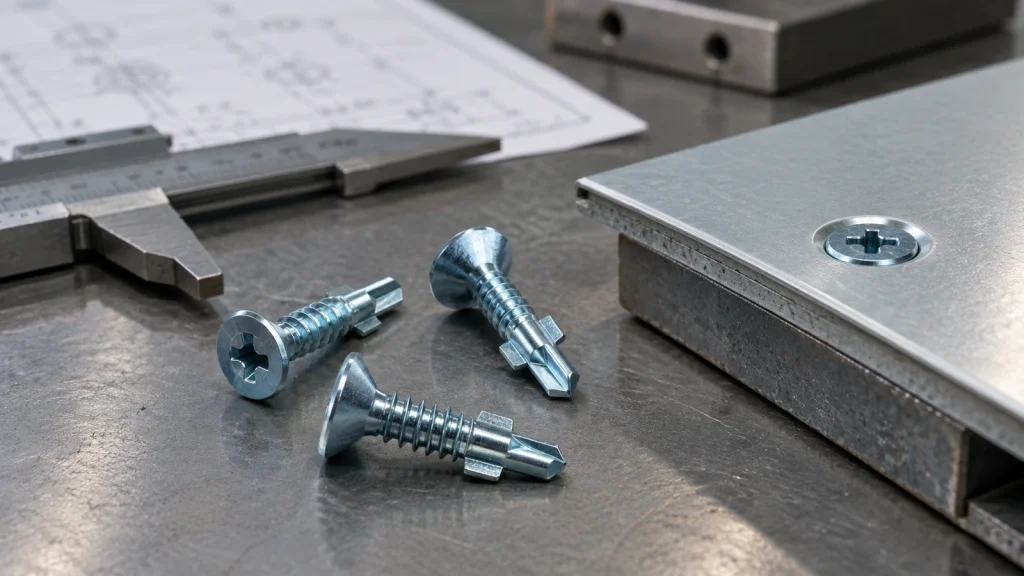
Brand: Hengzuan Surface: blue and white zinc plated, can be customized color zinc plated, black oxide plated Specifications: Comply with GB/T15856.2-2002 Chinese national standard, in stock ST4.2/ST4.8/ST5.5 full range of specifications, length 13mm~75mm optional, supports customized nonstandard rod lengths; drilling adaptation plate thickness 0.7~6mm Packaging: 25kg export cartons, full pallets wrapped with film, supports neutral export packaging, customer private-label customization

Read More
Countersunk Head Blue Zinc Self-Drilling Screw

Countersunk Head Blue Zinc Self-Drilling Screw

Brand: Hengzuan Surface: blue and white zinc plated, can be customized color zinc plated, black oxide plated Specifications: in stock 3.5/3.9/4.2/4.8/5.5 mainstream wire diameter, rod length 13mm~75mm full size range, nonstandard length can be customized as needed Packaging: 25kg export cartons, full wooden pallets wrapped with film, supports neutral export packaging, private-label customization

Read More
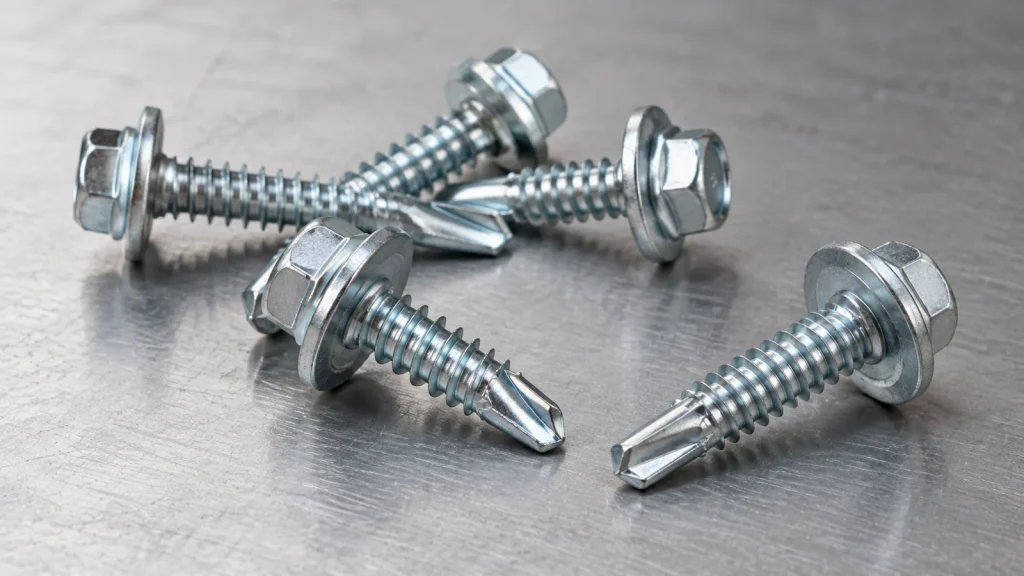
Hex Head Self-Drilling Screw With Cup Washer

Hex Head Self-Drilling Screw With Cup Washer

Brand: Hengzuan Surface: color zinc plated Specifications: in stock ST5.5/ST6.3 regular diameter, rod length 19mm~75mm in stock, supports nonstandard customized, suitable for drilling steel sheet thickness 2~5mm Packaging: carton packaging, full pallets wooden pallet packaging, support neutral packaging, private-label customization

Read More

Polycarbonate sheet options for the intended application

Sheet selection points

Useful selection criteria for polycarbonate sheet include solid or multiwall construction, clear or tinted appearance, UV protection, abrasion resistance, fire or building requirements, fabrication method and the way the panel will be supported. These details matter more than choosing by sheet name alone.

Criterion What To Check Why It Matters Buyer Tip
Sheet type and structure Confirm whether the requirement is solid, multiwall, corrugated, or embossed polycarbonate sheet. Different structures change impact resistance, stiffness, insulation, light transmission, and installation method. Ask: Which sheet type suits the span, light level, and fixing system in this project?
Thickness and panel size Match the sheet thickness and dimensions to the frame spacing, wind exposure, and handling limits. A sheet that is too thin can flex or vibrate; an oversized panel may be harder to transport, cut, or install cleanly. Ask: What thickness and sheet size are recommended for the support spacing and end use?
UV-protected surface Verify whether the sheet has UV protection and which side must face outward during installation. Incorrect orientation or lack of UV protection can lead to yellowing, brittleness, or shorter outdoor service life. Ask: Is one side or both sides UV-protected, and how is the protected face marked?
Fire, temperature, and chemical exposure Review the sheet’s suitability for nearby heat sources, cleaning chemicals, sealants, and local safety requirements. Polycarbonate handles impact well, but incompatible chemicals or excessive heat can cause stress cracking or deformation. Ask: Which sealants, cleaners, and temperature range are acceptable for this sheet?
Cutting, fastening, and expansion allowance Confirm drilling, cutting, edge sealing, and fixing guidance before ordering. Polycarbonate expands and contracts with temperature changes; tight holes or rigid fixing can cause cracking or buckling. Ask: What hole clearance, support spacing, and accessories are needed for the planned installation?

Key choices before specifying polycarbonate sheet

The first practical distinction is between solid polycarbonate sheet and multiwall polycarbonate sheet. Solid sheet gives better optical clarity, simpler edge finishing and strong impact performance, so it is commonly considered for guards, windows, shields and flat covers. Multiwall sheet is lighter and offers better insulation for roofing and greenhouse-style panels, but the open edges need proper sealing to reduce dust, insects and moisture inside the cells.

Surface requirements also change the purchase. A UV-protected sheet is important for outdoor use, while hard-coated sheet may be needed where cleaning, abrasion or contact with moving parts is expected. Choosing a standard clear sheet for a high-wear or sun-exposed position can lead to early hazing, yellowing or avoidable replacement.

Start with the application rather than the material name. A machine safety guard, a skylight, a greenhouse panel and a protective screen all place different demands on impact strength, light transmission, fire behavior, thermal movement and edge finishing. If the panel will be drilled, bent, cold formed or fixed with screws, say so early because fabrication method affects sheet choice.

Check exposure conditions before selecting a grade. Outdoor panels usually need UV protection on the exposed side, and installers must know which side faces the sun. Indoor sheets may not need the same UV layer, but they may need better scratch resistance, chemical compatibility or easier cleaning if used near machinery, kitchens or public contact areas.

Do not treat polycarbonate like glass or metal during installation. The material expands with temperature changes, so holes, clamps and frames need allowance for movement. Over-tightened fasteners, unsupported spans, incompatible sealants and sharp drilled holes are common causes of cracking or distortion.

For a clear next step, prepare the required sheet format, intended use, color or tint, indoor or outdoor exposure, and any fabrication needs such as cutting, drilling, bending or protective film. If you are asking Hebei Wotu Fastener Manufacturing Co., Ltd. about a related fastening or installation requirement, also include the substrate, frame material and fixing environment so the fastening method can be discussed alongside the panel design.

Criteria Importance Description Example Options
Sheet construction Often the first decision Solid sheet favors clarity, impact resistance and straightforward edge finishing. Multiwall sheet reduces weight and improves insulation, but its open cells need proper edge sealing. A machine guard may call for solid sheet, while a greenhouse-style roof may suit multiwall sheet.
Outdoor exposure and UV protection Critical for service life outdoors Sunlight exposure can affect appearance and durability if the wrong grade is chosen. UV-protected sheet and correct installation orientation are important for exterior panels. A canopy panel exposed to direct sun should be specified differently from an indoor partition.
Surface wear and cleaning Important where appearance or visibility matters Standard polycarbonate can scratch more easily than glass. Abrasion-resistant options may be worth considering for public-facing panels, guards and frequently cleaned surfaces. A clear viewing window near machinery may need better scratch resistance than a storage-room cover.
Fixing and thermal movement Affects installation reliability Polycarbonate needs room to expand and contract. Hole size, washer choice, frame design and compatible sealants all influence whether the sheet remains flat and crack-free. A long roof panel fixed too tightly may bow or stress around fasteners during temperature changes.
Fabrication method Changes material and handling choices Cutting, drilling, bending and cold forming should be planned before purchase. The required fabrication can affect sheet type, thickness selection and edge finishing. A flat protective screen and a curved equipment cover may require different forming and fixing approaches.

Blog Articles / Reviews

Hex Head Self-Drilling Screws with Cup Washers: Choosing Drill Point and Length

Hex Head Self-Drilling Screws with Cup Washers: Choosing Drill Point and Length

Choosing a hex head self-drilling screw with a cup washer requires more than selecting ST5.5 or ST6.3 and a nominal length. The drilling point must suit the steel it penetrates; the threaded section must engage the intended supporting material; and the head-and-washer assembly must seat correctly on the outer panel. A screw’s drilling capacity is […]

What Is a Fastener? Types, Functions and Industrial Uses

What Is a Fastener? Types, Functions and Industrial Uses

A fastener is a hardware component that mechanically joins or secures parts. Common examples include screws, bolts, nuts and rivets; washers are supporting components used in many fastening assemblies. Some connections can be dismantled by removing threaded fasteners, while others, such as riveted joints, normally require the fastener to be destroyed during removal. In industrial […]

What Should Buyers Confirm When Ordering Color Nylon Head Hex Self-Drilling Screws?

What Should Buyers Confirm When Ordering Color Nylon Head Hex Self-Drilling Screws?

When ordering a chinese standard color nylon head hex self drilling screw, the RFQ should define more than a color name. Buyers should confirm the exact color reference, nylon head or cap configuration, base screw diameter and length, steel-sheet condition, metallic screw finish, visible-face requirement, color approval method, batch-consistency check and packaging or SKU separation. […]

What RFQ Details Matter When Ordering Blue Zinc Winged Self-Drilling Screws?

What RFQ Details Matter When Ordering Blue Zinc Winged Self-Drilling Screws?

When ordering a blue zinc self drilling screw with a winged, countersunk configuration, diameter and length are not enough to define the application. The RFQ should identify the materials being connected, upper-material thickness, steel-substrate thickness, total material stack, required countersunk seating, screw diameter, total length, drill-point condition, wing geometry, surface treatment, installation method, quantity and […]

What Should Buyers Verify When Comparing Bolt Manufacturers?

What Should Buyers Verify When Comparing Bolt Manufacturers?

A bolt manufacturer should be evaluated against a defined joint, drawing and acceptance plan—not a product list or unit price alone. Buyers need to verify whether the supplier can manufacture the required geometry, control material and heat-treatment requirements where applicable, manage threads and coatings as one dimensional system, inspect critical characteristics, preserve batch traceability and […]

What Should Buyers Check Before Ordering Hot-Dip Galvanized Flat Washers?

What Should Buyers Check Before Ordering Hot-Dip Galvanized Flat Washers?

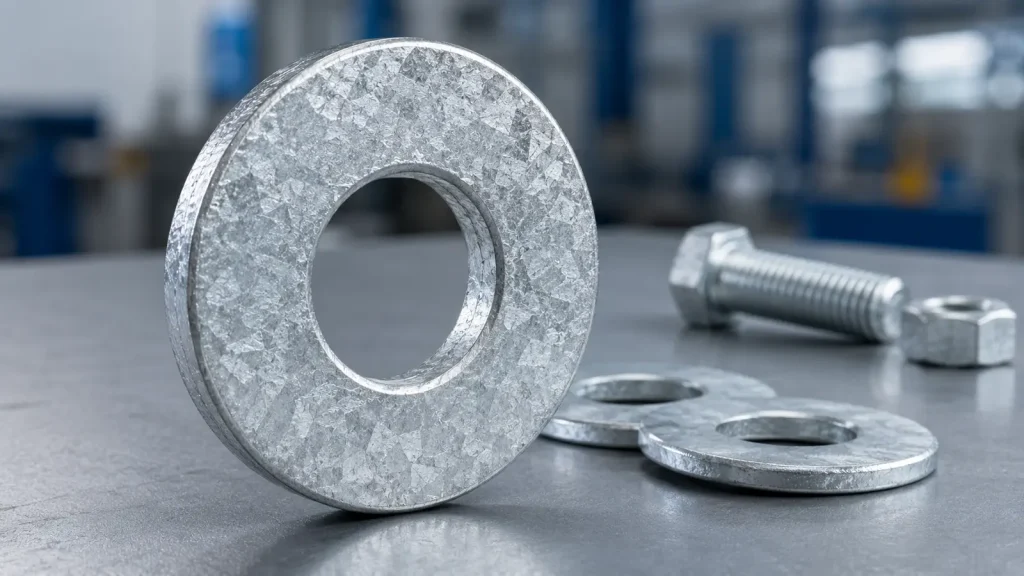
A hot-dip galvanized flat washer should be purchased as a defined joint component, not simply as an M-size metal disc. A usable specification identifies the dimensional standard and series, nominal size, inside and outside diameters, thickness, product grade, hardness or mechanical requirement, base material, coating requirement and the bolt, nut and bearing surface with which […]

Frequently Asked Questions

Is solid or multiwall polycarbonate better for a roof panel?

Multiwall sheet is often preferred for light roofing, canopy and greenhouse-style panels because it is lighter and provides better insulation than a solid sheet. Solid sheet may be better where clearer vision, simpler edge finishing or higher point-impact resistance is more important than insulation.

Does clear polycarbonate stay clear outdoors?

Outdoor use usually requires UV-protected material, and the protected side must face the sun if the sheet has one-sided treatment. A standard indoor sheet used outdoors may haze, yellow or lose appearance sooner than expected.

Can polycarbonate sheet be installed the same way as glass?

No. Polycarbonate expands and contracts more with temperature change, so fixing holes, clamps and frames need allowance for movement. Over-tightening fasteners or using a rigid frame without expansion space can cause stress marks, distortion or cracking.

When is scratch-resistant sheet worth considering?

Hard-coated or abrasion-resistant sheet is useful where the surface will be cleaned often, touched by users, exposed to dust wiping, or placed near moving equipment. For low-contact glazing or temporary protection, a standard surface may be enough if optical wear is not a major concern.

What details should be included in an inquiry?

Provide the application, indoor or outdoor exposure, preferred sheet type, color or tint, approximate panel size, support spacing and any cutting, drilling or bending needs. If the sheet will be fixed to metal, wood, concrete or another frame material, include that as well so the fastening method can be reviewed.

Leave Your Message

Share the application, indoor or outdoor exposure, preferred sheet type or appearance, and any cutting, drilling, bending or fixing requirements so the inquiry can be reviewed accurately.