Rivet Nut Gun Selection Guide | Hebei Wotu Fastener Manufacturing Co., Ltd.

Rivet Nut Gun Selection for Threaded Insert Installation

A rivet nut gun installs threaded inserts into sheet metal, tubes, panels and other thin-wall parts where a tapped hole is not practical. The main decision is not only hand, pneumatic or battery operation; it is whether the tool, mandrel and rivet nut style match the material, access space and production volume.

For a fastening assembly, the wrong installation tool can leave inserts loose, over-compressed or damaged. A good inquiry should connect the tool to the rivet nut size, body style, workpiece material and how often the operator will use it.

Related Products

Hex nut DIN934-1987 (A/B accuracy classification)

Hex nut DIN934-1987 (A/B accuracy classification)

Brand: Wotu Standard basis: German standard DIN934-1987, metric coarse thread/fine thread universal thread Surface: 304 stainless steel Specifications: M6~M24 full range of specifications Supporting equipment: same specification bolts, flat washer, spring washer complete set of shipment Packaging: 25kg standard carton, whole wooden pallet packaging

Read More
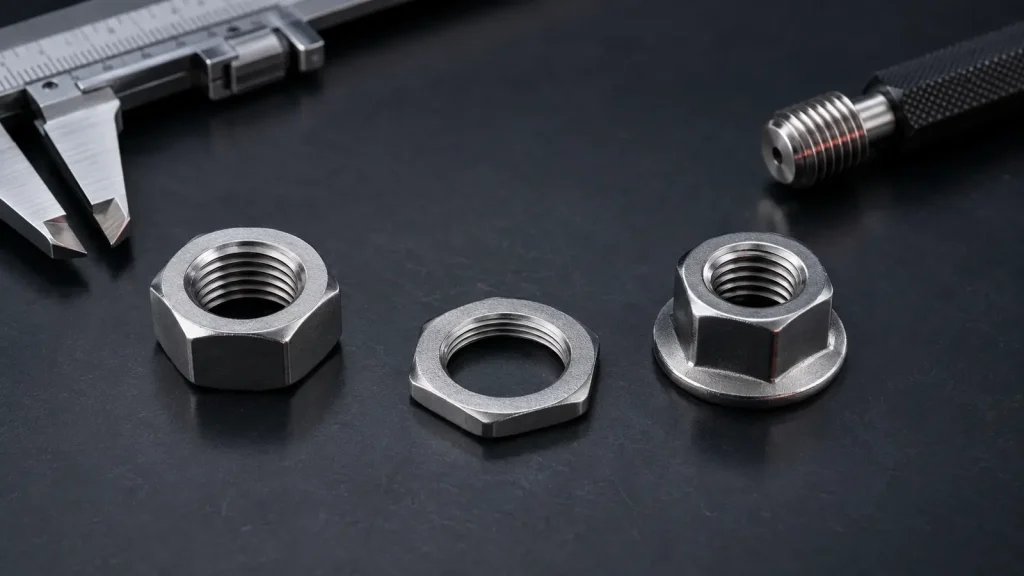
Hex thin nut

Hex thin nut

Brand: Wotu Surface: zinc plated Specifications: in stock M8~M64 full standard specifications, covering precision, machinery, and steel structure full size range, supporting nonstandard tooth pitch and customized thickness Matching: Can be matched with bolts of corresponding specifications, flat washer, spring washer complete set of shipment Packing: packed in 25kg cartons and packed on wooden pallets.

Read More
Hex nut (Chinese national standard GB52-1976)

Hex nut (Chinese national standard GB52-1976)

Brand: Wotu Surface: 304 stainless steel Specifications: in stock M6~M24 full standard metric specifications, supports nonstandard pitch, thickening/customized Matching: Can be matched with bolts of corresponding specifications, flat washer, spring washer complete set of supporting shipment Packaging: 25kg cartons, whole wooden pallets

Read More
Hex flange nut (Chinese national standard GB/T6177.1-2000)

Hex flange nut (Chinese national standard GB/T6177.1-2000)

Brand: Wotu Surface: zinc plated Specifications: in stockM6/M8/M10/M12/M14/M16/M20 Chinese national standardfull range of specifications, support nonstandard thickness, tooth pitch customized Matching: can be matched with bolts of the same specification, flat washer, spring washer complete set of shipment Packaging: 25kg cartons, whole wooden pallets

Read More
Grade 8/Grade 10 High-strength Black Oxide Hex Nut (DIN934/GB Chinese National Standard Thickened Nut)

Grade 8/Grade 10 High-strength Black Oxide Hex Nut (DIN934/GB Chinese National Standard Thickened Nut)

Brand: Wotu Surface: quenching and tempering heat treatment + high temperature black oxide anti-rust treatment Specifications: Comply with DIN934, GB/T6170 standards, in stock M6-M48 full range of specifications, nonstandard sizes can be customized Packaging: 25kg carton/woven bag inner packaging, whole wooden pallet wrapped with film for export packaging, supports neutral/private-label customization packaging

Read More
Chinese National Standard / German Standard Hex Nut (thick Nuts, Thin Nuts, Flange Nuts, Multiple Categories)

Chinese National Standard / German Standard Hex Nut (thick Nuts, Thin Nuts, Flange Nuts, Multiple Categories)

Brand: Wotu Surface: color zinc plated, blue-white zinc plated, black oxide, hot-dip galvanized, various surface treatments available Specifications: Comply with DIN934, GB/T6170, GB/T6172.1, GB/T6177.1 standards, in stock M6-M64 full range of specifications, support nonstandard customized Packaging: woven bag inside/25kg export carton, full-container wooden pallet wrapped with film, supports private-label, neutral export packaging

Read More

Rivet Nut Gun Selection for Threaded Insert Installation

Tool and insert fit

Compare rivet nut gun options by compatible thread range, mandrel type, stroke or pull adjustment, nose access, operator workload and replacement part availability. The best fit is the tool that can set the chosen insert cleanly in the actual workpiece, not simply the largest or strongest model available.

Criterion What To Check Why It Matters Buyer Tip
Rivet nut size and thread range Confirm the gun accepts the rivet nut diameters, thread types, and body styles used in your assembly. A tool outside the correct range can under-crimp, strip threads, or fail to seat the insert squarely. Ask which rivet nut sizes the gun is intended for and whether mandrels for your required threads are included or sold separately.
Tool type for production volume Compare hand, lever, pneumatic, or battery-operated rivet nut guns based on how many inserts your team installs per shift. Manual tools suit repair or low-volume work, while powered tools reduce operator fatigue and improve consistency in repeated installation. Share your expected daily installation quantity and ask which tool style is practical for that workload.
Stroke or pull adjustment Look for a clear way to set and repeat the pull stroke or installation force for different materials. Thin sheet, soft material, and thicker sections need different compression; too little pull leaves a loose insert, while too much can deform the workpiece. Ask how the rivet nut gun is adjusted when changing insert size or sheet thickness.
Mandrel change and spare parts Verify how quickly mandrels, nosepieces, and wear parts can be changed and replaced. Mandrels take the most stress during installation, and downtime increases if replacements are hard to source. Ask for the compatible spare mandrel list and whether replacement parts are available for the sizes you use most.
Access to the installation area Compare head size, handle length, and tool clearance against the space around the hole in your part. A strong tool may still be unsuitable if it cannot sit squarely on a flange, inside a channel, or near an edge. Send a photo or drawing of the joint area and ask whether the tool can install the rivet nut without angled pulling.

Key Tool, Insert and Workpiece Checks Before Buying

The key distinction is between occasional installation and repeated production work. A manual rivet nut gun can suit repair work, prototypes and small batches, but it depends heavily on operator force and consistency. Pneumatic or battery tools are usually considered when the same insert must be installed many times with more repeatable pull and less fatigue.

Tool choice also depends on the rivet nut itself. Open-end, closed-end, knurled, hex-body and reduced-head inserts can behave differently during setting. Before choosing the gun, confirm the thread size range, mandrel compatibility and whether the tool can set the insert without spinning it in the base material.

Start with the installed joint, not the tool handle. Identify the rivet nut thread, body shape, head style and base material thickness. A thin sheet, square tube or coated panel may need a different insert style and setting force than a rigid bracket. If the insert will carry vibration or repeated service loads, ask how the selected rivet nut resists rotation after installation.

Choose the actuation type around usage. Hand tools are simple and portable, but they become tiring when used all day or on larger inserts. Pneumatic tools can speed up production if compressed air is available and controlled. Battery tools add mobility, but buyers should confirm mandrel availability, stroke adjustment and service parts before committing.

A common mistake is buying a gun by thread size alone. The mandrel may fit the thread but still be unsuitable for the insert length, material or required deformation. Another mistake is ignoring access: a long nose, bulky head or wide handle can make installation difficult inside channels, frames and enclosed assemblies.

For the next step, provide the rivet nut thread size, insert material, workpiece material and thickness, expected installation quantity, and any access limits around the hole. If the rivet nut has not been selected yet, ask for guidance on the insert and tool together rather than treating them as separate purchases.


Criteria Importance Description Example Options
Actuation method Important because usage volume, operator fatigue and available utilities affect the practical choice. Manual tools are portable and simple, pneumatic tools support repeated workstation use, and battery tools combine powered setting with greater mobility. A repair technician may prefer a manual model, while a fixed assembly station may consider pneumatic operation.
Mandrel and insert compatibility Essential for setting the selected rivet nut without damaging the thread or leaving the insert loose. Check thread range, mandrel type, insert length and compatibility with the insert body and material. A tool with a matching thread mandrel may still be unsuitable if the insert length or body style falls outside its setting range.
Workpiece and access Critical when holes are inside tubes, frames, cabinets or other restricted spaces. The nose length, head shape and handle clearance must allow the operator to align the tool with the hole and complete the setting stroke. An enclosed square tube may need a more accessible nose than an exposed flat bracket.
Setting adjustment and consistency Important for avoiding over-compression, under-setting and variation across repeated assemblies. Consider how the tool controls pull, stroke or setting depth and whether the operator can adjust it for different insert and material combinations. A production user may need repeatable adjustment for several insert sizes, while occasional repair work may require fewer settings.
Maintenance and replacement parts Important because worn mandrels and nose components can interrupt installation and affect joint quality. Confirm which mandrels, nosepieces and other service parts are available for the selected tool and insert range. A buyer using several thread sizes should check whether the required mandrels can be obtained for the same tool.

Product Selection

Related Options

For metal cabinets, vehicle panels, equipment frames or tubular structures, the priority is a repeatable threaded insert that stays tight after installation. Match the rivet nut gun to the insert style and production method so the operator can install each fastener without crushing the workpiece or leaving the thread misaligned.

Blog Articles / Reviews

Hex Thin Nut vs Standard Hex Nut: Which Fits Space-Limited or Locking Assemblies?

Hex Thin Nut vs Standard Hex Nut: Which Fits Space-Limited or Locking Assemblies?

Direct Answer: Choose a hex thin nut when reduced nut height is genuinely required by the assembly or when the engineering design specifies it as part of a locking arrangement. Choose a standard hex nut when full nut height, normal thread engagement, and the specified load-bearing function are required. Buyers should compare nut height, thread […]

How Should Buyers Select Chinese and German Standard Hex Nuts?

How Should Buyers Select Chinese and German Standard Hex Nuts?

Direct Answer: Select a hex nut by the exact standard number and edition, thread diameter and pitch, nut style, property class, material, finish, mating bolt and acceptance method. “Chinese standard” or “German standard” alone is not a complete specification. Regular, thick, thin and flange nuts can differ in geometry and load behavior, so buyers should […]

Frequently Asked Questions

Is this type of tool suitable for thin sheet metal and tubular sections?

It can be suitable when the rivet nut body, head style and setting range match the workpiece. Thin sheet, square tube and enclosed profiles may also require a nose shape and tool size that fit the available access without distorting the material.

When is a manual tool a better choice than a powered model?

A manual tool can suit repairs, prototypes and small batches because it is portable and does not need compressed air or battery charging. For repeated installation or larger inserts, operator fatigue and variation may make a pneumatic or battery-powered alternative more practical.

Is matching the thread size enough to select the right gun?

No. The mandrel must match the thread, but the tool also needs to suit the insert length, body style, material and required deformation. A thread-compatible mandrel can still produce a poor joint if the insert or setting range does not match the workpiece.

What should be checked before choosing pneumatic or battery operation?

Confirm the available power source, adjustment method, compatible mandrels and access around the hole. Pneumatic tools may suit a fixed production station with compressed air, while battery tools offer mobility; either option should also have a practical route for replacement wear parts and servicing.

What information should I include in a purchasing enquiry?

Provide the rivet nut thread size, insert material and body style, workpiece material and thickness, expected installation quantity and any restricted access or nose-length limits. If the insert has not been selected, request a tool-and-insert recommendation rather than specifying the gun alone.

Leave Your Message

Share the rivet nut thread size and material, the workpiece material and thickness, and the expected installation quantity or tool type you prefer. Include any tight access or nose-length limits if the insert is inside a frame, tube or enclosure.