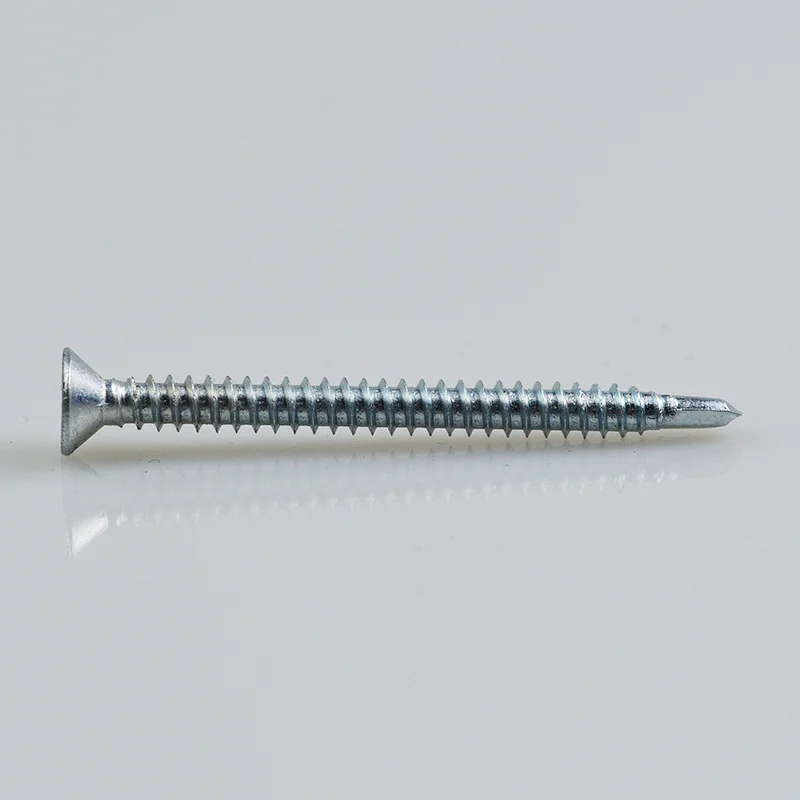
| Screw point for stud thickness |
Confirm whether the metal studs need self-drilling screws or screws driven into pre-punched or pre-drilled holes. |
A self-drilling point saves a drilling step in light-gauge steel, while the wrong point can skate, overheat, or fail to form a clean hole. |
What is the stud gauge or steel thickness, and will installers drill pilot holes before fastening? |
| Thread type and holding method |
Match the thread form to thin sheet steel rather than wood, masonry, or fiberboard applications. |
Metal studs have limited material for thread engagement, so the thread must cut or form securely without stripping the hole. |
Will the screw fasten drywall, track, brackets, or metal-to-metal framing members? |
| Head style for the attached material |
Compare bugle, pan, wafer, hex washer, or countersunk heads based on the surface being clamped. |
The head affects pull-through resistance, surface finish, tool access, and whether the fastener sits flush or remains proud. |
Does the finished assembly need a flush surface, broad bearing area, or easy removal later? |
| Corrosion protection for the jobsite |
Ask what coating or material is suitable for indoor dry areas, humid interiors, or exposed construction conditions. |
Metal studs and screws can corrode at different rates, especially where moisture, treated materials, or dissimilar metals are present. |
Where will the studs be installed, and will the fasteners be exposed to moisture before or after enclosure? |
| Drive recess and installation control |
Choose a drive type that matches the installer’s tools and reduces cam-out or over-driving. |
Fastening into metal studs needs steady torque control; over-driving can strip the hole or damage the attached board or bracket. |
What driver bits and screw guns will the crew use, and is depth control required on the project? |