Black Self-Tapping Screws | Hebei Wotu Fastener Manufacturing Co., Ltd.

Black Self-Tapping Screws

A black self-tapping screw is chosen when the fastener must form its own thread in a prepared hole while blending with a dark panel, bracket, enclosure or interior fitting. The key decision is not the colour alone: match the screw's thread and point to the base material, then confirm that the black finish suits the exposure and appearance requirements.

For a reliable selection, define the substrate, material thickness, hole condition, head style and drive type before comparing options. A black finish may be mainly decorative, so outdoor or corrosive applications need separate confirmation of the coating system and resistance required.

Related Products

Black Phosphated Winged Countersunk Head Self-Drilling Screw

Black Phosphated Winged Countersunk Head Self-Drilling Screw

Brand: Hengzuan Surface: high temperature black phosphated anti-rust treatment, blue zinc, color zinc plated coating can be replaced as needed Specifications: in stock ST3.5/ST4.2/ST4.8 common specifications, rod length 16mm~50mm, complete, supports nonstandard size customization, suitable for drilling steel sheets 2~5mm Packaging: 25kg cartons, whole wooden pallets, support neutral packaging, private-label customization

Read More
Blue-White Zinc Plated Pan Head With Pad Self-Tapping Screw

Blue-White Zinc Plated Pan Head With Pad Self-Tapping Screw

Brand: Hengzuan Surface: blue and white zinc plated Specifications: in stock ST4.2/ST4.8full range of specifications, length 13~50mm in stock, support nonstandard length customization Packaging: 25kg cartons, solid wood packaging, support neutral packaging, private-label customization

Read More
Countersunk Head Cross Black Phosphated Drywall Screw

Countersunk Head Cross Black Phosphated Drywall Screw

Brand: Hengzuan Specifications: in stock 3.5/3.9/4.2 mainstream wire diameter, rod length 16mm~80mm full range of specifications in stock, supports nonstandard length customization Packaging: 25kg export cartons, full pallets wrapped with film, supports neutral export packaging, private-label customization

Read More
Wafer Head Self-Drilling Screw

Wafer Head Self-Drilling Screw

Brand: Hengzuan Surface: blue and white zinc plated, can be customized color zinc plated, black oxide plated Specifications: Comply with GB/T15856.2 Chinese national standard, in stock ST3.5/ST4.2/ST4.8/ST5.5 mainstream wire diameter, rod length 13mm~50mm full range of specifications, nonstandard length customization on demand, drilling applicable plate thickness 2~5mm Packaging: 25kg export cartons, full pallets wrapped with film, supports neutral export packaging, private-label customization

Read More

Match the screw to the substrate, hole and black finish

Selection criteria

Compare black self-tapping screws by substrate compatibility, thread engagement, point design, length, head and drive style, finish purpose, and resistance needed in service. The right combination depends on the joint and installation method, not on the black colour alone.

Criterion What To Check Why It Matters Buyer Tip
Black finish and corrosion environment Confirm the coating or surface treatment, not just the black appearance, and match it to indoor, sheltered, or exposed use. A black finish may be selected for appearance, but its surface treatment also affects corrosion resistance and compatibility with the surrounding material. Ask: What coating or treatment is used, and is it suitable for the intended exposure and substrate?
Self-tapping point and thread form Match the point style and thread geometry to the material being joined, such as sheet metal, timber, plastic, or a pre-drilled assembly. The wrong point or thread can make starting difficult, damage the hole, or provide weak thread engagement. Provide the substrate type and thickness, then ask whether the screw requires a pilot hole and what hole size is recommended.
Screw length and effective engagement Check the total length against the materials being joined and confirm how much thread will remain engaged in the base material. A screw that is too short may not hold securely; one that is too long can protrude, interfere with components, or damage the assembly. Ask for the recommended length based on the combined material thickness and required thread engagement.
Head style, drive, and bearing surface Compare the head shape, drive recess, and any washer or bearing surface with the installation tool and the mating surface. The head determines seating, torque transfer, visible appearance, and the risk of damaging a thin or finished panel. Ask which drive bit and head configuration suit the installation method and whether the head should sit flush or remain visible.

Check thread engagement, corrosion exposure and installed appearance

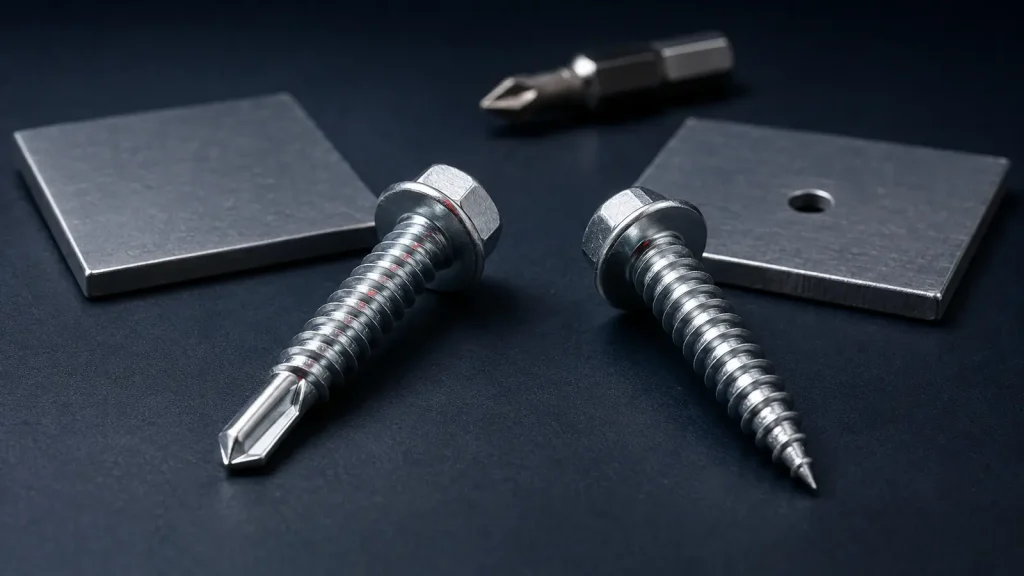
The practical distinction is between a self-tapping screw and a self-drilling screw. A self-tapping screw normally relies on a correctly prepared pilot hole to form or cut the mating thread; a self-drilling screw has a drilling point intended to penetrate the material as it is installed. Choosing the wrong type can cause poor thread engagement, excess installation effort or damage to a thin workpiece.

For metal-to-wood, metal-to-metal and pre-drilled assemblies, check the material hardness and thickness rather than selecting by length alone. The screw must provide useful engagement without protruding unnecessarily, and its head must seat correctly without damaging the visible surface.

Start with the assembly. State whether the screw joins metal to metal, metal to wood, plastic or another material, and identify the thickness of each layer. Thread form and point style affect holding power and installation, while a pilot hole that is too small can split or distort the material and one that is too large can reduce engagement.

Separate appearance from protection. Black may be selected to match a dark panel or reduce visual contrast, but colour does not by itself establish corrosion resistance. For exterior, damp, coastal or chemically exposed service, ask which finish is supplied, how it is verified, and whether the screw is suitable for contact with the adjoining materials.

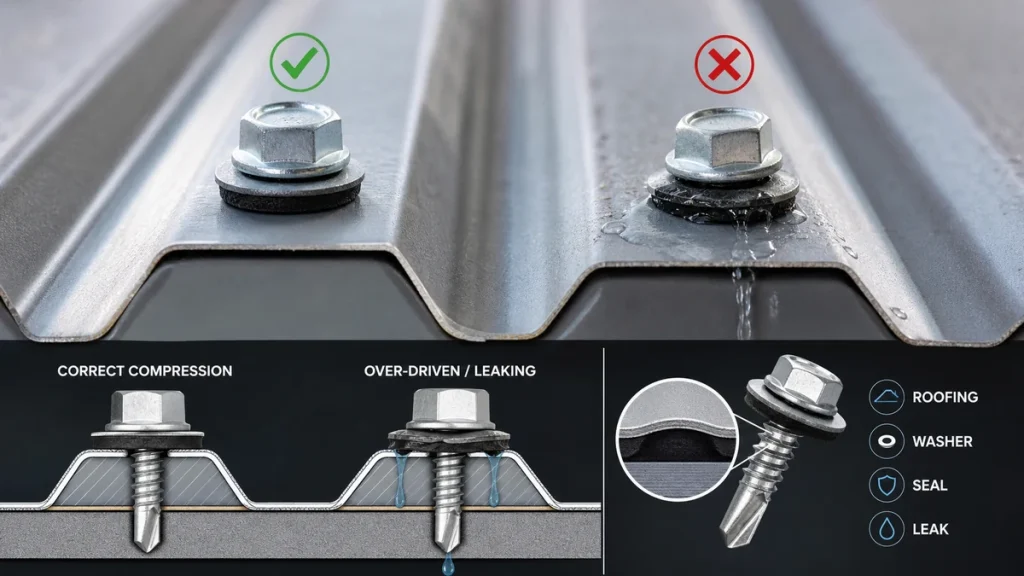
Check the installed interface. Choose a head style and drive that fit the recess, access and required flush or non-flush finish. Consider washer use or a sealing arrangement where the joint must resist moisture, but do not assume a correctly sized screw will prevent leakage without the right joint design.

Give the supplier a usable application brief. Send the substrate and thickness, pilot-hole status, required length and head or drive preference, plus the exposure conditions and expected appearance. Request confirmation of the thread type, black finish, available samples or drawings, and any inspection information relevant to the order.


Criteria Importance Description Example Options
Self-tapping versus self-drilling Important when installation speed and hole preparation differ A self-tapping screw forms or cuts a thread in a prepared hole, while a self-drilling screw is designed to create the hole and thread during installation. Confusing the two can lead to hard driving, damaged panels, or weak engagement. A bracket with pre-punched holes may suit a self-tapping screw; an assembly with no prepared holes may require a self-drilling type.
Pilot hole and thread engagement Critical for holding strength and consistent installation The hole must be small enough for the screw to form a secure thread but not so small that it distorts the material or breaks the fastener. Material thickness affects how many threads can engage. Thin sheet metal may need a thread style that gains reliable engagement without stripping the hole.
Black finish purpose High when the screw is visible or exposed to moisture A black finish may be chosen for appearance, glare reduction, or added surface protection, but the colour alone does not define performance. The coating type should match the environment and adjacent materials. A dark indoor enclosure may only need a matching appearance; an outdoor panel needs confirmation of the coating system.
Head and drive style Important for seating, access, and visible finish The head must suit the joint design and the drive must match the installation tool and access space. A poor head choice can leave the screw proud, damage a visible surface, or reduce clamping performance. A flush surface may need a countersunk head, while a panel fixing may use a different head style for broader bearing.
Base material compatibility Essential when joining different substrates Metal, wood, plastic, and composite materials respond differently to thread forming. The screw point, thread form, and installation torque should fit the weaker or more damage-prone material in the joint. A metal-to-wood joint may need different thread engagement than a metal-to-metal joint with pre-drilled holes.

Product Selection

Related Options

For a dark metal panel or enclosure with prepared holes, the main priority is a screw that forms a dependable thread while seating cleanly and matching the visible surface. For exposed assemblies, give equal weight to the finish system and material compatibility instead of treating a black appearance as proof of protection.

Blog Articles / Reviews

How Should Buyers Evaluate Self Tapping Screws for Project Procurement?

How Should Buyers Evaluate Self Tapping Screws for Project Procurement?

#4 self tapping screws should not be purchased from the “#4” designation alone. For a usable B2B specification, the buyer still needs the actual screw diameter, thread form or pitch, overall length, substrate, pilot-hole condition, head and drive style, material, surface finish and quantity. This matters because suppliers may use different naming systems. Wotu Fastener’s […]

Which Self-Tapping Roofing Screw Specification Fits Metal Panels on Steel or Timber?

Which Self-Tapping Roofing Screw Specification Fits Metal Panels on Steel or Timber?

The correct self-tapping roofing screw depends on the complete panel-and-substrate stack-up. Steel supports typically require a point and thread matched to the support thickness and any pilot-hole requirement; timber supports require a wood-appropriate thread and sufficient embedment. In both cases, buyers must define diameter, length, head, sealing washer, material or coating, environment, pull-out requirements, and […]

Why Do Self-Tapping Roofing Screws Leak Even When the Screw Length Looks Correct?

Why Do Self-Tapping Roofing Screws Leak Even When the Screw Length Looks Correct?

Direct answer: Correct screw length does not guarantee a watertight metal-roof connection. Self tapping roofing screws can leak because of incorrect washer compression, enlarged or stripped holes, insufficient thread engagement, panel movement, or an unsuitable coating-and-washer system. Buyers should diagnose the complete installed connection—including panel profile, support thickness, point type, washer condition, and exposure—rather than […]

What Is the Difference Between Self Drilling and Self Tapping Screws?

What Is the Difference Between Self Drilling and Self Tapping Screws?

Direct Answer: A self-drilling screw has a drill-shaped point that creates a hole and then forms mating threads in a suitable material. A self-tapping screw forms or cuts mating threads but may require a correctly sized pilot hole. Selection depends on substrate type and thickness, joint stack, point geometry, installation tool, finish and application testing—not […]

Frequently Asked Questions

Is a black self-tapping screw suitable for metal panels?

It can be suitable if the panel has the right pilot hole and the screw thread matches the metal thickness and hardness. For thin sheet metal, the decision often depends on thread engagement and head seating, not only on screw length.

Should I use a self-tapping screw or a self-drilling screw?

Use a self-tapping screw where the hole is already prepared or will be made before installation. Use a self-drilling screw when the fastener must drill its own hole as it is driven, provided the material and thickness are appropriate for that point style.

Does the black colour mean the screw is corrosion resistant?

No. Black colour can be decorative, protective, or both, depending on the actual coating system. For outdoor, damp, coastal, or chemical exposure, ask what finish is supplied and whether it is suitable for that service environment.

What causes poor holding even when the screw length looks correct?

Common causes include an oversized pilot hole, too little thread engagement, the wrong thread form for the substrate, or a workpiece that is too thin for the selected screw. Length should be checked together with material thickness, hole size, and the number of engaged threads.

What information should I include in an enquiry?

Give the joined materials, each material thickness, pilot-hole size or drilling condition, preferred head and drive style, required length, and the service environment. If appearance matters, include whether the black finish is mainly visual or must provide corrosion protection.

Leave Your Message

Please provide the substrate and material thickness, the required screw length and head or drive style, and the service environment or appearance requirement so the enquiry can be reviewed accurately.