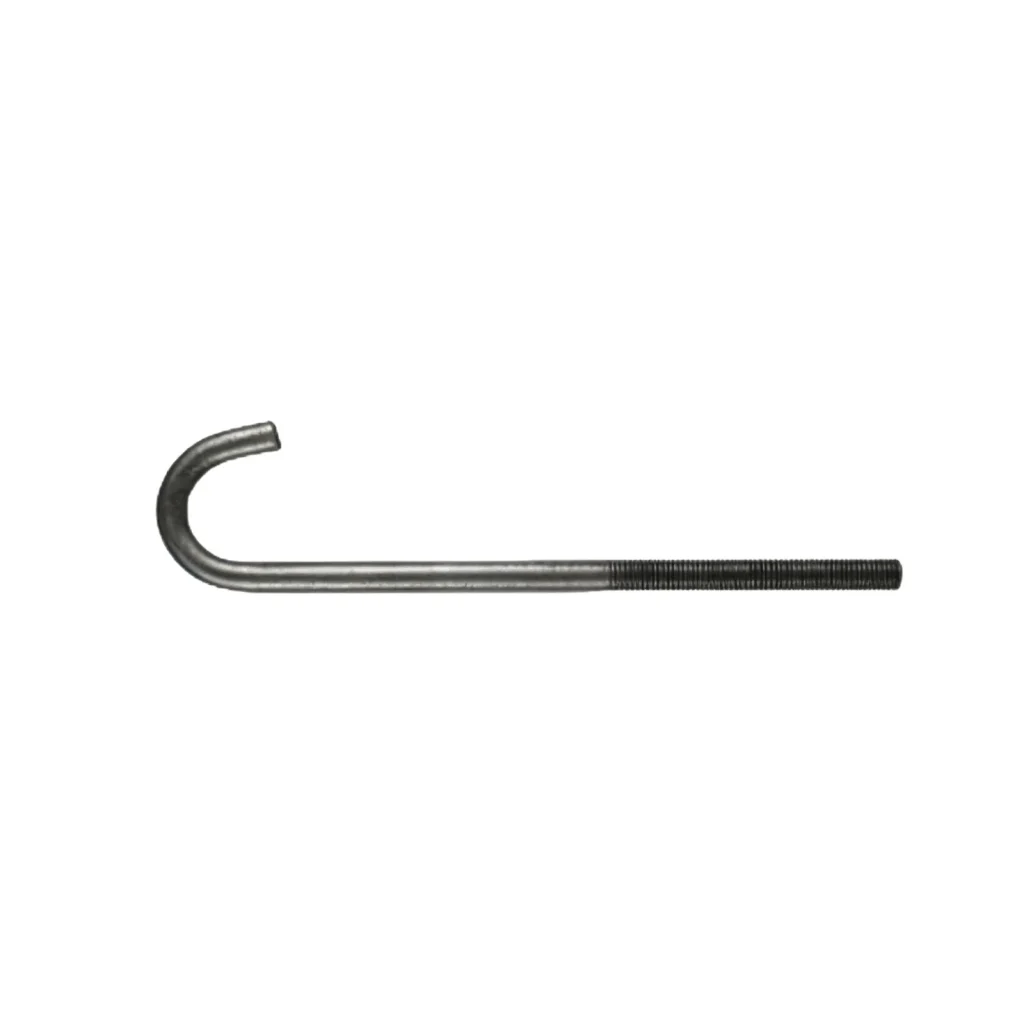
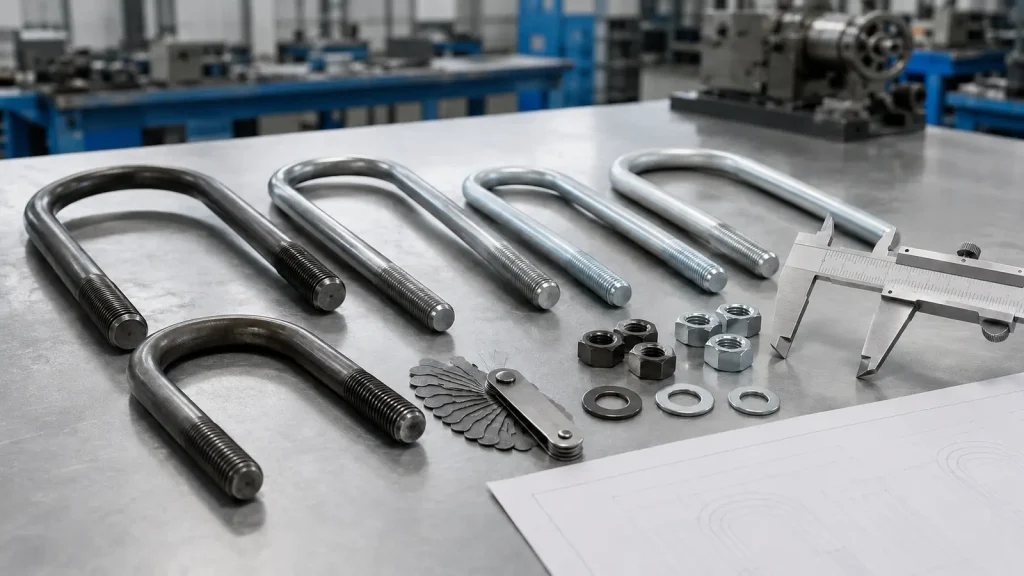
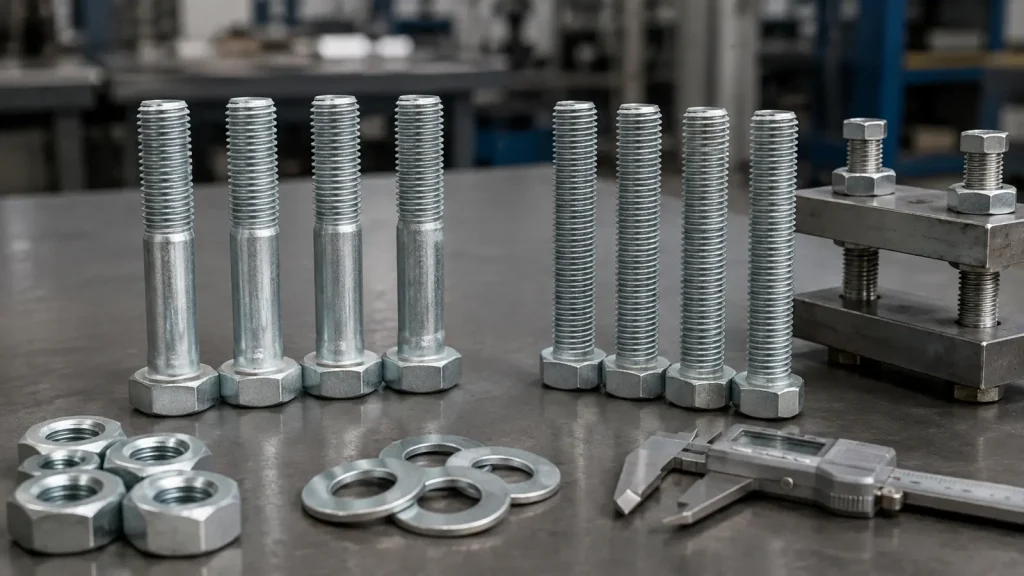
The practical difference is between ordering a general anchor bolt size and specifying the working assembly. A bolt may match the nominal diameter but still fail the job requirement if the projection, washer and nut arrangement, coating, or usable thread length does not match the fixture and concrete depth.
This matters most in construction, equipment mounting, steel structure bases, guardrails, brackets, and machinery foundations. A small mismatch can force installers to enlarge holes, add spacers, cut threads, or replace anchors after delivery.
Start with the application, not the bolt code. Confirm what the anchor fast bolt will fasten, the base material, the direction of load, and whether the fixture will face vibration, outdoor exposure, moisture, or chemical contact. These details influence the anchor style, material grade, and surface treatment more than the product name alone.
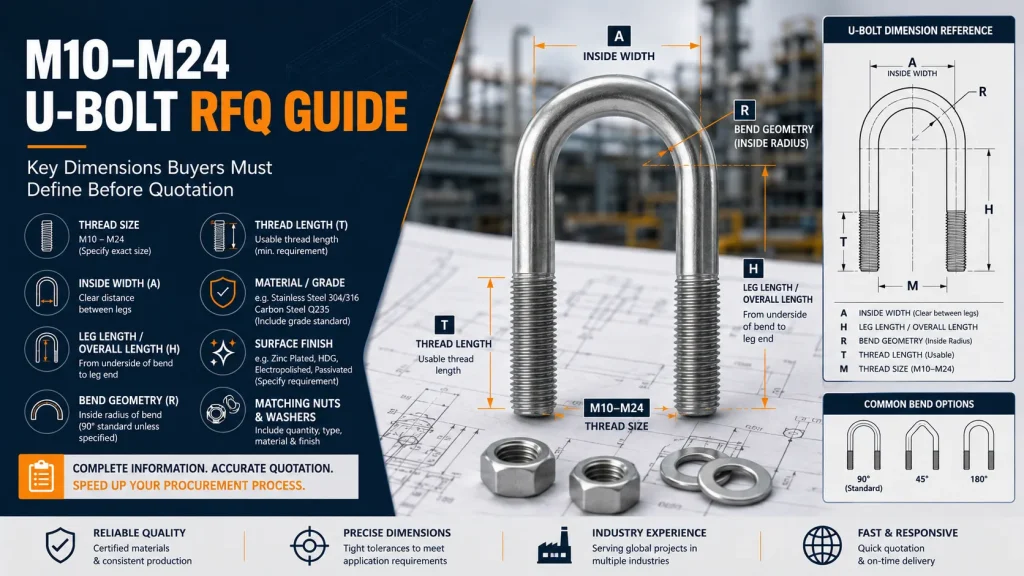
Check the dimensions that control fit: overall length, diameter, thread length, required projection above the surface, washer and nut requirements, and fixture thickness. One common mistake is ordering by total length while ignoring how much of the bolt must remain usable after embedment.
Match the finish to the environment and the assembly. Plain, zinc-coated, hot-dip galvanized, or stainless options can behave differently with nuts, washers, and installation tools. If the anchor will be used outdoors or near corrosive media, ask which coating or material is suitable rather than assuming a standard finish is enough.
Before requesting a quotation from Hebei Wotu Fastener Manufacturing Co., Ltd., send the drawing or a simple specification list. Include bolt diameter, length, thread length, material or grade requirement, finish, nut and washer needs, quantity, packing preference, and any standard the project must follow. If the anchor is for a critical structural connection, also confirm what test documents or inspection records are required for your purchase process.