Blind Nut Selection Guide | Hebei Wotu Fastener Manufacturing Co., Ltd.

Blind Nut Selection for One-Sided Panel Assembly

A blind nut provides a threaded fastening point when you can reach only one side of a panel, tube, frame or enclosure. The main decision is matching the insert to the panel thickness, thread, expected load and installation method so it stays secure without crushing or distorting the base material.

For sheet-metal and hollow-section assemblies, a blind nut can avoid welding or access to the rear face. It is commonly considered where a standard nut cannot be held during assembly, but the correct body style and grip range still depend on the joint design.

Related Products

Hex nut DIN934-1987 (A/B accuracy classification)

Hex nut DIN934-1987 (A/B accuracy classification)

Brand: Wotu Standard basis: German standard DIN934-1987, metric coarse thread/fine thread universal thread Surface: 304 stainless steel Specifications: M6~M24 full range of specifications Supporting equipment: same specification bolts, flat washer, spring washer complete set of shipment Packaging: 25kg standard carton, whole wooden pallet packaging

Read More
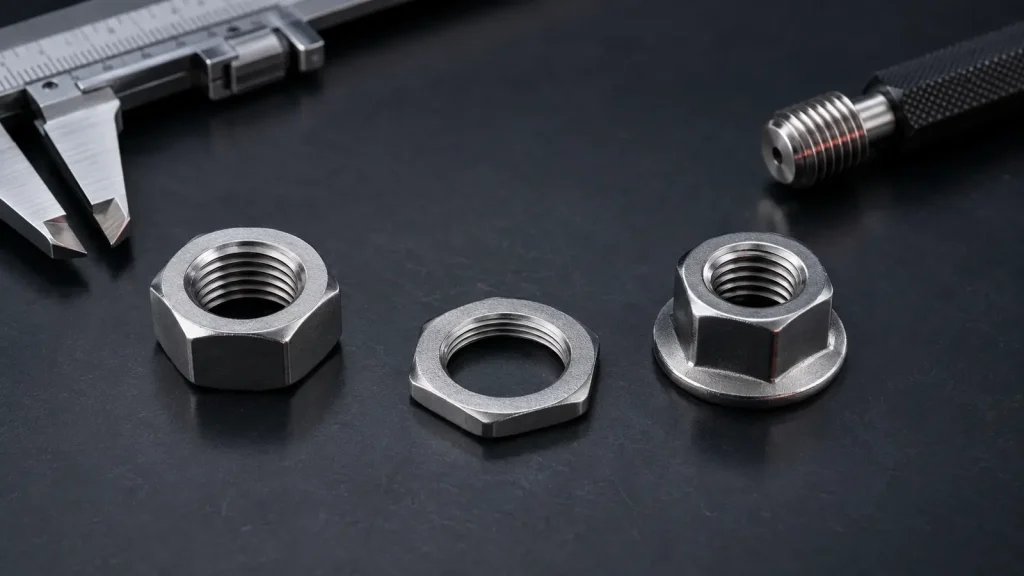
Hex thin nut

Hex thin nut

Brand: Wotu Surface: zinc plated Specifications: in stock M8~M64 full standard specifications, covering precision, machinery, and steel structure full size range, supporting nonstandard tooth pitch and customized thickness Matching: Can be matched with bolts of corresponding specifications, flat washer, spring washer complete set of shipment Packing: packed in 25kg cartons and packed on wooden pallets.

Read More
Hex nut (Chinese national standard GB52-1976)

Hex nut (Chinese national standard GB52-1976)

Brand: Wotu Surface: 304 stainless steel Specifications: in stock M6~M24 full standard metric specifications, supports nonstandard pitch, thickening/customized Matching: Can be matched with bolts of corresponding specifications, flat washer, spring washer complete set of supporting shipment Packaging: 25kg cartons, whole wooden pallets

Read More
Hex flange nut (Chinese national standard GB/T6177.1-2000)

Hex flange nut (Chinese national standard GB/T6177.1-2000)

Brand: Wotu Surface: zinc plated Specifications: in stockM6/M8/M10/M12/M14/M16/M20 Chinese national standardfull range of specifications, support nonstandard thickness, tooth pitch customized Matching: can be matched with bolts of the same specification, flat washer, spring washer complete set of shipment Packaging: 25kg cartons, whole wooden pallets

Read More
Grade 8/Grade 10 High-strength Black Oxide Hex Nut (DIN934/GB Chinese National Standard Thickened Nut)

Grade 8/Grade 10 High-strength Black Oxide Hex Nut (DIN934/GB Chinese National Standard Thickened Nut)

Brand: Wotu Surface: quenching and tempering heat treatment + high temperature black oxide anti-rust treatment Specifications: Comply with DIN934, GB/T6170 standards, in stock M6-M48 full range of specifications, nonstandard sizes can be customized Packaging: 25kg carton/woven bag inner packaging, whole wooden pallet wrapped with film for export packaging, supports neutral/private-label customization packaging

Read More
Chinese National Standard / German Standard Hex Nut (thick Nuts, Thin Nuts, Flange Nuts, Multiple Categories)

Chinese National Standard / German Standard Hex Nut (thick Nuts, Thin Nuts, Flange Nuts, Multiple Categories)

Brand: Wotu Surface: color zinc plated, blue-white zinc plated, black oxide, hot-dip galvanized, various surface treatments available Specifications: Comply with DIN934, GB/T6170, GB/T6172.1, GB/T6177.1 standards, in stock M6-M64 full range of specifications, support nonstandard customized Packaging: woven bag inside/25kg export carton, full-container wooden pallet wrapped with film, supports private-label, neutral export packaging

Read More

Blind nut features for one-sided panel assembly

Blind nut selection criteria

When comparing blind nuts, focus on thread compatibility, body shape, head profile, grip range, base material, surface finish and resistance to spinning or pull-out in the actual panel. The installation tool and access space matter as much as the insert itself, so confirm that the proposed design can be set consistently in the finished assembly.

Criterion What To Check Why It Matters Buyer Tip
Installation access and panel thickness Confirm the joint is installed from one side only and compare the blind nut grip range with the actual sheet or tube wall thickness. A blind nut that is too short may not clamp securely; one that is too long may deform poorly or spin during tightening. What is the minimum and maximum material thickness the blind nut must grip after coating or plating?
Body style for hole shape and anti-rotation Match round, knurled, ribbed, splined or hex body styles to the prepared hole and base material. Smooth round bodies suit simple holes but may rotate under higher torque; hex or splined bodies usually need more controlled hole preparation. Will the hole be punched, drilled or laser cut, and do you need extra resistance to spinning?
Thread size and mating screw load Specify the internal thread size, pitch and the fastener grade or screw type that will be used with it. The blind nut must provide enough thread engagement for the assembly without damaging the parent material during tightening. What screw size, tightening method and expected service load will the assembly use?
Open-end or closed-end design Decide whether the end of the blind nut can be open or should be sealed at the back. Open-end parts allow longer screws and are common in general assemblies; closed-end parts help limit ingress and protect the far side of the joint. Does the application need a sealed back side, or can the screw pass through the insert?
Material and surface finish compatibility Compare steel, stainless steel or other available materials with the base material, indoor or outdoor exposure and corrosion expectations. Material and finish affect corrosion behavior, galling risk, appearance and long-term removal of the mating screw. What environment will the assembled part face, and is there any restriction on mixed metals or surface finish?

Match the insert to the panel, load and installation method

The practical distinction is between a blind nut or rivet nut installed from one side and a conventional hex nut fitted behind the joint. A blind nut suits enclosed sections and preassembled panels, while a conventional nut may offer a simpler or stronger joint when rear access is available.

Also confirm whether the application needs an open-end insert, a closed-end insert for separation or environmental protection, or a different threaded insert design. These choices affect bolt engagement, resistance to pull-out and the space available around the hole.

Start with the joint geometry. Specify the thread form and size, panel or wall material, hole condition and the full material thickness range. A grip range that is too large can leave the insert loose; one that is too small can prevent correct setting or damage a thin panel.

Choose the body and head style for the load path and available clearance. Round-body inserts are suited to many general sheet applications, while a hexagonal or partially hexagonal body can provide better resistance to spinning when the panel and hole are suitable. A low-profile or countersunk head may be needed where the surface must remain clear, but reducing the head area can change support for a soft panel.

Match the material and finish to the surrounding assembly. Steel, stainless steel and aluminium can behave differently during installation and in service, especially where moisture or dissimilar metals are present. Check thread engagement, corrosion exposure and whether the insert must remain sealed or electrically isolated.

Before ordering, send the intended thread, panel material and thickness range, hole diameter or design requirement, expected load, and the available installation tool. Ask which blind-nut style and setting method suit the joint, and request confirmation of the usable grip range and supplied material or finish.

Criteria Importance Description Example Options
Access to the back of the joint Often the first decision factor A blind nut is designed for one-sided installation. If the rear face is accessible, other fastening methods may be easier to install, inspect or replace. A hollow tube wall may suit a blind nut, while an open bracket with rear access may use a standard nut and bolt.
Grip range and panel thickness Critical for setting quality The insert must clamp the actual material thickness without under-setting, over-compressing or distorting the panel. A thin sheet and a thicker layered panel may require different grip ranges even if they use the same thread size.
Body shape and anti-rotation need Important where bolts are removed or retightened Round bodies are simple to use in round holes, while hex or keyed designs can resist spinning better when the panel preparation supports them. A service panel opened repeatedly may need stronger anti-rotation than a fixed cover assembled once.
Head style and surface clearance Application-dependent Large flange heads can spread load on softer panels, while low-profile or countersunk heads reduce surface height but may offer less bearing area. A flush exterior surface may favor a countersunk style, while a soft panel may benefit from a broader flange.
Material and finish compatibility Important for durability and assembly compatibility The insert material and surface finish should suit the panel material, moisture exposure and any concerns about corrosion or dissimilar metals. An indoor equipment panel and an outdoor enclosure may need different material or finish choices.

Product Selection

Related Options

For an enclosure, vehicle panel or tubular frame assembled from one accessible side, prioritize a blind nut with a grip range that matches the wall and a body style suited to the hole. A compact head may help with clearance, while a stronger anti-rotation design may be more important where repeated bolt removal could stress the panel.

Blog Articles / Reviews

Hex Thin Nut vs Standard Hex Nut: Which Fits Space-Limited or Locking Assemblies?

Hex Thin Nut vs Standard Hex Nut: Which Fits Space-Limited or Locking Assemblies?

Direct Answer: Choose a hex thin nut when reduced nut height is genuinely required by the assembly or when the engineering design specifies it as part of a locking arrangement. Choose a standard hex nut when full nut height, normal thread engagement, and the specified load-bearing function are required. Buyers should compare nut height, thread […]

How Should Buyers Select Chinese and German Standard Hex Nuts?

How Should Buyers Select Chinese and German Standard Hex Nuts?

Direct Answer: Select a hex nut by the exact standard number and edition, thread diameter and pitch, nut style, property class, material, finish, mating bolt and acceptance method. “Chinese standard” or “German standard” alone is not a complete specification. Regular, thick, thin and flange nuts can differ in geometry and load behavior, so buyers should […]

Frequently Asked Questions

Where does a blind nut make more sense than a standard nut and bolt?

It is most useful when the back of the panel, tube or enclosure cannot be reached during assembly. If rear access is available and space allows, a standard nut, welded nut or captive nut may be simpler to inspect and may suit higher-load joints better.

How do I choose between round, hex and other body styles?

A round body is common for general sheet applications, but it can rotate if the hole or material does not support it well. A hex or partly hex body can improve anti-rotation performance when the panel can be punched or formed with a matching hole shape.

Is grip range the same as panel thickness?

Grip range is the material thickness range that the insert is designed to clamp after setting. It should cover the real stack thickness at the installation point, including coatings or layers where relevant, rather than only the nominal sheet thickness.

What is a common cause of loose or spinning inserts?

Loose or spinning inserts often come from the wrong hole size, mismatched grip range, unsuitable body shape or inconsistent setting force. The panel material also matters: thin, soft or cracked material may not provide enough support even if the thread size looks correct.

Should I specify open-end or closed-end inserts?

Open-end inserts allow the bolt to pass through and can offer more flexibility for bolt length. Closed-end inserts may be preferred where the thread needs a sealed back side or separation from the hollow section, but they limit available bolt engagement depth.

What details should I provide before asking for a recommendation?

Provide the thread size, panel material, total thickness range, intended hole shape or diameter, head clearance, expected load direction and installation tool type. A drawing or photo of the joint is helpful because the best insert depends on how the bolt will be tightened and serviced.

Leave Your Message

For a useful recommendation, include the required thread size, panel material and thickness range, and the intended application or installation tool.