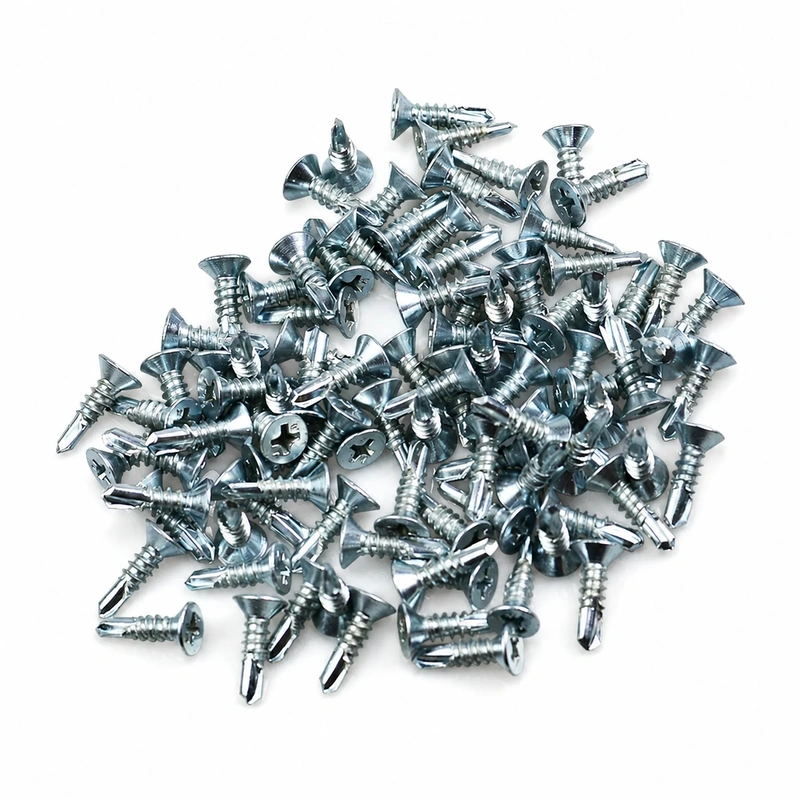
The most common point of confusion is screw length. For many countersunk screws, length is measured from the top of the head to the screw tip because the whole head is intended to sit inside the material. That differs from pan head, hex head, or washer head screws, where length is usually measured from under the head.
Head angle also matters. A countersunk recess must match the screw head angle closely enough for full contact. If the angle or head diameter is wrong, the screw may center poorly, carry load on a narrow edge, or damage the surface before it reaches the required clamp load.
Start with the joint, not the screw code. Confirm the top material thickness, the base material, and whether the screw is cutting its own thread or entering a pre-tapped or pilot-drilled hole. A furniture panel, thin metal sheet, and plastic housing can all use countersunk heads, but they need different thread forms and different expectations for pull-out resistance.
Check the head fit before confirming volume. The countersunk head diameter and angle must suit the countersink tool or molded recess. If the recess is too shallow, the head stands proud; if it is too deep, the screw may sit below the surface and reduce clamp contact or damage decorative finishes.
Do not treat diameter and length as complete dimensions. Buyers should also define drive style, thread type, point style, finish or coating, material grade where relevant, and any standard the drawing follows. For wood and fiberboard, coarse or special threads may hold better; for metal, the pilot hole and thread engagement become more important.
A useful next step is to send a drawing, sample, or current part number together with the application material and the required flush condition. Ask Hebei Wotu Fastener Manufacturing Co., Ltd. to confirm which dimensions are needed for quotation and whether the screw should follow a named standard, a drawing, or an existing sample.