Dowel Pins for Accurate Alignment | Hebei Wotu Fastener Manufacturing Co., Ltd.

Dowel Pins for Accurate Part Alignment

A dowel pin is usually chosen for alignment first, not fastening force. In fixtures, molds, machine housings and repeat-assembly parts, the main decision is how accurately two components must locate after machining, service or repeated disassembly.

The right pin depends on the hole tolerance, material pairing, fit type and removal requirement. A small change in these details can turn a precise locating feature into a part that is hard to assemble, loose after use or difficult to service.

Related Products

Countersunk Head Self-Tapping Screw

Countersunk Head Self-Tapping Screw

Brand: Hengzuan Surface: blue and white zinc plated, optional color zinc plated, black oxide treatment Specifications: Follow GB/T846-1985 Chinese national standard, in stock ST4.2/ST4.8/ST5.5 full range of specifications Packaging: 25kg export cartons, full pallets wrapped with film, supports neutral export packaging, private-label customization

Read More
Blue-White Zinc Plated Pan Head With Pad Self-Tapping Screw

Blue-White Zinc Plated Pan Head With Pad Self-Tapping Screw

Brand: Hengzuan Surface: blue and white zinc plated Specifications: in stock ST4.2/ST4.8full range of specifications, length 13~50mm in stock, support nonstandard length customization Packaging: 25kg cartons, solid wood packaging, support neutral packaging, private-label customization

Read More
Countersunk Head Blue-White Zinc Plated Self-Drilling Screw (Chinese National Standard: Phillips Countersunk Head Self-Drilling And Self-Tapping Screw GB/T15856.2-2002)

Countersunk Head Blue-White Zinc Plated Self-Drilling Screw (Chinese National Standard: Phillips Countersunk Head Self-Drilling And Self-Tapping Screw GB/T15856.2-2002)

Brand: Hengzuan Surface: blue and white zinc plated, can be customized color zinc plated, black oxide plated Specifications: Comply with GB/T15856.2-2002 Chinese national standard, in stock ST4.2/ST4.8/ST5.5 full range of specifications, length 13mm~75mm optional, supports customized nonstandard rod lengths; drilling adaptation plate thickness 0.7~6mm Packaging: 25kg export cartons, full pallets wrapped with film, supports neutral export packaging, customer private-label customization

Read More
U-bolt ( / U-bolt, M10/M12/M16/M20/M24 multiple specifications)

U-bolt ( / U-bolt, M10/M12/M16/M20/M24 multiple specifications)

Brand: Wotu Surface: natural black oxide / hot-dip galvanized / blue-white zinc plated, multiple processes available Specifications: Based on common industry drawing parameters, suitable for pipe diameter 25mm~139.7mm, screw diameter M10~M24, total length can be nonstandard customized Matching: can be matched with nut, flat washer and spring washer of the same specifications for complete shipment Packaging: Bundling and packaging + 25kg export carton, full-container wooden pallet wrapped with film, supports private-label export packaging

Read More

Dowel Pin Selection for Accurate Part Location

Selection criteria

Useful dowel pin selection starts with the assembly function, hole tolerance, material, end style and retention method. If you are comparing options, separate the locating requirement from the clamping requirement and confirm which component receives the fixed fit.

Criterion What To Check Why It Matters Buyer Tip
Fit with the mating holes Compare the dowel pin diameter and tolerance with the hole tolerance on both parts of the assembly. A dowel pin locates parts by controlled fit, not by thread force. Too tight can damage the bore during installation; too loose can allow movement and poor alignment. Ask: What hole diameter, tolerance, and fit type should the pin match in my drawing?
Material and hardness Confirm the base material and hardness range against the mating parts and the expected load or wear conditions. Hardened steel pins resist wear in repeated assembly, while softer or corrosion-resistant materials may suit different environments. The wrong material can gall, deform, or corrode. Ask: Is the pin for permanent location, repeated removal, shear load, or a corrosive environment?
End style and installation method Identify whether the design needs chamfered ends, rounded ends, pull-out features, or other installation details. End geometry affects how easily the pin enters the hole, whether it shaves material, and how it can be removed during maintenance. Ask: Will the pin be press-fitted once, assembled by hand, or removed during service?
Length and engagement depth Check how much of the pin engages each component and whether the length leaves enough clearance for blind holes. Insufficient engagement reduces locating stability, while excessive length can bottom out before parts clamp together fully. Ask: Are the holes through-holes or blind holes, and what usable engagement length is required on each side?
Surface finish and coating Review the surface finish, oiling, plating, or passivation requirement stated on the drawing or purchase specification. Surface condition affects insertion force, corrosion resistance, and consistency of fit. Added coating thickness can also change the effective diameter. Ask: Does the specified finish change the pin diameter enough to affect the required fit?

Fit, Material and Hole Details That Change the Pin Choice

The most important distinction is between a locating pin and a load-bearing fastener. A dowel pin controls position; a screw, bolt or clamp normally supplies holding force. If a design asks the pin to do both jobs, the assembly may become difficult to align and the pin may wear, shear or seize during maintenance.

Fit also matters. A press fit can hold the pin securely in one component, while a slip fit allows the mating part to slide on during assembly. Many designs use one fixed hole and one relieved or floating location to avoid over-constraining the parts. Confirming this before purchase prevents a common mistake: ordering pins by diameter and length only, without defining how the holes will be prepared.

Start with the job of the dowel pin in the assembly. If it locates two machined parts, ask which side should retain the pin and which side should clear it. If it is used as a stop, hinge feature or shear element, the material and loading discussion becomes more important than simple positional accuracy.

Match the pin to the hole process. Reamed holes, drilled holes and cast or punched holes do not behave the same way. A precision ground pin in an inconsistent hole will not give precision location. Before ordering, confirm the nominal diameter, length, end style, fit expectation and any drawing tolerance that controls the mating holes.

Choose material and surface condition around the environment, not just the base metal. Hardened steel can suit wear and alignment in machinery, while stainless material may be preferred where corrosion is a concern. Coatings or surface finishes can affect fit, friction and long-term removal, so they should be discussed with the mating material and lubrication conditions in mind.

Avoid specifying every pin as a tight press fit. Tight fits can improve retention, but they also raise insertion force and can distort thin sections. For a practical inquiry, send the drawing or a simple sketch, the pin size, material preference, fit type, annual or batch quantity and whether the pin must be removable during service.


Criteria Importance Description Example Options
Function in the assembly High priority because it defines the correct pin type and fit Decide whether the pin is used for location, repeat assembly, a stop feature, a hinge point or shear support. A locating pin should not be treated the same as a general fastener. A mold plate alignment point may need repeatable location, while a stop feature may need more attention to impact and wear.
Fit between pin and holes Critical for assembly accuracy and serviceability Press fit improves retention but increases insertion force and can make removal difficult. Slip fit supports easier assembly but does not retain the pin by itself. One component may use a press fit to hold the pin, while the mating component uses a clearance fit for easy installation.
Hole preparation Often the difference between a precise location and a loose assembly Reamed or accurately finished holes support controlled fits better than basic drilled, punched or cast holes. The pin specification should match the actual hole process. Ordering a precision ground pin will not correct a mating hole that is too large or out of round.
Material and surface condition Important when wear, corrosion or removal force matters Material choice affects hardness, corrosion resistance, galling risk and long-term fit. Coatings and finishes can also change friction and effective fit. A dry indoor fixture may have different material needs from an assembly exposed to moisture or cleaning chemicals.
Removal and maintenance requirement Important for equipment that is serviced or reassembled A tight retained pin can be reliable in permanent assemblies, but it can slow maintenance if no removal method is considered. End style and access should be reviewed early. A serviceable machine housing may need a fit and end design that allow the pin to be extracted without damaging the surrounding part.

Product Selection

Related Options

For a machine fixture, mold plate or housing alignment point, the best choice is usually the pin that repeats position without making assembly difficult. Share the mating hole details and service conditions so the suitable diameter, length, material and fit can be checked against the real use case.

Blog Articles / Reviews

How Should Buyers Evaluate Self Tapping Screws for Project Procurement?

How Should Buyers Evaluate Self Tapping Screws for Project Procurement?

#4 self tapping screws should not be purchased from the “#4” designation alone. For a usable B2B specification, the buyer still needs the actual screw diameter, thread form or pitch, overall length, substrate, pilot-hole condition, head and drive style, material, surface finish and quantity. This matters because suppliers may use different naming systems. Wotu Fastener’s […]

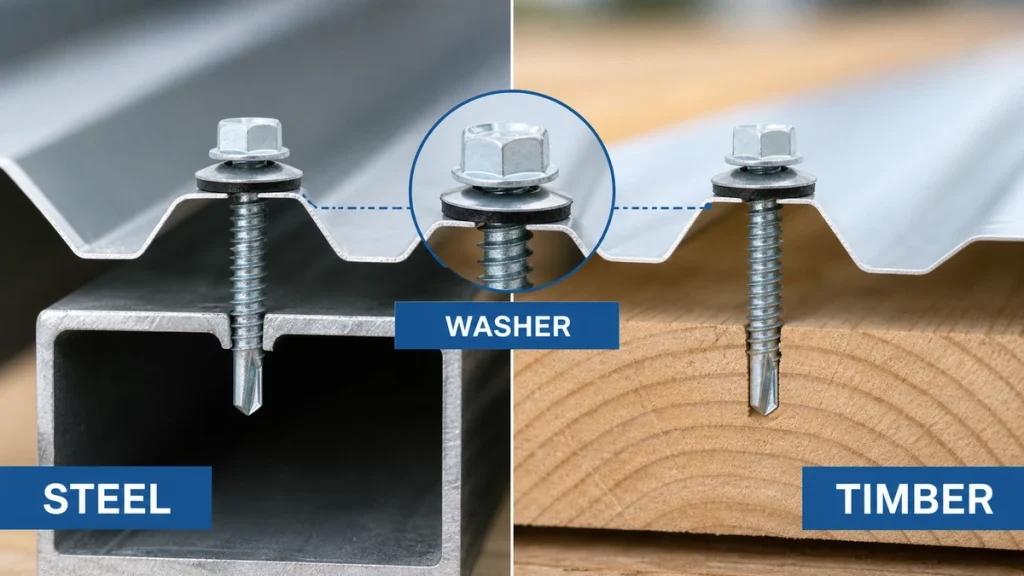
Which Self-Tapping Roofing Screw Specification Fits Metal Panels on Steel or Timber?

Which Self-Tapping Roofing Screw Specification Fits Metal Panels on Steel or Timber?

The correct self-tapping roofing screw depends on the complete panel-and-substrate stack-up. Steel supports typically require a point and thread matched to the support thickness and any pilot-hole requirement; timber supports require a wood-appropriate thread and sufficient embedment. In both cases, buyers must define diameter, length, head, sealing washer, material or coating, environment, pull-out requirements, and […]

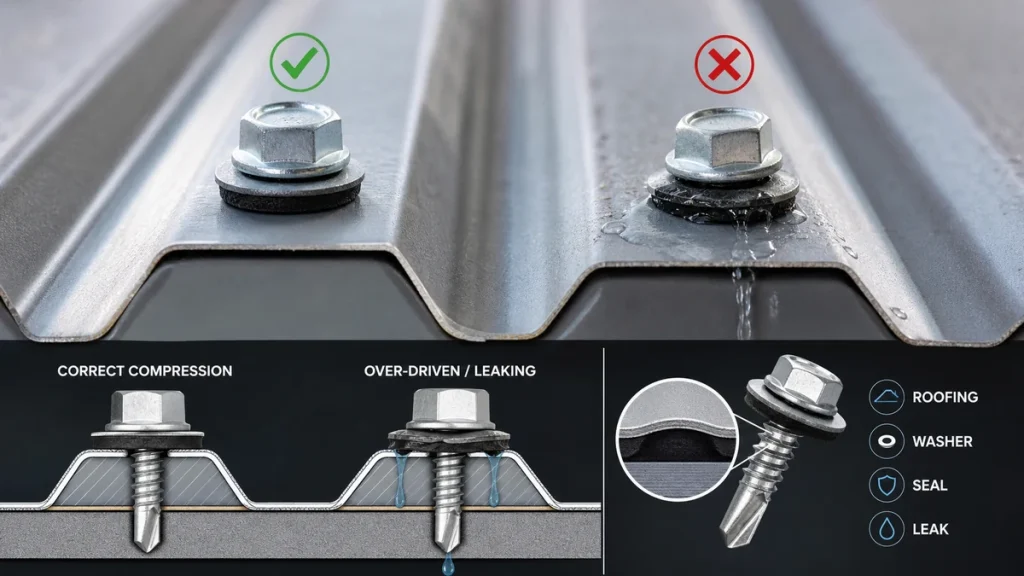
Why Do Self-Tapping Roofing Screws Leak Even When the Screw Length Looks Correct?

Why Do Self-Tapping Roofing Screws Leak Even When the Screw Length Looks Correct?

Direct answer: Correct screw length does not guarantee a watertight metal-roof connection. Self tapping roofing screws can leak because of incorrect washer compression, enlarged or stripped holes, insufficient thread engagement, panel movement, or an unsuitable coating-and-washer system. Buyers should diagnose the complete installed connection—including panel profile, support thickness, point type, washer condition, and exposure—rather than […]

What Is the Difference Between Self Drilling and Self Tapping Screws?

What Is the Difference Between Self Drilling and Self Tapping Screws?

Direct Answer: A self-drilling screw has a drill-shaped point that creates a hole and then forms mating threads in a suitable material. A self-tapping screw forms or cuts mating threads but may require a correctly sized pilot hole. Selection depends on substrate type and thickness, joint stack, point geometry, installation tool, finish and application testing—not […]

Frequently Asked Questions

Should a dowel pin be used to hold parts together?

Usually no. A dowel pin is mainly for accurate location, while screws, bolts or clamps provide the holding force. If the pin is expected to locate and clamp at the same time, the assembly can become hard to service and the pin may wear or seize.

What is the difference between a press fit and a slip fit?

A press fit holds the pin tightly in the hole and is often used on the fixed side of an assembly. A slip fit allows the mating part to install and remove more easily. Many assemblies use one retained side and one clearance side to keep alignment accurate without over-constraining the parts.

Is a hardened steel pin always better than stainless steel?

Not always. Hardened steel can be suitable where wear resistance and precise location matter, but stainless material may be preferred where corrosion is a concern. The better choice depends on the mating material, moisture or chemical exposure, lubrication, and whether the pin needs to be removed later.

Why does the hole tolerance matter so much?

The pin only locates accurately if the mating holes are controlled properly. A precision pin placed into an oversized, rough or inconsistent hole will not deliver precision alignment. Confirm whether the holes are drilled, reamed, ground or otherwise finished before choosing the fit.

What information should be sent for a clear purchase inquiry?

Send the diameter, length, material preference, end style if specified, required fit in each component, quantity and service environment. A drawing or simple sketch is helpful because it shows which side retains the pin and whether the assembly needs removal during maintenance.

Leave Your Message

Send the dowel pin diameter and length, material or corrosion requirement, and the intended fit in each mating hole. A drawing or sketch showing the assembly function will make the inquiry clearer.