Pedestal Drilling Machine Selection Guide | Hebei Wotu Fastener Manufacturing Co., Ltd.

Pedestal drilling machine selection

A pedestal drilling machine is a floor-standing drill press for producing repeatable holes in metal, wood or other workpieces. The main buying decision is not simply motor power: column rigidity, spindle travel, table adjustment, speed control and workholding determine how accurately and consistently the machine handles your parts.

Choose the machine around the material, hole sizes, workpiece dimensions and production rhythm. A machine for occasional fabrication may need a different spindle arrangement and speed range from one used for repeated drilling in steel components.

Related Products

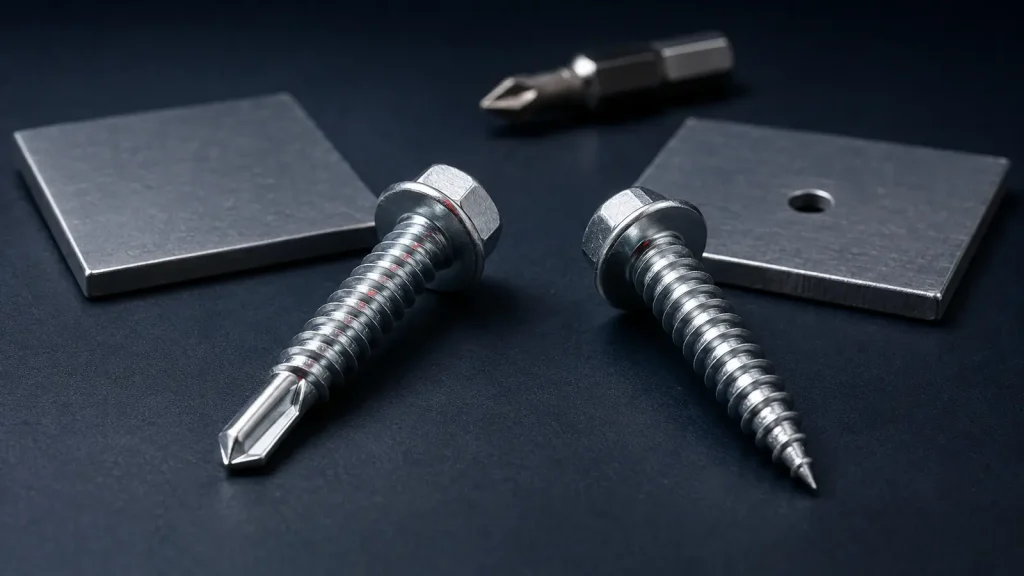
Hex Head Self-Drilling Screw With Bonded Washer

Hex Head Self-Drilling Screw With Bonded Washer

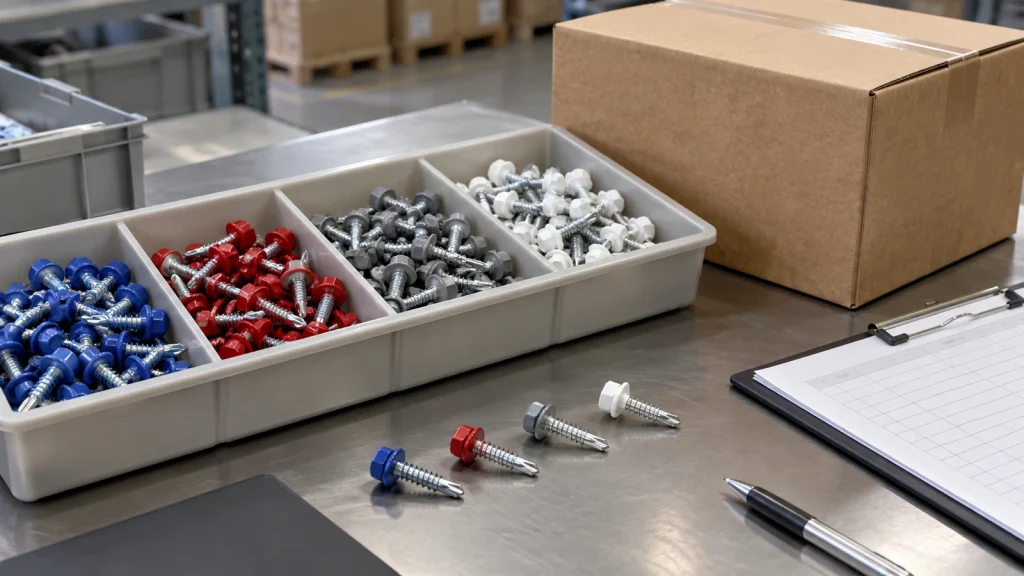
Brand: Hengzuan Surface: blue and white zinc plated, color zinc plated can be customized on request Specifications: in stock 4.2/4.8/5.5/6.3mm mainstream wire diameter, length 20mm~165mm full range of specifications, nonstandard rod length, drill point size can be customized Packaging: 25kg export cartons, full pallets wrapped with film, supports neutral export packaging, customer private-label customization

Read More
Countersunk Head Blue-White Zinc Plated Self-Drilling Screw (Chinese National Standard: Phillips Countersunk Head Self-Drilling And Self-Tapping Screw GB/T15856.2-2002)

Countersunk Head Blue-White Zinc Plated Self-Drilling Screw (Chinese National Standard: Phillips Countersunk Head Self-Drilling And Self-Tapping Screw GB/T15856.2-2002)

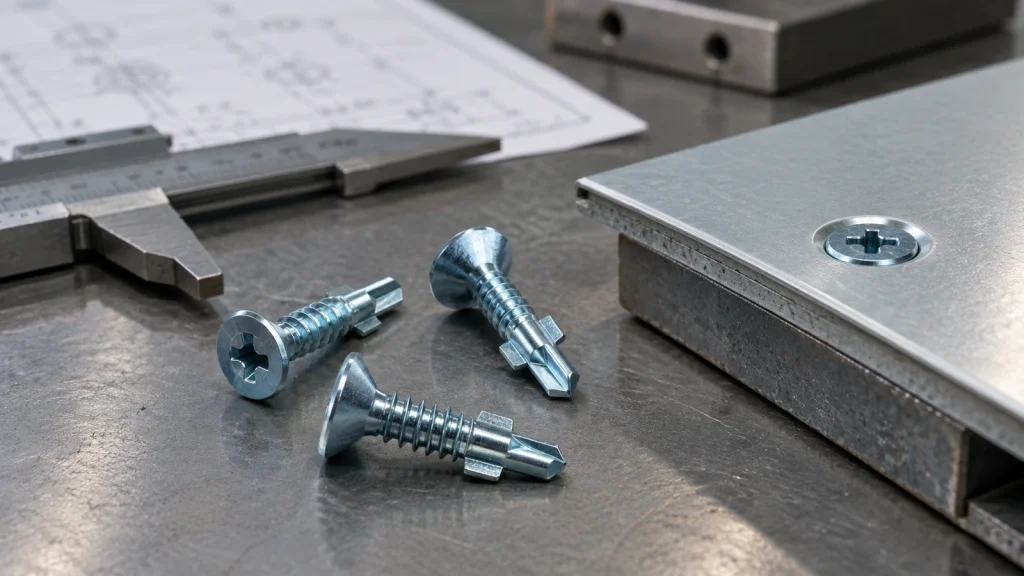
Brand: Hengzuan Surface: blue and white zinc plated, can be customized color zinc plated, black oxide plated Specifications: Comply with GB/T15856.2-2002 Chinese national standard, in stock ST4.2/ST4.8/ST5.5 full range of specifications, length 13mm~75mm optional, supports customized nonstandard rod lengths; drilling adaptation plate thickness 0.7~6mm Packaging: 25kg export cartons, full pallets wrapped with film, supports neutral export packaging, customer private-label customization

Read More
Blue-White Zinc Plated Winged Countersunk Head Self-Drilling Screw

Blue-White Zinc Plated Winged Countersunk Head Self-Drilling Screw

Brand: Hengzuan Surface: blue and white zinc plated, optional color zinc plated, black oxide treatment Specifications: in stock ST3.5/ST4.2/ST4.8 mainstream specifications, rod length 16~50mm full size range, supports nonstandard length customization, suitable for drilling steel sheets 2~5mm Packaging: 25kg cartons, full pallets packed on wooden pallets, support neutral packaging, private-label customization

Read More
Countersunk Head Blue Zinc Self-Drilling Screw

Countersunk Head Blue Zinc Self-Drilling Screw

Brand: Hengzuan Surface: blue and white zinc plated, can be customized color zinc plated, black oxide plated Specifications: in stock 3.5/3.9/4.2/4.8/5.5 mainstream wire diameter, rod length 13mm~75mm full size range, nonstandard length can be customized as needed Packaging: 25kg export cartons, full wooden pallets wrapped with film, supports neutral export packaging, private-label customization

Read More

Compare working capacity, rigidity and spindle control

Pedestal drilling machine selection

Compare pedestal drilling machines by spindle capacity and travel, throat depth, column and base stability, table size and adjustment, speed-control method, motor arrangement, chuck or taper compatibility, guarding and included accessories. These details show whether a candidate fits your parts and tooling rather than only matching a general machine name.

Criterion What To Check Why It Matters Buyer Tip
Drilling capacity for the workpiece material Confirm the maximum drill size the pedestal drilling machine can handle in steel, aluminum, wood, or the actual material you use. Capacity affects hole accuracy, motor load, tool life, and whether operators need multiple passes or a different machine. What is the largest hole diameter and material thickness you expect to drill in normal production?
Spindle speed range and adjustment method Ask for the available speed range and whether speed changes are made by belt, gearbox, or variable-speed control. Small drills, large drills, and different materials need different speeds; the wrong range can burn tools or leave poor holes. Can the machine run slow enough for larger bits and fast enough for small-diameter drilling?
Spindle travel and table movement Compare spindle stroke, table height adjustment, table tilt, and throat depth against your part size and hole position. A machine may have enough power but still be awkward if the part cannot sit flat or the drill cannot reach the hole location. What is the tallest part and farthest hole-from-edge distance you need to drill?
Chuck, taper, and tooling compatibility Verify chuck size, spindle taper, and whether your existing drill bits, countersinks, reamers, or tapping attachments will fit. Tooling compatibility affects setup time and avoids extra purchases or improvised adapters that reduce rigidity. Do you need the supplier to match the machine to your current drill shanks or provide suitable holders?
Machine stability and workshop setup Check base size, column rigidity, machine weight, power supply requirement, guarding, and emergency stop arrangement. A pedestal drilling machine must stay rigid during drilling; vibration, poor anchoring, or incompatible power can reduce accuracy and safety. Where will the machine be installed, and what floor space and electrical supply are available?

Match the drill press to your material and workload

The key distinction is between a basic belt-driven drill press and a more heavily built geared or industrial configuration. Belt-driven machines can offer straightforward maintenance and speed changes, while a geared arrangement may suit demanding, repeated work but can require closer attention to service, noise and operating conditions.

Also compare a pedestal machine with a bench drill press. The floor-standing format normally gives more room for larger workpieces and a taller working envelope, but it occupies more floor space. Confirm the actual throat depth, spindle travel, table movement and maximum workpiece size instead of choosing by overall machine height alone.

Start with the workpiece. List the materials to be drilled, the usual hole diameter range, the thickest section and the required hole depth. Steel, stainless steel, aluminium and wood call for different speed and tooling choices, so a wide speed range may be more useful than a higher headline motor rating.

Check rigidity and access together. A stiff column, stable base, adjustable table and suitable spindle taper help control runout and vibration. A larger table is useful for plates and fixtures, but it may limit adjustment or make loading awkward if the table design does not suit your parts.

Decide how much control the operator needs. Stepped pulley speeds can be simple and economical; variable-speed arrangements can make changes between materials more convenient. Confirm how speed is changed, how the chuck or tooling is retained, and which guards and workholding provisions are included. Do not assume a chuck, vice, tooling or safety equipment is part of the machine package.

Before requesting a quotation, send a short application brief with the material, hole-size range, workpiece dimensions, expected daily or batch use and available power supply. Ask the supplier to confirm the spindle configuration, working envelope, included accessories, documentation, warranty terms and whether Hebei Wotu Fastener Manufacturing Co., Ltd. can supply or arrange a pedestal drilling machine matching those requirements.


Criteria Importance Description Example Options
Working envelope Critical for fit Throat depth, spindle travel, table height adjustment and clearance determine whether the machine can physically handle the part and the required hole depth. A tall bracket or thick plate may need more spindle travel and table adjustment than a small flat component.
Rigidity and stability High for accuracy and tool life Column stiffness, base weight, table support and spindle quality affect vibration, runout and repeatability during drilling. Repeated holes in steel plate generally need a more stable setup than occasional holes in softwood.
Speed-control method Important when materials vary Stepped pulley systems can be simple and economical, while variable-speed or geared arrangements can make speed changes easier for different drill sizes and materials. A workshop switching between aluminium and steel may value quicker speed adjustment.
Tooling and spindle compatibility Affects what can be used immediately Confirm chuck capacity, spindle taper or mounting style, tooling retention and whether the chuck or adapters are included. A machine name alone does not confirm that it accepts the drills, hole saws or countersinking tools planned for the job.
Included accessories and guarding Prevents purchase gaps Workholding, guards, lighting, coolant provisions, documentation and spare parts support may vary by supplier or configuration. One offer may include a basic chuck only, while another may quote the machine with a vice or other workshop accessories.

Product Selection

Related Options

For repeat drilling in steel plates, brackets or other fabricated parts, give priority to rigidity, controlled speed and reliable workholding. For occasional workshop use, ease of adjustment and maintenance may matter more than a heavier industrial configuration. Compare each candidate against the same material, hole-depth and production-use case.

Blog Articles / Reviews

What Should an RFQ Include When Sourcing Dacromet Hex Head Self-Drilling Screw?

What Should an RFQ Include When Sourcing Dacromet Hex Head Self-Drilling Screw?

When sourcing dacromet hex head self drilling screw, a complete RFQ should define the application, screw configuration, coating requirement, dimensions, and supplier confirmation requirements. Buyers often receive different quotations because suppliers may interpret coating, size, drilling capability, or packaging scope differently. Before preparing a project inquiry, buyers can review the available fastener product categories to […]

What Is the Difference Between Self Drilling and Self Tapping Screws?

What Is the Difference Between Self Drilling and Self Tapping Screws?

Direct Answer: A self-drilling screw has a drill-shaped point that creates a hole and then forms mating threads in a suitable material. A self-tapping screw forms or cuts mating threads but may require a correctly sized pilot hole. Selection depends on substrate type and thickness, joint stack, point geometry, installation tool, finish and application testing—not […]

What RFQ Details Matter When Ordering Blue Zinc Winged Self-Drilling Screws?

What RFQ Details Matter When Ordering Blue Zinc Winged Self-Drilling Screws?

When ordering a blue zinc self drilling screw with a winged, countersunk configuration, diameter and length are not enough to define the application. The RFQ should identify the materials being connected, upper-material thickness, steel-substrate thickness, total material stack, required countersunk seating, screw diameter, total length, drill-point condition, wing geometry, surface treatment, installation method, quantity and […]

What Should Buyers Confirm When Ordering Color Nylon Head Hex Self-Drilling Screws?

What Should Buyers Confirm When Ordering Color Nylon Head Hex Self-Drilling Screws?

When ordering a chinese standard color nylon head hex self drilling screw, the RFQ should define more than a color name. Buyers should confirm the exact color reference, nylon head or cap configuration, base screw diameter and length, steel-sheet condition, metallic screw finish, visible-face requirement, color approval method, batch-consistency check and packaging or SKU separation. […]

Rust Prevention Tips for Self-Drilling Screws

Rust Prevention Tips for Self-Drilling Screws

As we all know, the simplest way to prevent self-drilling screws from rusting is to properly isolate the screws from moisture-containing and humid environments. This can be achieved through selective application of protective coatings and sealants, or by purchasing specially formulated rust-resistant or rust-proof screws. This is why many businesses and households have rust prevention […]

Frequently Asked Questions

Is a floor-standing drill press the right choice for larger workpieces?

Usually, yes, if the parts need more vertical clearance or table support than a bench drill can provide. Check throat depth, spindle travel and table movement against your largest workpiece rather than judging by the overall machine height.

Should I choose a belt-driven or geared machine?

A belt-driven machine is often simpler to maintain and may be suitable for general workshop drilling. A geared machine can be better for heavier, repeated work, but it may cost more, run differently and require closer attention to service conditions.

Does higher motor power always mean better drilling performance?

No. Motor power matters, but rigidity, spindle speed range, tooling, workholding and operator control often have a larger effect on hole quality. A powerful machine with poor workpiece support can still produce chatter, inaccurate holes or premature tool wear.

What details should I provide before asking for a quotation?

Share the material, hole diameter range, required hole depth, workpiece size, expected batch or daily use and available power supply. Also state whether you need only the machine or also tooling, a chuck, vice, guards or other accessories.

Can one pedestal drilling machine handle steel, aluminium and wood?

It may, provided the speed range, tooling and workholding suit each material. Steel normally needs lower cutting speeds and firm clamping, while aluminium and wood may use different speeds, drill types and chip-clearance practices.

Leave Your Message

Tell us the material to be drilled, your typical hole-size and depth range, and the largest workpiece or batch volume. Please also confirm the available power supply and whether you need the machine, tooling or workholding accessories.