The practical distinction is between a nut that can be welded in place and a nut that remains reliable after the full assembly process. Projection weld nuts concentrate welding current through raised projections, so the projections must match the parent sheet and welding setup. If they collapse too quickly, the joint may be weak; if they do not heat properly, the nut may sit proud or fail under load.
Buyers should also separate thread requirements from welding requirements. A nut may have the correct thread, but still be wrong if its pilot, flange diameter, projection pattern or coating interferes with positioning, welding current or post-weld thread condition.
Start with the assembly drawing rather than only the fastener description. Confirm thread size and pitch, nut height, flange shape, pilot style, hole size in the sheet and the direction of loading. A projection weld nut used mainly for panel attachment may need different geometry from one used for structural brackets or repeated service removal.
Match the nut to the base material and welding process. Sheet thickness, steel grade, surface condition and access for electrodes all affect weld quality. Coated nuts can reduce corrosion risk, but some coatings may affect weld consistency or require process adjustment. Ask how the nut should be supplied if welding performance is more important than appearance before welding.
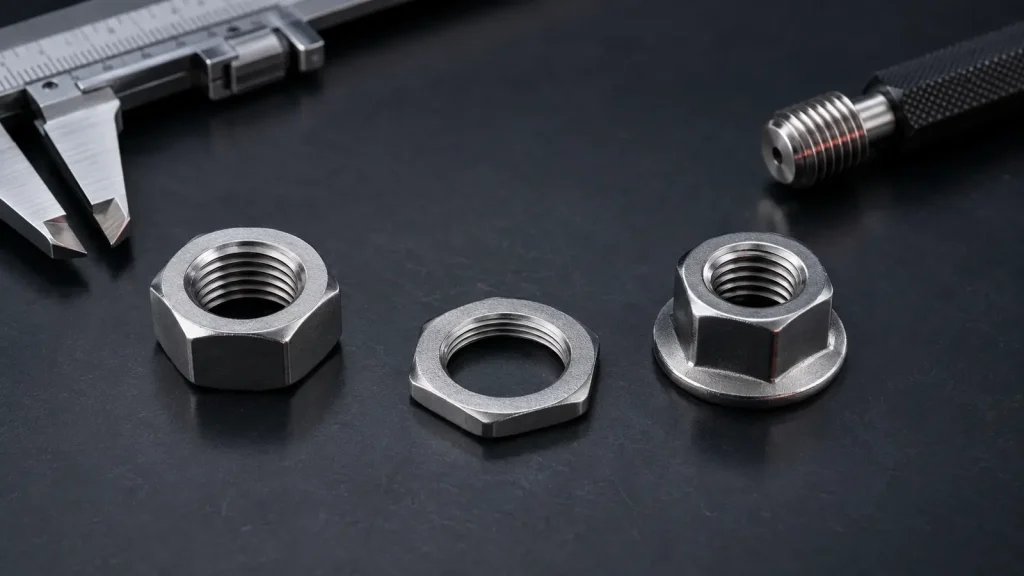
A common mistake is treating projection weld nuts as interchangeable with standard hex nuts or thin nuts. Standard nuts can provide the thread, but they do not provide the same welded location features. Thin nuts save space, yet they may reduce thread engagement. If the assembly has limited clearance, compare nut height, flange diameter and installed position instead of choosing the lowest-profile part by default.
For an inquiry, send the drawing or a clear sketch, the thread specification, sheet material and thickness, required coating or finish, and any load or inspection requirement already defined by your customer. If samples will be welded on your own line, also confirm whether you need parts optimized for trial welding, production welding or replacement of an existing nut.