Sheetrock Anchor Screws for Wall Fixings | Hebei Wotu Fastener Manufacturing Co., Ltd.

Sheetrock Anchor Screws for Wall Fixings

Sheetrock anchor screws are used to attach items to gypsum-board walls where a screw alone may not hold securely. The key decision is choosing an anchor-and-screw combination that matches the wall construction, the item's load, and how often the fixing may be disturbed.

For light wall-mounted items, a suitable hollow-wall anchor can spread the load behind the board. For heavier or regularly loaded items, fastening into a stud or another structural support is usually more appropriate than relying on the sheetrock alone.

Related Products

Hexagonal Wood Screws

Hexagonal Wood Screws

Brand: Wotu Surface: blue and white zinc plated Specifications: Chinese national standard 6#/8#/10#/12#/16#/20#, rod length 35mm~250mm full range of specifications in stock, supports nonstandard length customization Packaging: 25kg cartons, full pallets packed on wooden pallets, support neutral packaging, private-label customization

Read More
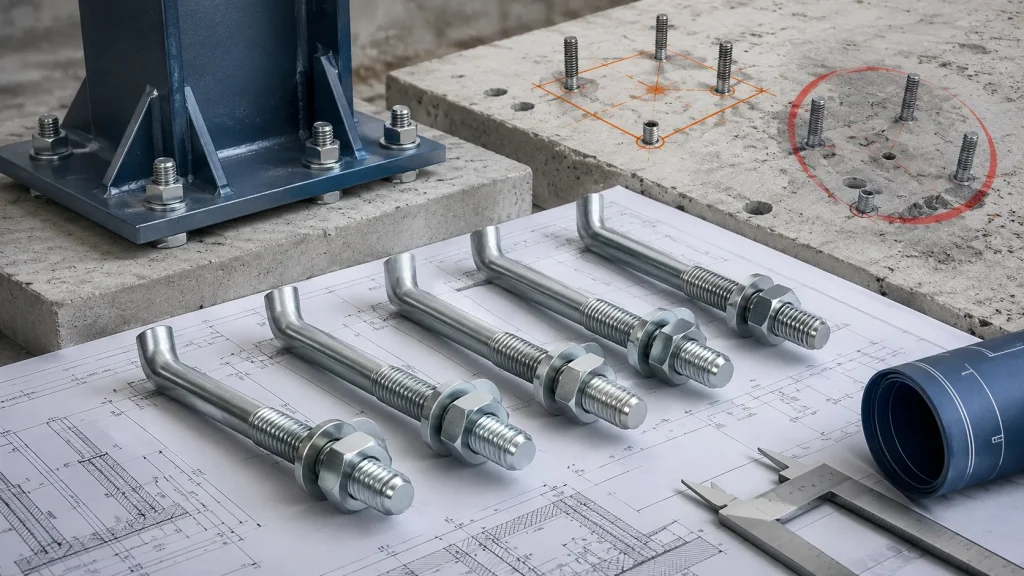
7-letter, 9-letter L-shaped anchor bolt (Chinese national standard GB/T799-1988 embedded anchor screw)

7-letter, 9-letter L-shaped anchor bolt (Chinese national standard GB/T799-1988 embedded anchor screw)

Brand: Wotu Surface: Natural black oxide treatment, customized hot-dip galvanized, zinc plated as required Specifications: Follow Chinese national standard GB/T799-1988, in stock M12-M48, total length 120mm~1500mm, nonstandard customized diameter, bending length, total screw length available Matching: Nuts, flat washers and spring washers of the same specification can be supplied in complete sets. Packaging: Bundling and packaging, using wooden pallets and film-wrapped export packaging in large quantities

Read More
Blue-White Zinc Plated Pan Head With Pad Self-Tapping Screw

Blue-White Zinc Plated Pan Head With Pad Self-Tapping Screw

Brand: Hengzuan Surface: blue and white zinc plated Specifications: in stock ST4.2/ST4.8full range of specifications, length 13~50mm in stock, support nonstandard length customization Packaging: 25kg cartons, solid wood packaging, support neutral packaging, private-label customization

Read More
Countersunk Head Blue-White Zinc Plated Self-Drilling Screw (Chinese National Standard: Phillips Countersunk Head Self-Drilling And Self-Tapping Screw GB/T15856.2-2002)

Countersunk Head Blue-White Zinc Plated Self-Drilling Screw (Chinese National Standard: Phillips Countersunk Head Self-Drilling And Self-Tapping Screw GB/T15856.2-2002)

Brand: Hengzuan Surface: blue and white zinc plated, can be customized color zinc plated, black oxide plated Specifications: Comply with GB/T15856.2-2002 Chinese national standard, in stock ST4.2/ST4.8/ST5.5 full range of specifications, length 13mm~75mm optional, supports customized nonstandard rod lengths; drilling adaptation plate thickness 0.7~6mm Packaging: 25kg export cartons, full pallets wrapped with film, supports neutral export packaging, customer private-label customization

Read More
Countersunk Head Blue Zinc Self-Drilling Screw

Countersunk Head Blue Zinc Self-Drilling Screw

Brand: Hengzuan Surface: blue and white zinc plated, can be customized color zinc plated, black oxide plated Specifications: in stock 3.5/3.9/4.2/4.8/5.5 mainstream wire diameter, rod length 13mm~75mm full size range, nonstandard length can be customized as needed Packaging: 25kg export cartons, full wooden pallets wrapped with film, supports neutral export packaging, private-label customization

Read More

Compare Anchor-and-Screw Fits for Sheetrock Walls

Sheetrock Anchor Screw Selection

When comparing sheetrock anchor screws, review the anchor mechanism, compatible screw dimensions, wall-board thickness range, head and drive style, material or finish, installation method, and the intended loading conditions. The correct combination matters more than choosing a screw by appearance or length alone.

Criterion What To Check Why It Matters Buyer Tip
Anchor style for the wall condition Confirm whether the job needs plastic expansion anchors, threaded drywall anchors, toggle-style anchors, or another type suited to hollow gypsum board. Different anchors grip sheetrock in different ways. A light fixture, a shelf bracket, and a cable clip do not put the same load on the wall. What is being fixed to the sheetrock, and will the load pull straight down, pull outward, or both?
Screw length and anchor engagement Match the screw length to the anchor body, wall thickness, and fixture thickness before ordering. A screw that is too short may not expand or engage the anchor fully; a screw that is too long can bottom out or damage the cavity behind the board. Can you provide the sheetrock thickness and the thickness of the bracket, plate, or part being fastened?
Head style and drive recess Compare pan, flat, bugle, or countersunk heads, and confirm the drive type used by the installer. The head must seat correctly against the fixture. The wrong head can prevent a flush fit, crack a plastic part, or make installation slower on site. Should the screw sit proud, sit flat on a bracket, or finish flush in a countersunk hole?
Thread and point behavior during installation Ask whether the screw is intended to cut into the anchor only, or pass through the fixture and start cleanly without stripping the anchor. Aggressive threads can speed installation but may damage soft anchors if driven too hard. Fine details matter when installers use powered drivers. Will the anchors be installed by hand tools or power drivers, and is torque control available?
Finish and indoor environment State whether the fasteners will be used in dry interior rooms, humid areas, or near materials that may cause staining or corrosion. Sheetrock anchor screws are often hidden, but corrosion can still weaken the fixing or mark the surrounding surface in damp spaces. Is the application a normal dry interior wall, a bathroom, a kitchen, or another moisture-prone area?

Choose the Fixing for the Wall, Load, and Mounting Hardware

The main distinction is between a screw driven directly into framing and a screw used with a drywall anchor. A framing connection transfers the load into wood or metal behind the board, while an anchor grips or expands within the hollow wall cavity. This affects holding strength, installation method, serviceability, and the risk of damaging the sheetrock.

Anchor choice also depends on whether the wall is hollow, the board thickness, and the space available behind it. Confirm the anchor's compatible screw size and intended load range rather than assuming that a longer or thicker screw will improve performance.

Start with the substrate and load path. Identify the sheetrock thickness and check whether a stud, metal framing member, or masonry surface is available at the fixing point. A light decorative item may suit a hollow-wall anchor, while shelving, cabinets, hand-supported fixtures, or items subject to repeated movement may need a connection to framing or a fastening system designed for that load.

Choose the anchor style together with the screw, not as separate parts. Expansion, self-drilling, and toggle-style anchors behave differently inside the wall and require different installation conditions. The screw must fit the anchor's internal thread or sleeve and leave enough engagement without bottoming out or failing to expand the anchor.

Check the head and drive for the mounting hardware. A countersunk head can suit a flush-mounted bracket with a countersunk hole, while a pan or other non-countersunk head may provide better contact with a flat mounting slot. Match the finish and material to the room environment, especially where moisture or contact with dissimilar metals could affect long-term appearance or service.

Avoid selecting by screw length alone, mixing an anchor with an incompatible screw, or placing several anchors close together without considering the board's condition. For an enquiry, provide the sheetrock or wall construction, the item being mounted and its approximate load, plus the screw head, finish, and quantity required. Ask Hebei Wotu Fastener Manufacturing Co., Ltd. which anchor-and-screw combinations are available for that application and what installation details they require.

Criteria Importance Description Example Options
Load path Usually the first decision Decide whether the load can be carried by sheetrock with an anchor or should be transferred into framing, masonry, or another structural support. A small picture may use a hollow-wall anchor, while a wall cabinet often needs a fixing into framing or a purpose-designed support system.
Anchor mechanism Important for holding behavior and installation Expansion, self-drilling, and toggle-style anchors grip the wall differently and need different wall conditions, hole preparation, and cavity space. A toggle anchor needs room to open behind the board; a self-drilling anchor is selected more for convenient installation in suitable gypsum board.
Screw compatibility Critical to avoid installation failure The screw diameter, thread form, length, and drive must suit the anchor. Substituting a random screw can stop the anchor from expanding or reduce engagement. An anchor supplied or specified for a certain screw size should not be paired with a thicker screw simply because it looks stronger.
Mounting hardware fit Affects seating and stability after tightening The screw head should match the bracket, plate, slot, or countersunk hole so the mounted item sits flat and does not rock under use. A countersunk screw can sit flush in a beveled hole, while a pan head may be better for a flat keyhole slot or metal bracket.
Wall condition and placement Can change a suitable anchor into a poor choice Board thickness, damage, moisture exposure, edge distance, and spacing between fixings all influence whether the anchor can perform as intended. Several anchors placed close together in weak or broken sheetrock may not hold as well as fewer fixings placed into sound material or framing.

Blog Articles / Reviews

How to Specify Countersunk Head Cross Thick Thread Fiberboard Screws for Furniture Assembly Projects

How to Specify Countersunk Head Cross Thick Thread Fiberboard Screws for Furniture Assembly Projects

Fiberboard screws are selected based on more than screw size alone. For furniture assembly and board-based applications, buyers need to match the screw structure with the characteristics of fiberboard, MDF, and similar engineered wood materials. A suitable specification should consider thread design, head style, screw length, diameter, installation method, and application requirements. For buyers sourcing […]

How Should Buyers Evaluate Self Tapping Screws for Project Procurement?

How Should Buyers Evaluate Self Tapping Screws for Project Procurement?

#4 self tapping screws should not be purchased from the “#4” designation alone. For a usable B2B specification, the buyer still needs the actual screw diameter, thread form or pitch, overall length, substrate, pilot-hole condition, head and drive style, material, surface finish and quantity. This matters because suppliers may use different naming systems. Wotu Fastener’s […]

Anchor Bolts: 7 Ordering Errors That Cause Site Rework

Anchor Bolts: 7 Ordering Errors That Cause Site Rework

ost anchor bolt ordering errors come from incomplete drawings, unclear dimensions, unsuitable material or coating choices, undefined tolerances, and mismatched nuts or washers. These mistakes affect steel fabricators, EPC contractors, equipment installers, importers, and distributors because anchor bolts are usually embedded before the connected structure arrives on site. Once concrete has cured, even a small […]

Why Do Self-Tapping Roofing Screws Leak Even When the Screw Length Looks Correct?

Why Do Self-Tapping Roofing Screws Leak Even When the Screw Length Looks Correct?

Direct answer: Correct screw length does not guarantee a watertight metal-roof connection. Self tapping roofing screws can leak because of incorrect washer compression, enlarged or stripped holes, insufficient thread engagement, panel movement, or an unsuitable coating-and-washer system. Buyers should diagnose the complete installed connection—including panel profile, support thickness, point type, washer condition, and exposure—rather than […]

Frequently Asked Questions

Can a drywall anchor replace fastening into a stud?

Not for every application. A drywall anchor spreads load in the gypsum board or behind it, while a stud connection transfers load into the wall framing. For cabinets, grab points, heavy shelves, or fixtures that will be pulled or moved often, confirm whether a structural fixing is required instead of relying on the board.

Is a longer screw always stronger in sheetrock?

No. The screw must match the anchor design and the wall depth available behind the board. If the screw is too long, too wide, or incompatible with the anchor, it may prevent proper expansion, damage the board, or bottom out before the fixing is secure.

What is the difference between self-drilling anchors and toggle-style anchors?

Self-drilling anchors can be convenient for lighter-duty installation because the anchor cuts into the board as it is installed. Toggle-style anchors usually depend on a wing or bar opening behind the wall, so they need enough cavity space and a suitable hole. The better choice depends on load direction, wall condition, and how much access exists behind the sheetrock.

Which screw head should be used with a wall bracket or mounting plate?

Match the head to the hole or slot in the hardware. A countersunk head suits a countersunk hole where the screw should sit flush, while a pan or similar raised head may give broader bearing on a flat slot. The wrong head can leave the bracket loose even if the anchor itself is correctly installed.

What information should be sent with an enquiry?

Provide the wall type, sheetrock thickness if known, the item being mounted, approximate load, required quantity, screw head style, drive type, finish, and any preferred anchor style. Also mention if the fixing point is near a stud, metal frame, edge, damaged board, or damp area, because those details can change the suitable fastener combination.

Leave Your Message

Tell us the wall construction and sheetrock thickness, the item and approximate load to be supported, and the required screw head, finish, quantity, or installation method.