Stainless Screws Selection Guide | Hebei Wotu Fastener Manufacturing Co., Ltd.

Stainless screws for corrosion-resistant assemblies

Stainless screws suit assemblies that need corrosion resistance, a clean appearance, or both. The main purchase decision is not simply choosing a silver-colored screw; it is matching the stainless grade, head style, thread and length to the environment and the material being joined.

For furniture, sheet metal, outdoor fixtures and general assembly work, specify the application first. Moisture, salt exposure, contact with dissimilar metals and the need for a flush or visible head can change the suitable screw design.

Related Products

Hexagonal Wood Screws

Hexagonal Wood Screws

Brand: Wotu Surface: blue and white zinc plated Specifications: Chinese national standard 6#/8#/10#/12#/16#/20#, rod length 35mm~250mm full range of specifications in stock, supports nonstandard length customization Packaging: 25kg cartons, full pallets packed on wooden pallets, support neutral packaging, private-label customization

Read More
Hex nut DIN934-1987 (A/B accuracy classification)

Hex nut DIN934-1987 (A/B accuracy classification)

Brand: Wotu Standard basis: German standard DIN934-1987, metric coarse thread/fine thread universal thread Surface: 304 stainless steel Specifications: M6~M24 full range of specifications Supporting equipment: same specification bolts, flat washer, spring washer complete set of shipment Packaging: 25kg standard carton, whole wooden pallet packaging

Read More
Hex nut (Chinese national standard GB52-1976)

Hex nut (Chinese national standard GB52-1976)

Brand: Wotu Surface: 304 stainless steel Specifications: in stock M6~M24 full standard metric specifications, supports nonstandard pitch, thickening/customized Matching: Can be matched with bolts of corresponding specifications, flat washer, spring washer complete set of supporting shipment Packaging: 25kg cartons, whole wooden pallets

Read More
Hex flange nut (Chinese national standard GB/T6177.1-2000)

Hex flange nut (Chinese national standard GB/T6177.1-2000)

Brand: Wotu Surface: zinc plated Specifications: in stockM6/M8/M10/M12/M14/M16/M20 Chinese national standardfull range of specifications, support nonstandard thickness, tooth pitch customized Matching: can be matched with bolts of the same specification, flat washer, spring washer complete set of shipment Packaging: 25kg cartons, whole wooden pallets

Read More
Hex thin nut

Hex thin nut

Brand: Wotu Surface: zinc plated Specifications: in stock M8~M64 full standard specifications, covering precision, machinery, and steel structure full size range, supporting nonstandard tooth pitch and customized thickness Matching: Can be matched with bolts of corresponding specifications, flat washer, spring washer complete set of shipment Packing: packed in 25kg cartons and packed on wooden pallets.

Read More
Hex Head Self-Drilling Screw With Bonded Washer

Hex Head Self-Drilling Screw With Bonded Washer

Brand: Hengzuan Surface: blue and white zinc plated, color zinc plated can be customized on request Specifications: in stock 4.2/4.8/5.5/6.3mm mainstream wire diameter, length 20mm~165mm full range of specifications, nonstandard rod length, drill point size can be customized Packaging: 25kg export cartons, full pallets wrapped with film, supports neutral export packaging, customer private-label customization

Read More

Match the screw design to the joint and environment

Stainless screw selection criteria

Compare stainless screw options by material grade, corrosion environment, substrate, thread engagement, diameter, length, head and drive style. Also confirm dimensional tolerances, packaging, surface condition and the documentation available for the specified material and design.

Criterion What To Check Why It Matters Buyer Tip
Stainless steel grade and material designation Ask for the stated grade and review the material documentation or marking against the application specification. The grade affects corrosion resistance, strength, magnetic response and suitability for indoor, outdoor or chloride-exposed environments. Which stainless grade is supplied, and can you provide the material certificate for the required batch?
Thread form for the joined materials Match the thread style to the substrate, such as wood, sheet metal, plastic or a pre-threaded hole; confirm with a sample assembly. An unsuitable thread can cause poor engagement, splitting, stripped holes or excessive installation torque. What materials and thicknesses will the screw join, and should the design use tapping, self-drilling or machine threads?
Diameter, length and required thread engagement Measure the combined material thickness, required embedment and any washer or clearance needs before comparing sizes. Too little engagement can reduce holding power, while excessive length may cause breakthrough, interference or damage behind the joint. Can you confirm the recommended diameter and length for this joint, including the required thread engagement?
Head style, drive and seating surface Compare the head profile and drive recess with the installation tool, countersink requirement and available clearance. The head determines whether the screw sits flush, distributes clamping force correctly and can be installed without cam-out or access problems. Does the assembly need a flush countersunk head, a pan head or a washer-bearing head, and which drive is specified?
Corrosion exposure and contact with dissimilar metals Describe moisture, salt, chemicals, temperature and contact materials, then ask how the proposed screw and finish are selected for that environment. Stainless screws can still corrode in demanding conditions, and contact with dissimilar metals may create galvanic corrosion. What exposure and mating metals should the supplier assess before confirming the stainless screw grade and finish?

Specify grade, geometry and installation requirements

The stainless grade matters more than surface appearance. Buyers commonly compare grades such as 304 and 316, but the appropriate choice depends on exposure: ordinary indoor or sheltered use may have different requirements from coastal, marine or chloride-rich environments. Confirm the exact material grade and any available material documentation rather than relying on the word “stainless” alone.

Stainless steel is also different from a coated carbon-steel screw. A coating may provide a surface barrier at a lower cost, while stainless steel provides corrosion resistance through the fastener material itself. The two options can behave differently during installation and in contact with other metals, so the choice should reflect service conditions and assembly requirements.

Start with the joint. For wood, particleboard or fiberboard, thread form and thread engagement affect holding power; for sheet metal, the point, thread profile and pilot-hole requirement are more important. Self-tapping and self-drilling designs are not interchangeable: select based on the substrate and whether the assembly is pre-drilled.

Choose the length from the actual material stack-up, washer or bracket thickness and required engagement. An unnecessarily long screw can interfere with components behind the joint, while a short screw may not develop adequate engagement. Record the diameter, length, head type, drive style and point style together so a replacement is not selected by length alone.

Check the head against the finished surface. Countersunk heads can provide a flush result in suitable materials, while pan, truss or other raised heads may offer a different bearing area or clearance profile. The drive recess also affects installation consistency, particularly on repetitive assembly work.

Stainless fasteners can gall or seize during installation, especially with excessive speed, pressure or incompatible mating materials. Define the installation method, tool control and any required lubricant or installation guidance with the supplier. For an enquiry, provide the joint materials, service environment and required size or drawing; ask the supplier to confirm grade, thread, head, point and available documentation.

Criteria Importance Description Example Options
Stainless grade Critical when corrosion exposure affects service life The material grade determines how well the screw resists the service environment. Buyers should confirm the grade rather than relying on the general term stainless. A sheltered indoor cabinet fastener may not need the same grade as a screw used near salt spray or chemical washdown.
Self-tapping versus self-drilling design Important for installation speed and thread engagement Self-tapping screws are selected for materials and holes where the thread-forming or cutting action is suitable. Self-drilling screws are used where the screw must create its own hole in metal. A pre-drilled sheet-metal joint may use a self-tapping design, while a metal panel fixed without pre-drilling may require a drill-point screw.
Head and drive style Important for finished appearance, clearance and assembly consistency The head controls bearing area and how the screw sits on the surface. The drive style affects tool fit, torque transfer and repeatability in production assembly. A countersunk head may suit a flush furniture surface, while a raised head may be better where extra bearing area or easier service access is needed.
Length and thread engagement Critical for holding performance and avoiding interference The screw must engage enough material to hold securely without protruding into hidden components or deforming the joint. Length should be chosen from the actual material stack-up, not by visual estimate. A bracket fixed through a washer and panel needs a length that accounts for both parts before calculating thread engagement.
Stainless steel versus coated carbon steel Important where cost, corrosion resistance and installation behavior must be balanced Stainless provides corrosion resistance through the fastener material, while coated carbon steel depends on a protective surface layer. Each option has different cost, durability and installation considerations. A dry indoor assembly may accept a coated screw, while a damp or exposed assembly may justify stainless if the grade suits the environment.

Blog Articles / Reviews

How to Specify Countersunk Head Cross Thick Thread Fiberboard Screws for Furniture Assembly Projects

How to Specify Countersunk Head Cross Thick Thread Fiberboard Screws for Furniture Assembly Projects

Fiberboard screws are selected based on more than screw size alone. For furniture assembly and board-based applications, buyers need to match the screw structure with the characteristics of fiberboard, MDF, and similar engineered wood materials. A suitable specification should consider thread design, head style, screw length, diameter, installation method, and application requirements. For buyers sourcing […]

How Should Buyers Evaluate Self Tapping Screws for Project Procurement?

How Should Buyers Evaluate Self Tapping Screws for Project Procurement?

#4 self tapping screws should not be purchased from the “#4” designation alone. For a usable B2B specification, the buyer still needs the actual screw diameter, thread form or pitch, overall length, substrate, pilot-hole condition, head and drive style, material, surface finish and quantity. This matters because suppliers may use different naming systems. Wotu Fastener’s […]

Why Do Self-Tapping Roofing Screws Leak Even When the Screw Length Looks Correct?

Why Do Self-Tapping Roofing Screws Leak Even When the Screw Length Looks Correct?

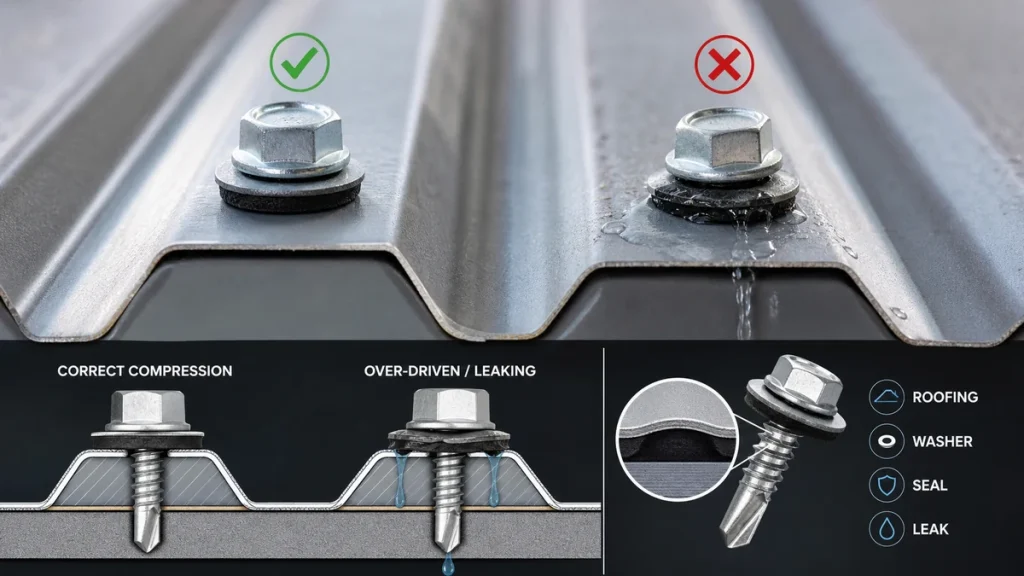
Direct answer: Correct screw length does not guarantee a watertight metal-roof connection. Self tapping roofing screws can leak because of incorrect washer compression, enlarged or stripped holes, insufficient thread engagement, panel movement, or an unsuitable coating-and-washer system. Buyers should diagnose the complete installed connection—including panel profile, support thickness, point type, washer condition, and exposure—rather than […]

What Is the Difference Between Self Drilling and Self Tapping Screws?

What Is the Difference Between Self Drilling and Self Tapping Screws?

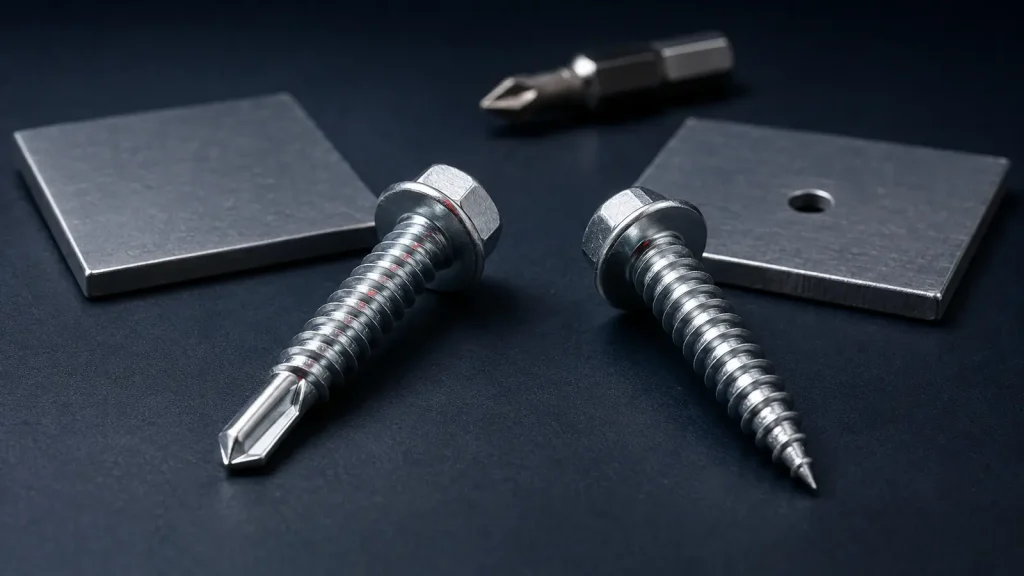
Direct Answer: A self-drilling screw has a drill-shaped point that creates a hole and then forms mating threads in a suitable material. A self-tapping screw forms or cuts mating threads but may require a correctly sized pilot hole. Selection depends on substrate type and thickness, joint stack, point geometry, installation tool, finish and application testing—not […]

Frequently Asked Questions

Is stainless steel always the best choice for outdoor screws?

Not always. Stainless steel is often a strong choice for moisture exposure, but the grade and the surrounding materials still matter. In some sheltered outdoor assemblies, a coated carbon-steel screw may be acceptable; in coastal or chloride-rich areas, buyers usually need to confirm a more corrosion-resistant stainless grade.

What is the practical difference between 304 and 316 stainless screws?

Both are common stainless options, but 316 generally offers better resistance in more aggressive environments, especially where salt or chlorides are present. 304 may suit many indoor, damp-area or general outdoor uses, but the final choice should be based on the actual exposure and any project documentation requirements.

Can a stainless self-tapping screw replace a self-drilling screw?

Only if the joint design allows it. A self-tapping screw forms or cuts threads in a prepared hole or suitable material, while a self-drilling screw has a drill point for creating its own hole in metal. Mixing them up can cause poor engagement, damaged points or slow installation.

Do stainless screws need a coating?

Stainless screws do not rely on a coating in the same way coated carbon-steel screws do, because corrosion resistance comes from the stainless material itself. A surface finish may still be specified for appearance, cleanliness or handling, but it should not be treated as a substitute for the correct stainless grade.

What information should be included in an enquiry?

Provide the screw diameter, length, head type, drive style, thread type, point style and stainless grade if already specified. Also include the joined materials, exposure conditions, required packaging, drawing or standard if available, and whether material documentation is needed.

Why can stainless screws seize during installation?

Stainless fasteners can gall when threads bind under pressure, speed or heat, especially in stainless-to-stainless contact. Tool control, correct pilot holes, compatible mating parts and suitable installation guidance can reduce the risk.

Leave Your Message

Tell us the joint materials, service environment and required screw size or drawing. If relevant, include the preferred head and drive style so the enquiry can address grade, thread and installation fit.