Stud Nut Selection Guide | Hebei Wotu Fastener Manufacturing Co., Ltd.

Stud Nut Selection for Threaded Stud Assemblies

A stud nut secures a threaded stud, but the right choice depends on the joint load, available space and the stud’s thread system. Buyers need to match the nut’s thread size, pitch, material and bearing face to the mating parts rather than treating every hex nut as interchangeable.

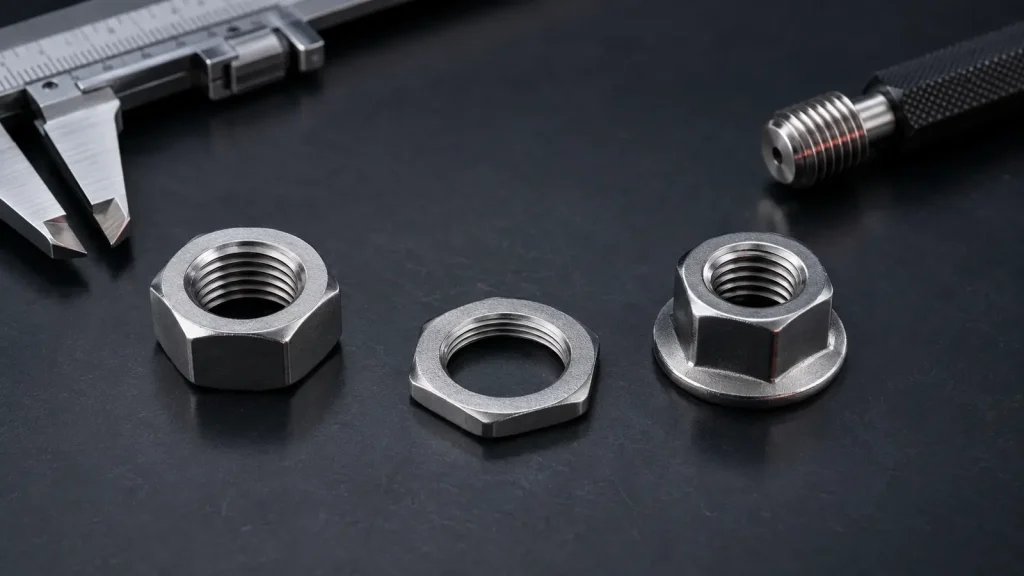
For flange, machinery or structural assemblies, nut height and engagement matter as much as the outside shape. A standard nut, heavy hex nut, thin nut, flange nut or coupling nut serves a different purpose, so the joint drawing and installation method should guide the selection.

Related Products

Hex nut DIN934-1987 (A/B accuracy classification)

Hex nut DIN934-1987 (A/B accuracy classification)

Brand: Wotu Standard basis: German standard DIN934-1987, metric coarse thread/fine thread universal thread Surface: 304 stainless steel Specifications: M6~M24 full range of specifications Supporting equipment: same specification bolts, flat washer, spring washer complete set of shipment Packaging: 25kg standard carton, whole wooden pallet packaging

Read More
Hex thin nut

Hex thin nut

Brand: Wotu Surface: zinc plated Specifications: in stock M8~M64 full standard specifications, covering precision, machinery, and steel structure full size range, supporting nonstandard tooth pitch and customized thickness Matching: Can be matched with bolts of corresponding specifications, flat washer, spring washer complete set of shipment Packing: packed in 25kg cartons and packed on wooden pallets.

Read More
Hex nut (Chinese national standard GB52-1976)

Hex nut (Chinese national standard GB52-1976)

Brand: Wotu Surface: 304 stainless steel Specifications: in stock M6~M24 full standard metric specifications, supports nonstandard pitch, thickening/customized Matching: Can be matched with bolts of corresponding specifications, flat washer, spring washer complete set of supporting shipment Packaging: 25kg cartons, whole wooden pallets

Read More
Hex flange nut (Chinese national standard GB/T6177.1-2000)

Hex flange nut (Chinese national standard GB/T6177.1-2000)

Brand: Wotu Surface: zinc plated Specifications: in stockM6/M8/M10/M12/M14/M16/M20 Chinese national standardfull range of specifications, support nonstandard thickness, tooth pitch customized Matching: can be matched with bolts of the same specification, flat washer, spring washer complete set of shipment Packaging: 25kg cartons, whole wooden pallets

Read More
Grade 8/Grade 10 High-strength Black Oxide Hex Nut (DIN934/GB Chinese National Standard Thickened Nut)

Grade 8/Grade 10 High-strength Black Oxide Hex Nut (DIN934/GB Chinese National Standard Thickened Nut)

Brand: Wotu Surface: quenching and tempering heat treatment + high temperature black oxide anti-rust treatment Specifications: Comply with DIN934, GB/T6170 standards, in stock M6-M48 full range of specifications, nonstandard sizes can be customized Packaging: 25kg carton/woven bag inner packaging, whole wooden pallet wrapped with film for export packaging, supports neutral/private-label customization packaging

Read More
Chinese National Standard / German Standard Hex Nut (thick Nuts, Thin Nuts, Flange Nuts, Multiple Categories)

Chinese National Standard / German Standard Hex Nut (thick Nuts, Thin Nuts, Flange Nuts, Multiple Categories)

Brand: Wotu Surface: color zinc plated, blue-white zinc plated, black oxide, hot-dip galvanized, various surface treatments available Specifications: Comply with DIN934, GB/T6170, GB/T6172.1, GB/T6177.1 standards, in stock M6-M64 full range of specifications, support nonstandard customized Packaging: woven bag inside/25kg export carton, full-container wooden pallet wrapped with film, supports private-label, neutral export packaging

Read More

Compare stud nut types for thread fit and joint load

Stud nut selection points

Compare stud nuts by thread compatibility, nut height, across-flats dimension, bearing face, material, finish and installation access. The most suitable form depends on whether the nut carries the joint load, locks another nut, joins threaded sections or must fit a restricted recess.

Criterion What To Check Why It Matters Buyer Tip
Thread size, pitch and standard Match the nut to the stud drawing or an approved sample, including thread diameter, pitch and thread standard. A similar-looking nut can bind, wobble or damage the stud if the thread form or pitch differs. Ask: Which thread designation and standard should be quoted, and how will the first-piece fit be checked?
Nut height and usable thread engagement Compare the nut’s height and internal threaded length with the stud length and the required thread engagement. Too little engagement can reduce joint security; an overly tall nut may not fit the available space. Send the stud length, joint stack-up and any minimum engagement requirement with the enquiry.
Nut profile and installation access Confirm the outside shape, across-flats dimension and available wrench clearance around the assembly. A correct thread will not solve an installation problem if the tool cannot reach or turn the nut. Provide the assembly drawing or clearance limits and ask which nut profile suits the access area.
Material, strength requirement and surface finish State the joint environment and required material or mechanical property, then verify the proposed nut marking, finish and compatibility with the stud. Load, corrosion exposure and galvanic compatibility affect joint reliability and future removal. Ask for the proposed material and finish, plus the applicable inspection or documentation requirements, before approving samples.
Mating and locking arrangement Confirm whether the stud nut works with a washer, locknut, prevailing-torque feature or another retention method. Changing the nut style can alter clamping behavior, available thread and resistance to loosening. Describe vibration, temperature and maintenance conditions and ask whether the nut is intended as the primary or secondary locking part.

Select the right nut profile for the stud assembly

The main distinction is between a nut intended to carry the joint load and one intended for adjustment, locking or limited clearance. A full-height or heavy hex nut generally provides more thread engagement and bearing area; a thin nut can fit a restricted space but may not be suitable as the only load-bearing nut.

Also confirm what “stud nut” means in your application. Some buyers mean a nut for a stud bolt, while others mean a coupling nut or a special nut used with a threaded rod. That distinction affects the nut length, wrenching profile, material and required thread compatibility.

Start with the complete thread information: nominal diameter, pitch or thread series, thread direction and the stud’s applicable standard. A nut with the correct diameter but the wrong pitch will not assemble correctly. If the order crosses Chinese and German or other international standards, compare the drawing and thread designation rather than relying on a translated product name.

Choose the nut profile around the joint’s job. Standard hex nuts suit ordinary bolted connections; heavy hex forms can provide a larger bearing and wrenching area; thin nuts help where clearance is limited or where a jam-nut arrangement is planned. Do not substitute a thin nut for the primary load-bearing nut without checking the joint design.

Check material, surface condition and the surrounding assembly together. The nut should be compatible with the stud and service environment, and its finish should not create an unwanted mismatch with the mating parts. For a flange or other controlled joint, confirm the required bearing face, tightening method and access for the tool.

Before requesting a quotation, send a drawing or clear thread description, the intended application and the required material or finish. Ask the supplier to confirm the exact nut type, thread standard, dimensional drawing and inspection documents available for the batch.

Criteria Importance Description Example Options
Thread compatibility Essential for assembly The nut must match the stud’s diameter, pitch or thread series, thread direction, and standard. Similar-looking nuts can fail to fit if the thread designation is wrong. A metric stud and an inch-series stud may have close outside diameters but require different nuts.
Nut height and engagement Critical for load-carrying joints Full-height or heavy forms generally provide more thread engagement than thin nuts. Reduced height can solve a clearance issue but may reduce the joint’s load capability. A thin nut may suit a locking arrangement, while a full-height nut may be required as the primary fastening nut.
Nut profile and bearing face Important for tightening access and load distribution Standard hex, heavy hex, flange, thin, and coupling styles serve different purposes. The wrenching space, bearing surface, and mating part shape should guide the selection. A recessed assembly may limit across-flats clearance, while a flange joint may need a specified bearing face.
Material and surface finish Important for durability and compatibility The nut should suit the stud, surrounding parts, and service conditions. Finish choice can affect corrosion resistance, appearance, and fit with mating components. Outdoor equipment may need a finish selected for corrosion exposure, while indoor machinery may prioritize dimensional consistency and assembly fit.
Standard or drawing reference Useful for avoiding substitution errors A clear standard, drawing, or dimensional requirement prevents confusion between similar nut names across different markets. This is especially important when comparing Chinese, German, or other standard systems. Instead of ordering by name alone, provide the thread designation and drawing requirement for confirmation.

Product Selection

Related Options

For a stud-bolt flange or machinery joint, the main priority is reliable thread engagement with enough bearing area for the tightening method. For a space-limited locking arrangement, clearance and the relationship between the thin nut and the primary nut become more important than choosing the smallest part by appearance alone.

Blog Articles / Reviews

Hex Thin Nut vs Standard Hex Nut: Which Fits Space-Limited or Locking Assemblies?

Hex Thin Nut vs Standard Hex Nut: Which Fits Space-Limited or Locking Assemblies?

Direct Answer: Choose a hex thin nut when reduced nut height is genuinely required by the assembly or when the engineering design specifies it as part of a locking arrangement. Choose a standard hex nut when full nut height, normal thread engagement, and the specified load-bearing function are required. Buyers should compare nut height, thread […]

How Should Buyers Select Chinese and German Standard Hex Nuts?

How Should Buyers Select Chinese and German Standard Hex Nuts?

Direct Answer: Select a hex nut by the exact standard number and edition, thread diameter and pitch, nut style, property class, material, finish, mating bolt and acceptance method. “Chinese standard” or “German standard” alone is not a complete specification. Regular, thick, thin and flange nuts can differ in geometry and load behavior, so buyers should […]

Frequently Asked Questions

How do I know if a standard hex nut is enough for a threaded stud?

Check the joint drawing or equipment requirement first. A standard hex nut may be suitable for ordinary fastening, but higher load, larger bearing area, or specific flange service may call for a heavy hex form or another specified nut type.

Can a thin nut replace a full-height nut to save space?

Not usually as a direct substitute. A thin nut is useful where clearance is limited or as part of a jam-nut arrangement, but it provides less thread engagement than a full-height nut, so the joint design should confirm whether it can carry the required load.

What is often misunderstood about ordering nuts for studs?

Buyers sometimes describe the part only by outside shape, such as “hex nut,” and omit the thread system. The nut must match the stud diameter, pitch or thread series, and applicable standard; a visually similar nut may not assemble correctly.

Should the nut material match the stud material?

The nut and stud should be mechanically and chemically compatible for the service environment. Matching is not always as simple as choosing the same material name, so confirm the required grade, finish, corrosion exposure, and any assembly standard before ordering.

What information should I send for a clear inquiry?

Send the stud size, thread pitch or standard, nut type if known, material, finish, quantity, and the application. A drawing or sample description is especially useful when the part might be a heavy hex nut, thin nut, flange nut, or coupling nut rather than a standard hex nut.

Leave Your Message

Please provide the stud diameter and thread standard, the application or joint type, and any required material or surface finish so the inquiry can be checked accurately.