Threaded Bar Selection Guide | Hebei Wotu Fastener Manufacturing Co., Ltd.

Choose the Right Threaded Bar

Threaded bar provides continuous external thread for suspending, securing, aligning or joining components with nuts, washers and couplers. The main buying decision is matching the thread system, material and load requirement to the assembly rather than choosing by diameter alone.

For a suitable enquiry, define the application first: construction anchoring, equipment support, pipe and duct suspension, fabrication or another use. Length, cut format, thread size, finish and required accessories can all affect fit and installation.

Related Products

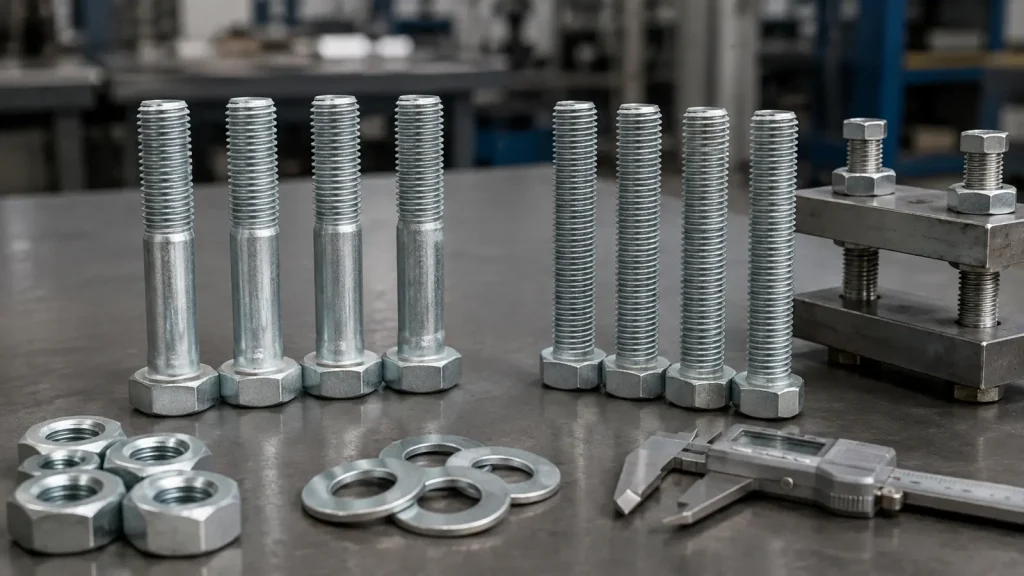
Hot-Dip Galvanized Hex Head Bolt (DIN931 Half Thread / DIN933 Full Thread / GB30 Chinese National Standard Bolt, Can Be Equipped With Nut And Washer Set)

Hot-Dip Galvanized Hex Head Bolt (DIN931 Half Thread / DIN933 Full Thread / GB30 Chinese National Standard Bolt, Can Be Equipped With Nut And Washer Set)

Brand: Wotu Surface: overall hot-dip zinc plating treatment Specifications: Comply with DIN and GB standards, in stock M6-M48 full range of specifications, length 20mm-300mm, supports nonstandard customized. Packaging: woven bag inside / 25kg export carton, film-wrapped wooden pallet; supports neutral packaging and customer private-label customization.

Read More
Countersunk Head Cross Thick Thread Fiberboard Screw

Countersunk Head Cross Thick Thread Fiberboard Screw

Brand: Wotu Surface: color zinc plated electroplating Specifications: in stock 3.5/4.0/4.5/5.0 regular wire diameter, rod length 16~80mm full range of specifications in stock, supports nonstandard length customization Packaging: 25kg cartons, whole wooden pallets

Read More
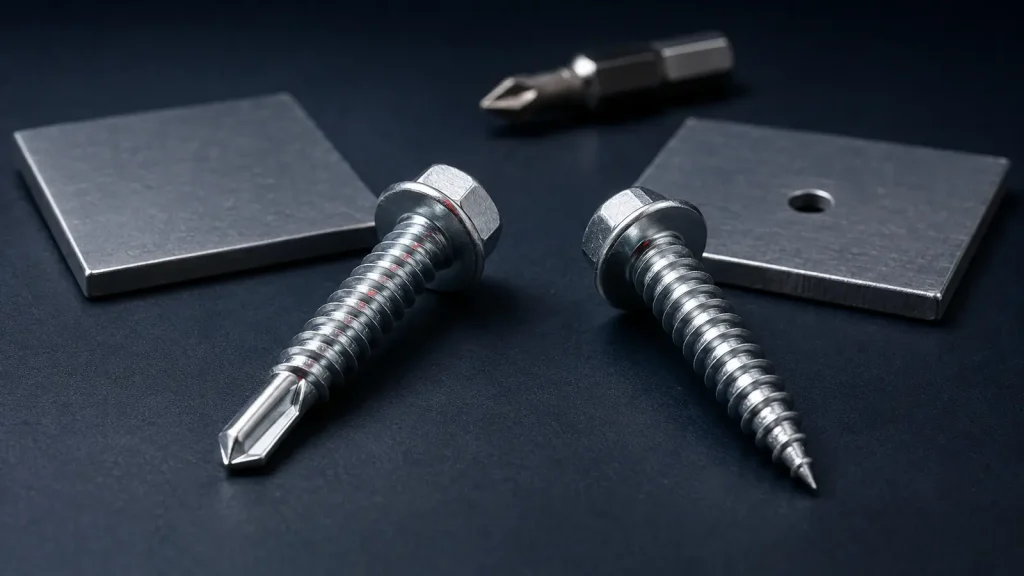
Painted Hex Head Self-Drilling Screw

Painted Hex Head Self-Drilling Screw

Brand: Hengzuan Surface: screw color zinc plated + hex head outdoor paint Specifications: ST5.5, ST6.3, rod length 25mm~120mm in stock, supports nonstandard customization, suitable for drilling steel sheets 2~5mm Packaging: 25kg cartons, whole wooden pallets

Read More

Compare threaded bar by thread, material and finish

Threaded bar selection criteria

Compare threaded bar by thread standard, diameter and pitch, material grade, corrosion protection, length, straightness, end condition and compatibility with the intended nuts or couplers. The correct choice depends on the assembly load, environment and installation method, not on nominal size alone.

Criterion What To Check Why It Matters Buyer Tip
Thread form and pitch Confirm the thread standard, diameter, pitch, and whether the bar is fully threaded along its length. A threaded bar must match the nuts, anchors, couplers, or embedded parts already specified for the job. A small mismatch can stop assembly or reduce thread engagement. Ask: Which thread standard and pitch can you supply for this diameter, and is the full length threaded?
Material grade and strength requirement Match the requested steel grade or strength class to the load, environment, and drawing notes. Threaded bar used for fastening, suspension, anchoring, or structural connection may need different tensile strength and ductility than light-duty fixing work. Ask: What material grade or strength class is available, and can it be supplied with the required mill or inspection documents?
Surface finish and corrosion exposure Decide between plain, zinc-plated, hot-dip galvanized, or another specified finish based on indoor, outdoor, humid, or chemical exposure. The coating affects corrosion resistance, thread fit, appearance, and compatibility with nuts and washers. Ask: Which surface finishes are available for this threaded bar, and should matching nuts be ordered with the same finish?
Cut length and end condition Confirm standard stock lengths, cut-to-length options, cutting tolerance, and whether the ends need chamfering or deburring. Poorly cut ends make nut starting difficult and add labor on site. Accurate length also reduces waste in repeated assemblies. Ask: Can the bars be supplied cut to our required lengths with clean ends ready for assembly?
Packaging for handling and identification Check bundle size, labeling, thread protection, and separation by diameter, length, grade, and finish. Threaded bars are easy to mix up when several sizes look similar. Good packaging reduces picking errors and thread damage during transport. Ask: How will each size and finish be packed and labeled for warehouse or site handling?

Choose threaded bar for the load, environment and assembly

The practical difference between threaded bar and a short threaded stud is the amount of adjustment available. A continuous threaded length can be cut or coupled to suit changing installation distances, while a fixed-length stud is more appropriate when the connection dimensions are already known.

Thread compatibility matters just as much as nominal diameter. Metric and imperial threads, coarse and fine pitches, and different nut or coupler standards should not be mixed. Confirm the mating hardware and the required load or tension before selecting the bar.

Match the thread to the assembly. Specify the thread standard, nominal diameter and pitch, then confirm that nuts, washers, couplers and inserts use the same system. A bar that appears to fit may still have the wrong pitch or thread form.

Select material and finish for the environment. Indoor, damp, outdoor and chemically exposed applications may require different corrosion protection. Plated, coated and stainless options involve trade-offs in corrosion resistance, cost, appearance and compatibility with other components. Ask what protection is available and whether it suits the installation conditions.

Check the structural requirement, not only the size. Threaded bar used for support or anchoring may experience tension, shear, vibration or bending. Confirm the required material grade, strength information and connection design with the responsible engineer or installer. Do not assume that a larger diameter alone makes an assembly suitable.

Specify the supply format clearly. State the required overall length, full- or partial-thread preference if relevant, cut tolerances, end condition, quantity and packaging. For a quotation, send the application, thread standard and size, operating environment, required lengths and any matching nut or coupler requirements. Also ask whether the requested material, finish and documentation can be supplied.


Criteria Importance Description Example Options
Thread standard and pitch Critical for fit The bar must match the nuts, couplers, anchors or inserts used in the assembly. A close visual match is not enough if the thread form or pitch differs. A metric coarse nut should be paired with the corresponding metric coarse thread, not an imperial thread that appears similar in diameter.
Material grade and strength requirement High where the bar supports load Different applications may place the bar in tension, shear, vibration or bending. The required grade should be selected against the connection design rather than by size alone. A suspended equipment support generally needs clearer strength information than a light-duty positioning or alignment use.
Corrosion protection Depends on the environment Indoor dry use, damp areas, outdoor exposure and chemical contact can require different material or finish choices. Better corrosion resistance may add cost or affect compatibility with other components. A bar used in a dry workshop may not need the same protection as one installed in an exposed service area.
Length and cut format Important for installation efficiency Full-length bars can be cut to suit variable site dimensions, while pre-cut lengths reduce site work when measurements are known. End condition and cut tolerance may matter for smooth nut engagement. For repeated assemblies with the same dimension, pre-cut pieces can be easier to handle than cutting every bar on site.
Matching accessories Often overlooked Nuts, washers and couplers must match the thread and suit the load path. Ordering the bar without checking accessories can delay installation or lead to incompatible parts. A coupling connection should use a coupler with the same thread system and suitable engagement length for the intended assembly.

Blog Articles / Reviews

Which U-Bolt Measurements Must Buyers Provide Before a Quote?

Which U-Bolt Measurements Must Buyers Provide Before a Quote?

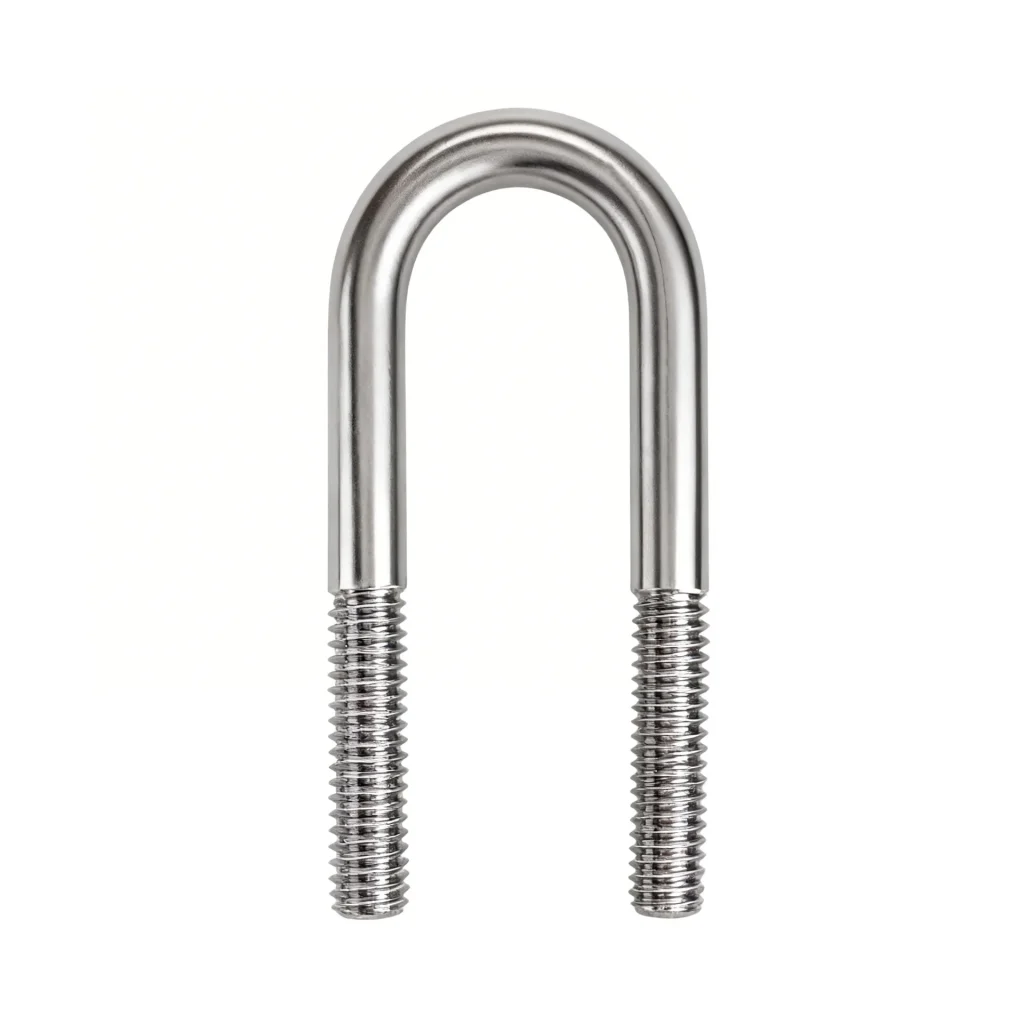
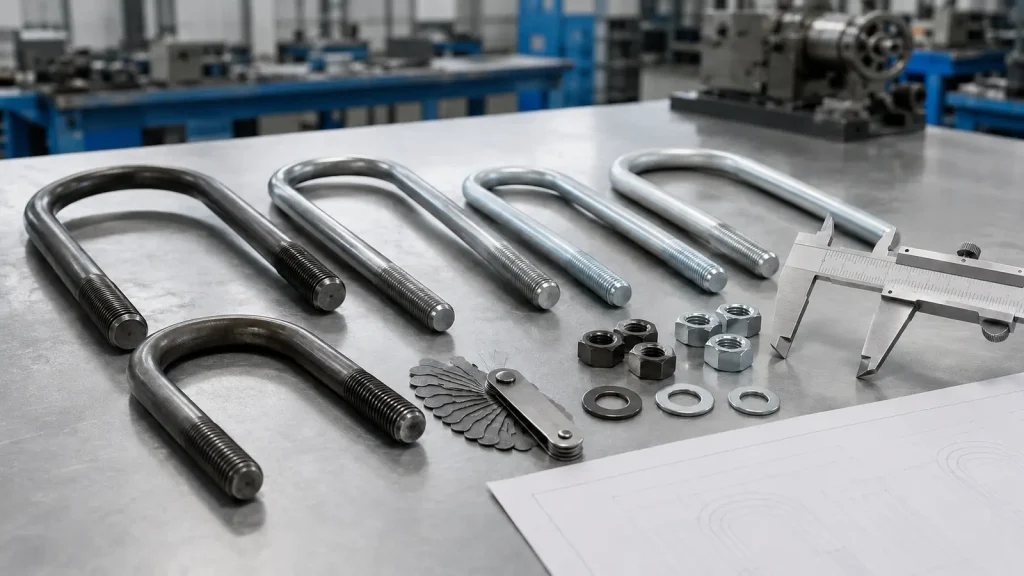
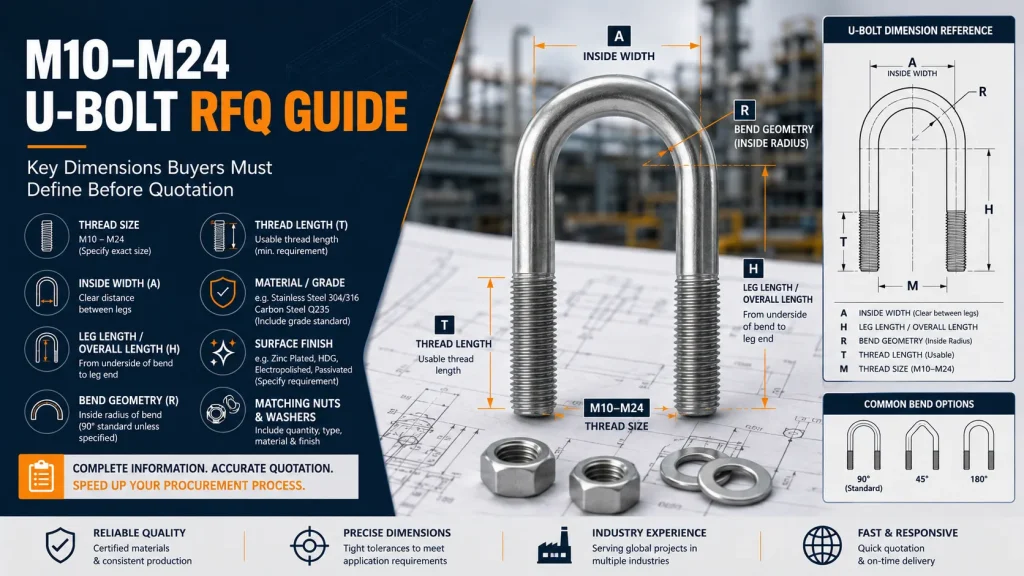
For an M10–M24 U-bolt RFQ, buyers should send a dimensioned drawing that defines thread diameter, inside width, leg or overall length, bend geometry, thread length, application diameter, material or grade requirement, surface finish, matching nuts/washers, quantity, and packing needs. Nominal thread size alone is not enough because different measurement datums can produce U-bolts that look […]

What Should Buyers Verify When Comparing Bolt Manufacturers?

What Should Buyers Verify When Comparing Bolt Manufacturers?

A bolt manufacturer should be evaluated against a defined joint, drawing and acceptance plan—not a product list or unit price alone. Buyers need to verify whether the supplier can manufacture the required geometry, control material and heat-treatment requirements where applicable, manage threads and coatings as one dimensional system, inspect critical characteristics, preserve batch traceability and […]

Which M10–M24 U-Bolt Measurements Must Buyers Send Before an RFQ?

Which M10–M24 U-Bolt Measurements Must Buyers Send Before an RFQ?

Direct Answer: For an M10–M24 U-bolt RFQ, buyers should send a dimensioned drawing that defines thread diameter, inside width, leg or overall length, bend geometry, thread length, application diameter, material or grade requirement, surface finish, matching nuts/washers, quantity, and packing needs. Nominal thread size alone is not enough because different measurement datums can produce U-bolts […]

Anchor Bolts: 7 Ordering Errors That Cause Site Rework

Anchor Bolts: 7 Ordering Errors That Cause Site Rework

ost anchor bolt ordering errors come from incomplete drawings, unclear dimensions, unsuitable material or coating choices, undefined tolerances, and mismatched nuts or washers. These mistakes affect steel fabricators, EPC contractors, equipment installers, importers, and distributors because anchor bolts are usually embedded before the connected structure arrives on site. Once concrete has cured, even a small […]

DIN 931 vs DIN 933 Hex Bolts: What Should Buyers Confirm Before Bulk Ordering?

DIN 931 vs DIN 933 Hex Bolts: What Should Buyers Confirm Before Bulk Ordering?

DIN 931-style half-thread and DIN 933-style full-thread hex bolts should not be selected from diameter and overall length alone. The practical choice depends on the joint stack, required grip, location of the thread transition, available nut engagement, mating hardware, material or property requirement, coating system and governing product specification. A half-thread bolt is not automatically […]

What Is the Difference Between Self Drilling and Self Tapping Screws?

What Is the Difference Between Self Drilling and Self Tapping Screws?

Direct Answer: A self-drilling screw has a drill-shaped point that creates a hole and then forms mating threads in a suitable material. A self-tapping screw forms or cuts mating threads but may require a correctly sized pilot hole. Selection depends on substrate type and thickness, joint stack, point geometry, installation tool, finish and application testing—not […]

Frequently Asked Questions

How do I choose the right size for a threaded bar?

Start with the thread standard, nominal diameter and pitch required by the mating nuts, couplers or anchors. Then confirm the load, installation method and material grade with the responsible engineer or installer, because diameter alone does not prove that the bar is suitable.

Is threaded bar better than a threaded stud?

Threaded bar is useful when the final length may need cutting, coupling or adjustment on site. A threaded stud is usually cleaner when the length and connection dimensions are fixed, because it reduces cutting work and can provide a more defined assembly.

Can metric and imperial nuts be used together if the diameter looks close?

No. Similar-looking thread diameters can have different pitch, angle or thread form, and forcing mismatched parts can damage the threads or create an unsafe connection. Specify the thread system and pitch, then match the nuts, washers, couplers and inserts to it.

What finish should be considered for outdoor or damp installations?

The finish should match the exposure conditions and the expected service life. Plated, coated and stainless options can differ in corrosion resistance, appearance, cost and compatibility with other metals, so confirm the installation environment before ordering.

What information should I send for a practical quotation?

Provide the application, thread standard, diameter, pitch, required lengths, quantity, material or grade if known, surface finish and any matching nuts, washers or couplers. If the part will carry load, also share the design requirement or ask what technical information can be provided for review.

Leave Your Message

For an accurate threaded bar enquiry, provide the application, thread standard and size, required lengths and the installation environment. Include the needed material or finish and any matching nuts, washers or couplers if known.