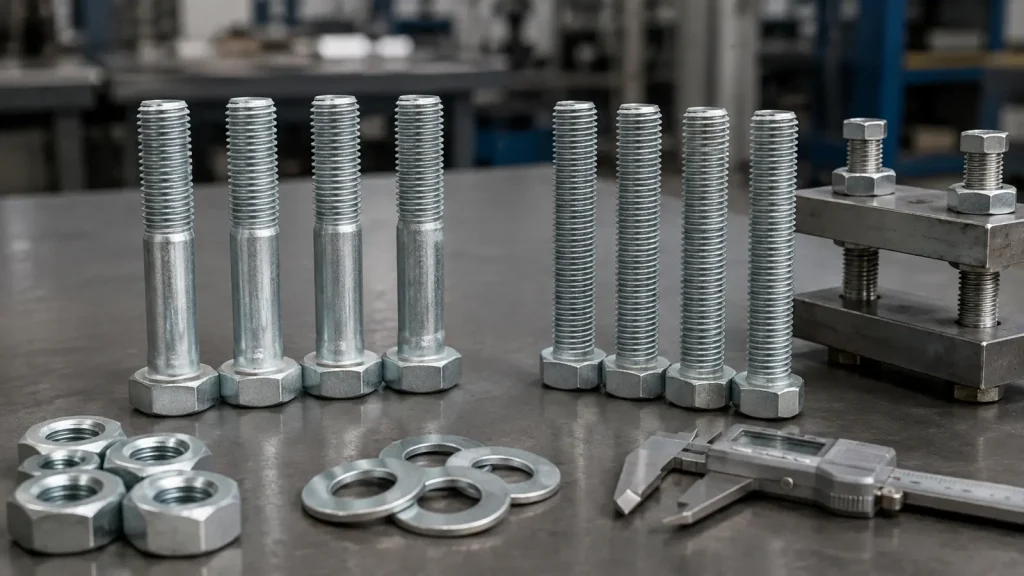
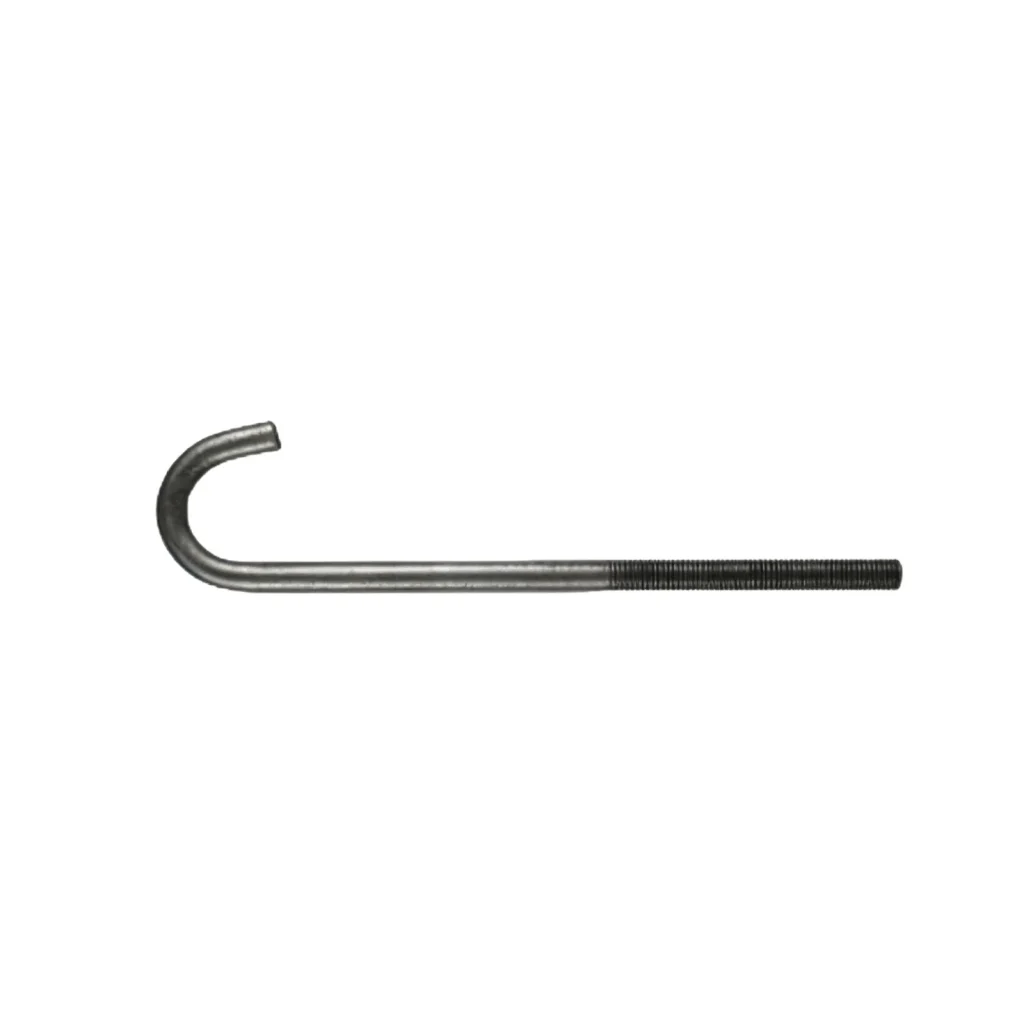
| Stud bolt form and end style |
Confirm whether the job needs fully threaded studs, double-end studs, tap-end studs, or weld studs. |
The end style determines how the stud engages with nuts, tapped holes, flanges, or a welded base. Choosing the wrong form can leave too little thread engagement or make installation impossible. |
Ask: Will this stud pass through two parts with nuts on both ends, screw into a tapped hole, or be fixed to a surface before assembly? |
| Thread specification on each end |
Verify diameter, pitch, thread length, and whether both ends use the same thread. |
Stud bolts often look similar but may have different threaded lengths or pitches. A mismatch can cause assembly delays, poor clamping, or damaged mating threads. |
Ask: Can you match the stud to the drawing or mating nut specification, including thread pitch and usable thread length? |
| Material and strength grade |
Identify the required material, property class, or grade from the drawing, equipment standard, or service condition. |
Stud bolts carry clamp load and may work under vibration, heat, pressure, or outdoor exposure. Material and grade affect strength, ductility, and suitability for the assembly. |
Ask: What grade or standard is already specified, and will the stud be used in a structural, flange, machinery, or general fastening application? |
| Surface finish and corrosion exposure |
Compare plain, zinc plated, hot-dip galvanized, black oxide, or other specified finishes against the working environment. |
Finish affects corrosion resistance, thread fit, appearance, and nut compatibility. Thick coatings may require matching nuts or thread allowances. |
Ask: Will the stud be used indoors, outdoors, in a humid area, or with galvanized mating parts? |
| Overall length and unthreaded shank requirement |
Confirm total length, grip length, and whether a plain shank section is needed between threaded ends. |
A fully threaded stud gives adjustment along its length, while a partial-thread or double-end design can provide a defined grip area and cleaner load transfer in some assemblies. |
Ask: Should the clamped parts bear on thread, or does the drawing require an unthreaded section through the joint? |