Wall Anchors for Secure Fixings | Hebei Wotu Fastener Manufacturing Co., Ltd.

Wall anchors for secure fixture installation

Wall anchors keep fixtures secure when the wall material cannot hold a screw on its own. The right choice depends on the substrate—such as drywall, hollow block, brick or concrete—as well as the fixture’s weight, projection from the wall and expected movement.

Choose the anchor and screw as a matched system rather than selecting by diameter alone. A suitable anchor should spread the load through the wall without damaging the substrate or making installation harder than the application requires.

Related Products

Countersunk Head Cross Black Phosphated Drywall Screw

Countersunk Head Cross Black Phosphated Drywall Screw

Brand: Hengzuan Specifications: in stock 3.5/3.9/4.2 mainstream wire diameter, rod length 16mm~80mm full range of specifications in stock, supports nonstandard length customization Packaging: 25kg export cartons, full pallets wrapped with film, supports neutral export packaging, private-label customization

Read More
Countersunk Head Cross Blue-White Zinc Plated Drywall Screw

Countersunk Head Cross Blue-White Zinc Plated Drywall Screw

Brand: Hengzuan Surface: blue and white zinc plated Specifications: in stock 3.5/3.9/4.2 mainstream wire diameter, rod length 16mm~80mm full size range in stock, supports nonstandard length customization; fine/coarse tooth types are available Packaging: 25kg export cartons, full pallets wrapped with film, supports neutral export packaging, private-label customization

Read More
Dacromet Hex Head Self-Drilling Screw

Dacromet Hex Head Self-Drilling Screw

Brand: Hengzuan Surface: Dacromet anti-corrosion coating Specifications: in stock ST5.5/ST6.3 mainstream caliber, rod length 50mm~150mm, extended full range of specifications, supports nonstandard extra long customized, suitable for drilling steel sheet thickness 2~6mm Packaging: 25kg export cartons, full pallets wrapped with film, supports neutral export packaging, private-label customization

Read More
Countersunk Head Cross Thick Thread Fiberboard Screw

Countersunk Head Cross Thick Thread Fiberboard Screw

Brand: Wotu Surface: color zinc plated electroplating Specifications: in stock 3.5/4.0/4.5/5.0 regular wire diameter, rod length 16~80mm full range of specifications in stock, supports nonstandard length customization Packaging: 25kg cartons, whole wooden pallets

Read More
Blue-White Zinc Plated Winged Countersunk Head Self-Drilling Screw

Blue-White Zinc Plated Winged Countersunk Head Self-Drilling Screw

Brand: Hengzuan Surface: blue and white zinc plated, optional color zinc plated, black oxide treatment Specifications: in stock ST3.5/ST4.2/ST4.8 mainstream specifications, rod length 16~50mm full size range, supports nonstandard length customization, suitable for drilling steel sheets 2~5mm Packaging: 25kg cartons, full pallets packed on wooden pallets, support neutral packaging, private-label customization

Read More
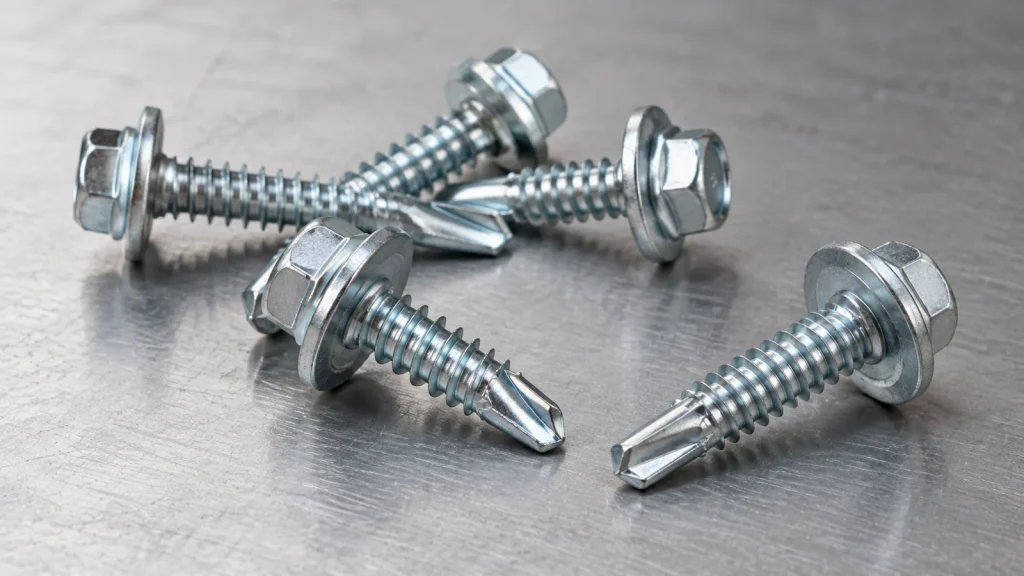
Hex Head Self-Drilling Screw With Bonded Washer

Hex Head Self-Drilling Screw With Bonded Washer

Brand: Hengzuan Surface: blue and white zinc plated, color zinc plated can be customized on request Specifications: in stock 4.2/4.8/5.5/6.3mm mainstream wire diameter, length 20mm~165mm full range of specifications, nonstandard rod length, drill point size can be customized Packaging: 25kg export cartons, full pallets wrapped with film, supports neutral export packaging, customer private-label customization

Read More

Match the anchor to the wall and fixture

Wall anchor selection

Compare wall anchors by substrate compatibility, load direction, anchor and screw dimensions, installation method, resistance to loosening, and how easily the fixing can be removed or replaced. Confirm the required hole size, usable wall thickness and suitable fixture material before approving a design.

Criterion What To Check Why It Matters Buyer Tip
Base material compatibility Confirm whether the anchor is intended for concrete, brick, block, drywall, or hollow wall construction. Wall anchors work by expanding, gripping, or bearing against the material. An anchor that holds well in solid concrete may fail in brittle brick or hollow drywall. Ask: Which wall material is this anchor designed for, and are there materials where it should not be used?
Load direction and fixture type Match the anchor to how the load pulls on the wall, such as straight outward tension, downward shear, or a combination from shelving, brackets, or pipe supports. A light picture frame, a handrail bracket, and a suspended cabinet stress the anchor in different ways. The wrong style can loosen even if the screw fits. Ask: What fixture will be mounted, and will the load pull away from the wall or mainly hang downward?
Anchor style and installation method Compare expansion anchors, sleeve anchors, wedge-type anchors, plastic plugs, toggle anchors, and other styles by the hole size, setting method, and tools required. Some anchors need accurate drilling and controlled tightening, while others are better for quick installation in lighter-duty applications. Tool access also matters on finished walls. Ask: What drill size, screw size, and setting steps are required for this anchor type?
Wall thickness and embedment Check the required embedment depth or grip range against the actual wall, panel, or masonry thickness. If the anchor cannot expand fully or engage enough material, it may spin, crack the base material, or pull out under load. Ask: What minimum wall thickness or embedment depth is needed for reliable installation?
Environment and material finish Identify whether the anchor will be used indoors, outdoors, in damp areas, or near chemicals, and confirm the anchor material or coating offered. Moisture and corrosive environments can affect both the anchor body and the fastener, especially where long-term holding strength matters. Ask: What material and surface finish are available for the expected indoor or outdoor conditions?

Choose wall anchors by substrate, load and installation

The main practical distinction is between anchors for solid walls and anchors for hollow or sheet materials. Expansion anchors generally rely on solid masonry or concrete, while toggle, cavity or self-drilling designs create support behind or within drywall and other hollow walls.

This matters because an anchor that works well in concrete may spin, pull through or fail to engage properly in a hollow wall. For shelves, cabinets and other projecting fixtures, consider leverage and repeated loading—not only the fixture’s static weight.

Start by identifying the wall accurately. Concrete, brick, block, plasterboard and composite panels require different holding methods, and wall thickness can affect whether a cavity anchor or toggle will open correctly. If the substrate is uncertain, confirm it with the installer before choosing the anchor.

Match the anchor to the load direction and fixture shape. A light picture frame places less demand on the wall than a shelf, handrail or wall-mounted cabinet that pulls outward. Fixtures with movement or frequent use need a more secure fixing method and careful spacing between fixing points.

Check compatibility between the anchor, screw, hole size and fixture thickness. A screw that is too short may not engage the anchor fully; one that is too large can prevent expansion or damage the anchor. Avoid mixing components without confirming that the dimensions and installation method are intended to work together.

For an enquiry, provide the wall material and thickness, the fixture type with its approximate load, and the screw or fixing size you plan to use. Also state whether the installation is permanent or needs to be removable, so the proposed anchor type can be checked against the application.

Criteria Importance Description Example Options
Wall substrate Usually the first decision factor The anchor must suit the material it grips. Solid walls, hollow walls and sheet materials use different holding methods. Concrete may suit an expansion fixing; drywall may need a cavity or toggle-style anchor.
Load direction Critical for fixtures that pull away from the wall A flush load is easier to support than a projecting load that creates leverage. Movement or repeated use increases the demand on the fixing. A picture frame places less outward force on the anchor than a wall shelf or cabinet.
Wall thickness and cavity space Important for hollow-wall anchors Some anchors need enough wall depth or open space behind the surface to expand, fold or lock correctly. A toggle anchor may not open properly if the cavity is too shallow.
Screw and anchor compatibility Essential for reliable installation The screw must engage the anchor correctly without preventing expansion, stripping the fixing or leaving too little thread engagement. Using a screw that is too short may not activate the anchor fully.
Removability and wall finish Relevant where appearance or later replacement matters Some anchors are easier to remove or patch than others. Stronger cavity fixings may leave a larger hole or part of the anchor behind. A temporary display may favor an easier-to-remove fixing, while a permanent shelf may prioritize holding strength.

Blog Articles / Reviews

Hex Head Self-Drilling Screws with Cup Washers: Choosing Drill Point and Length

Hex Head Self-Drilling Screws with Cup Washers: Choosing Drill Point and Length

Choosing a hex head self-drilling screw with a cup washer requires more than selecting ST5.5 or ST6.3 and a nominal length. The drilling point must suit the steel it penetrates; the threaded section must engage the intended supporting material; and the head-and-washer assembly must seat correctly on the outer panel. A screw’s drilling capacity is […]

How to Choose Self-Tapping Screws for Plastic Parts

How to Choose Self-Tapping Screws for Plastic Parts

Choose self-tapping screws for plastic by matching the thread design to the resin, pilot hole and surrounding plastic, then checking head seating, thread engagement and tightening conditions on actual parts. Screw diameter alone cannot establish a suitable hole size or installation torque. This guide concerns metal screws fastening into plastic components. These screws create their […]

What Is a Fastener? Types, Functions and Industrial Uses

What Is a Fastener? Types, Functions and Industrial Uses

A fastener is a hardware component that mechanically joins or secures parts. Common examples include screws, bolts, nuts and rivets; washers are supporting components used in many fastening assemblies. Some connections can be dismantled by removing threaded fasteners, while others, such as riveted joints, normally require the fastener to be destroyed during removal. In industrial […]

What Should Buyers Verify When Comparing Bolt Manufacturers?

What Should Buyers Verify When Comparing Bolt Manufacturers?

A bolt manufacturer should be evaluated against a defined joint, drawing and acceptance plan—not a product list or unit price alone. Buyers need to verify whether the supplier can manufacture the required geometry, control material and heat-treatment requirements where applicable, manage threads and coatings as one dimensional system, inspect critical characteristics, preserve batch traceability and […]

Why Do U Bolts Loosen in Pipe Supports? 6 Causes and Prevention Methods

Why Do U Bolts Loosen in Pipe Supports? 6 Causes and Prevention Methods

U bolts usually loosen in pipe supports because the connection loses clamping force, receives continuous vibration, restricts thermal pipe movement, uses an incorrectly sized U bolt, experiences surface settlement, or suffers from corrosion and inadequate inspection. This issue affects EPC contractors, pipe installers, industrial maintenance teams, equipment manufacturers and fastener distributors working with water, oil […]

What are the applications of self-drilling screws?

What are the applications of self-drilling screws?

Self-drilling screws have a wide range of applications; they are one of the most common fasteners. They are mainly used in four main areas: 1. Stainless steel plates, metal plates, galvanized steel plates, and engineering installation. 2. Indoor and outdoor installation of metal curtain walls, metal partitions, etc. 3. Installation of general angle steel, channel […]

Frequently Asked Questions

How do I know which anchor type suits my wall?

Start with the wall material, not the fixture. Solid concrete or brick usually needs an expansion-style fixing, while drywall, hollow block or cavity walls often need an anchor that grips behind the surface or spreads the load inside the cavity.

Is a larger anchor always stronger?

No. A larger anchor can damage thin or brittle wall material, require an oversized hole, or fail to expand correctly if the substrate is unsuitable. The best choice is the anchor design that matches the wall, screw, fixture thickness and load direction.

What is the trade-off between expansion anchors and toggle or cavity anchors?

Expansion anchors are usually simpler and effective in solid materials where the wall can resist outward pressure. Toggle and cavity anchors are better for hollow walls, but they may need enough space behind the wall to open and can be harder to remove cleanly.

Why do anchors sometimes spin in the hole during installation?

Spinning often means the hole is too large, the wall material is too soft, or the anchor type is not suited to the substrate. It can also happen if the screw and anchor are not a matched size, so confirm the recommended drill hole and screw compatibility before installation.

What details should I provide before ordering?

Provide the wall material and thickness, fixture type, approximate load, screw size if already chosen, and whether the fixing must be removable. For shelves, cabinets, rails or other projecting fixtures, also mention how far the load sits from the wall.

Leave Your Message

Tell us the wall material and thickness, the fixture and approximate load, and the screw or fixing size required so the suitable anchor type can be checked.