Wood Screws Selection Guide | Hebei Wotu Fastener Manufacturing Co., Ltd.

Wood Screws for Timber, Panels and Joinery

Wood screws are selected around the timber, joint design and finished appearance—not by length alone. The right combination of thread, point, head style, diameter, material and coating helps the screw hold securely without splitting the wood or standing proud of the surface.

For furniture, cabinetry, framing, outdoor joinery or general repairs, define the wood type and the layers being joined before choosing a screw. Hebei Wotu Fastener Manufacturing Co., Ltd. can confirm its available wood screw designs and production options against those requirements.

Related Products

Hexagonal Wood Screws

Hexagonal Wood Screws

Brand: Wotu Surface: blue and white zinc plated Specifications: Chinese national standard 6#/8#/10#/12#/16#/20#, rod length 35mm~250mm full range of specifications in stock, supports nonstandard length customization Packaging: 25kg cartons, full pallets packed on wooden pallets, support neutral packaging, private-label customization

Read More
Color Zinc Plated Hex Flange Wood Screw With Washer

Color Zinc Plated Hex Flange Wood Screw With Washer

Brand: Hengzuan Surface: color zinc plated, can be customizedblue-white zinc plated Specifications: in stock 4.8/5.5 common wire diameter, rod length 16~125mm full range of specifications, supports nonstandard customized Packaging: 25kg cartons, whole wooden pallets, support neutral packaging, private-label customization

Read More
Countersunk Head Cross Thick Thread Fiberboard Screw

Countersunk Head Cross Thick Thread Fiberboard Screw

Brand: Wotu Surface: color zinc plated electroplating Specifications: in stock 3.5/4.0/4.5/5.0 regular wire diameter, rod length 16~80mm full range of specifications in stock, supports nonstandard length customization Packaging: 25kg cartons, whole wooden pallets

Read More
Countersunk Head Cross Black Phosphated Drywall Screw

Countersunk Head Cross Black Phosphated Drywall Screw

Brand: Hengzuan Specifications: in stock 3.5/3.9/4.2 mainstream wire diameter, rod length 16mm~80mm full range of specifications in stock, supports nonstandard length customization Packaging: 25kg export cartons, full pallets wrapped with film, supports neutral export packaging, private-label customization

Read More
Countersunk Head Cross Blue-White Zinc Plated Drywall Screw

Countersunk Head Cross Blue-White Zinc Plated Drywall Screw

Brand: Hengzuan Surface: blue and white zinc plated Specifications: in stock 3.5/3.9/4.2 mainstream wire diameter, rod length 16mm~80mm full size range in stock, supports nonstandard length customization; fine/coarse tooth types are available Packaging: 25kg export cartons, full pallets wrapped with film, supports neutral export packaging, private-label customization

Read More
Blue-White Zinc Plated Winged Countersunk Head Self-Drilling Screw

Blue-White Zinc Plated Winged Countersunk Head Self-Drilling Screw

Brand: Hengzuan Surface: blue and white zinc plated, optional color zinc plated, black oxide treatment Specifications: in stock ST3.5/ST4.2/ST4.8 mainstream specifications, rod length 16~50mm full size range, supports nonstandard length customization, suitable for drilling steel sheets 2~5mm Packaging: 25kg cartons, full pallets packed on wooden pallets, support neutral packaging, private-label customization

Read More

Compare screw designs for your wood joint

Wood screw selection

Compare wood screws by application first, then review diameter, length, thread form, point, head style, drive, material, coating and packaging. The correct choice depends on the timber or panel, joint thickness, installation method, exposure conditions and whether the finished head must sit flush.

Criterion What To Check Why It Matters Buyer Tip
Wood species and density Confirm whether the application uses softwood, hardwood, plywood, MDF or particleboard, then review the recommended pilot-hole approach. Dense hardwood can resist driving and split near edges, while engineered boards may have lower thread-holding strength or crumble around the hole. Ask, “Which wood materials and pilot-hole sizes were used to validate this screw?”
Screw length and thread engagement Compare the screw length with the thickness of the attached part and the depth available in the base material; check whether the stated length includes the head. Too little thread engagement can reduce holding strength, while excessive length can break through the workpiece or interfere with hidden components. Provide both material thicknesses and ask, “What usable thread engagement do you recommend for this joint?”
Head style and drive recess Match the head to the surface finish and joint design, and confirm that the drive recess fits the installation tool and expected torque. A countersunk head can sit flush in suitable wood products, while an unsuitable head may damage the surface or leave the joint proud. Ask, “Is this head intended to sit flush, remain exposed, or work with a countersink?”
Coating and service environment Confirm the finish and the intended exposure, including dry indoor use, humidity, outdoor weather or contact with treated wood. Moisture and wood-treatment chemicals can affect corrosion resistance; a finish suitable for dry interiors may not suit exterior assemblies. Describe the exposure and ask, “Is this finish recommended for this environment and wood treatment?”

Specify the right screw for timber, panels and finished surfaces

The main distinction is between a screw intended for direct fastening into wood and one intended for sheet material, metal or a pre-drilled assembly. Wood screws commonly use a geometry suited to forming a thread in timber, while fiberboard and chipboard screws may use sharper points or different thread proportions for engineered panels.

This matters because the same screw can behave differently in hardwood, softwood, plywood and particleboard. A design that works well in solid timber may strip, split the panel or provide weak pull-out resistance in another material. For furniture or fiberboard applications, compare the head, thread and point as a complete design; the related fiberboard screw specification guide provides a useful reference.

Match length and diameter to the joint. The screw should engage enough material in the supporting member without emerging from the far side or colliding with hidden hardware. Account for the thickness of the first piece, any countersink, and the depth available in the second piece. A longer screw is not automatically stronger if it causes splitting or weakens the joint.

Choose the thread for the material. Coarse threads are often considered for softer wood and some sheet materials, while a different thread form may be more suitable for hardwood or engineered panels. If the joint uses two different materials, check whether the screw is designed for that combination rather than assuming a general-purpose wood screw will perform equally well.

Specify the head and drive for the installation. Countersunk heads suit flush furniture and joinery surfaces when the material can accept the recess. Pan or other raised heads may be preferable where the screw must clamp a fitting or where a flush finish is unnecessary. The drive type should match the intended tool and the assembly process; poor bit fit is a common cause of damaged heads and inconsistent seating.

Confirm corrosion and appearance requirements. Interior dry-use furniture, damp rooms and outdoor joinery may require different materials or coatings, and the visible finish may need to match the surrounding hardware. Before requesting a quotation, send the wood or panel type, joint sketch or layer thickness, preferred head and drive, and the required finish or service environment. Ask Hebei Wotu Fastener Manufacturing Co., Ltd. which designs and finishes it can supply for that application.

Criteria Importance Description Example Options
Wood or panel material This is a primary fit criterion because thread and point geometry can behave differently in hardwood, softwood, plywood and engineered panels. Identify the material being entered by the screw and whether the joint combines different materials. A general timber screw may not provide the same result in fiberboard or particleboard. A furniture panel joint may call for a panel-focused design, while a solid softwood repair may call for a different thread and point.
Length and diameter These dimensions affect thread engagement, clamping and the risk of splitting or breakthrough. Base the size on the thickness of the first piece, the support available in the second piece and any countersink depth. More length or diameter is not automatically better. A short trim piece joined to a thicker support needs enough engagement without allowing the screw to emerge from the back.
Thread and point design The thread must form and hold in the selected material without excessive installation force or damage. Compare coarse or other thread forms, point geometry and the need for a pilot hole against the wood or panel type. Designs for engineered boards and solid timber may involve different trade-offs. A sharp point and panel-suitable thread may be considered for fiberboard, while a different geometry may suit a hardwood joint.
Head and drive style These features control surface finish, clamping behavior and how consistently the screw can be installed. Choose a countersunk head for a flush finish when the material permits recessing, or a raised head where a visible head is acceptable or a fitting must be clamped. Match the drive to the available bit and assembly process. Cabinet assembly may favor a flush countersunk head, while a bracket can use a raised head if surface appearance is not the main concern.
Material, coating and service environment Exposure conditions influence corrosion resistance and the appearance required for the finished assembly. Separate dry interior use from damp-room or outdoor joinery requirements, then confirm which base materials and finishes are available for that environment. Also consider whether the screw will remain visible. An indoor cabinet and an outdoor timber joint may need different finish and corrosion-resistance considerations even when their dimensions are similar.

Blog Articles / Reviews

How to Specify Countersunk Head Cross Thick Thread Fiberboard Screws for Furniture Assembly Projects

How to Specify Countersunk Head Cross Thick Thread Fiberboard Screws for Furniture Assembly Projects

Fiberboard screws are selected based on more than screw size alone. For furniture assembly and board-based applications, buyers need to match the screw structure with the characteristics of fiberboard, MDF, and similar engineered wood materials. A suitable specification should consider thread design, head style, screw length, diameter, installation method, and application requirements. For buyers sourcing […]

How Should Buyers Evaluate Self Tapping Screws for Project Procurement?

How Should Buyers Evaluate Self Tapping Screws for Project Procurement?

#4 self tapping screws should not be purchased from the “#4” designation alone. For a usable B2B specification, the buyer still needs the actual screw diameter, thread form or pitch, overall length, substrate, pilot-hole condition, head and drive style, material, surface finish and quantity. This matters because suppliers may use different naming systems. Wotu Fastener’s […]

Why Do Self-Tapping Roofing Screws Leak Even When the Screw Length Looks Correct?

Why Do Self-Tapping Roofing Screws Leak Even When the Screw Length Looks Correct?

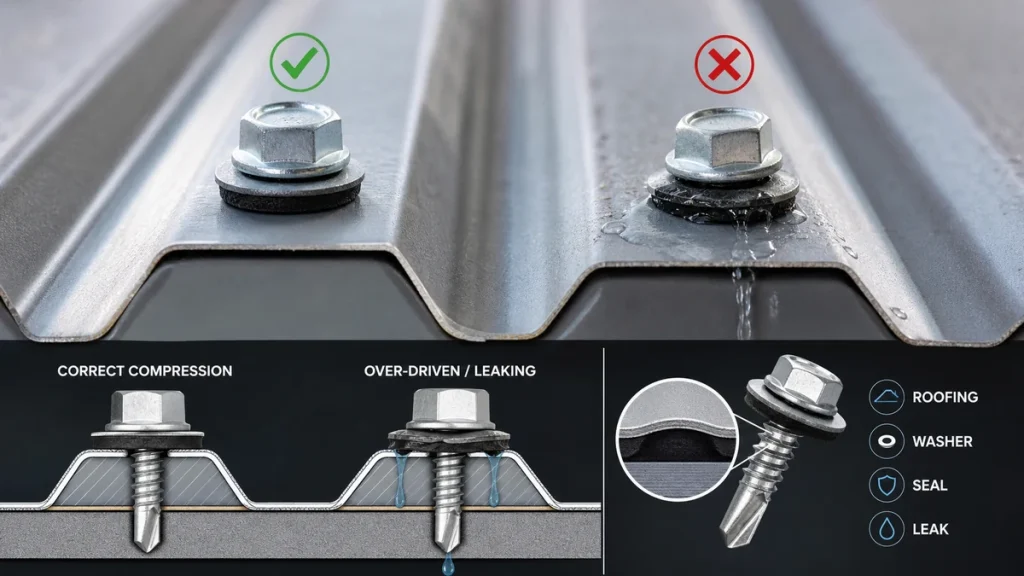
Direct answer: Correct screw length does not guarantee a watertight metal-roof connection. Self tapping roofing screws can leak because of incorrect washer compression, enlarged or stripped holes, insufficient thread engagement, panel movement, or an unsuitable coating-and-washer system. Buyers should diagnose the complete installed connection—including panel profile, support thickness, point type, washer condition, and exposure—rather than […]

What Is the Difference Between Self Drilling and Self Tapping Screws?

What Is the Difference Between Self Drilling and Self Tapping Screws?

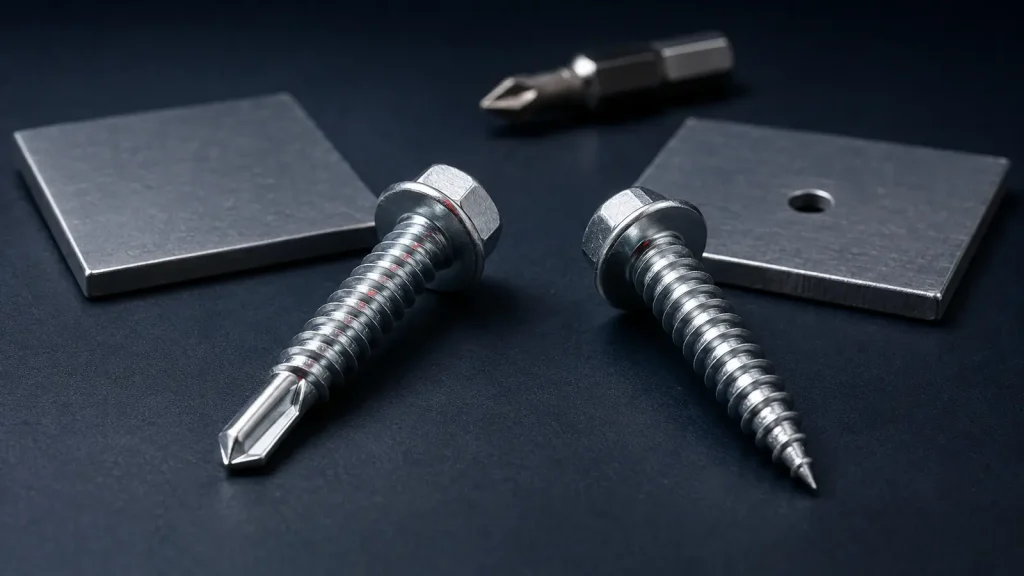
Direct Answer: A self-drilling screw has a drill-shaped point that creates a hole and then forms mating threads in a suitable material. A self-tapping screw forms or cuts mating threads but may require a correctly sized pilot hole. Selection depends on substrate type and thickness, joint stack, point geometry, installation tool, finish and application testing—not […]

Frequently Asked Questions

Can one screw design cover solid timber and engineered panels?

Not always. Hardwood, softwood, plywood, particleboard and fiberboard can respond differently to the same thread and point, so confirm that the design suits the material and the required holding strength. Screws intended for furniture panels may differ from those selected for solid timber joinery.

When should I consider a fiberboard or chipboard screw instead?

Consider one when the joint is made from particleboard, MDF or another engineered panel and the screw must form a reliable thread without damaging the board. The trade-off is that a design optimized for panels may not be the best choice for hardwood or general timber work; compare the thread, point and head as a complete design.

Does a longer or thicker screw automatically make the joint stronger?

No. Extra length or diameter can cause splitting, leave too little material around the hole, or emerge through the far side, while insufficient engagement can reduce holding power. Select the size from the thickness of each layer, the available support material and the joint load rather than from length alone.

When is a countersunk head preferable to a raised head?

A countersunk head is useful when the finished surface should be flush, such as on many furniture or joinery assemblies, provided the material can accept the recess. A pan or other raised head may suit a fitting or bracket where flush seating is unnecessary; the drive must also match the installation tool to reduce head damage.

What information should I provide when asking Hebei Wotu Fastener Manufacturing Co., Ltd. about suitable options?

Provide the wood or panel type, the thickness and order of the layers, the required screw length and diameter if known, the head and drive preference, the installation method, and the indoor or outdoor service environment. Ask which available designs, materials and finishes match those conditions, and confirm packaging or quantity requirements separately.

Leave Your Message

Tell us the wood or panel type, the thickness of the pieces being joined, and your preferred head, drive or finish so we can confirm suitable options.