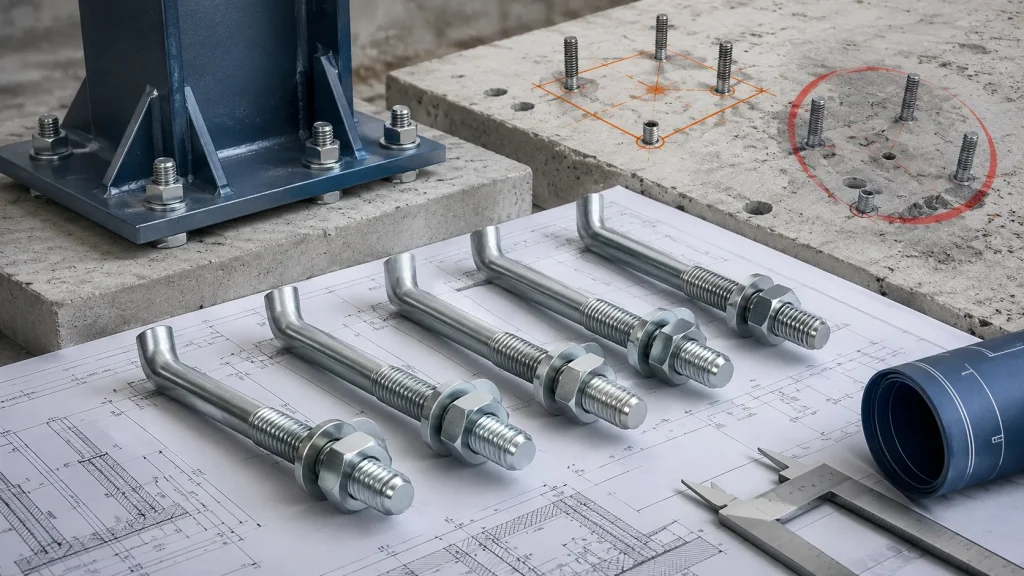
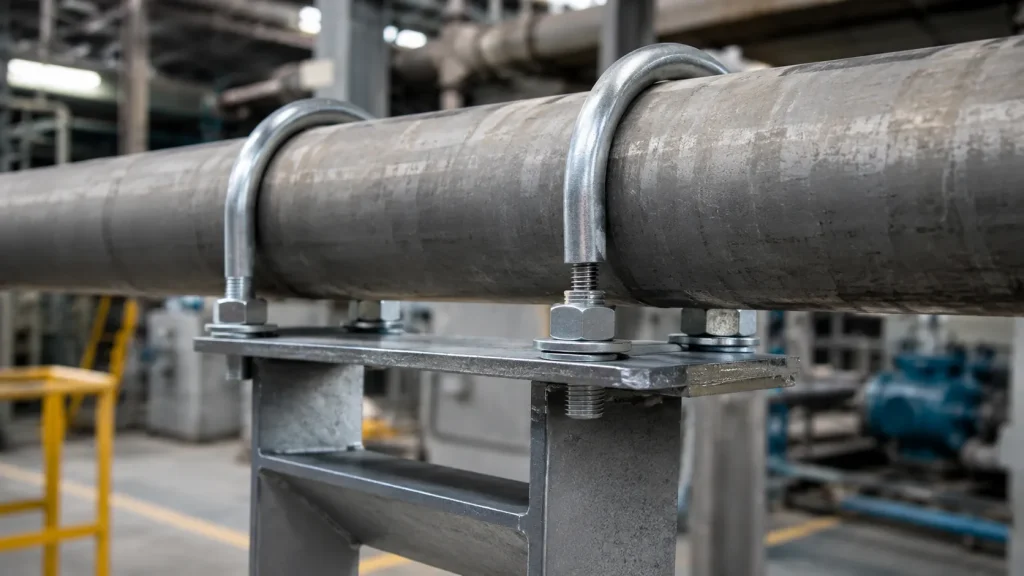
| Fastener type and intended joint |
Confirm whether the requirement is for a bolt, screw, or stud, and identify the joint materials and access constraints. |
Bolts usually work with a nut, screws form threads in a material or threaded hole, and studs provide threaded engagement at both ends. Choosing the wrong form can prevent assembly or servicing. |
Ask: Will the fastener pass through the parts with a nut, cut or form its own thread, or remain installed as a double-ended threaded member? |
| Diameter, length, thread and fit |
Compare the thread designation, pitch, usable threaded length, overall length, head or end form, and mating nut or tapped-hole requirement against the assembly drawing. |
A small mismatch in thread form or insufficient engagement can cause assembly failure, interference, or poor load transfer even when the nominal diameter looks correct. |
Send the drawing or a complete dimensional schedule and ask the supplier to confirm every mating component before ordering. |
| Material and strength requirement |
Match the fastener material and stated property or grade requirement to the joint load, temperature, corrosion exposure, and mating materials. |
Material choice affects load capacity, deformation, corrosion behavior, and the risk of galvanic interaction with adjoining parts. |
Ask which material and grade are available for the required bolt, screw, or stud, and request the applicable material documentation for the supplied lot. |
| Surface finish and service environment |
Specify the required finish and describe exposure to moisture, chemicals, outdoor conditions, heat, or other corrosive environments. |
The finish must suit the service environment without creating an unacceptable fit or compatibility problem with the nut, tapped hole, or assembly material. |
Ask the supplier to recommend a finish for the stated environment and confirm whether it changes thread fit or requires matching mating hardware. |
| Installation and maintenance method |
Define the tool access, tightening method, reuse expectation, locking arrangement, and whether the fastener must be removable or permanently retained. |
Head style, drive type, stud arrangement, and locking method affect installation time, access, preload control, and future disassembly. |
Ask which installation details the supplier needs to confirm the correct head, drive, nut, washer, and locking arrangement for your assembly. |