Cooling Sheet Price and Specification Questions | Hebei Wotu Fastener Manufacturing Co., Ltd.

Cooling Sheet Price and Specification Questions

Cooling sheet price depends on more than the material name. For thermal pads or heat-conductive sheets used between a component and a heat sink, the key decision is whether the sheet provides reliable contact at the required thickness without adding unnecessary material cost.

Compare quotes against the same sheet size, thickness, thermal performance requirement, electrical insulation need, compression behavior and order quantity. A lower unit price may not be cheaper if the sheet needs extra cutting, creates poor contact, or requires a different assembly process.

Related Products

Hex thin nut

Hex thin nut

Brand: Wotu Surface: zinc plated Specifications: in stock M8~M64 full standard specifications, covering precision, machinery, and steel structure full size range, supporting nonstandard tooth pitch and customized thickness Matching: Can be matched with bolts of corresponding specifications, flat washer, spring washer complete set of shipment Packing: packed in 25kg cartons and packed on wooden pallets.

Read More
Wafer Head Self-Drilling Screw

Wafer Head Self-Drilling Screw

Brand: Hengzuan Surface: blue and white zinc plated, can be customized color zinc plated, black oxide plated Specifications: Comply with GB/T15856.2 Chinese national standard, in stock ST3.5/ST4.2/ST4.8/ST5.5 mainstream wire diameter, rod length 13mm~50mm full range of specifications, nonstandard length customization on demand, drilling applicable plate thickness 2~5mm Packaging: 25kg export cartons, full pallets wrapped with film, supports neutral export packaging, private-label customization

Read More
Countersunk Head Blue-White Zinc Plated Self-Drilling Screw (Chinese National Standard: Phillips Countersunk Head Self-Drilling And Self-Tapping Screw GB/T15856.2-2002)

Countersunk Head Blue-White Zinc Plated Self-Drilling Screw (Chinese National Standard: Phillips Countersunk Head Self-Drilling And Self-Tapping Screw GB/T15856.2-2002)

Brand: Hengzuan Surface: blue and white zinc plated, can be customized color zinc plated, black oxide plated Specifications: Comply with GB/T15856.2-2002 Chinese national standard, in stock ST4.2/ST4.8/ST5.5 full range of specifications, length 13mm~75mm optional, supports customized nonstandard rod lengths; drilling adaptation plate thickness 0.7~6mm Packaging: 25kg export cartons, full pallets wrapped with film, supports neutral export packaging, customer private-label customization

Read More
Countersunk Head Blue Zinc Self-Drilling Screw

Countersunk Head Blue Zinc Self-Drilling Screw

Brand: Hengzuan Surface: blue and white zinc plated, can be customized color zinc plated, black oxide plated Specifications: in stock 3.5/3.9/4.2/4.8/5.5 mainstream wire diameter, rod length 13mm~75mm full size range, nonstandard length can be customized as needed Packaging: 25kg export cartons, full wooden pallets wrapped with film, supports neutral export packaging, private-label customization

Read More
Hex Head Self-Drilling Screw With Cup Washer

Hex Head Self-Drilling Screw With Cup Washer

Brand: Hengzuan Surface: color zinc plated Specifications: in stock ST5.5/ST6.3 regular diameter, rod length 19mm~75mm in stock, supports nonstandard customized, suitable for drilling steel sheet thickness 2~5mm Packaging: carton packaging, full pallets wooden pallet packaging, support neutral packaging, private-label customization

Read More

Cooling sheet selection for the actual interface

Selection criteria

When comparing cooling sheet options, review thermal transfer needs alongside thickness, compressibility, electrical insulation, surface adhesion, temperature resistance, dimensional tolerance and format. The right choice depends on the interface and assembly pressure, so confirm these points before comparing unit prices.

Criterion What To Check Why It Matters Buyer Tip
Cooling material and construction Ask what the sheet is made from, such as cooling fiber, gel layer, treated fabric, or a breathable weave. The material usually drives the price and affects how long the cool feel lasts during use. Ask: Is the cooling effect built into the fabric, added as a coating, or created by airflow?
Size, thickness, and usable coverage Compare the exact finished size and thickness, not only the product name or bed size description. A larger or thicker cooling sheet may cost more, but it may also cover the intended area better and feel more stable. Ask: What are the finished dimensions, and do they change after washing or packing?
Wash care and cooling durability Confirm the recommended washing method and whether the cooling performance is expected to reduce after repeated washing. A lower price can be less attractive if the sheet loses its feel quickly or needs special care. Ask: Can you provide care instructions and explain how washing affects the cooling surface?
Surface feel and end use Match the sheet to the application, such as bedding, pet use, medical comfort, travel, or summer retail goods. Softness, slip resistance, noise, and skin contact comfort can matter more than the lowest unit price. Ask: Is this sheet intended for direct skin contact, and can a sample be checked before ordering?
Price basis and packing Clarify whether the quoted price is per piece, per set, per square meter, or per carton, and what packaging is included. Cooling sheet prices can look different until size, quantity, packing, and included accessories are compared on the same basis. Ask: Please quote the same size, quantity, packing method, and delivery terms so the offers are comparable.

Compare cooling sheet cost without hiding the specification

The main price difference usually comes from the sheet construction and the way it is supplied. A basic thermally conductive sheet may suit a simple, flat interface, while an electrically insulating, compressible or custom-cut sheet may cost more but solve clearance, contact or safety requirements.

Ask for the price by finished piece and by material area, and confirm whether cutting tools, backing liners, packaging and delivery are included. This prevents comparisons between a standard roll, a blank sheet and a ready-to-install die-cut part as if they were equivalent.

Start with the application: identify the component being cooled, the mating surface, available gap, operating temperature range and whether the sheet must insulate electricity. A sheet that is too thick may increase thermal resistance, while one that is too thin or too stiff may not fill surface irregularities.

Balance conductivity against compressibility and handling. The highest stated conductivity is not automatically the best choice if the assembly cannot apply consistent pressure or if the material does not conform to the surfaces. Check how the sheet performs after assembly, not only its material label.

Compare finished specifications carefully. Confirm dimensions, thickness tolerance, adhesive or non-adhesive construction, liner type, cut shape, quantity per package and whether custom tooling is charged separately. Avoid requesting a quote with only the phrase “cooling sheet”; it leaves too many cost-driving details open.

For a useful enquiry, send a drawing or clear dimensions together with the application, target quantity and insulation or temperature requirements. Ask which construction is recommended, what is included in the quoted price, and whether the company can supply the required format.

Criteria Importance Description Example Options
Finished format High when assembly time, fit and material waste affect total cost. Compare blank sheet, roll material and ready-to-install die-cut pieces as separate supply formats. The lowest material-area price may not produce the lowest installed cost. A standard sheet may require in-house cutting, while a shaped piece arrives ready for placement.
Thickness and gap conformity High because an incorrect thickness can increase thermal resistance or leave poor contact. Match the material thickness and compression behavior to the actual interface gap and surface irregularities. A thinner option is not automatically better if it cannot fill the gap consistently. A small, controlled gap may suit a thin sheet; a larger uneven gap may require a more compressible construction.
Electrical insulation and construction Important for assemblies where the interface must separate conductive parts electrically. Confirm whether the sheet needs insulating properties, adhesive backing, a liner or a non-adhesive construction. These features can change both suitability and price. An insulated interface may require a different sheet construction from a mechanically retained, non-insulating interface.
Supply quantity and conversion costs Important when comparing small prototype orders with repeat production. Check quantity breaks, cutting or tooling charges, packaging and whether the quote is based on raw area or finished pieces. A price comparison is meaningful only when these cost elements are stated on the same basis. A blank sheet and a low-volume custom-cut order may have different setup and per-piece costs even if they use similar material.

Blog Articles / Reviews

What Is the Difference Between Self Drilling and Self Tapping Screws?

What Is the Difference Between Self Drilling and Self Tapping Screws?

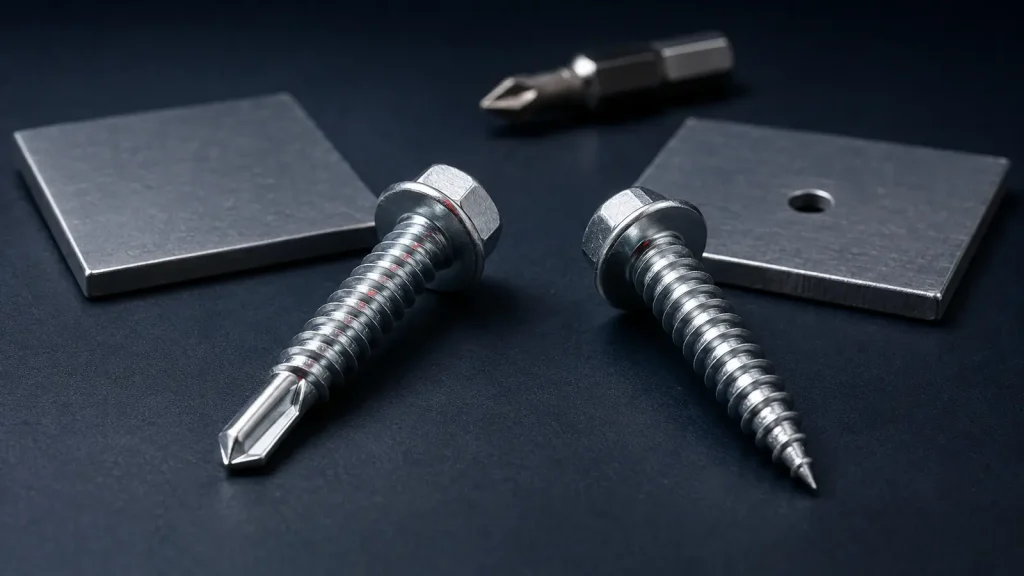
Direct Answer: A self-drilling screw has a drill-shaped point that creates a hole and then forms mating threads in a suitable material. A self-tapping screw forms or cuts mating threads but may require a correctly sized pilot hole. Selection depends on substrate type and thickness, joint stack, point geometry, installation tool, finish and application testing—not […]

Anchor Bolts: 7 Ordering Errors That Cause Site Rework

Anchor Bolts: 7 Ordering Errors That Cause Site Rework

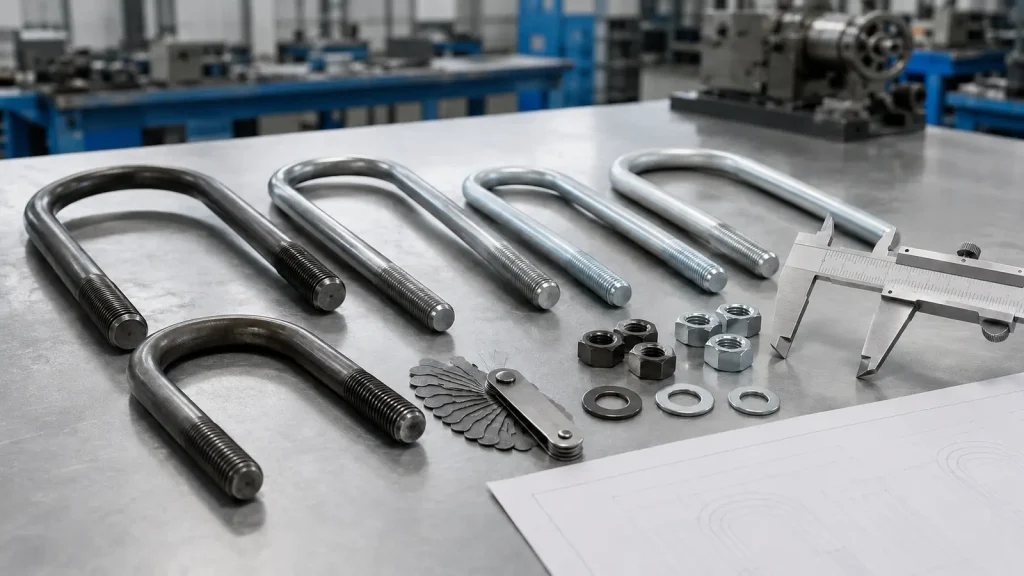
ost anchor bolt ordering errors come from incomplete drawings, unclear dimensions, unsuitable material or coating choices, undefined tolerances, and mismatched nuts or washers. These mistakes affect steel fabricators, EPC contractors, equipment installers, importers, and distributors because anchor bolts are usually embedded before the connected structure arrives on site. Once concrete has cured, even a small […]

Which Self-Tapping Roofing Screw Specification Fits Metal Panels on Steel or Timber?

Which Self-Tapping Roofing Screw Specification Fits Metal Panels on Steel or Timber?

The correct self-tapping roofing screw depends on the complete panel-and-substrate stack-up. Steel supports typically require a point and thread matched to the support thickness and any pilot-hole requirement; timber supports require a wood-appropriate thread and sufficient embedment. In both cases, buyers must define diameter, length, head, sealing washer, material or coating, environment, pull-out requirements, and […]

What RFQ Details Matter When Ordering Blue Zinc Winged Self-Drilling Screws?

What RFQ Details Matter When Ordering Blue Zinc Winged Self-Drilling Screws?

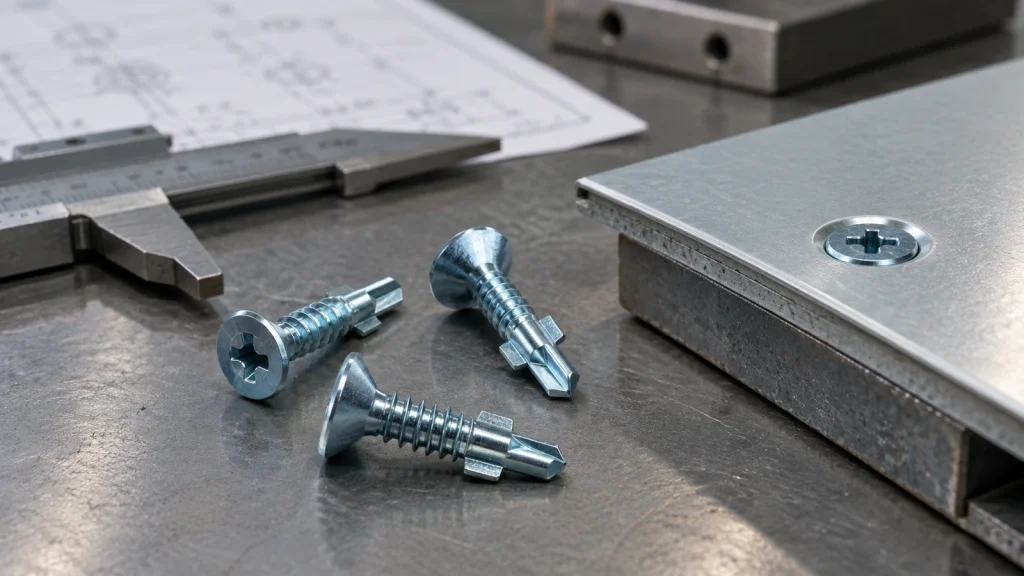
When ordering a blue zinc self drilling screw with a winged, countersunk configuration, diameter and length are not enough to define the application. The RFQ should identify the materials being connected, upper-material thickness, steel-substrate thickness, total material stack, required countersunk seating, screw diameter, total length, drill-point condition, wing geometry, surface treatment, installation method, quantity and […]

What Should Buyers Verify When Comparing Bolt Manufacturers?

What Should Buyers Verify When Comparing Bolt Manufacturers?

A bolt manufacturer should be evaluated against a defined joint, drawing and acceptance plan—not a product list or unit price alone. Buyers need to verify whether the supplier can manufacture the required geometry, control material and heat-treatment requirements where applicable, manage threads and coatings as one dimensional system, inspect critical characteristics, preserve batch traceability and […]

What Should Buyers Check Before Ordering Hot-Dip Galvanized Flat Washers?

What Should Buyers Check Before Ordering Hot-Dip Galvanized Flat Washers?

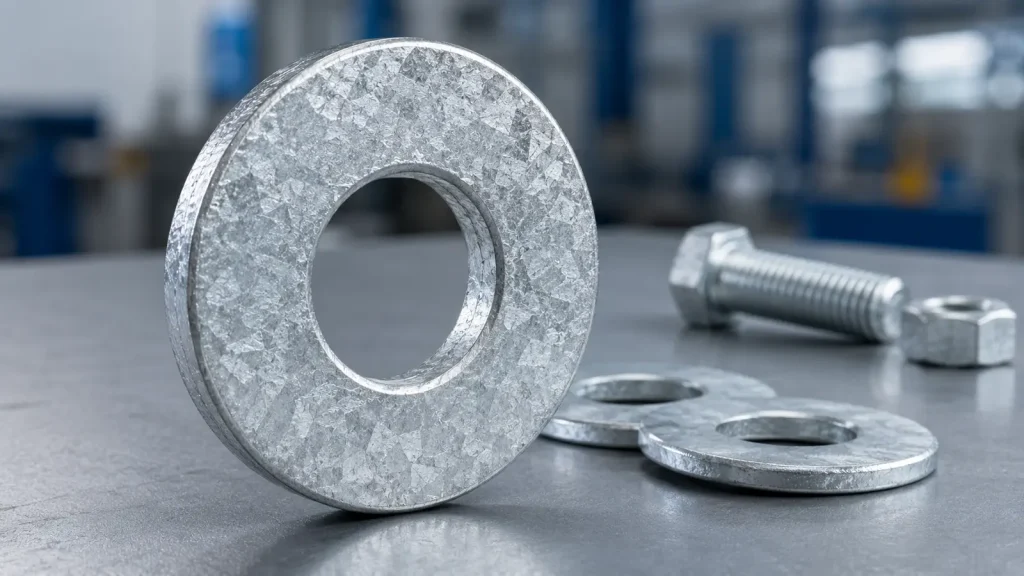
A hot-dip galvanized flat washer should be purchased as a defined joint component, not simply as an M-size metal disc. A usable specification identifies the dimensional standard and series, nominal size, inside and outside diameters, thickness, product grade, hardness or mechanical requirement, base material, coating requirement and the bolt, nut and bearing surface with which […]

Frequently Asked Questions

Is a thermally conductive sheet suitable for every cooling interface?

It can work well for a defined gap between a component and a heat sink when the surfaces can be pressed together consistently. Check the available space, surface flatness, required compression and whether electrical insulation is necessary before selecting it.

When might thermal paste or another interface material be a better alternative?

Thermal paste can suit very thin, close-fitting interfaces and may conform well to fine surface irregularities, but it can be harder to control during application and handling. A sheet may be easier to position and keep consistent, while a thicker or custom-cut format can add material and conversion cost.

Does a higher conductivity rating always mean the lower-cost option will cool better?

No. The final heat path also depends on thickness, contact quality, compression and surface conformity. A sheet with a lower stated conductivity may perform better in an assembly if it fills the gap reliably and maintains contact.

What should be included when requesting a price?

Provide the finished length and width, thickness, shape or drawing, quantity, adhesive requirement, liner preference and any insulation or temperature requirements. Ask whether the quotation covers cutting, tooling, liners, packaging and delivery, and compare finished-piece pricing with material-area pricing only when the formats are equivalent.

Can standard sheet stock be used instead of a custom-cut part?

Standard sheet or roll material may reduce conversion cost when the buyer can cut and handle it consistently. A custom-cut part may reduce assembly labor and waste, but its price can include setup, tooling or minimum quantities that do not apply to blank material.

Leave Your Message

Send the application, finished dimensions and thickness, plus the expected quantity and any electrical insulation or temperature requirements. We can then confirm whether the requested cooling sheet format and construction are available and clarify what the quoted price includes.