Hex Standoffs for Threaded Spacing | Hebei Wotu Fastener Manufacturing Co., Ltd.

Hex Standoffs for Threaded Spacing

A hex standoff spaces two parts apart while providing a threaded fastening point. Buyers usually choose it for PCB mounting, panel assembly, enclosure hardware, signage, or equipment frames where the part must be tightened with a wrench and hold a fixed gap.

The main decision is not just thread size. You need the body length, thread form, male or female ends, material, finish, and tolerance expectations to match the assembly and the environment.

Related Products

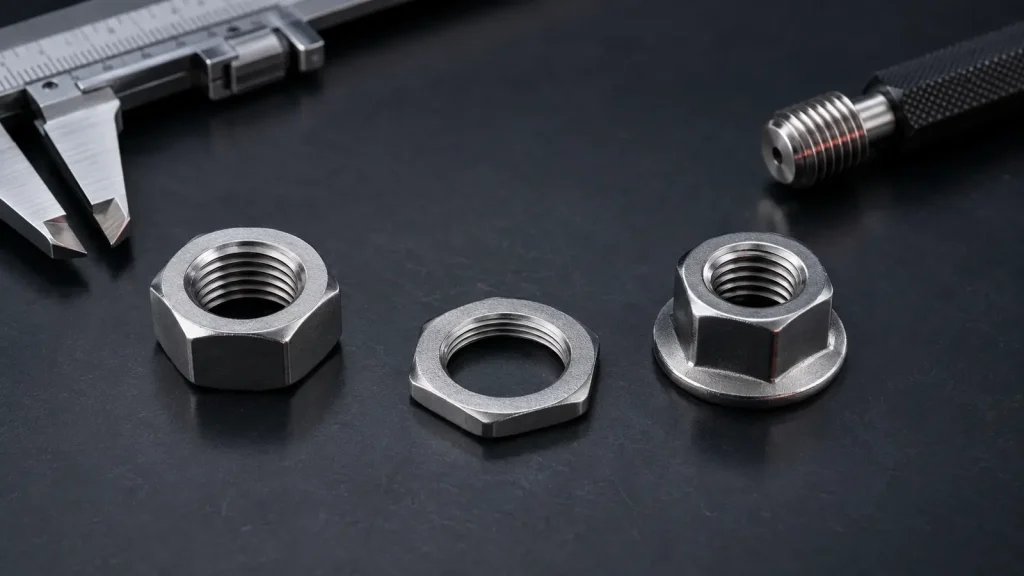
Hex nut DIN934-1987 (A/B accuracy classification)

Hex nut DIN934-1987 (A/B accuracy classification)

Brand: Wotu Standard basis: German standard DIN934-1987, metric coarse thread/fine thread universal thread Surface: 304 stainless steel Specifications: M6~M24 full range of specifications Supporting equipment: same specification bolts, flat washer, spring washer complete set of shipment Packaging: 25kg standard carton, whole wooden pallet packaging

Read More
Dacromet Hex Head Self-Drilling Screw

Dacromet Hex Head Self-Drilling Screw

Brand: Hengzuan Surface: Dacromet anti-corrosion coating Specifications: in stock ST5.5/ST6.3 mainstream caliber, rod length 50mm~150mm, extended full range of specifications, supports nonstandard extra long customized, suitable for drilling steel sheet thickness 2~6mm Packaging: 25kg export cartons, full pallets wrapped with film, supports neutral export packaging, private-label customization

Read More
Painted Hex Head Self-Drilling Screw

Painted Hex Head Self-Drilling Screw

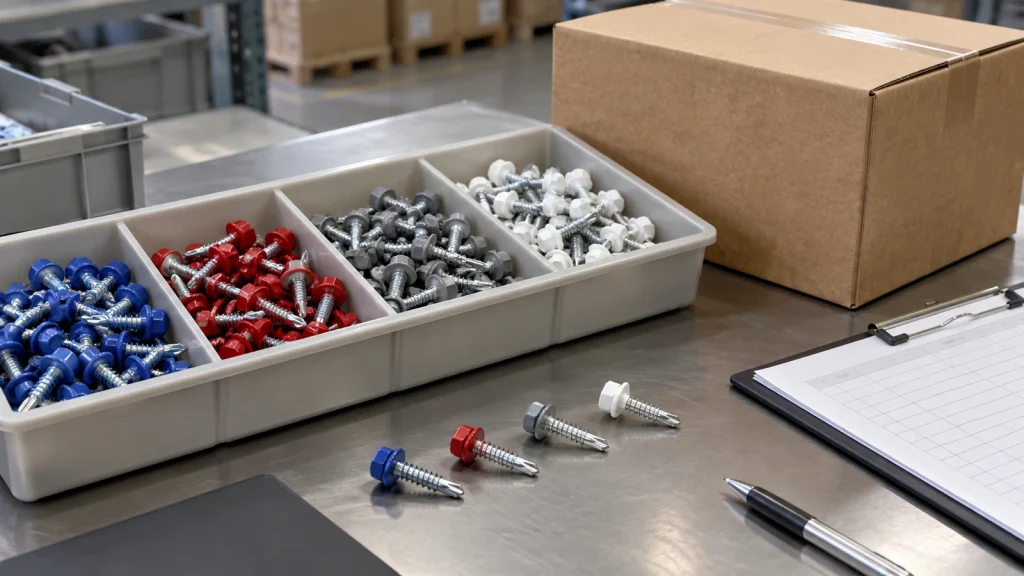
Brand: Hengzuan Surface: screw color zinc plated + hex head outdoor paint Specifications: ST5.5, ST6.3, rod length 25mm~120mm in stock, supports nonstandard customization, suitable for drilling steel sheets 2~5mm Packaging: 25kg cartons, whole wooden pallets

Read More
Color Zinc Plated Hex Flange Wood Screw With Washer

Color Zinc Plated Hex Flange Wood Screw With Washer

Brand: Hengzuan Surface: color zinc plated, can be customizedblue-white zinc plated Specifications: in stock 4.8/5.5 common wire diameter, rod length 16~125mm full range of specifications, supports nonstandard customized Packaging: 25kg cartons, whole wooden pallets, support neutral packaging, private-label customization

Read More
Chinese-standard Color Nylon Head Hex Self-Drilling Screw

Chinese-standard Color Nylon Head Hex Self-Drilling Screw

Brand: Hengzuan Surface: screw color zinc plated, head color nylon protective cap, multiple colors available Specifications: Chinese national standard ST5.5, ST6.3 mainstream caliber, rod length 25mm~125mm full range of specifications in stock, supports nonstandard length customization, suitable for drilling steel sheet thickness 2~6mm Packaging: 25kg cartons, full pallets packed on wooden pallets, support neutral packaging, private-label customization

Read More
Hex Head No. 5 Point Self-Drilling Screw

Hex Head No. 5 Point Self-Drilling Screw

Brand: Wotu Surface: blue and white zinc plated, customized color zinc plated, Dacromet anti-corrosion coating available Specifications: ST5.5, ST6.3 mainstream specifications, rod length 20mm~125mm, full size range in stock, support nonstandard customization, drilling to adapt to steel sheet 2-6mm Packaging: 25kg cartons, whole wooden pallets

Read More

Hex standoff details that affect fit

Selection criteria

Relevant hex standoff selection criteria include end configuration, thread standard, body length, wrench size, material, finish, and any drawing tolerance that affects fit in the assembly. For custom or replacement parts, a sample photo is useful, but a dimensioned drawing is safer.

Criterion What To Check Why It Matters Buyer Tip
Thread gender and mating hardware Confirm whether the standoff needs female-female, male-female, or male-male threads, and match the thread size and pitch to the screws, studs, or PCB hardware already specified. The wrong thread form can stop assembly even if the standoff body length is correct. It also affects how the part is installed and removed during service. Ask: What screw or stud will engage each end, and can you share the thread standard, size, pitch, and engagement length?
Body length and stack height Compare the specified standoff length with the required spacing between panels, circuit boards, brackets, or covers after washers, coatings, and tolerances are considered. A small height mismatch can bend boards, leave covers unsupported, or create uneven clamping in multi-point assemblies. Ask: Is the stated length the finished overall body length, and what tolerance is acceptable for the assembled gap?
Across-flats size and tool access Check the hex width against the available space for a wrench, socket, or automated driver in the final assembly. Hex standoffs are often chosen because they can be held or tightened with a tool. If the tool cannot fit, assembly becomes slow or may damage nearby parts. Ask: What tool will be used to install the standoff, and is there clearance around all six flats in the product design?
Material and surface finish Select material and plating or coating based on load, corrosion exposure, electrical contact needs, and appearance requirements. Material choice affects strength, weight, conductivity, corrosion resistance, and compatibility with other metals in the assembly. Ask: Will the hex standoff be used indoors, outdoors, near moisture, or as part of an electrical grounding path?
End features and thread depth Verify blind-hole depth, through-hole design, chamfers, shoulder details, and any unthreaded lead-in before approving drawings or samples. End geometry controls screw engagement, starting ease, and whether the mating screw bottoms out before clamping the assembly. Ask: Can the supplier confirm usable thread depth at each end and provide a drawing before production?

Choosing the right hex standoff for an assembly

The practical difference is between a spacer and a standoff with usable threads. A plain spacer only controls distance and normally needs a screw or bolt passing through it. A hex standoff has internal threads, external threads, or both, so it becomes part of the fastening system and affects screw engagement, stack height, and serviceability.

Male-female standoffs are common when one end screws into a base plate and the other receives a screw. Female-female standoffs suit assemblies tightened from both sides. Male-male versions can join two tapped parts, but they leave less flexibility if one mating thread changes during design.

Start with the assembled height. The hex body length sets the spacing between boards, covers, brackets, or panels. Check whether your drawing measures only the hex body or includes any male threaded stud length, because mixing these dimensions is a common cause of incorrect stack height.

Match the thread to the mating hardware. Confirm metric or inch thread, internal depth, male thread length, and whether the end needs a chamfer or flat bearing face. A thread that looks close can still fail in assembly if the pitch or engagement depth does not match the screw.

Choose material and finish around the working environment. Brass is easy to machine and often used in electronics; steel offers higher strength for mechanical assemblies; stainless steel helps where corrosion resistance matters. Plating or coating should be checked for appearance, corrosion expectations, conductivity needs, and compatibility with mating parts.

Before requesting a quote from Hebei Wotu Fastener Manufacturing Co., Ltd., send a drawing or sample details if available. If no drawing exists, list the thread type, body length, across-flat size, end style, material, finish, and expected order quantity so the technical discussion starts from the actual assembly rather than a part name alone.

Criteria Importance Description Example Options
End configuration Critical because it determines how the part connects to the surrounding components. Male-female, female-female, and male-male arrangements support different fastening directions and service access. A male-female part can screw into a base and receive a screw at the opposite end, while a female-female part accepts screws from both sides.
Thread standard and engagement Critical for preventing cross-threading, loose joints, and incomplete screw engagement. Match the diameter, pitch, thread form, internal depth, and external thread length to the mating hardware. A metric screw requires a matching metric internal thread; a similar-looking inch thread is not an interchangeable substitute.
Body length and wrench size Critical for achieving the intended spacing and allowing the part to be tightened in the available clearance. Separate the hex body length from any projecting threaded section, and check the across-flat dimension against nearby components and tools. A board-to-panel assembly may need a defined body length, while a confined enclosure may require a smaller wrench-access dimension.
Material and finish Important where load, corrosion, conductivity, appearance, or contact compatibility affects service life. Select the base material and surface treatment according to the environment and the properties required at the joint. Brass may be considered for an electronic assembly, while stainless steel may be considered where corrosion resistance is a priority; the final choice should match the application.

Product Selection

Related Options

For PCB and enclosure builds, the priority is often repeatable spacing with clean thread engagement. For metal frames or panel hardware, strength, corrosion resistance, and wrench access may matter more than appearance. The same hex standoff shape can serve both uses, but the correct material, finish, and thread details change with the application.

Blog Articles / Reviews

What Should an RFQ Include When Sourcing Dacromet Hex Head Self-Drilling Screw?

What Should an RFQ Include When Sourcing Dacromet Hex Head Self-Drilling Screw?

When sourcing dacromet hex head self drilling screw, a complete RFQ should define the application, screw configuration, coating requirement, dimensions, and supplier confirmation requirements. Buyers often receive different quotations because suppliers may interpret coating, size, drilling capability, or packaging scope differently. Before preparing a project inquiry, buyers can review the available fastener product categories to […]

Hex Thin Nut vs Standard Hex Nut: Which Fits Space-Limited or Locking Assemblies?

Hex Thin Nut vs Standard Hex Nut: Which Fits Space-Limited or Locking Assemblies?

Direct Answer: Choose a hex thin nut when reduced nut height is genuinely required by the assembly or when the engineering design specifies it as part of a locking arrangement. Choose a standard hex nut when full nut height, normal thread engagement, and the specified load-bearing function are required. Buyers should compare nut height, thread […]

How Should Buyers Select Chinese and German Standard Hex Nuts?

How Should Buyers Select Chinese and German Standard Hex Nuts?

Direct Answer: Select a hex nut by the exact standard number and edition, thread diameter and pitch, nut style, property class, material, finish, mating bolt and acceptance method. “Chinese standard” or “German standard” alone is not a complete specification. Regular, thick, thin and flange nuts can differ in geometry and load behavior, so buyers should […]

Which Hexagonal Wood Screw Specifications Should Buyers Freeze Before Production?

Which Hexagonal Wood Screw Specifications Should Buyers Freeze Before Production?

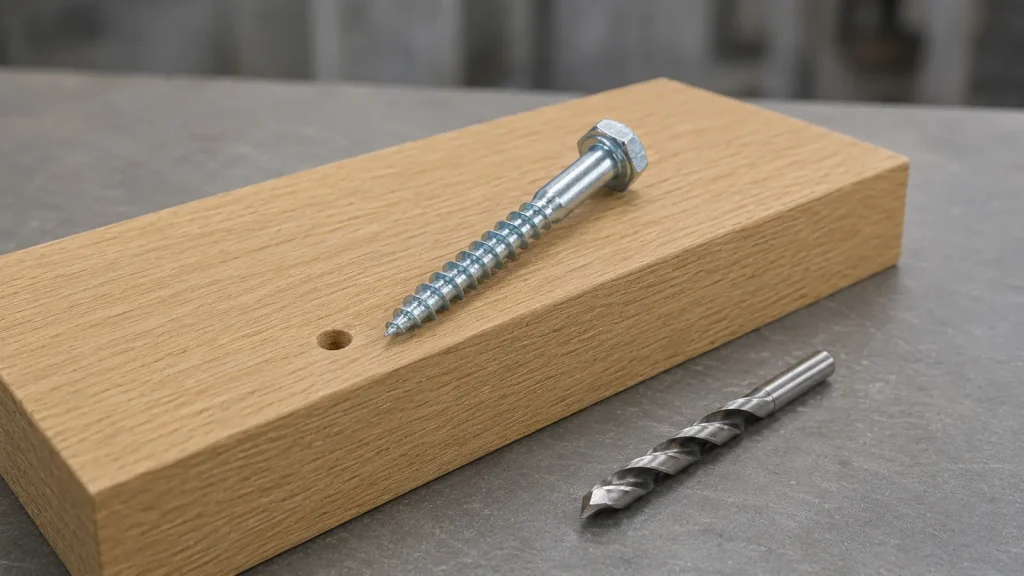
A hexagonal wood screw order should not be released from a gauge number and length alone. Before production, the buyer and supplier need one approved specification that fixes the screw diameter, length basis, thread geometry, point, hex-head dimensions, material, finish, installation method, substrate and acceptance evidence. The pilot hole belongs in the application specification as […]

DIN 931 vs DIN 933 Hex Bolts: What Should Buyers Confirm Before Bulk Ordering?

DIN 931 vs DIN 933 Hex Bolts: What Should Buyers Confirm Before Bulk Ordering?

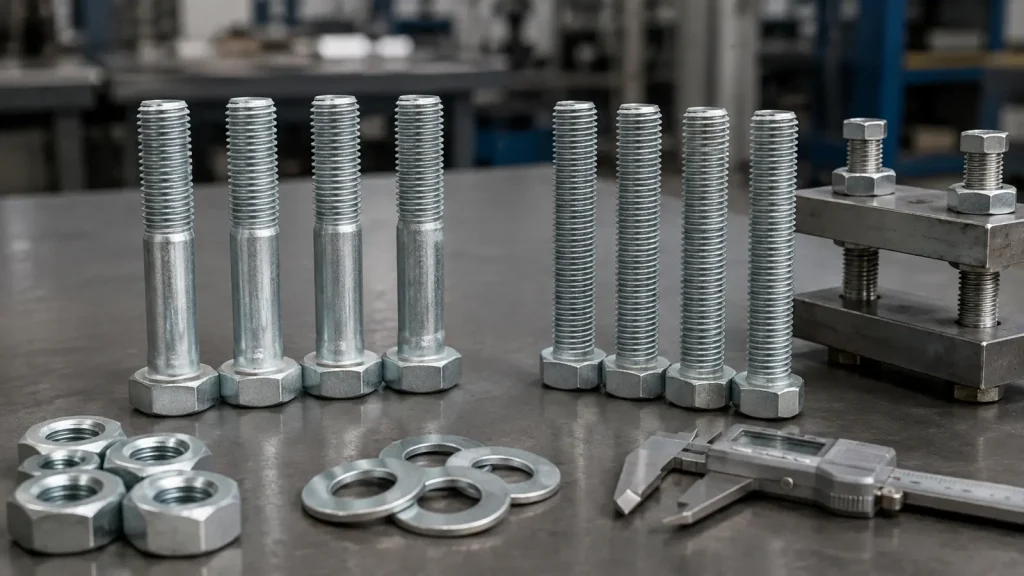
DIN 931-style half-thread and DIN 933-style full-thread hex bolts should not be selected from diameter and overall length alone. The practical choice depends on the joint stack, required grip, location of the thread transition, available nut engagement, mating hardware, material or property requirement, coating system and governing product specification. A half-thread bolt is not automatically […]

What Should Buyers Confirm When Ordering Color Nylon Head Hex Self-Drilling Screws?

What Should Buyers Confirm When Ordering Color Nylon Head Hex Self-Drilling Screws?

When ordering a chinese standard color nylon head hex self drilling screw, the RFQ should define more than a color name. Buyers should confirm the exact color reference, nylon head or cap configuration, base screw diameter and length, steel-sheet condition, metallic screw finish, visible-face requirement, color approval method, batch-consistency check and packaging or SKU separation. […]

Frequently Asked Questions

Is this type of fastener suitable for PCB and enclosure assemblies?

Yes, it can maintain a defined gap between a circuit board, cover, bracket, or panel while also providing a threaded mounting point. Check board clearance, screw engagement, insulation or grounding needs, and access for tightening before choosing the configuration.

When would a plain spacer be a better choice?

A plain spacer may be preferable when a screw or bolt can pass through the complete stack and no threaded feature is needed in the spacer itself. A threaded standoff offers a more integrated fastening point, but its end configuration and thread depth must match the assembly.

Does the hexagonal body identify the thread size?

No. The hex shape mainly provides wrench access and does not establish the thread diameter, pitch, or standard. Confirm the thread type separately, including metric or inch form, internal thread depth, and any external thread length.

What information should be included in a quotation request?

Provide the required end configuration, thread details, hex body length, across-flat dimension, material, finish, quantity, and any drawing tolerances. A dimensioned drawing is the clearest reference; a sample photo can support the request but may not show every feature needed for production.

How should the material be selected for the application?

Consider mechanical load, corrosion exposure, appearance, conductivity, and contact with mating materials. Brass may suit many electronic assemblies, while steel or stainless steel may be considered for higher mechanical demands or more demanding environments; confirm the choice against the actual assembly conditions.

Leave Your Message

Send the thread size and type, body length and end configuration, plus the required material, finish, and order quantity. A drawing or sample photo will help confirm the part faster.