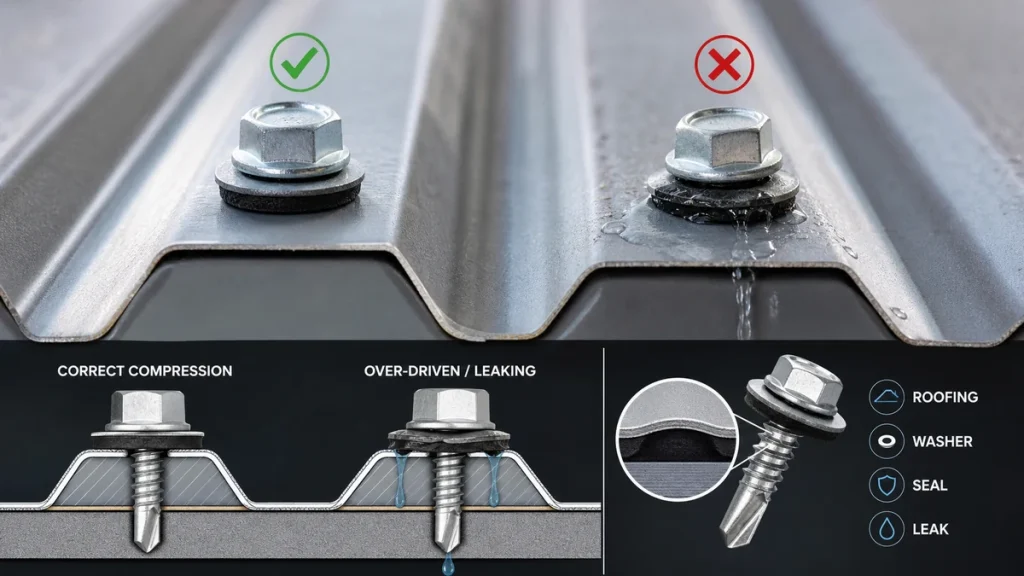
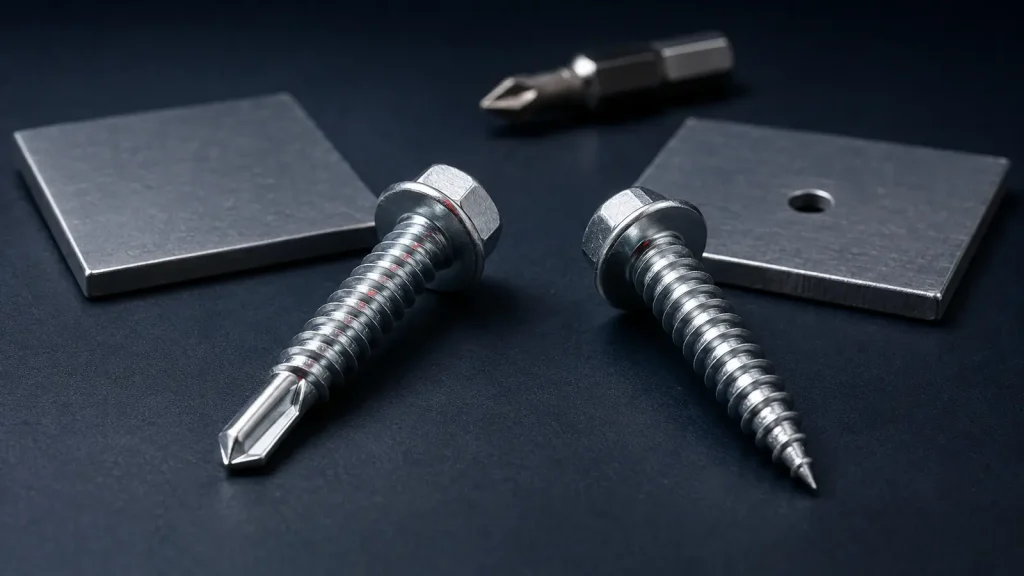
The important distinction is between overall screw length and effective thread engagement. A screw may be long enough to pass through a panel and spacer but still be unsuitable if too little thread enters the supporting material. Conversely, an unnecessarily long screw can protrude from the back, strike hidden components, split the substrate, or make installation difficult.
Measure the materials being joined, account for any washer or clearance gap, and identify how much of the screw will actually engage the base material. Then confirm the diameter, thread style, head seating, and installation method with the supplier rather than specifying length alone.
Match the thread to the substrate. Wood, fiberboard, plastics, sheet metal, and pre-drilled metal assemblies do not need the same thread form. Coarse threads may suit some wood-based applications, while fine threads or a different point may be more appropriate for metal. Do not substitute a self-tapping or self-drilling screw without checking the material and hole condition.
Specify the joint stack-up. Give the supplier the thickness of every layer, including washers, brackets, spacers, or soft materials that the screw must pass through. Check the required engagement in the supporting part and the available clearance behind it. A common mistake is selecting by nominal length while ignoring the actual grip length and the risk of breakthrough.
Choose the head and drive for the assembly. Countersunk heads can provide a flush finish where the material supports countersinking; pan, hex, or washer-head designs may be better where a visible bearing surface is needed. The drive should suit the tool access and expected installation torque. A mismatched head or drive can cause poor seating, cam-out, or damage to the surface.
Confirm material and finish for the environment. Indoor dry use, damp areas, outdoor exposure, and contact with dissimilar metals can require different corrosion protection. Ask for the available material or coating, thread and head options, dimensional tolerance, packaging, and any sample or drawing review needed for your application. Send the joint stack-up, substrate, intended use, and quantity in your enquiry so the proposed screw can be checked against the actual assembly.