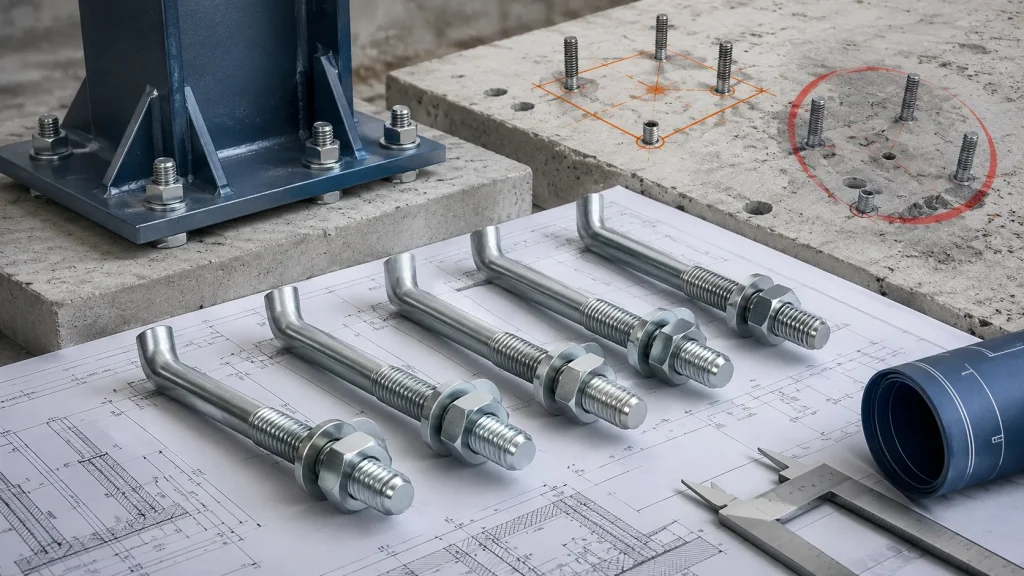
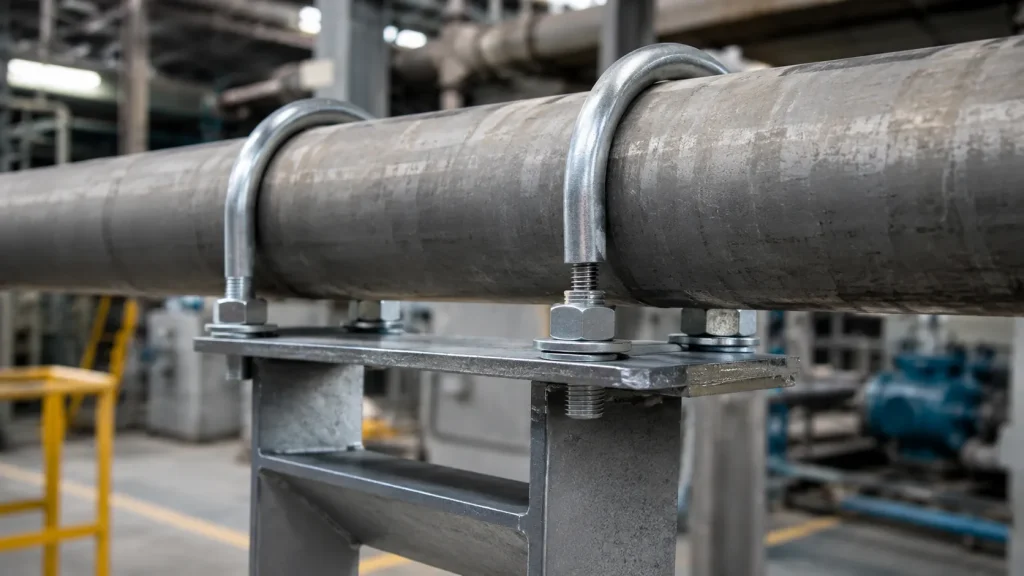
The practical distinction is between a stud and a bolt. A stud normally has no head and remains installed while a nut or another threaded component is tightened onto it; a bolt has a head and is turned to clamp the joint. A stud is useful where access for turning a headed fastener is limited or where repeated removal should not disturb the internal thread.
Terminology can vary between drawings and suppliers, so confirm the thread form and the thread arrangement at each end before ordering. A sample, drawing, or established part reference can prevent a fully threaded stud from being supplied where a reduced-thread or unequal-length design is required.
Start with the joint geometry. State the nominal diameter, thread standard and pitch, total length, threaded length at each end, and any plain shank or unthreaded section. For a blind tapped hole, check the available thread depth and required engagement; for a through-joint, define the nut, washer, protrusion, and clamping space.
Choose the material and finish for the service environment, not appearance alone. Corrosion exposure, temperature, contact with dissimilar metals, and the required clamping load can change the suitable combination. Ask the supplier to confirm the material designation, finish, and available inspection or test documentation rather than assuming that a familiar grade name covers every requirement.
Check how the stud will be installed and removed. A driving feature, a double-nut method, or another installation arrangement may be needed, but adding a feature that is absent from the drawing can create clearance or strength problems. Do not substitute a bolt simply because its diameter and length look similar; the head, thread runout, engagement, and installation access may differ.
For an enquiry to Hebei Wotu Fastener Manufacturing Co., Ltd., send the drawing or a clear part description together with the application, mating component, quantity, and required material or finish. Ask the company to confirm whether it can supply the exact stud arrangement and what inspection documents or samples are available before approving production.