Threaded Post Selection for Panel Mounting | Hebei Wotu Fastener Manufacturing Co., Ltd.

Threaded Posts for Panel and Bracket Mounting

Threaded posts provide a projecting threaded point for mounting panels, brackets, covers, signs, fixtures or other components. The main buying decision is whether the post’s thread size, length, end style and material match the mating part and the loads in the application.

For a reliable fit, specify the thread standard and size, usable threaded length, unthreaded shoulder if required, installation method and the environment where the fastener will be used.

Related Products

Hot-Dip Galvanized Hex Head Bolt (DIN931 Half Thread / DIN933 Full Thread / GB30 Chinese National Standard Bolt, Can Be Equipped With Nut And Washer Set)

Hot-Dip Galvanized Hex Head Bolt (DIN931 Half Thread / DIN933 Full Thread / GB30 Chinese National Standard Bolt, Can Be Equipped With Nut And Washer Set)

Brand: Wotu Surface: overall hot-dip zinc plating treatment Specifications: Comply with DIN and GB standards, in stock M6-M48 full range of specifications, length 20mm-300mm, supports nonstandard customized. Packaging: woven bag inside / 25kg export carton, film-wrapped wooden pallet; supports neutral packaging and customer private-label customization.

Read More
Countersunk Head Cross Thick Thread Fiberboard Screw

Countersunk Head Cross Thick Thread Fiberboard Screw

Brand: Wotu Surface: color zinc plated electroplating Specifications: in stock 3.5/4.0/4.5/5.0 regular wire diameter, rod length 16~80mm full range of specifications in stock, supports nonstandard length customization Packaging: 25kg cartons, whole wooden pallets

Read More

Threaded post features to compare

Threaded post selection

When comparing threaded posts, check the thread specification, overall and threaded lengths, shoulder geometry, end form, material, finish and installation method. A drawing is especially useful where the post controls spacing, aligns parts or must fit a restricted assembly.

Criterion What To Check Why It Matters Buyer Tip
Thread form and mating hardware Confirm the thread standard, diameter, pitch, and whether the post needs internal or external threading. A threaded post only works if it matches the nut, insert, bracket, or tapped hole already used in the assembly. Ask: Which exact thread callout must the post match, and is a sample or drawing available to compare?
Post length and usable thread length Separate the overall length from the threaded engagement length, shoulder length, or unthreaded section if present. Too little engagement can loosen under load; too much length can bottom out or interfere with nearby parts. Ask: What material thicknesses will the post pass through, and how much thread must remain after assembly?
Head, base, or mounting style Identify whether the design needs a plain threaded stud, standoff-style post, weld post, clinch post, or post with a flange or head. The mounting style affects how the post is installed, how it resists rotation, and whether it suits sheet metal, plastic, or a machined part. Ask: How will the post be fixed in place—tightened with hardware, pressed in, welded, molded in, or assembled another way?
Material and surface finish Match the base material and finish to the environment, mating metals, appearance needs, and corrosion exposure. Material choice affects strength, corrosion resistance, galling risk, and compatibility with the surrounding assembly. Ask: Will the threaded post be used indoors, outdoors, near moisture, or against stainless, aluminum, plated steel, or plastic?
Load direction and installation access Review whether the post will see tension, shear, vibration, repeated removal, or limited tool clearance during installation. A post that is easy to install may not be the best choice for high vibration, side loading, or frequent maintenance. Ask: What load will the post carry, and can tools reach both sides of the assembly during installation?

Select the right thread, length and shoulder

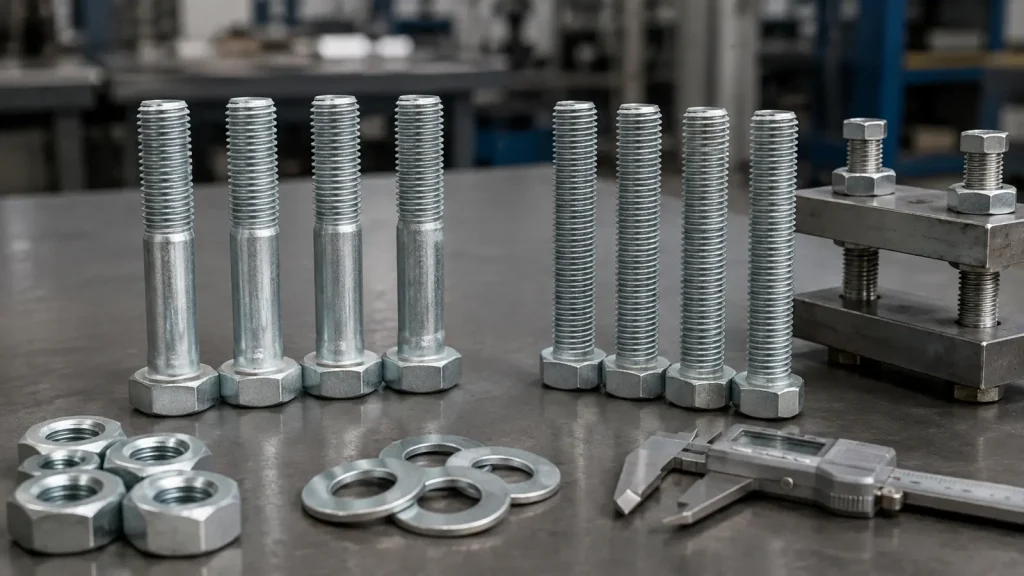
The key distinction is between a fully threaded stud and a post with a defined shoulder or unthreaded section. A fully threaded design allows more adjustment and engagement, while a shoulder can set a consistent spacing distance and help position a panel or bracket.

End design also matters. A plain-ended post may suit a tapped hole or nut, while a point, chamfer or other formed end may be easier to start during assembly. Confirm the mating thread, engagement depth and clearance before selecting a replacement or custom part.

Start with the connection rather than the outside appearance. State whether the post screws into a tapped hole, passes through a clearance hole with a nut, or joins two components with different thread arrangements. Match the thread standard, diameter, pitch and handedness to the mating hardware; a similar-looking thread can bind or provide insufficient engagement.

Choose the length from the installed position. Separate the overall length from the usable threaded length, and allow for the thickness of panels, washers, brackets and nuts. If the post must hold a component at a fixed distance, specify the shoulder length or spacer section instead of relying on loose washers to set the gap.

Material and surface finish should reflect the working environment. Consider corrosion exposure, contact with dissimilar metals, temperature, appearance and the strength needed for the joint. A finish that looks suitable may still be unsuitable for the mating material or for repeated assembly, so ask what material and finish options are available for the intended use.

Before sending an enquiry, provide a drawing or clear dimensions, thread details, required quantity, application, installation method and any finish or packaging requirements. Ask the supplier to confirm the drawing, thread compatibility, tolerance expectations and whether the requested end and shoulder configuration can be produced.

Criteria Importance Description Example Options
Thread specification Critical for fit and engagement The thread standard, diameter, pitch and handedness must match the mating hole, nut or insert. A near match can bind, strip, or leave too little engagement. Metric and inch threads may look similar at a glance but require the correct mating hardware.
Overall length versus usable thread length Important for installed position Overall length describes the full part, while usable threaded length determines how much engagement is available after panels, washers or brackets are installed. A post may have enough total length but too little thread left after passing through a thick bracket.
Shoulder or spacer section High when spacing or alignment matters A shoulder can create a fixed stand-off distance, locate a panel, or limit how far the post enters an assembly. Without a shoulder, spacing may depend on other components. A cover mounted away from a frame may need a defined shoulder rather than stacked washers.
End form Relevant to assembly method Plain, chamfered, pointed or otherwise formed ends affect how easily the post starts in a hole and how it seats against the mating part. A chamfered end can help start assembly where access is limited, while a plain end may be adequate for a simple nut connection.
Material and finish Depends on load and environment Material affects strength and compatibility; finish affects corrosion resistance, appearance and assembly behavior. The right choice depends on exposure, mating materials and service conditions. An indoor fixture may prioritize appearance, while an exposed installation may require stronger corrosion consideration.

Blog Articles / Reviews

Grade 8 vs Grade 10 Hex Nuts: Strength Class and Bolt Compatibility

Grade 8 vs Grade 10 Hex Nuts: Strength Class and Bolt Compatibility

Class 8 and class 10 metric hex nuts are not interchangeable labels for bolt strength. They identify different nut property classes, while the suitability of either nut depends on the mating bolt, thread dimensions, nut style and the relevant specification. A black oxide finish adds another purchasing variable: it describes a surface treatment, not a […]

What Should Buyers Verify When Comparing Bolt Manufacturers?

What Should Buyers Verify When Comparing Bolt Manufacturers?

A bolt manufacturer should be evaluated against a defined joint, drawing and acceptance plan—not a product list or unit price alone. Buyers need to verify whether the supplier can manufacture the required geometry, control material and heat-treatment requirements where applicable, manage threads and coatings as one dimensional system, inspect critical characteristics, preserve batch traceability and […]

What Should Buyers Check Before Ordering Hot-Dip Galvanized Flat Washers?

What Should Buyers Check Before Ordering Hot-Dip Galvanized Flat Washers?

A hot-dip galvanized flat washer should be purchased as a defined joint component, not simply as an M-size metal disc. A usable specification identifies the dimensional standard and series, nominal size, inside and outside diameters, thickness, product grade, hardness or mechanical requirement, base material, coating requirement and the bolt, nut and bearing surface with which […]

Why Do U Bolts Loosen in Pipe Supports? 6 Causes and Prevention Methods

Why Do U Bolts Loosen in Pipe Supports? 6 Causes and Prevention Methods

U bolts usually loosen in pipe supports because the connection loses clamping force, receives continuous vibration, restricts thermal pipe movement, uses an incorrectly sized U bolt, experiences surface settlement, or suffers from corrosion and inadequate inspection. This issue affects EPC contractors, pipe installers, industrial maintenance teams, equipment manufacturers and fastener distributors working with water, oil […]

DIN 931 vs DIN 933 Hex Bolts: What Should Buyers Confirm Before Bulk Ordering?

DIN 931 vs DIN 933 Hex Bolts: What Should Buyers Confirm Before Bulk Ordering?

DIN 931-style half-thread and DIN 933-style full-thread hex bolts should not be selected from diameter and overall length alone. The practical choice depends on the joint stack, required grip, location of the thread transition, available nut engagement, mating hardware, material or property requirement, coating system and governing product specification. A half-thread bolt is not automatically […]

How Should Buyers Select Chinese and German Standard Hex Nuts?

How Should Buyers Select Chinese and German Standard Hex Nuts?

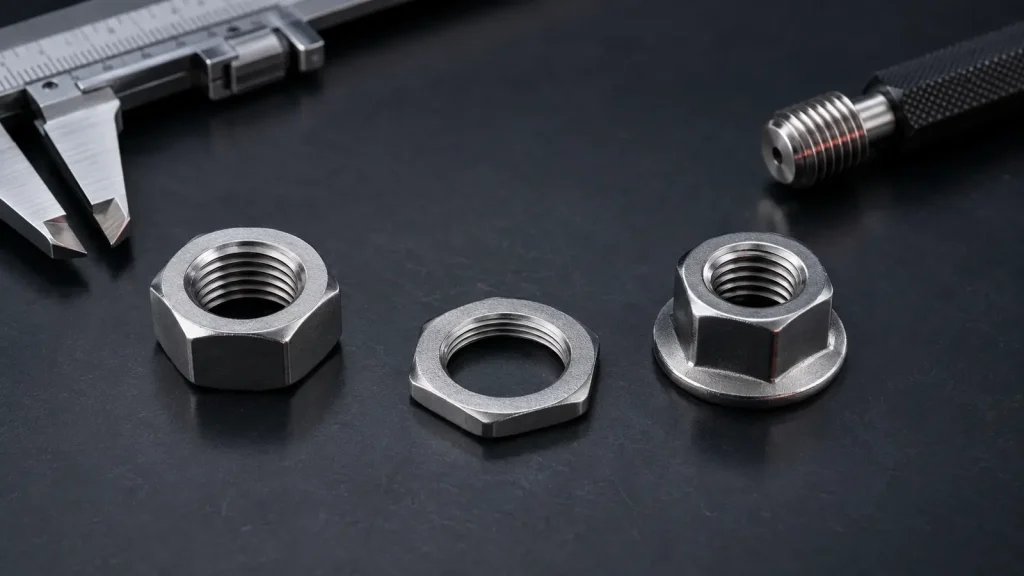
Direct Answer: Select a hex nut by the exact standard number and edition, thread diameter and pitch, nut style, property class, material, finish, mating bolt and acceptance method. “Chinese standard” or “German standard” alone is not a complete specification. Regular, thick, thin and flange nuts can differ in geometry and load behavior, so buyers should […]

Frequently Asked Questions

How do I know whether I need a fully threaded stud or a post with a shoulder?

Choose a fully threaded stud when you need thread engagement along most of the length or some adjustment during assembly. Choose a shoulder style when the part must sit at a fixed spacing distance, align consistently, or stop against a defined face.

What information is most important for matching an existing part?

The thread standard, diameter, pitch, overall length, usable threaded length and end shape are usually the first details to confirm. If the part includes a shoulder, also provide the shoulder diameter and length, because those dimensions often control fit more than the total length.

Can a similar-looking threaded post be used as a replacement?

Not safely without checking the thread and installed dimensions. Threads that look close can differ in pitch or standard, and a small length or shoulder difference can affect engagement, spacing or clearance in the assembly.

What material or finish should be specified?

Base the choice on strength needs, corrosion exposure, appearance, contact with other metals and how often the part will be assembled or removed. If the post will be used outdoors, in humid conditions, or near dissimilar metals, ask which material and surface finish options are suitable for that environment.

What should be sent with an enquiry?

A drawing, sample reference or dimensioned sketch is the clearest starting point. Include thread details, lengths, shoulder dimensions if any, end form, material or finish preference, quantity, installation method and the mating part or application.

Leave Your Message

Tell us the thread size and standard, required overall and threaded lengths, application, material or finish preference, and expected quantity so the enquiry can be reviewed accurately.