Tightening Machine Selection Guide | Hebei Wotu Fastener Manufacturing Co., Ltd.

Tightening Machine Selection for Assembly Applications

A tightening machine is selected around the joint it must assemble, not simply the fastener name. The key decision is how consistently the machine can apply the required torque or clamp load while reaching the joint, handling the part and fitting your production method.

For repeat assembly, a suitable machine can reduce variation and operator effort. The right choice depends on fastener type and size, joint access, tightening sequence, production volume and the level of control or traceability you need.

Related Products

Hex Head Self-Drilling Screw With Bonded Washer

Hex Head Self-Drilling Screw With Bonded Washer

Brand: Hengzuan Surface: blue and white zinc plated, color zinc plated can be customized on request Specifications: in stock 4.2/4.8/5.5/6.3mm mainstream wire diameter, length 20mm~165mm full range of specifications, nonstandard rod length, drill point size can be customized Packaging: 25kg export cartons, full pallets wrapped with film, supports neutral export packaging, customer private-label customization

Read More
Countersunk Head Blue-White Zinc Plated Self-Drilling Screw (Chinese National Standard: Phillips Countersunk Head Self-Drilling And Self-Tapping Screw GB/T15856.2-2002)

Countersunk Head Blue-White Zinc Plated Self-Drilling Screw (Chinese National Standard: Phillips Countersunk Head Self-Drilling And Self-Tapping Screw GB/T15856.2-2002)

Brand: Hengzuan Surface: blue and white zinc plated, can be customized color zinc plated, black oxide plated Specifications: Comply with GB/T15856.2-2002 Chinese national standard, in stock ST4.2/ST4.8/ST5.5 full range of specifications, length 13mm~75mm optional, supports customized nonstandard rod lengths; drilling adaptation plate thickness 0.7~6mm Packaging: 25kg export cartons, full pallets wrapped with film, supports neutral export packaging, customer private-label customization

Read More
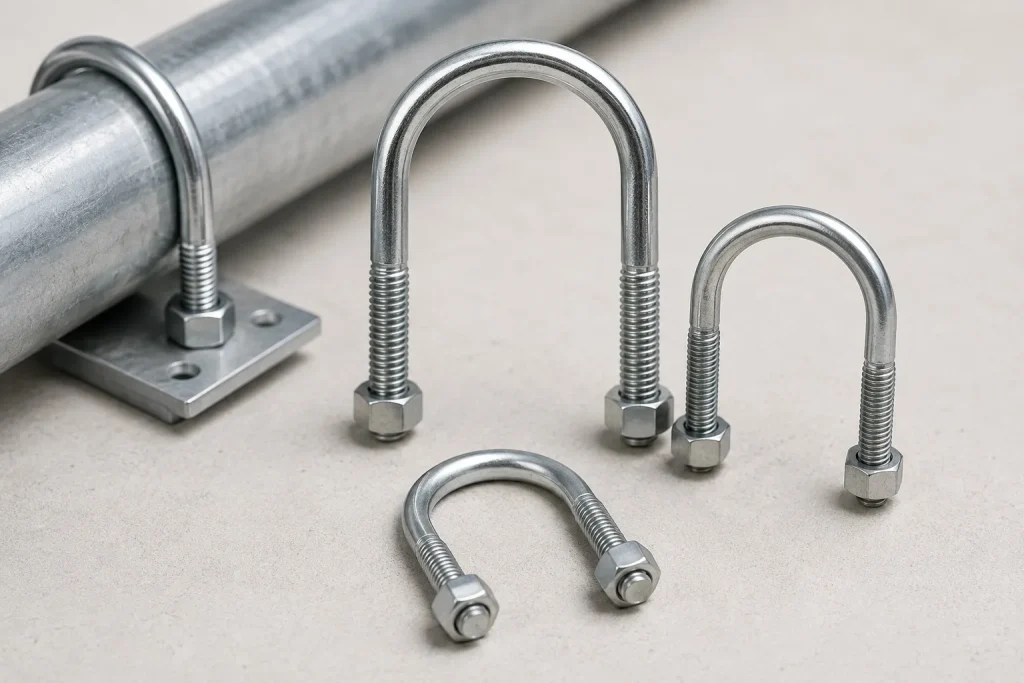
U-bolt ( / U-bolt, M10/M12/M16/M20/M24 multiple specifications)

U-bolt ( / U-bolt, M10/M12/M16/M20/M24 multiple specifications)

Brand: Wotu Surface: natural black oxide / hot-dip galvanized / blue-white zinc plated, multiple processes available Specifications: Based on common industry drawing parameters, suitable for pipe diameter 25mm~139.7mm, screw diameter M10~M24, total length can be nonstandard customized Matching: can be matched with nut, flat washer and spring washer of the same specifications for complete shipment Packaging: Bundling and packaging + 25kg export carton, full-container wooden pallet wrapped with film, supports private-label export packaging

Read More
7-letter, 9-letter L-shaped anchor bolt (Chinese national standard GB/T799-1988 embedded anchor screw)

7-letter, 9-letter L-shaped anchor bolt (Chinese national standard GB/T799-1988 embedded anchor screw)

Brand: Wotu Surface: Natural black oxide treatment, customized hot-dip galvanized, zinc plated as required Specifications: Follow Chinese national standard GB/T799-1988, in stock M12-M48, total length 120mm~1500mm, nonstandard customized diameter, bending length, total screw length available Matching: Nuts, flat washers and spring washers of the same specification can be supplied in complete sets. Packaging: Bundling and packaging, using wooden pallets and film-wrapped export packaging in large quantities

Read More
Hex thin nut

Hex thin nut

Brand: Wotu Surface: zinc plated Specifications: in stock M8~M64 full standard specifications, covering precision, machinery, and steel structure full size range, supporting nonstandard tooth pitch and customized thickness Matching: Can be matched with bolts of corresponding specifications, flat washer, spring washer complete set of shipment Packing: packed in 25kg cartons and packed on wooden pallets.

Read More
Hex nut (Chinese national standard GB52-1976)

Hex nut (Chinese national standard GB52-1976)

Brand: Wotu Surface: 304 stainless steel Specifications: in stock M6~M24 full standard metric specifications, supports nonstandard pitch, thickening/customized Matching: Can be matched with bolts of corresponding specifications, flat washer, spring washer complete set of supporting shipment Packaging: 25kg cartons, whole wooden pallets

Read More

Tightening machine selection by joint, control and production method

Selection criteria

Compare tightening machines by fastening method, usable torque range, spindle or tool access, part positioning, control functions, changeover needs and fault detection. Confirm how the equipment will be integrated with your existing workstation or line, and ask the supplier to review a representative joint rather than selecting from the fastener size alone.

Criterion What To Check Why It Matters Buyer Tip
Fastener type and access Compare the machine setup with the bolts, nuts, screws, or studs you need to tighten, including head style, thread size range, and working clearance. A machine that fits the fastener but not the surrounding space can slow production or damage parts during tightening. Ask: Which fastener sizes and head styles can the machine handle without changing the main tooling?
Torque control method Verify whether the machine controls tightening by torque, angle, time, clutch setting, or another method, and how settings are adjusted. The control method affects joint consistency, repeatability, and how easily operators can match the process to different assemblies. Ask: How is the target tightening value set, locked, and checked during normal production?
Tooling and changeover Look at socket, bit, fixture, and feeding requirements, especially if several fastener types are used on the same line. Frequent manual changes can reduce output and increase the chance of using the wrong tooling. Ask: What parts need to be changed when switching to a different fastener, and how long does the change usually take?
Part holding and alignment Confirm how the workpiece is positioned and whether the machine guides the fastener squarely into the joint. Poor alignment can cause cross-threading, uneven tightening, stripped threads, or rejected assemblies. Ask: Can the machine be tested with our actual parts or drawings to confirm access and alignment?
Data, alarms, and maintenance access Check whether the machine records tightening results, flags missed or failed tightening, and allows routine service without major disassembly. Traceability and clear fault signals help control process risk, while simple maintenance reduces downtime. Ask: What tightening data can be saved, and which wear parts should operators inspect regularly?

Match the machine to your fastener and assembly process

The main distinction is between a powered tightening tool used at an operator station and a more automated machine that positions the part, engages the fastener and controls the tightening cycle. A powered tool offers greater flexibility for changing parts or fastening locations; an automated system can provide more repeatable positioning and cycle control for stable, higher-volume work.

Torque control alone may not describe the finished joint accurately. Joint friction, screw or nut condition, thread engagement and the tightening sequence can all affect clamp load. Ask the supplier how the proposed machine controls the process and how it identifies an incomplete, cross-threaded or out-of-range fastening cycle.

Start with the fastener and joint: record the bolt, screw or nut form, the tightening direction, the required tightening range, the material being joined and any washers or locking features. Include a drawing or clear photographs of the assembly. A machine that suits an exposed vertical joint may not fit a recessed, angled or rotating assembly.

Choose the operating format around production needs. A handheld or suspended tool can cover several fastening points and changing products, while a fixed station can improve positioning and cycle consistency. Automation adds repeatability but can reduce flexibility and require more detailed part presentation and sequencing.

Check how the system handles reaction force, tool access, part location and error detection. Common mistakes include choosing by motor power alone, overlooking the tightening order, ignoring socket or bit changes and assuming that a stated torque range proves the required clamp load on every joint.

For an enquiry, provide the fastener drawing or sample details, joint photographs, target output or cycle expectations and the preferred level of operator involvement. Ask what torque-control method, tooling, changeover process, fault checks and application validation the supplier can provide for that assembly.


Criteria Importance Description Example Options
Joint access and tool approach Often decisive The machine must physically reach the fastener at the required angle while allowing room for the socket, bit, reaction arm or spindle head. Recessed, side-facing or obstructed joints may need different tooling from an open vertical joint. A fastener inside a narrow housing may require a slim tool head, while an exposed top-mounted nut may suit a simpler vertical spindle.
Control method Important for repeatability and quality checks Basic tightening may control torque only, while more controlled processes may also monitor angle, time, position or sequence. The right level depends on how sensitive the joint is and how much process confirmation the buyer needs. A non-critical cover screw may need simple torque control; a structural joint may require additional cycle verification.
Production format High impact on cost, layout and changeover Handheld, suspended and fixed machines suit different production patterns. More automation can improve consistency for stable work, while manual or semi-manual setups can be easier to adapt for changing assemblies. A line making one repeat product may justify a fixed station; a workshop assembling several models may prefer a movable powered tool.
Fastener and joint condition Can change the real tightening result Fastener finish, lubrication, washer use, thread engagement and joint material affect friction and clamp load. These details should be reviewed with the assembly, not treated as minor accessories. The same torque setting may behave differently on dry threads and lubricated threads.
Error prevention and operator guidance Useful where missed or repeated fastening causes rework Guided sequences, tool interlocks, result feedback and part location checks can reduce assembly mistakes. The needed level depends on the number of fastening points and the cost of an incorrect cycle. A multi-fastener frame may benefit from sequence confirmation so the operator does not skip a location.

Product Selection

Related Options

For a repeatable assembly such as a multi-fastener frame or enclosure, the main priority is consistent tool positioning and a controlled tightening sequence. For mixed products or low-volume work, flexibility and quick changeover may matter more than a highly automated station; the appropriate equipment depends on the joint layout and production pattern.

Blog Articles / Reviews

What Is a Fastener? Types, Functions and Industrial Uses

What Is a Fastener? Types, Functions and Industrial Uses

A fastener is a hardware component that mechanically joins or secures parts. Common examples include screws, bolts, nuts and rivets; washers are supporting components used in many fastening assemblies. Some connections can be dismantled by removing threaded fasteners, while others, such as riveted joints, normally require the fastener to be destroyed during removal. In industrial […]

Why Do U Bolts Loosen in Pipe Supports? 6 Causes and Prevention Methods

Why Do U Bolts Loosen in Pipe Supports? 6 Causes and Prevention Methods

U bolts usually loosen in pipe supports because the connection loses clamping force, receives continuous vibration, restricts thermal pipe movement, uses an incorrectly sized U bolt, experiences surface settlement, or suffers from corrosion and inadequate inspection. This issue affects EPC contractors, pipe installers, industrial maintenance teams, equipment manufacturers and fastener distributors working with water, oil […]

Hex Thin Nut vs Standard Hex Nut: Which Fits Space-Limited or Locking Assemblies?

Hex Thin Nut vs Standard Hex Nut: Which Fits Space-Limited or Locking Assemblies?

Direct Answer: Choose a hex thin nut when reduced nut height is genuinely required by the assembly or when the engineering design specifies it as part of a locking arrangement. Choose a standard hex nut when full nut height, normal thread engagement, and the specified load-bearing function are required. Buyers should compare nut height, thread […]

Why Do Self-Tapping Roofing Screws Leak Even When the Screw Length Looks Correct?

Why Do Self-Tapping Roofing Screws Leak Even When the Screw Length Looks Correct?

Direct answer: Correct screw length does not guarantee a watertight metal-roof connection. Self tapping roofing screws can leak because of incorrect washer compression, enlarged or stripped holes, insufficient thread engagement, panel movement, or an unsuitable coating-and-washer system. Buyers should diagnose the complete installed connection—including panel profile, support thickness, point type, washer condition, and exposure—rather than […]

How to Install Self-Drilling Screws to Prevent Breakage

How to Install Self-Drilling Screws to Prevent Breakage

During the use of self-drilling screws, we often find that bolts crack. To prevent this, we need to pay attention to several points when using self-drilling screws. Today, Hebei Wotu Fastener Manufacturing Co., Ltd. will discuss these points with you. Strictly follow the preload and tightening sequence specified in the instruction manual when installing bolts. […]

Self-Drill Screw Manufacturer Shares Assembly Details

Self-Drill Screw Manufacturer Shares Assembly Details

Today, Hebei Wotu Fastener Manufacturing Co., Ltd. will show you the optimizations in strength aspects of self-drill screws. As the requirements for fixing objects continue to improve and evolve, the demands on self-drill screws are also increasing. Therefore, self-drill screws have undergone corresponding improvements, including the emergence of high-strength self-drill screws. Today, Hebei Wotu Fastener […]

Frequently Asked Questions

Is a handheld powered tool enough, or do I need a fixed tightening station?

A handheld or suspended tool is usually better for mixed products, several fastening locations or lower-volume work because the operator can move between joints. A fixed station makes more sense when the part position, fastener location and sequence are stable enough to justify guided positioning and more controlled cycle checks.

Does matching the torque range mean the machine will produce the right clamp load?

Not by itself. Clamp load can change with thread condition, lubrication, washer use, joint material and friction, so the supplier should review the actual joint and tightening method rather than selecting only from a torque value.

What should I provide before asking for a recommendation?

Send the fastener type and size, a drawing or clear photos of the joint, the tightening direction, access space, expected production volume and any required tightening sequence. If the assembly has recessed, angled or multiple fasteners, include that detail early because it can change the tool head, fixture and control approach.

What is the trade-off between automation and flexibility?

Automation can improve repeatability, reduce missed steps and support a fixed production rhythm, but it usually needs consistent part presentation and more defined tooling. Flexible tools handle product changes more easily, but they may rely more on operator positioning and process discipline.

How can a machine detect a poor tightening cycle?

Depending on the control system, it may monitor torque, angle, time, sequence completion or tool position. For critical joints, ask what fault conditions can be identified, such as an incomplete cycle, wrong sequence, cross-threading risk or a result outside the accepted tightening window.

Leave Your Message

Tell us the fastener type and size, a joint drawing or photo, and your expected output or preferred operator setup so the application can be reviewed accurately.