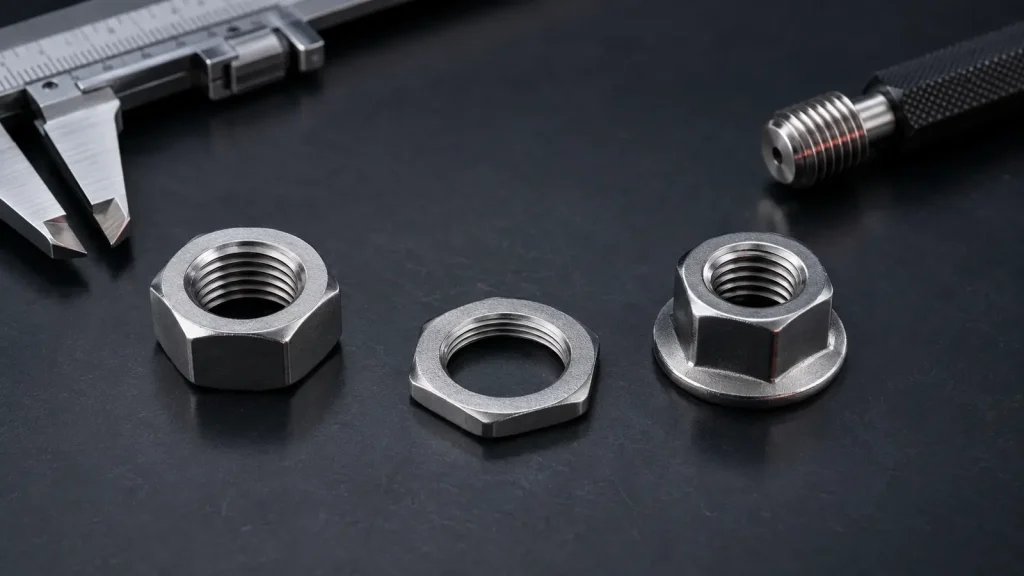
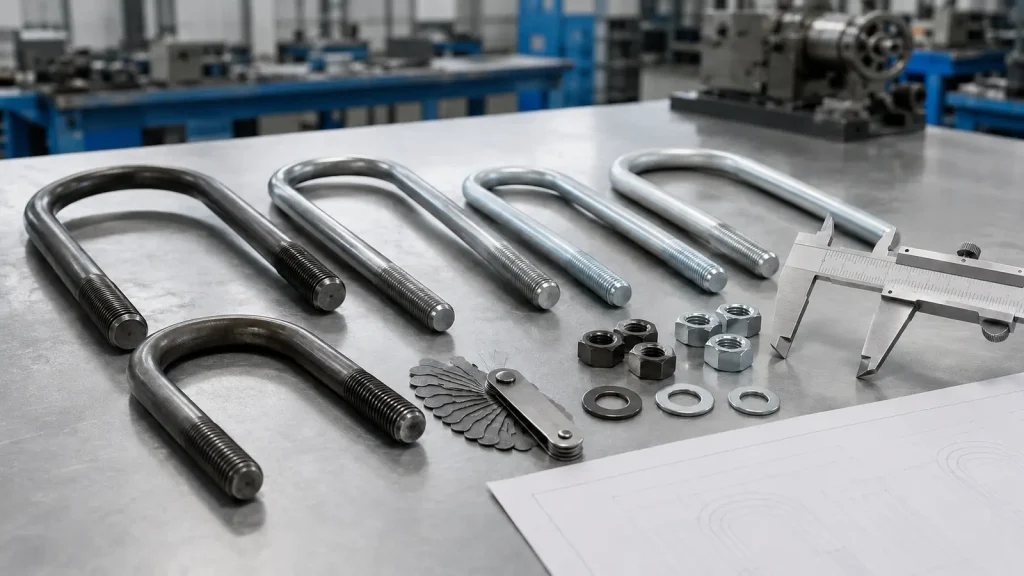
An Allen key bolt is identified by its internal hex drive, while the nut is normally a separate hex, lock, flange, or other nut style. The bolt may be paired with a nut, screwed into a tapped component, or used with a washer, depending on the joint design.
This distinction matters because thread compatibility alone does not confirm a suitable assembly. Head height, washer seating, access for the Allen key, resistance to loosening, and exposure to moisture or chemicals can all change which combination is appropriate.
Start with the joint and installation space. Choose a socket head when you need a compact, strong clamping point with tool access from above; consider a button or low-profile head when surrounding clearance is tighter, while accepting that the available drive engagement and seating arrangement may differ. Check the required head diameter and height against the mating part before ordering.
Specify the thread system completely, including nominal size, pitch, and thread length. If a nut is required, match its thread and standard to the bolt and confirm whether the assembly needs a plain nut, lock nut, or flange nut. A common mistake is to request only an “Allen bolt” and leave the thread standard or nut style open to interpretation.
Material and surface finish should follow the environment and joint requirements. Consider corrosion exposure, contact with dissimilar metals, appearance, and whether the finish must remain consistent across the bolt, nut, and washer. Do not select a finish solely by colour if the joint will face outdoor moisture, chemicals, or repeated maintenance.
Before sending an enquiry to Hebei Wotu Fastener Manufacturing Co., Ltd., provide a drawing or clear description of the application, the bolt size and thread details, and whether you need matching nuts or washers. Also ask which head styles, materials, finishes, standards, and inspection documents can be supplied for the requested combination.