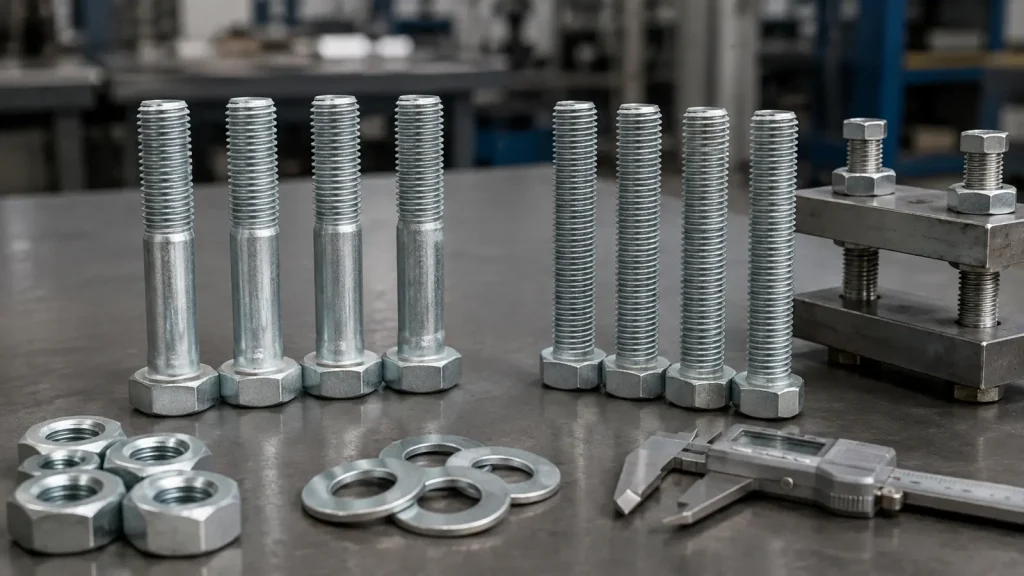
A partially threaded bolt has a plain shank and a threaded end; a fully threaded bolt has threads along most or all of its length. The plain shank can provide better bearing in holes and can help control alignment in assemblies where the shear plane should not sit on threads. A fully threaded bolt gives more adjustment range and can suit thinner clamped parts, but the threads may pass through contact areas unless the joint is designed for that.
This distinction matters before bulk ordering because two bolts with the same diameter, length and grade can behave differently in the same joint. If the shank is too short, threads may sit inside the grip area. If it is too long, the nut may bottom out before achieving proper clamping. Confirm the required standard, total length, thread length and grip thickness before approving the drawing or purchase order.
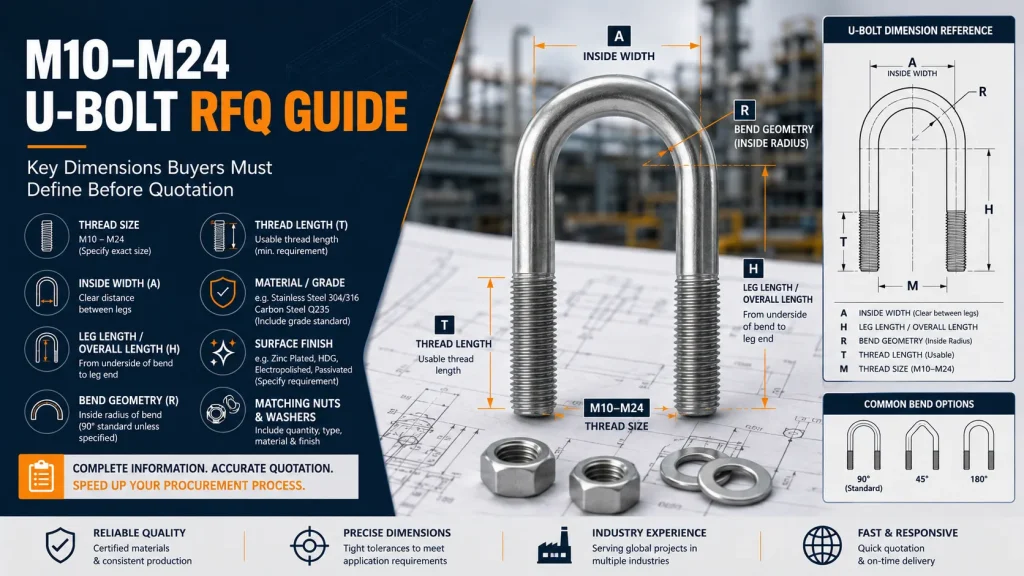
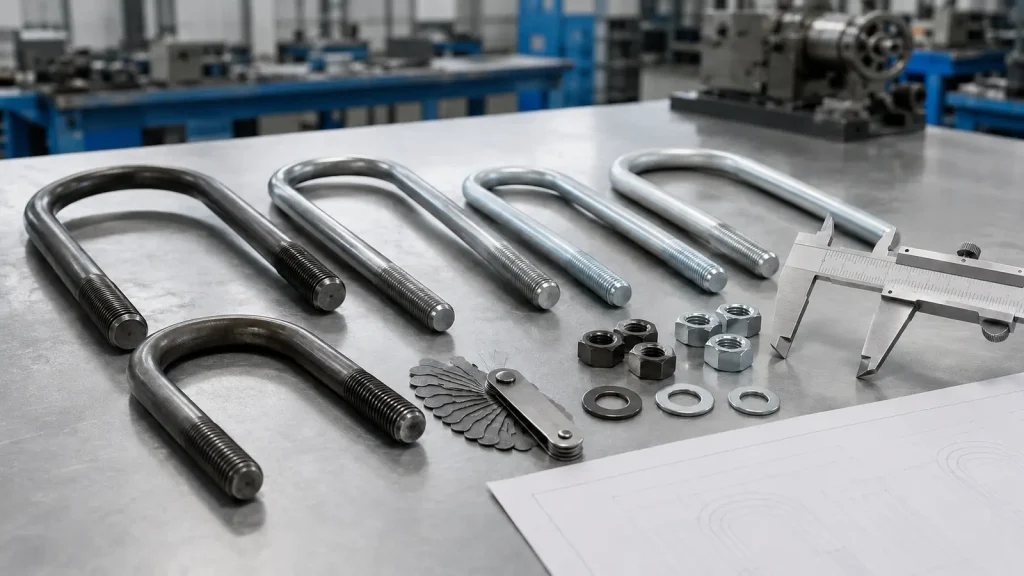
Start with the joint, not the catalog name. Check the total thickness of the parts being clamped, the washer arrangement and the position of the shear plane. For many hex bolts, anchor bolts and U-bolts, the usable shank length determines whether the bolt fits the assembly as intended. A simple drawing is often clearer than a description such as “standard shank.”
Match the thread length to the tightening requirement. The threaded portion must allow the nut to engage properly after washers, coatings and tolerances are considered. At the same time, too much thread in the grip area may be undesirable for load-bearing holes or locating functions. If the application allows either partial thread or full thread, state which one is preferred and why.
Consider finish and coating build-up. Surface treatments such as hot-dip galvanizing can affect thread fit and assembly feel. Coating choice should be discussed together with the nut, washer and thread standard, not as a separate afterthought. Ask how the mating parts should be supplied so the set assembles smoothly on site.
Avoid vague ordering terms. Phrases such as “long shank,” “short thread” or “same as last time” can cause rework when drawings are missing. Send the bolt standard if applicable, diameter, total length, required thread length, material or property class, finish, quantity and any drawing that shows the grip area. If you are replacing an existing fastener, provide photos and measured dimensions from the old part.