| Bolt type and installation method |
Confirm whether the design calls for a cast-in anchor bolt, expansion bolt, sleeve anchor, or concrete screw, and check the approved installation method. |
These fasteners transfer load into concrete in different ways; replacing one type with another can change capacity, embedment, edge-distance, and installation requirements. |
Ask: “Which concrete strength, base material, embedment depth, and installation method does your design specify?” |
| Thread, diameter, length, and usable embedment |
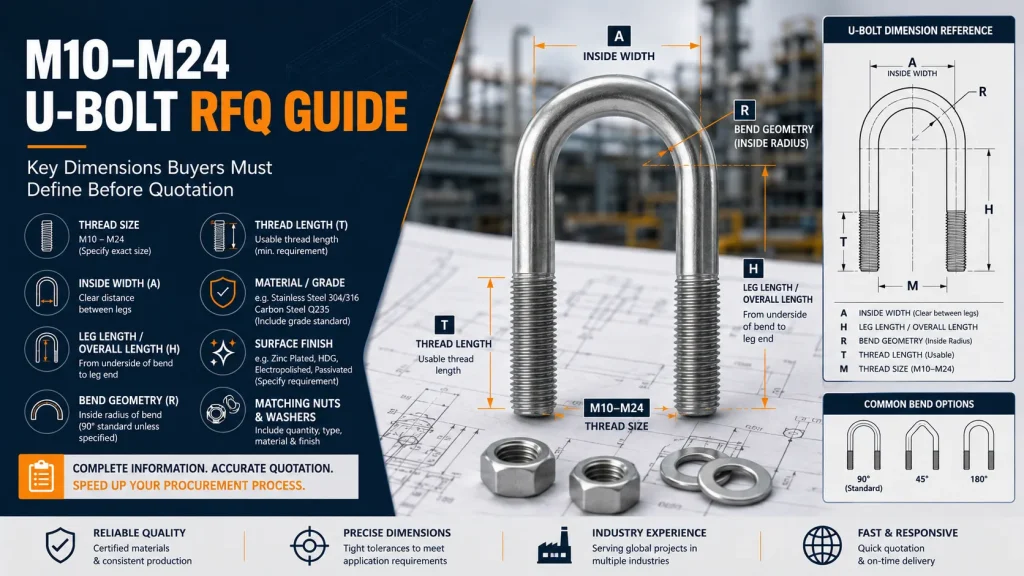
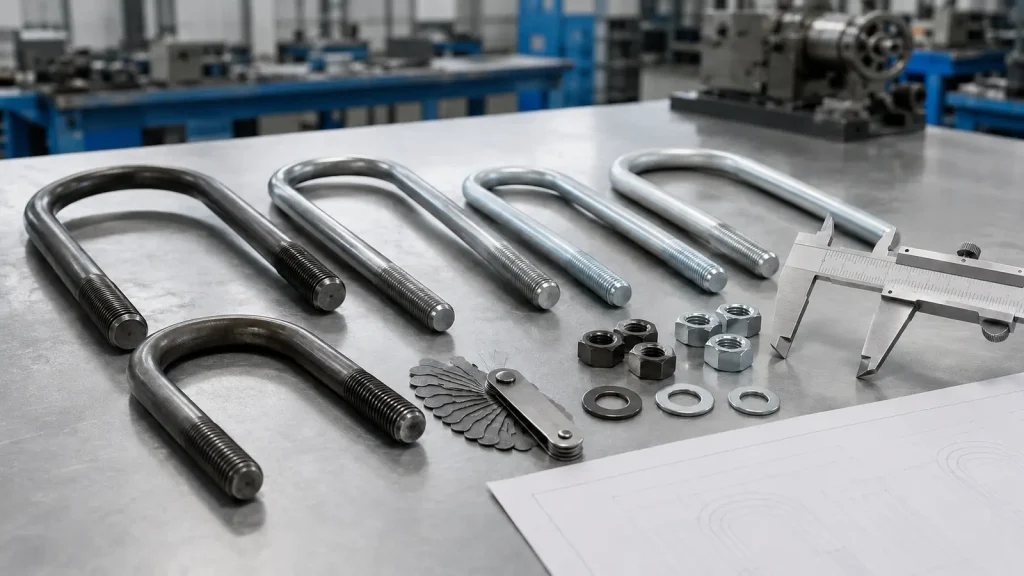
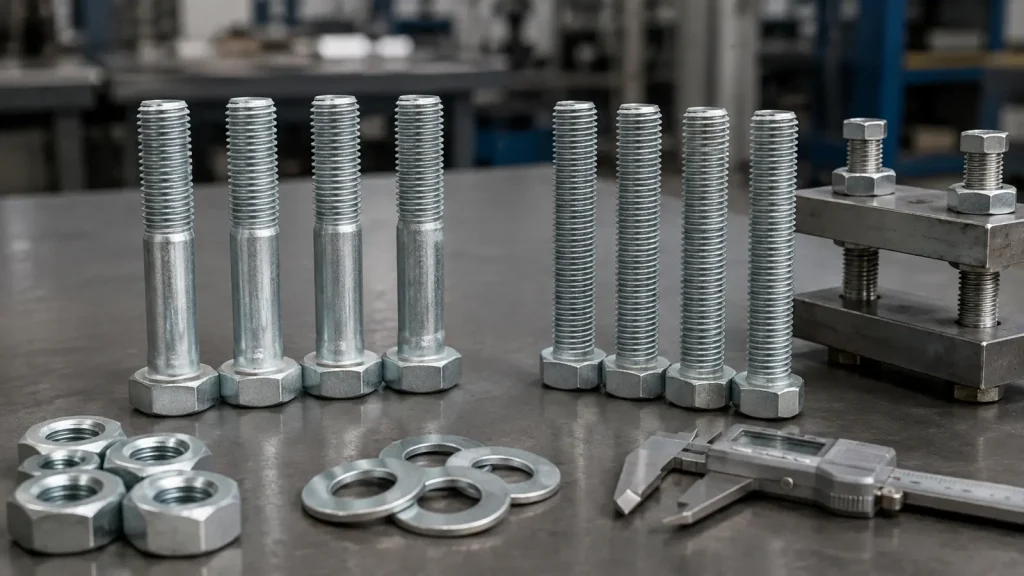
Compare the thread size, overall length, threaded length, washer and nut arrangement, and required embedment against the drawing or load calculation. |
A bolt that is too short may not develop the required engagement, while excessive length can interfere with fixtures or leave insufficient thread for tightening. |
Send a dimensioned sketch showing the fixture thickness, washer and nut, required projection, and embedment. |
| Load and installation conditions |
State the expected tension, shear, vibration, and direction of loading, along with whether the concrete is cracked, cured, damaged, or near an edge. |
Concrete condition and load direction affect the suitable anchor design and the risk of pull-out, splitting, or local concrete failure. |
Ask the engineer or supplier to confirm the fastener’s intended load case rather than selecting only by bolt diameter. |
| Material and corrosion protection |
Compare the bolt material and surface finish with the indoor, outdoor, damp, chemical, or coastal environment and with any nearby metal components. |
Corrosion can reduce usable section, damage threads, and make future adjustment or removal difficult; dissimilar metals may also create compatibility concerns. |
Ask: “Which material and coating are specified for this exposure, and are the nut and washer compatible with it?” |
| Standards, traceability, and supply documents |
Request the applicable product standard, material or mechanical-property documentation, lot identification, and any inspection records required for the project. |
Clear documentation lets the buyer compare equivalent products and identify the supplied batch if a site or engineering issue arises. |
Before ordering, ask what documents accompany the shipment and whether the marking and packaging will match the approved specification. |