The main distinction is between a general structural bolt and a cutter bolt designed to sit correctly in a specific cutting component. A standard hex bolt may have the right thread size but the wrong head profile, bearing area, or shank length for a blade, bucket edge, road milling tool, agricultural cutter, or crusher wear part. That mismatch matters because the joint must resist shock loads while keeping the cutting part firmly seated.
Buyers should also separate one-time repair needs from repeat maintenance supply. A repair order may focus on matching an existing sample quickly, while a maintenance program needs repeatable dimensions, consistent nut pairing, suitable corrosion protection, and packaging that supports workshop use.
Start with the joint, not the bolt name. Confirm what the cutter bolt fastens: a cutting edge, replaceable blade, tooth segment, holder, wear plate, or another machine part. The seating face and head clearance often decide the correct bolt style, so photos from several angles or a drawing can prevent a wrong but similar-looking fastener.
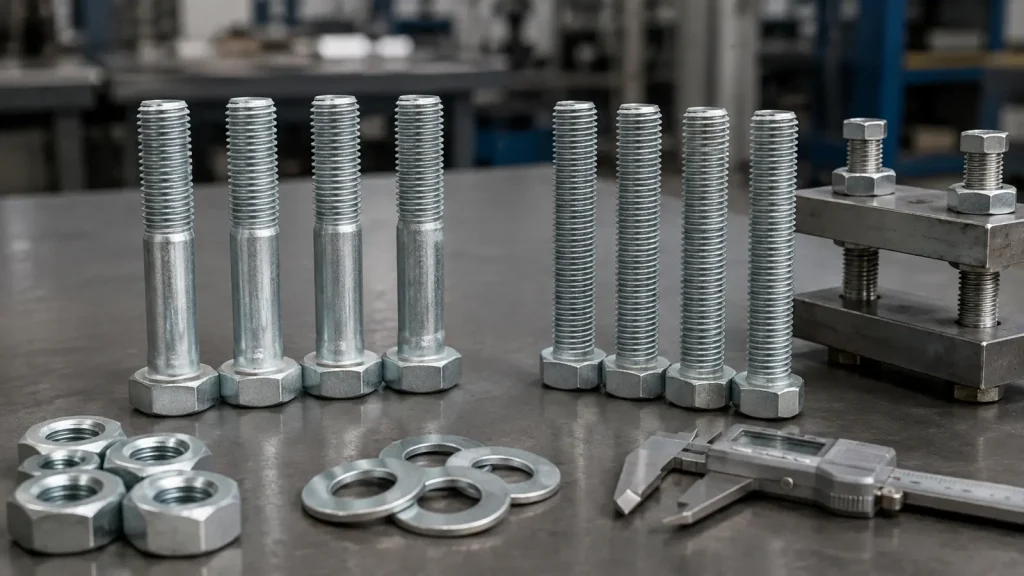
Check the dimensions that affect fit: thread diameter, pitch, total length, shank length, thread length, head diameter or width, head height, and any special neck, square, countersunk, or domed form. A common mistake is measuring only the outside diameter and length, then receiving bolts that fit the nut but do not sit properly in the cutter component.
Match strength and finish to the service conditions. Cutter assemblies can see vibration, mud, fertilizer, road debris, aggregate, or wet outdoor storage. Higher strength is not automatically better if the mating part, nut, washer, or installation method is not suited to it. Surface finish should be chosen for the environment and for practical maintenance, including whether the bolt needs to be removed regularly.
Before placing an inquiry with Hebei Wotu Fastener Manufacturing Co., Ltd., prepare the drawing or sample details, required nut and washer pairing, finish preference, application equipment, and order quantity. If the bolt replaces an OEM part, include the part number and clear photos; if it is for a new assembly, confirm the hole size, seating geometry, and expected clamping arrangement with your engineering team.