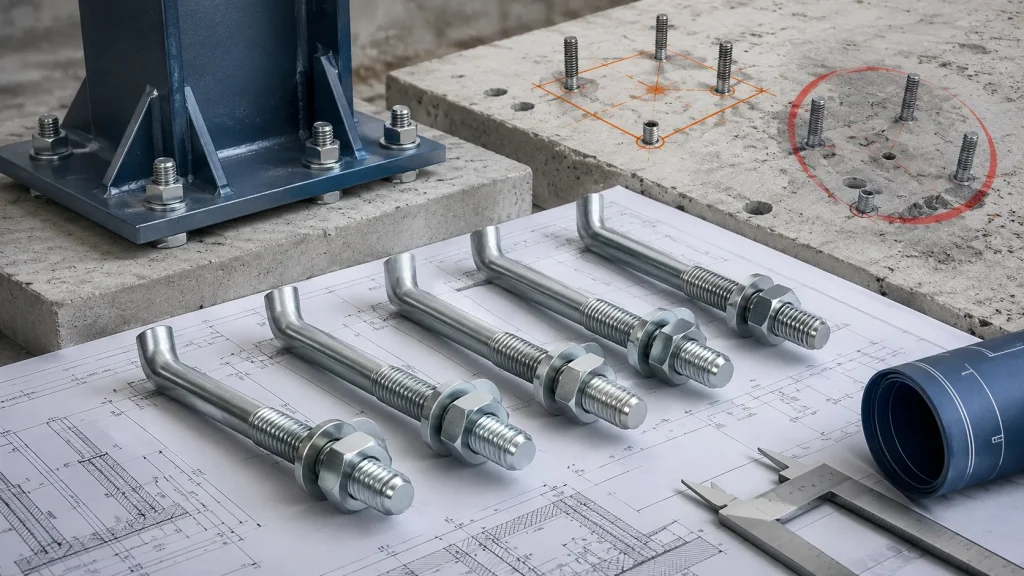
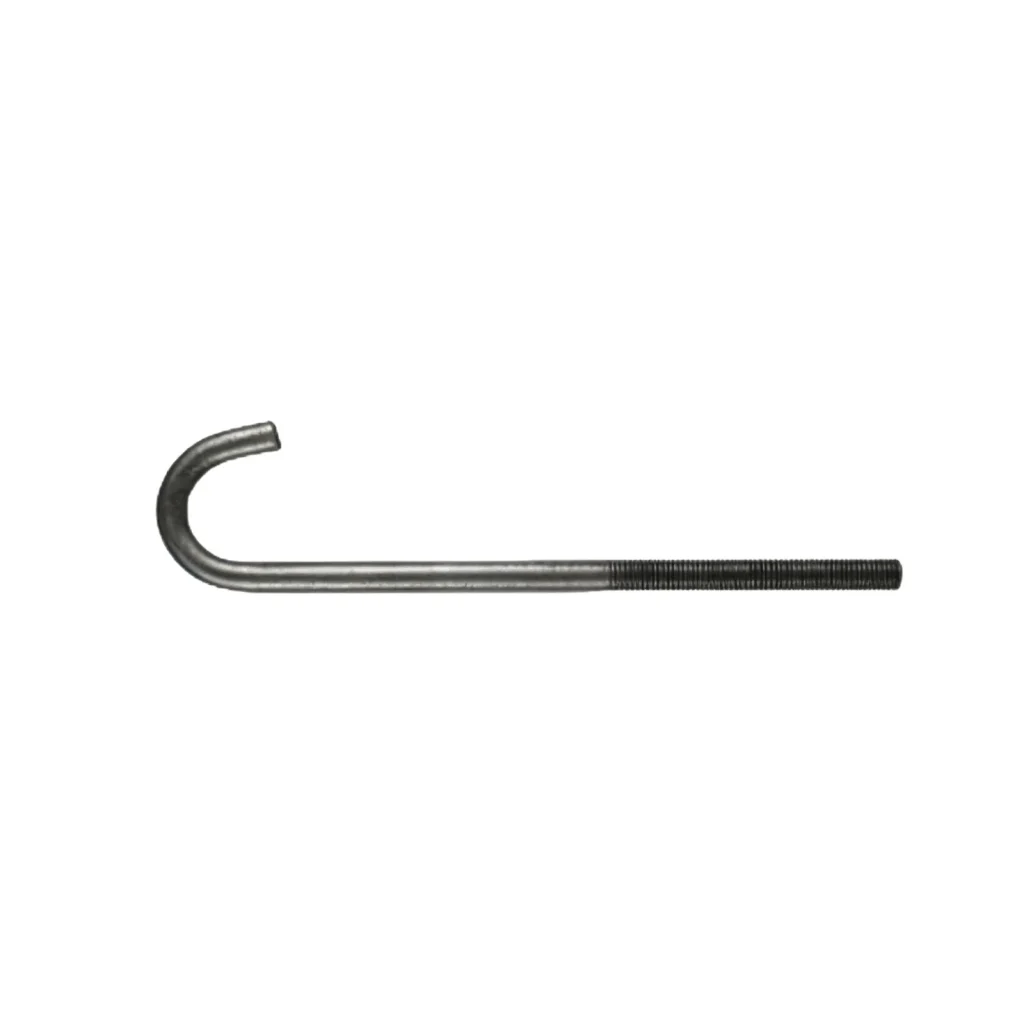
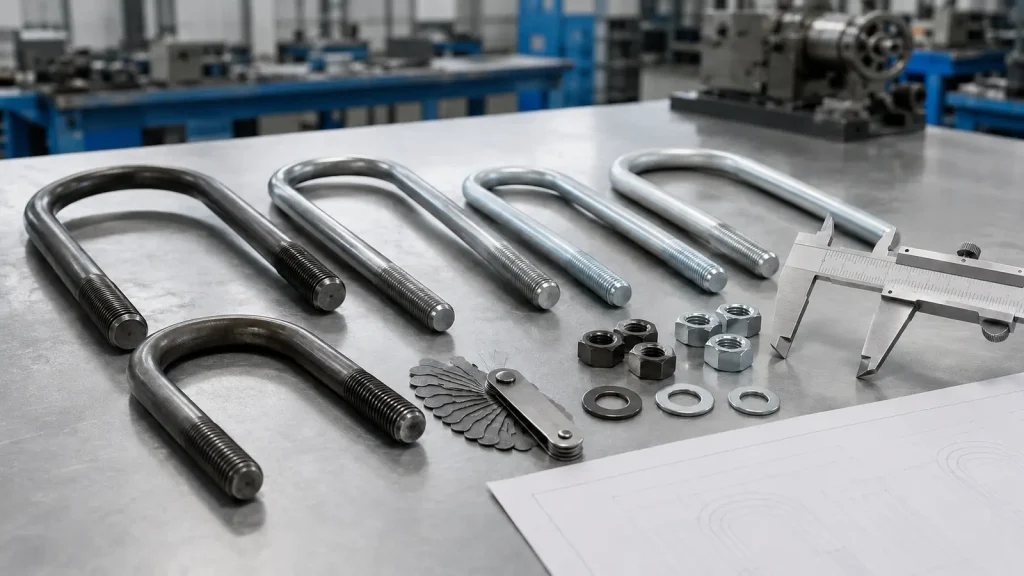
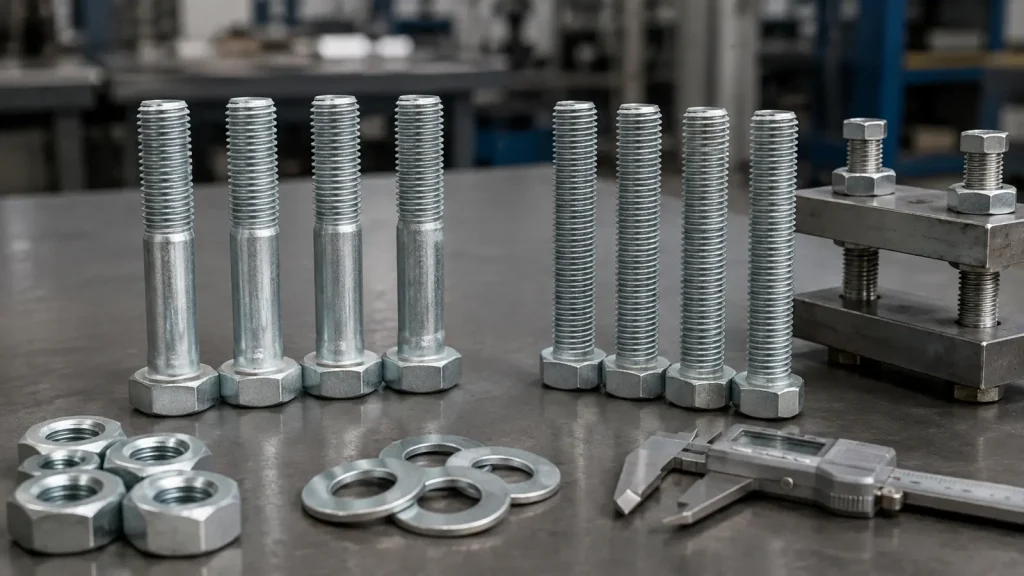
The practical difference between a hook anchor bolt and a straight anchor bolt is the way the embedded end resists pullout. A hook shape provides bearing inside the concrete, while a straight anchor often relies more heavily on bond, expansion, adhesive, or a separate anchor system. That difference matters when the bolt is cast in place, because the hook geometry must match the foundation layout before concrete is poured.
Hook anchor bolts are commonly considered for base plates, light structural supports, equipment bases, posts, rails, and general foundation fixing. They are less forgiving after installation than some post-installed anchors, so drawing accuracy, projection height, and thread protection during the pour should be checked before ordering.
Start with the installed condition, not only the bolt size. Confirm the base plate hole diameter, plate thickness, nut and washer arrangement, required projection above the finished surface, and the depth available below the plate. If the projection is too short, the nut may not fully engage; if it is too long, the installer may need extra spacers or site cutting.
Define the hook shape clearly. Buyers often send only diameter and total length, but a hook anchor bolt also needs hook leg length, bend radius or bend style, straight shank length, and threaded length. A small change in hook geometry can affect cage spacing, edge distance, and how easily the bolt can be positioned in a template.
Choose material and finish based on the environment and the connected part. Plain steel may suit protected indoor work, while outdoor or damp locations often require a corrosion-resistant finish. Hot-dip galvanizing, electroplating, and other coatings can change thread fit and appearance, so confirm compatible nuts and washers rather than assuming all finishes assemble the same way.
Avoid ordering from a sketch that omits tolerances or installation direction. Mark which end is threaded, whether nuts and washers are required, the quantity per set, packing preference, and any inspection or documentation expectations. A useful next step is to send a drawing or photo of the base plate layout together with the bolt dimensions you plan to use, so the supplier can check for obvious conflicts before production.