The practical difference is how the bolt holds the assembly. An L bolt is often chosen where the bent end is embedded, hooked, or trapped so the fastener resists withdrawal. A key bolt is more about controlled positioning or anti-rotation, especially where the bolt must stay aligned while the nut is tightened.
This distinction matters because a bolt that looks strong on paper can still fail the application if the bend radius, leg length, key shape, or bearing surface does not suit the mating part. Before ordering, confirm whether the fastener is carrying tension, shear, alignment load, or a mix of these.
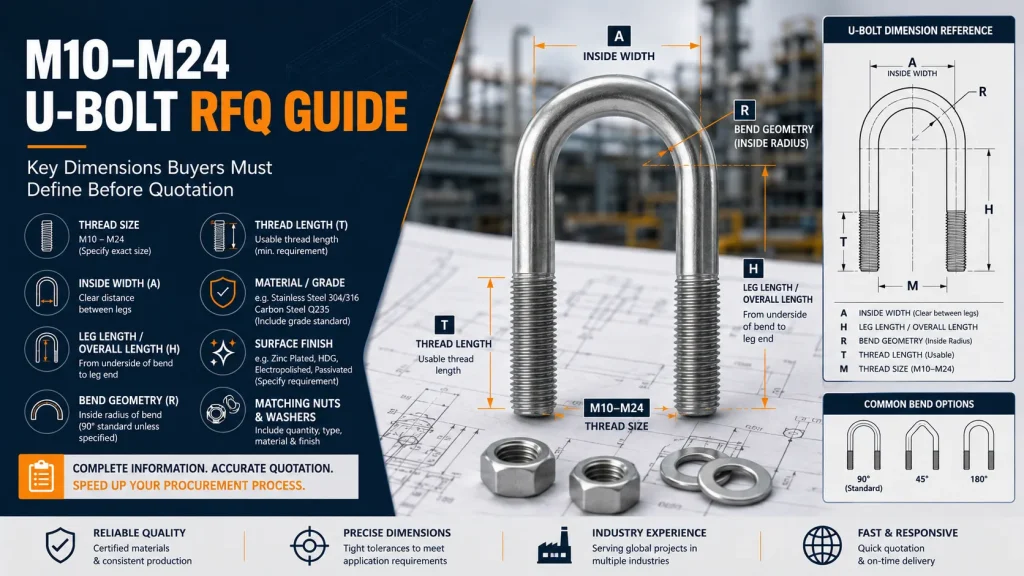
Start with the joint geometry. For an L bolt, define the thread diameter, total length, threaded length, inside bend dimensions, and the length of the bent leg. For a key bolt, define the head or key profile, the slot or mating feature it engages, and the clearance available for assembly.
Match the material and finish to the service environment. Indoor brackets, concrete anchorage, outdoor frames, machinery bases, and pipe supports may need different corrosion resistance and strength levels. A harder bolt is not automatically better if the mating material is soft or if installation requires bending, seating, or repeated adjustment.
Avoid treating L bolts and key bolts as standard interchangeable items unless the drawing is controlled. Small differences in bend angle, head shape, thread length, or shoulder position can stop the bolt from seating correctly. If the part replaces an existing fastener, send a drawing, sample photo, or measured sketch rather than only a name.
The next step is to describe the assembly in plain terms: what the bolt holds, how it is installed, what movement it must resist, and what finish or material is expected. Hebei Wotu Fastener Manufacturing Co., Ltd. can then confirm which dimensions and tolerances need to be fixed before quotation.