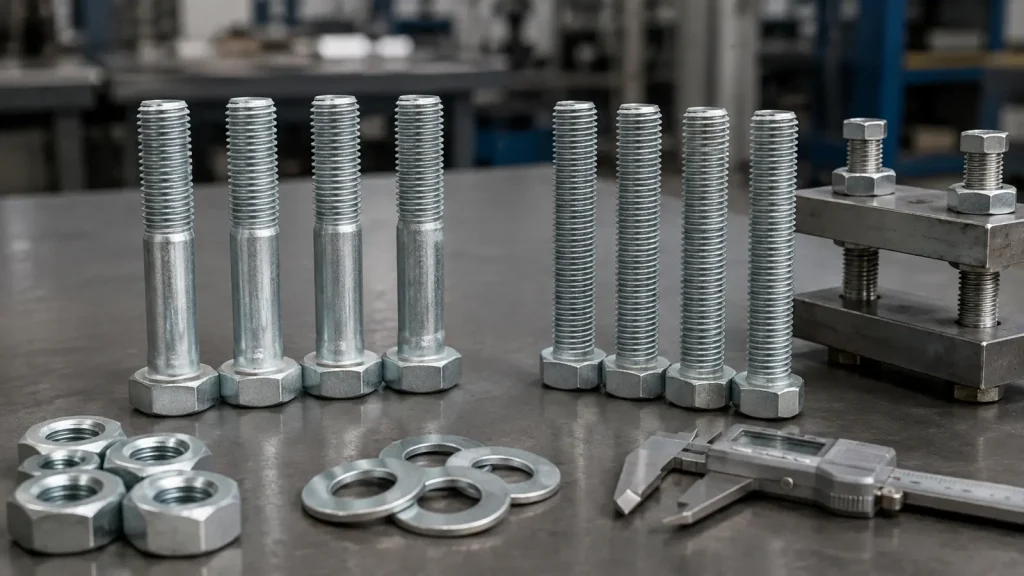
The useful distinction is between a standard bolt and a drawing-controlled bolt. A standard bolt can be checked against a recognized specification such as a DIN, ISO, ASTM or project standard. A drawing-controlled LN bolt depends on the buyer’s drawing, because small details such as shoulder length, thread runout, head height, coating thickness or nut engagement can change how the bolt performs.
This matters most when the bolt fits through a bracket, base plate, pipe support or embedded fixture. If the inquiry only says “LN bolt” without dimensions or a standard, the supplier may quote the wrong item even if the diameter and length look close.
Start by confirming what “LN” means in your own document set. If it is a part number, send the drawing or the specification sheet behind that code. If it is meant to describe a bolt shape, state the head type, shank form, thread type and whether the bolt is fully threaded or partially threaded.
Material and grade should match the load and installation environment. A structural connection, pipe support or anchor assembly may need a different strength class and surface finish from a general fastening job. Avoid treating coating as a cosmetic choice; hot-dip galvanizing, zinc plating and plain finish can affect corrosion resistance, thread fit and nut compatibility.
Check the mating parts before ordering. Nut standard, washer type, hole diameter, clamp thickness and required thread engagement can all change the usable bolt length. A common mistake is measuring only the overall length while ignoring the unthreaded shank or the length needed after assembly.
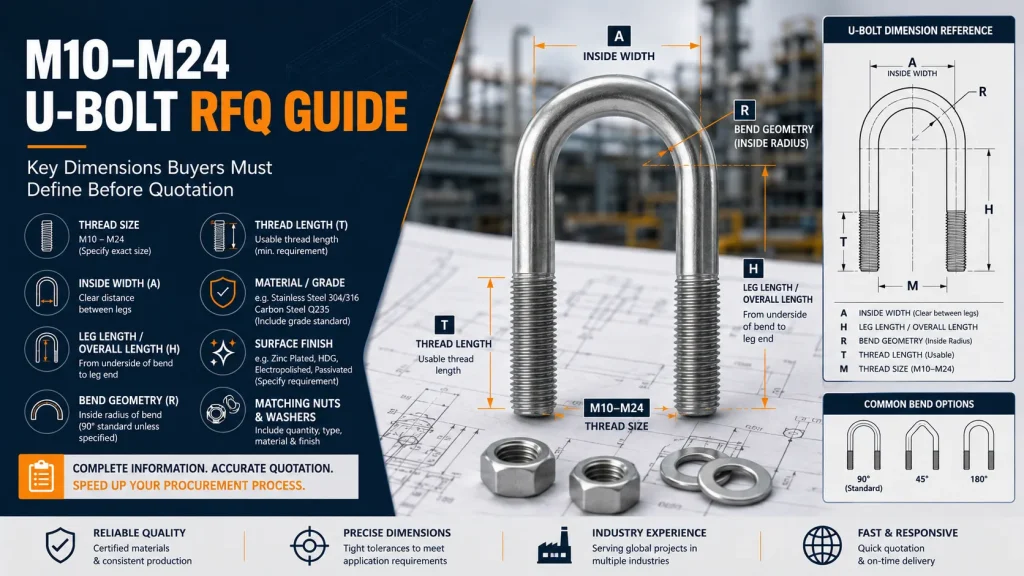
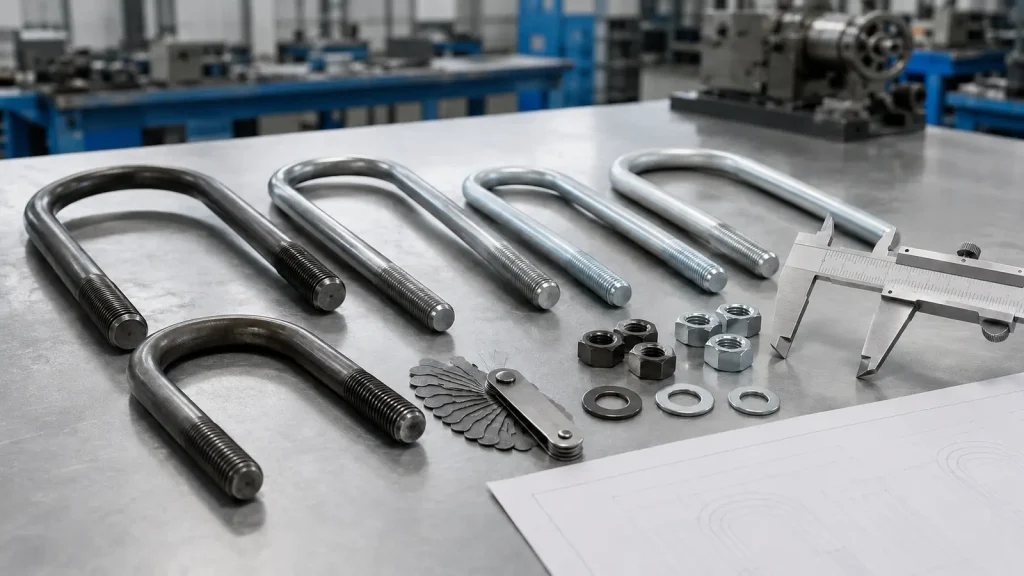
For a clear next step, send the LN bolt drawing or sample details with diameter, length, thread pitch, head style, material grade, finish, quantity and application. If the bolt is used with anchors, U-bolts, pipe supports or base plates, include a simple assembly photo or sketch so the fit can be checked before production or sourcing.