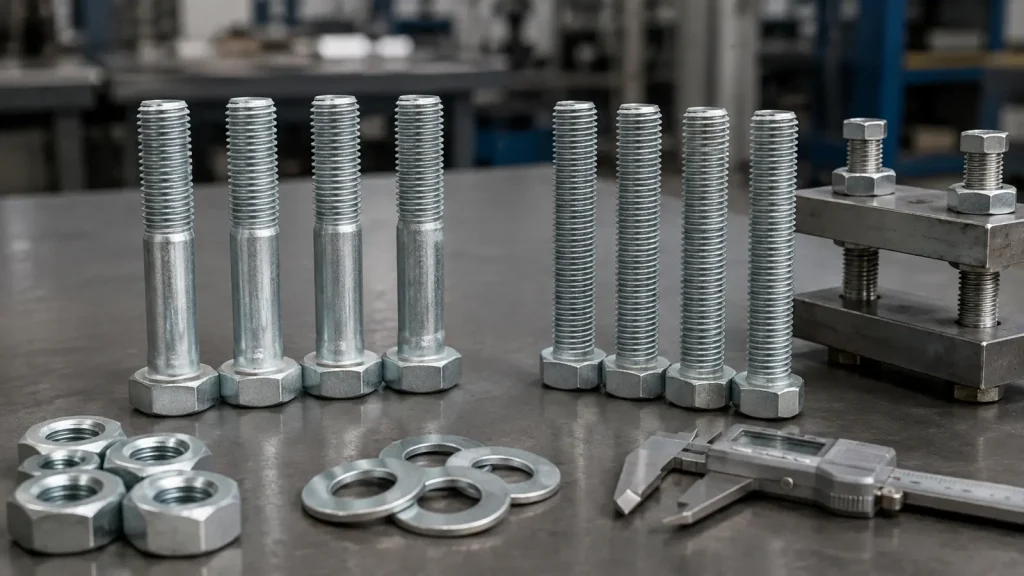
M20 describes the thread size, not the bolt’s overall length or head geometry. Two M20 Allen bolts can have different lengths, partially or fully threaded shanks, head heights and socket dimensions while sharing the same nominal thread diameter.
This distinction matters during replacement and assembly. The thread must engage correctly, the unthreaded shank must suit the joint, and the hex socket must accept the intended tool without bottoming out or losing contact. Confirm the applicable standard and request a dimensional drawing before approving a bulk order.
Start with the thread information: specify M20, the thread pitch or standard, and whether the mating hole is tapped or used with a nut. Do not assume that every M20 bolt has the same pitch. If the bolt replaces an existing part, measure the thread, usable length and the portion that passes through the assembled components.
Next, define the geometry that affects installation. Confirm overall length, threaded length, head diameter, head height and internal hexagon dimensions. A low-clearance assembly may need a particular head profile, while a deep or obstructed joint may require a socket that can reach and fully engage the recess.
Choose the material or strength grade and surface finish for the actual load and environment. High strength, corrosion resistance and coating thickness can affect joint performance, fit and installation. Check that the selected finish is compatible with the nut, tapped hole and surrounding material rather than treating coating as a cosmetic choice.
For an enquiry, send the required standard, bolt length and thread length, plus the application or operating environment. A marked-up drawing or photo of the existing bolt can resolve head and socket details faster than an M20 description alone. Ask Hebei Wotu Fastener Manufacturing Co., Ltd. to confirm the proposed dimensional drawing, grade, finish and inspection information before placing the order.