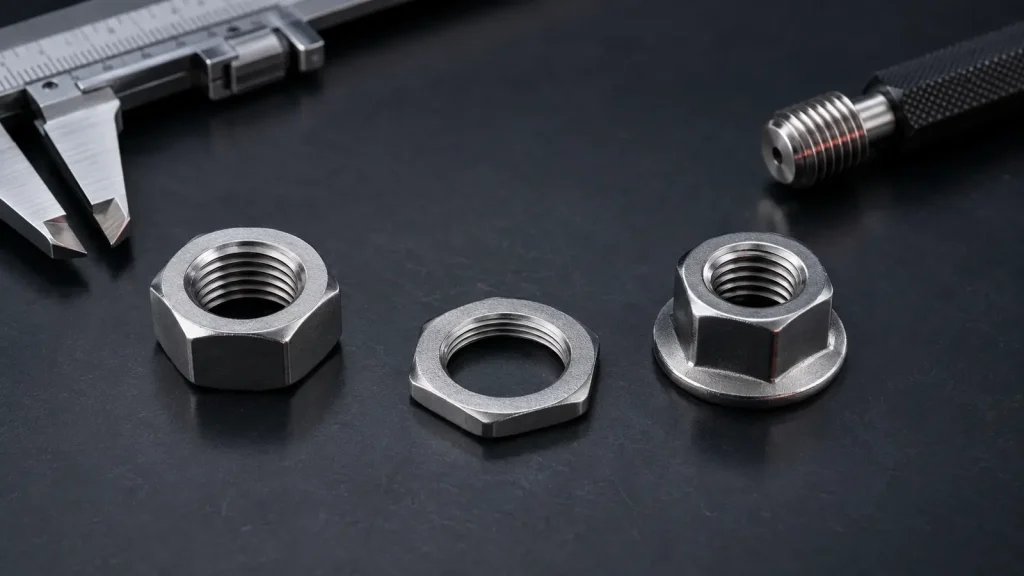
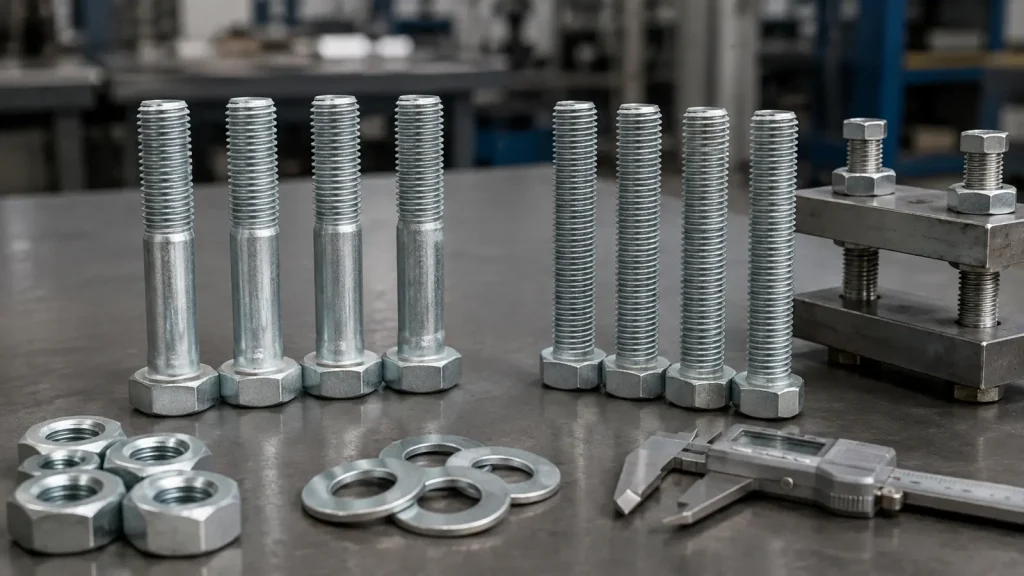
The first distinction is between a bolt that mainly locates parts and a bolt that carries clamp load. A light-duty assembly may only need a standard hex bolt and nut, while a joint exposed to vibration, outdoor corrosion or repeated maintenance may need a different nut style, coating, washer arrangement or tightening method.
Thread length also matters. A fully threaded bolt gives more adjustment and is common in many general assemblies. A partially threaded bolt leaves a plain shank through the joint, which can be preferred where shear bearing or cleaner alignment is important. Confirm this before bulk ordering, especially when comparing DIN, ISO, GB or other standards.
Start with the joint, not the part name. Share the connected material, hole size, plate thickness, load direction and whether the connection is temporary or permanent. These details affect bolt length, thread engagement, washer choice and whether a standard hex nut is enough.
Choose the material and surface finish for the working environment. Plain steel may suit protected indoor equipment, while zinc-plated or hot-dip galvanized fasteners are often considered for more exposed conditions. Coating thickness can affect thread fit, so confirm that the nut and bolt are compatible after plating or galvanizing.
Do not mix standards casually. Similar-looking nuts and bolts can differ in head dimensions, thread pitch, tolerance, strength marking or coating allowance. If a drawing calls for DIN 931, DIN 933, ISO, GB or ASTM parts, keep that reference in the enquiry and state whether equivalents are acceptable.
Avoid ordering from only a short description such as “M16 bolt and nut.” Add diameter, length, thread pitch if non-standard, grade, finish, head style, nut type, washer requirement and packaging preference. For repeat projects, send a drawing or previous purchase specification so the quotation is based on the same joint requirement.