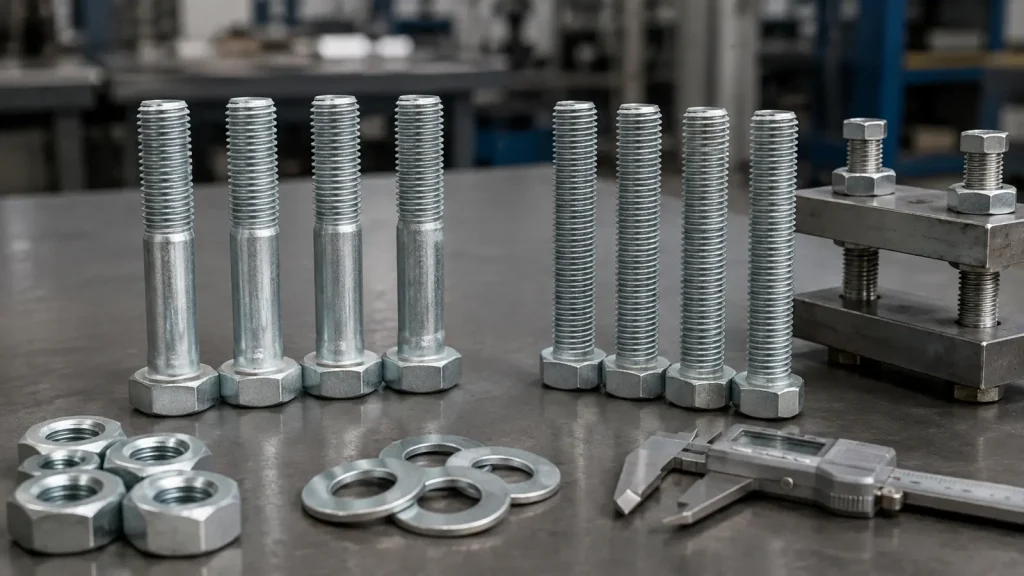
The main distinction is between identifying a bolt by its name and identifying it by its complete specification. “M10 bolt” gives only part of the information; the required length, thread length, head style, material, finish, strength class, and standard may still be open.
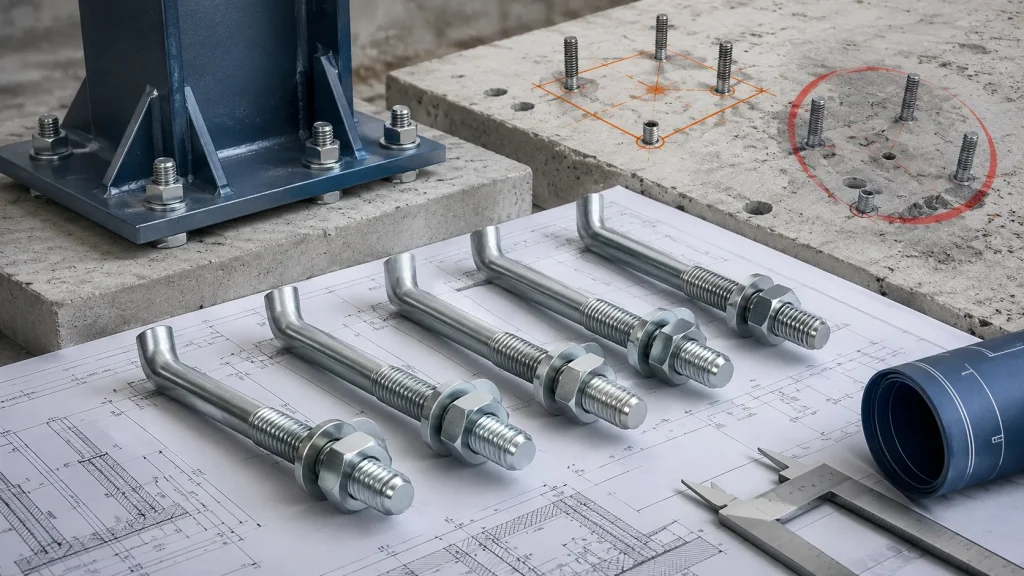
This matters most when replacing an existing fastener or ordering in volume. For example, a hex bolt with partial threading is not automatically interchangeable with a fully threaded version, and an anchor bolt or U-bolt must also match the mounting geometry. Confirm the drawing, sample, or installation dimensions before approving a substitute.
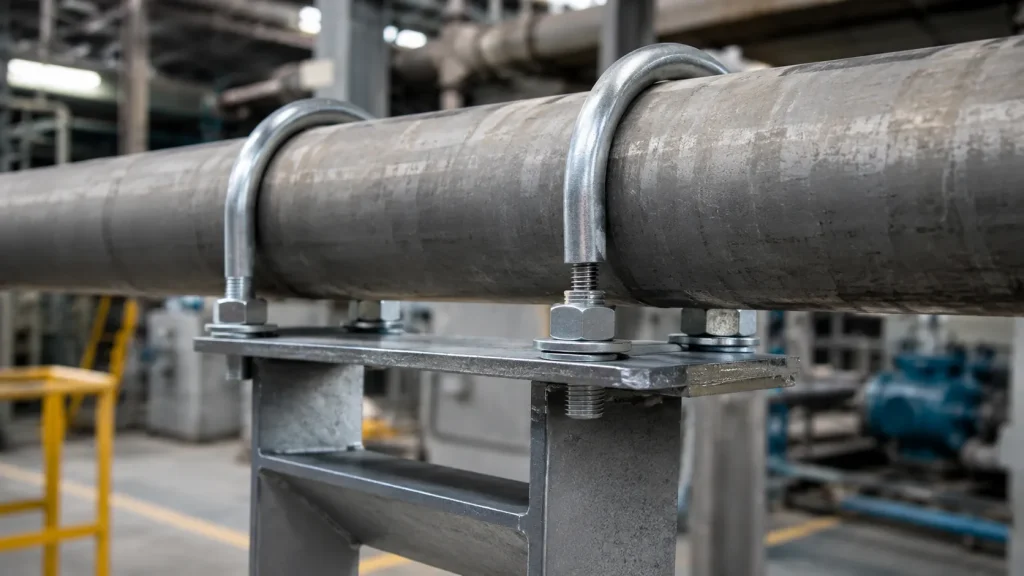
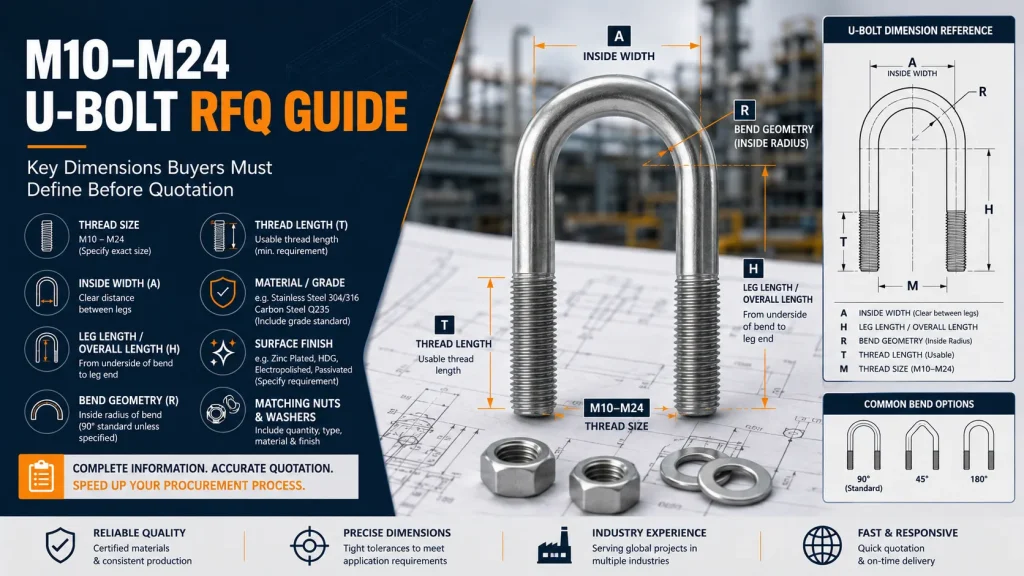
Match the bolt to the joint. For a general equipment or steel connection, identify the head and thread form required. For pipe supports, send the pipe outside diameter, support arrangement, leg length, and thread details for a U-bolt. For anchoring, provide the base material, embedment arrangement, exposed thread, plate or fixture details, and installation purpose. Do not choose from diameter alone.
Check the full specification. Confirm the applicable standard, nominal diameter, overall length, threaded length, material, finish, and strength or property class. Also state whether the order includes nuts and washers and whether those parts must match the bolt material and finish. A standard designation such as DIN 931 or DIN 933 should be checked against the required thread arrangement rather than treated as a complete substitute decision.
Allow for the service environment. Indoor dry use, outdoor exposure, moisture, chemicals, and temperature can lead to different material or coating choices. Corrosion protection can affect appearance, compatibility, and long-term maintenance; a coated carbon-steel bolt should not be assumed suitable for every environment. If the assembly has special exposure or galvanic-contact concerns, ask which material and finish combinations are appropriate.
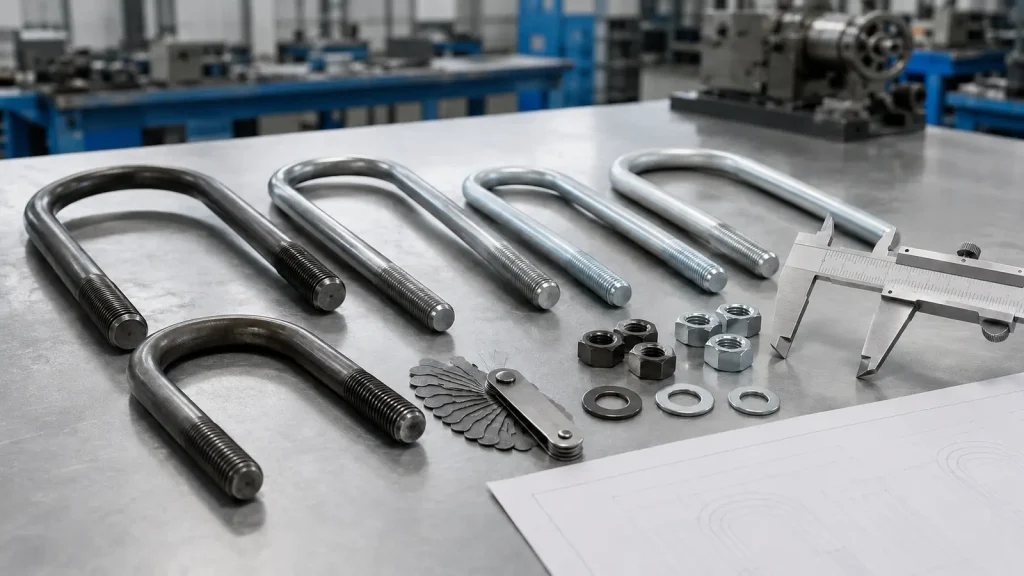
Make the next step specific. Send a drawing, marked-up photograph, or existing-part measurements together with the application, required quantity, destination, and any standard or grade shown on the documents. Ask the supplier to confirm the complete part description, supplied accessories, and any proposed substitutions before placing a bulk order.