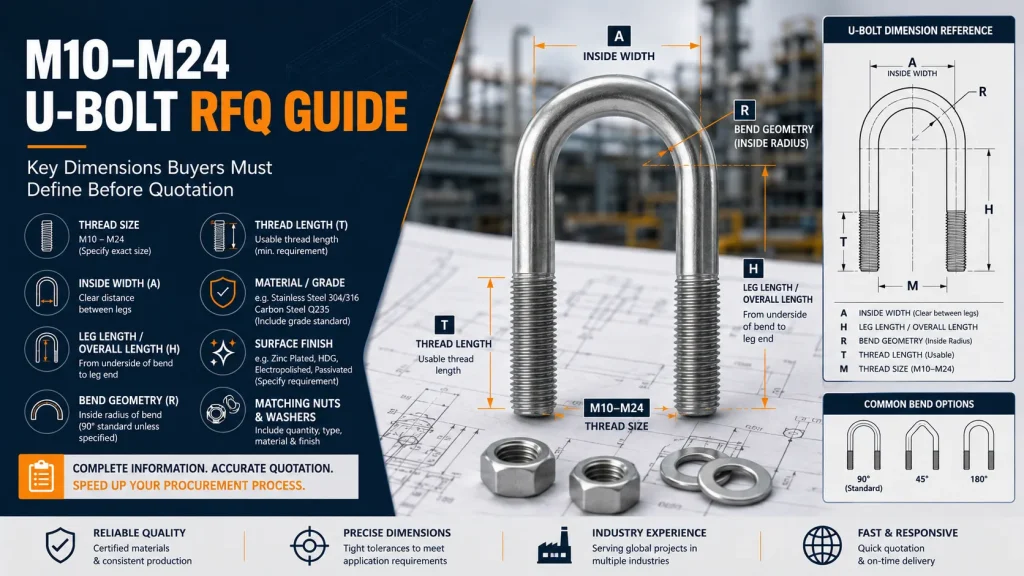
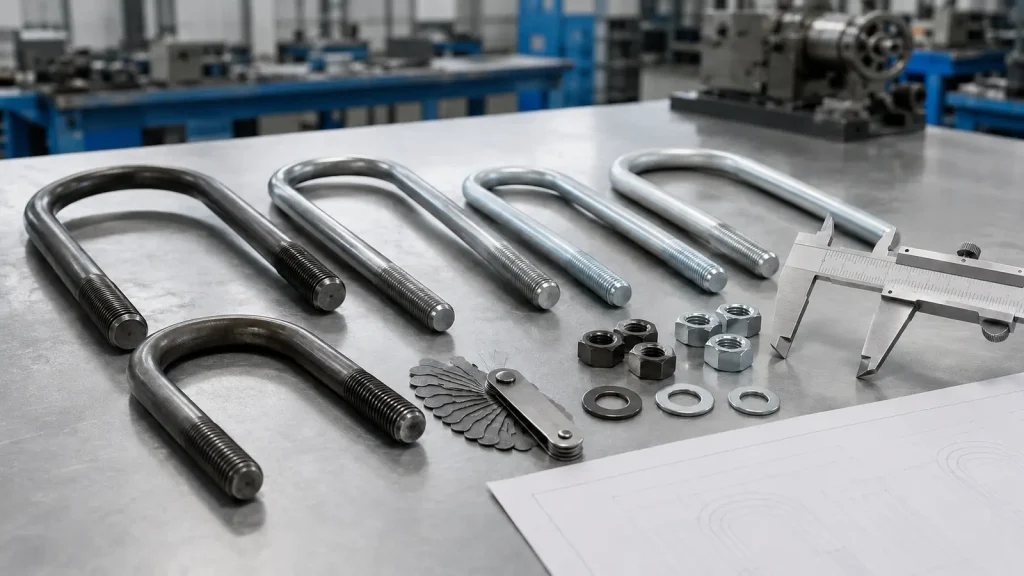
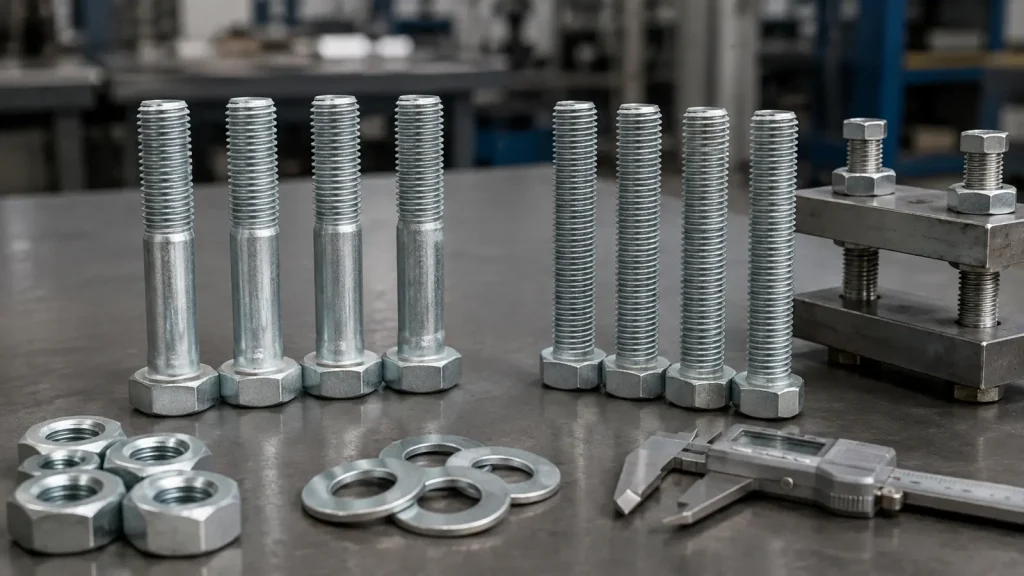
The first distinction to confirm is the socket bolt head type. Socket head cap bolts provide a tall cylindrical head and high drive engagement, button head bolts give a lower rounded profile, flat countersunk socket bolts sit flush in a countersunk hole, and low-head designs help where vertical clearance is limited. These styles are not interchangeable unless the mating part, counterbore or countersink has been designed for them.
Thread choice also matters. A fully threaded bolt is useful when the grip length varies or the joint uses tapped holes with limited depth. A partially threaded bolt can place a smooth shank through the shear plane and may suit structural or precision assemblies better. Before ordering, confirm the drawing callout, mating thread, required engagement depth and whether the application depends on clamping force, positioning or both.
Start with the joint geometry. Check the through-hole or tapped-hole size, available head clearance, counterbore or countersink dimensions, required thread engagement and the tool access angle. Many socket bolt problems come from choosing the correct diameter but the wrong head form for the recess or surface.
Match the material and finish to the operating environment. Plain alloy steel may suit protected mechanical assemblies, while zinc plating, black oxide, stainless steel or hot-dip galvanized finishes may be considered for different corrosion and appearance needs. Coating thickness can affect thread fit and recess detail, so confirm compatibility with the mating nut or tapped part rather than treating finish as a cosmetic choice only.
Do not mix standards casually. DIN, ISO, ANSI and customer drawings may use different head dimensions, drive sizes, tolerances and thread designations. If your existing part came from an older machine or imported assembly, send a drawing, sample or full measurement set before replacing it with a visually similar socket bolt.
A practical next step is to provide the bolt standard or drawing, diameter, thread pitch, length, head style, material or property class, finish, quantity and application notes. If the bolt will be used in vibration, outdoor exposure, repeated maintenance or a safety-related joint, say so early so locking method, coating and inspection requirements can be discussed before quotation.