SS Anchor Bolts | Hebei Wotu Fastener Manufacturing Co., Ltd.

Stainless Steel Anchor Bolts

Stainless steel anchor bolts are usually chosen where the fixing must hold structural or equipment loads while resisting corrosion from weather, washdown, chemicals, or coastal exposure. The main purchase decision is not simply “stainless or carbon steel”; it is the anchor style, stainless grade, thread form, embedment arrangement, and documentation that match the base material and site conditions.

For an inquiry to Hebei Wotu Fastener Manufacturing Co., Ltd., the useful starting point is the drawing or installation requirement: bolt shape, diameter, length, thread length, nut and washer requirements, and the environment where the anchor will be installed.

Related Products

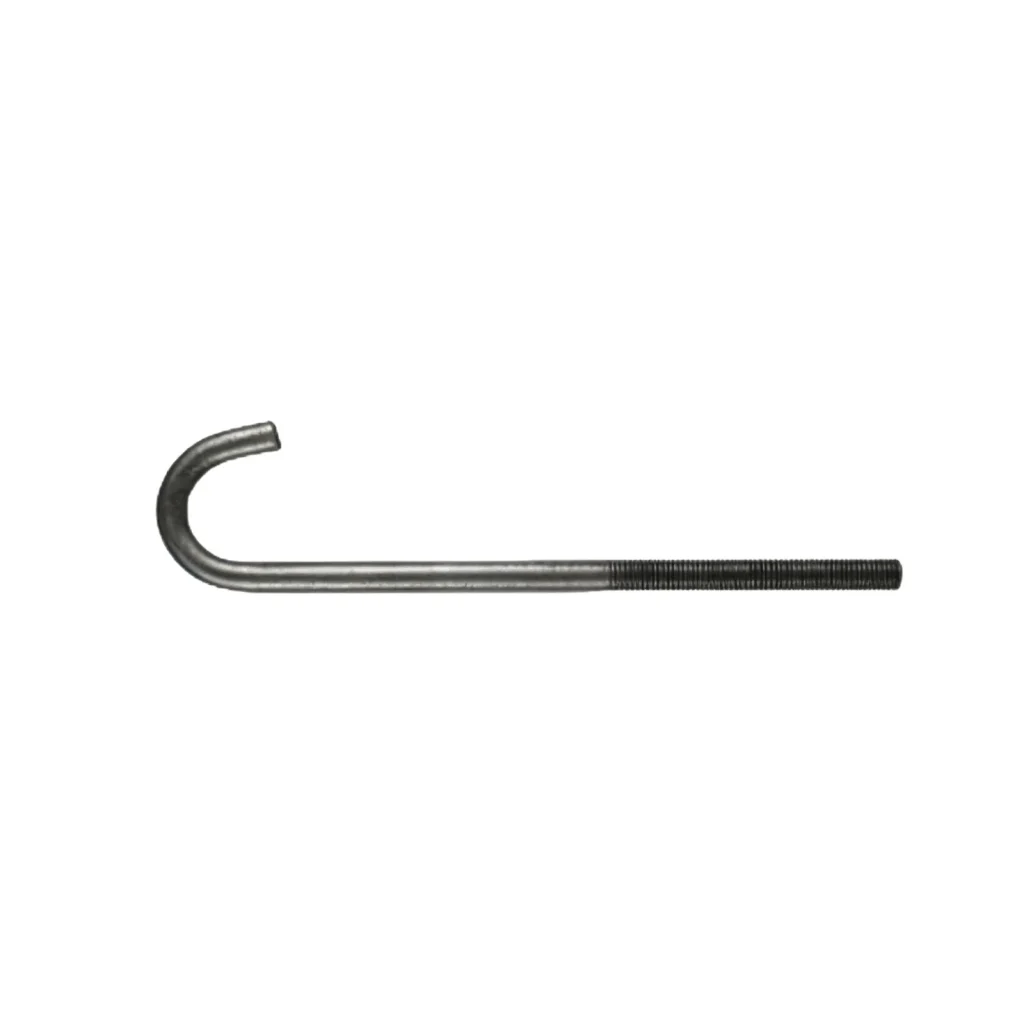
7-letter, 9-letter L-shaped anchor bolt (Chinese national standard GB/T799-1988 embedded anchor screw)

7-letter, 9-letter L-shaped anchor bolt (Chinese national standard GB/T799-1988 embedded anchor screw)

Brand: Wotu Surface: Natural black oxide treatment, customized hot-dip galvanized, zinc plated as required Specifications: Follow Chinese national standard GB/T799-1988, in stock M12-M48, total length 120mm~1500mm, nonstandard customized diameter, bending length, total screw length available Matching: Nuts, flat washers and spring washers of the same specification can be supplied in complete sets. Packaging: Bundling and packaging, using wooden pallets and film-wrapped export packaging in large quantities

Read More
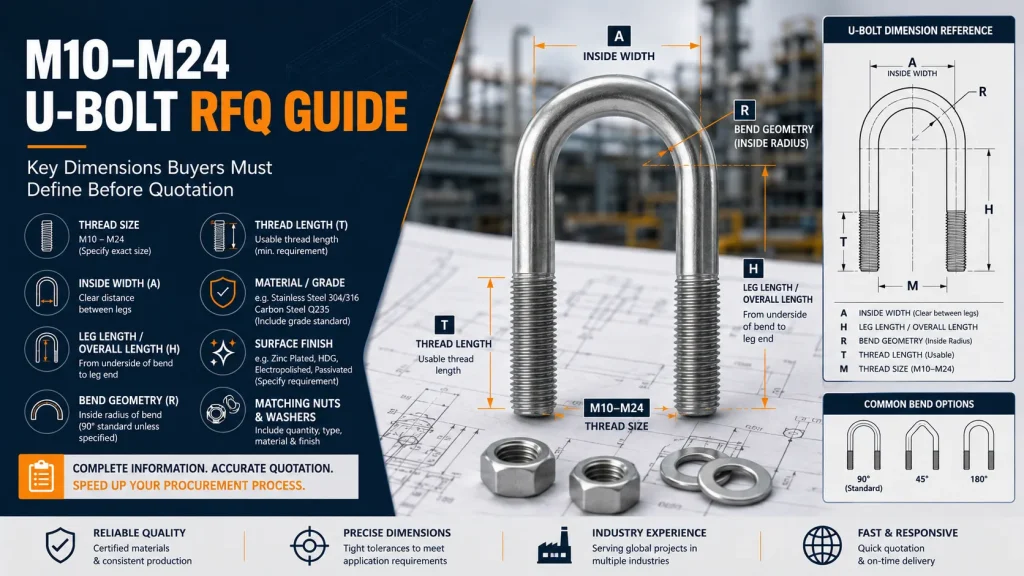
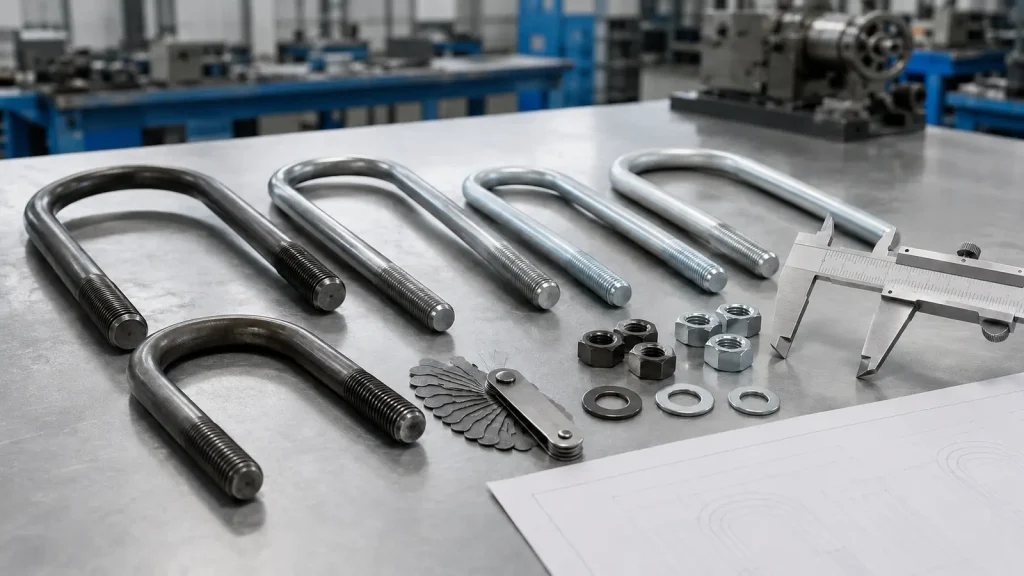
U-bolt ( / U-bolt, M10/M12/M16/M20/M24 multiple specifications)

U-bolt ( / U-bolt, M10/M12/M16/M20/M24 multiple specifications)

Brand: Wotu Surface: natural black oxide / hot-dip galvanized / blue-white zinc plated, multiple processes available Specifications: Based on common industry drawing parameters, suitable for pipe diameter 25mm~139.7mm, screw diameter M10~M24, total length can be nonstandard customized Matching: can be matched with nut, flat washer and spring washer of the same specifications for complete shipment Packaging: Bundling and packaging + 25kg export carton, full-container wooden pallet wrapped with film, supports private-label export packaging

Read More
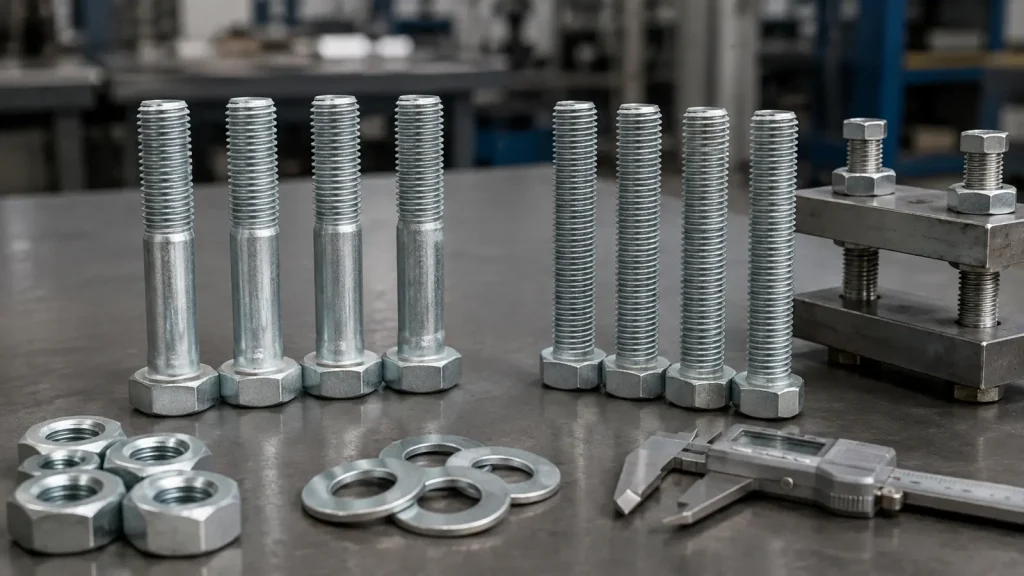
Hot-Dip Galvanized Hex Head Bolt (DIN931 Half Thread / DIN933 Full Thread / GB30 Chinese National Standard Bolt, Can Be Equipped With Nut And Washer Set)

Hot-Dip Galvanized Hex Head Bolt (DIN931 Half Thread / DIN933 Full Thread / GB30 Chinese National Standard Bolt, Can Be Equipped With Nut And Washer Set)

Brand: Wotu Surface: overall hot-dip zinc plating treatment Specifications: Comply with DIN and GB standards, in stock M6-M48 full range of specifications, length 20mm-300mm, supports nonstandard customized. Packaging: woven bag inside / 25kg export carton, film-wrapped wooden pallet; supports neutral packaging and customer private-label customization.

Read More
Hex nut DIN934-1987 (A/B accuracy classification)

Hex nut DIN934-1987 (A/B accuracy classification)

Brand: Wotu Standard basis: German standard DIN934-1987, metric coarse thread/fine thread universal thread Surface: 304 stainless steel Specifications: M6~M24 full range of specifications Supporting equipment: same specification bolts, flat washer, spring washer complete set of shipment Packaging: 25kg standard carton, whole wooden pallet packaging

Read More
Hex thin nut

Hex thin nut

Brand: Wotu Surface: zinc plated Specifications: in stock M8~M64 full standard specifications, covering precision, machinery, and steel structure full size range, supporting nonstandard tooth pitch and customized thickness Matching: Can be matched with bolts of corresponding specifications, flat washer, spring washer complete set of shipment Packing: packed in 25kg cartons and packed on wooden pallets.

Read More
Hex nut (Chinese national standard GB52-1976)

Hex nut (Chinese national standard GB52-1976)

Brand: Wotu Surface: 304 stainless steel Specifications: in stock M6~M24 full standard metric specifications, supports nonstandard pitch, thickening/customized Matching: Can be matched with bolts of corresponding specifications, flat washer, spring washer complete set of supporting shipment Packaging: 25kg cartons, whole wooden pallets

Read More

Stainless Steel Anchor Bolt Selection Points

Selection criteria

When comparing stainless steel anchor bolt options, focus on the anchor form, stainless grade, thread and nut compatibility, concrete installation method, and the dimensional details that affect fit at the base plate or bracket. A drawing or sample specification is more reliable than a short part name.

Criterion What To Check Why It Matters Buyer Tip
Stainless-steel grade and exposure Confirm the proposed grade and review its suitability for moisture, chlorides, chemicals, and indoor or outdoor exposure. The steel grade affects corrosion resistance and the service life of the anchor bolt in its installation environment. Which stainless-steel grade do you recommend for this site, and what exposure assumptions support that recommendation?
Anchor style and base material Match the anchor type to the concrete, masonry, or other base material and verify the installation method. An anchor designed for one substrate or installation method may not provide the intended hold in another. Is this bolt intended for cast-in, expansion, sleeve, wedge, or another anchoring method, and what base material is specified?
Thread, length, and projection Compare thread diameter, thread length, overall length, embedment, projection, and any required bend or head geometry against the drawing. A mismatch can prevent nut engagement, reduce embedment, interfere with the fixture, or cause site rework. Can you confirm the full dimensional drawing, including tolerances and the reference point for measuring length?
Load and installation requirements Ask for the applicable design loads, installation torque or procedure, edge distances, spacing, and required embedment for the selected anchor system. Anchor performance depends on the interaction between the bolt, substrate, fixture, spacing, and installation conditions. Which load case and installation instructions should our engineer use to approve this anchor bolt?
Nuts, washers, and material compatibility Verify that the supplied nuts and washers match the stainless-steel grade, thread form, dimensions, and installation environment. Incompatible or mismatched hardware can cause thread problems, galling, uneven clamping, or galvanic-corrosion concerns. Are matching nuts and washers included, and how do you control thread compatibility and galling during installation?

What to Confirm Before Ordering SS Anchor Bolts

An SS anchor bolt can mean several different fastener types. Some projects need cast-in anchor bolts for concrete foundations, such as L-type, J-type, straight threaded, or headed anchors. Others need post-installed anchors, where the bolt works with a sleeve, wedge, or chemical anchoring system. These are not interchangeable, because the load path, installation method, hole preparation, and inspection points are different.

The stainless grade also matters. Common stainless options offer different resistance to corrosion and different cost levels, while high chloride or chemical environments may require a more resistant material than a general outdoor fixing. Confirming the environment early prevents two common mistakes: overpaying for stainless where coating would be enough, or using a stainless grade that looks acceptable at delivery but stains, pits, or seizes after installation.

Start with the anchor’s job. A holding-down bolt for a steel column base plate is not specified the same way as an anchor for machinery, pipe supports, guardrails, or façade brackets. Ask whether the anchor is cast into concrete before pouring or installed after the concrete has cured. That one detail changes the bolt shape, tolerance expectations, accessories, and installation checks.

Match the material to the exposure. Stainless steel is often selected for corrosion resistance, but the right grade depends on moisture, salt, cleaning chemicals, temperature, and contact with other metals. If galling during tightening is a concern, discuss compatible nuts, washers, lubrication practice, and thread condition rather than treating all stainless hardware as the same.

Check dimensions from the drawing, not from a short description. Diameter and total length are not enough for many anchor bolts. Buyers commonly need to confirm thread length, bend radius or hook dimensions, projection above concrete, embedment length, chamfer, nut and washer type, and any marking or packaging requirements. Small dimensional mismatches can cause base plates not to fit or leave too little usable thread on site.

Confirm the standard and inspection needs before ordering. If the project refers to a standard, drawing, or material certificate requirement, include it with the inquiry. If the anchor must work with a specified grout thickness, template, sleeve, or chemical adhesive system, say so clearly. A practical next step is to send the anchor drawing, stainless grade requested, quantity, application, and installation method so the supplier can confirm what can be quoted accurately.


Criteria Importance Description Example Options
Anchor installation method Critical because it changes the anchor design and site procedure Cast-in anchors are set before concrete placement; post-installed anchors are fixed into cured concrete. They should not be treated as direct substitutes without checking the design requirement. A foundation bolt for a new equipment pad may be cast in place, while a bracket added to an existing concrete wall may need a post-installed anchoring system.
Stainless steel grade High where corrosion resistance affects service life Different stainless grades perform differently in moisture, salt, chemical exposure, and high-cleaning environments. The lowest-cost stainless option is not always suitable for aggressive exposure. An indoor dry base fixing may not need the same material as an anchor exposed to coastal spray or cleaning chemicals.
Anchor shape and dimensions High because small errors can stop installation Diameter and total length are not enough for many orders. Thread length, projection, embedment, hook or bend details, and base plate hole clearance can all affect fit. A bolt with the correct diameter but insufficient thread projection may not accept the required washer and nut after leveling grout is added.
Thread, nut, and washer compatibility Important for tightening, load transfer, and avoiding galling The thread form, nut material, washer type, and surface condition should work together. Stainless assemblies may need attention to galling risk during installation. A stainless anchor used with matching nuts and flat washers should still be checked for thread fit and tightening practice before site use.
Documentation and project standard Important when the buyer must pass inspection or match a design file Some projects require a specific standard, material certificate, marking, drawing tolerance, or packing method. These requirements should be confirmed before quotation rather than after production. A buyer may need the supplier to quote against a project drawing and include the requested material certificate with the shipment.

Product Selection

Related Options

For exposed equipment bases, outdoor steel structures, handrail posts, and pipe supports, the priority is usually corrosion resistance without losing installation fit. The right SS anchor bolt should match the drawing, suit the concrete or bracket detail, and arrive with the nuts, washers, and documentation your project requires.

Blog Articles / Reviews

Anchor Bolts: 7 Ordering Errors That Cause Site Rework

Anchor Bolts: 7 Ordering Errors That Cause Site Rework

ost anchor bolt ordering errors come from incomplete drawings, unclear dimensions, unsuitable material or coating choices, undefined tolerances, and mismatched nuts or washers. These mistakes affect steel fabricators, EPC contractors, equipment installers, importers, and distributors because anchor bolts are usually embedded before the connected structure arrives on site. Once concrete has cured, even a small […]

Applications of Anchor Bolts

Applications of Anchor Bolts

Fixed anchor bolts, also known as short anchor bolts, are cast in with the foundation and used to secure equipment that does not experience strong vibration or impact. 1. Fixed anchor bolts, also known as short anchor bolts, are cast in with the foundation and used to secure equipment that does not experience strong vibration […]

Why Do U Bolts Loosen in Pipe Supports? 6 Causes and Prevention Methods

Why Do U Bolts Loosen in Pipe Supports? 6 Causes and Prevention Methods

U bolts usually loosen in pipe supports because the connection loses clamping force, receives continuous vibration, restricts thermal pipe movement, uses an incorrectly sized U bolt, experiences surface settlement, or suffers from corrosion and inadequate inspection. This issue affects EPC contractors, pipe installers, industrial maintenance teams, equipment manufacturers and fastener distributors working with water, oil […]

Which M10–M24 U-Bolt Measurements Must Buyers Send Before an RFQ?

Which M10–M24 U-Bolt Measurements Must Buyers Send Before an RFQ?

Direct Answer: For an M10–M24 U-bolt RFQ, buyers should send a dimensioned drawing that defines thread diameter, inside width, leg or overall length, bend geometry, thread length, application diameter, material or grade requirement, surface finish, matching nuts/washers, quantity, and packing needs. Nominal thread size alone is not enough because different measurement datums can produce U-bolts […]

What Should Buyers Verify When Comparing Bolt Manufacturers?

What Should Buyers Verify When Comparing Bolt Manufacturers?

A bolt manufacturer should be evaluated against a defined joint, drawing and acceptance plan—not a product list or unit price alone. Buyers need to verify whether the supplier can manufacture the required geometry, control material and heat-treatment requirements where applicable, manage threads and coatings as one dimensional system, inspect critical characteristics, preserve batch traceability and […]

DIN 931 vs DIN 933 Hex Bolts: What Should Buyers Confirm Before Bulk Ordering?

DIN 931 vs DIN 933 Hex Bolts: What Should Buyers Confirm Before Bulk Ordering?

DIN 931-style half-thread and DIN 933-style full-thread hex bolts should not be selected from diameter and overall length alone. The practical choice depends on the joint stack, required grip, location of the thread transition, available nut engagement, mating hardware, material or property requirement, coating system and governing product specification. A half-thread bolt is not automatically […]

Frequently Asked Questions

Can stainless steel anchor bolts be used for all outdoor concrete fixings?

They are a good option for many outdoor fixings, especially where corrosion is a concern, but the stainless grade still needs to match the exposure. Coastal air, de-icing salts, chemical washdown, and contact with dissimilar metals can change the material choice.

Is a cast-in anchor bolt the same as a post-installed anchor?

No. A cast-in anchor is positioned before the concrete is poured, while a post-installed anchor is fixed into cured concrete using a mechanical or chemical anchoring method. The bolt shape, installation tolerance, inspection method, and load behavior can be very different.

When would a coated carbon steel anchor be a better choice than stainless steel?

Coated carbon steel may suit dry or mildly exposed locations where corrosion risk is controlled and cost is a stronger factor. Stainless steel is usually preferred where coating damage, long-term staining, moisture, or washdown exposure would create maintenance problems.

What details should be sent with an inquiry?

Send the drawing or specification, anchor type, stainless grade, diameter, total length, thread length, quantity, and required nuts or washers. Also confirm whether the anchor is cast-in or post-installed and describe the service environment.

Why do stainless threads sometimes seize during tightening?

Stainless fasteners can gall if the threads are rough, overloaded, dry, or tightened too quickly with an incompatible nut. Buyers should confirm nut material, thread finish, lubrication practice, and installation method when galling would cause site delays.

Can the same anchor bolt be used for machinery bases and structural columns?

Not always. Machinery bases may need attention to vibration, leveling, grout thickness, and usable thread projection, while structural columns often depend on base plate layout, embedment, and template accuracy. The project drawing should drive the anchor dimensions rather than the application name alone.

Leave Your Message

Send the anchor type or drawing, stainless grade, diameter and length details, and whether the bolt is cast-in or post-installed. Include the application environment and any nut, washer, marking, or certificate requirements.