Thread Forming Screws for Prepared Holes | Hebei Wotu Fastener Manufacturing Co., Ltd.

Thread Forming Screws for Prepared Holes

Thread forming screws are chosen when an assembly needs a strong internal thread without cutting chips from the mating material. The main decision is not only screw size; it is whether the thread form, pilot hole, material hardness, head style and surface finish suit the part being fastened.

For purchasing, the useful starting point is the joint: plastic, sheet metal, light alloy, wood-based board or another pre-drilled material. That choice affects driving torque, pull-out strength, risk of cracking, and whether the screw can be removed and reinstalled without damaging the formed thread.

Related Products

Countersunk Head Cross Thick Thread Fiberboard Screw

Countersunk Head Cross Thick Thread Fiberboard Screw

Brand: Wotu Surface: color zinc plated electroplating Specifications: in stock 3.5/4.0/4.5/5.0 regular wire diameter, rod length 16~80mm full range of specifications in stock, supports nonstandard length customization Packaging: 25kg cartons, whole wooden pallets

Read More
Hexagonal Wood Screws

Hexagonal Wood Screws

Brand: Wotu Surface: blue and white zinc plated Specifications: Chinese national standard 6#/8#/10#/12#/16#/20#, rod length 35mm~250mm full range of specifications in stock, supports nonstandard length customization Packaging: 25kg cartons, full pallets packed on wooden pallets, support neutral packaging, private-label customization

Read More
Hex nut DIN934-1987 (A/B accuracy classification)

Hex nut DIN934-1987 (A/B accuracy classification)

Brand: Wotu Standard basis: German standard DIN934-1987, metric coarse thread/fine thread universal thread Surface: 304 stainless steel Specifications: M6~M24 full range of specifications Supporting equipment: same specification bolts, flat washer, spring washer complete set of shipment Packaging: 25kg standard carton, whole wooden pallet packaging

Read More
Hex thin nut

Hex thin nut

Brand: Wotu Surface: zinc plated Specifications: in stock M8~M64 full standard specifications, covering precision, machinery, and steel structure full size range, supporting nonstandard tooth pitch and customized thickness Matching: Can be matched with bolts of corresponding specifications, flat washer, spring washer complete set of shipment Packing: packed in 25kg cartons and packed on wooden pallets.

Read More
Hex nut (Chinese national standard GB52-1976)

Hex nut (Chinese national standard GB52-1976)

Brand: Wotu Surface: 304 stainless steel Specifications: in stock M6~M24 full standard metric specifications, supports nonstandard pitch, thickening/customized Matching: Can be matched with bolts of corresponding specifications, flat washer, spring washer complete set of supporting shipment Packaging: 25kg cartons, whole wooden pallets

Read More
Hex flange nut (Chinese national standard GB/T6177.1-2000)

Hex flange nut (Chinese national standard GB/T6177.1-2000)

Brand: Wotu Surface: zinc plated Specifications: in stockM6/M8/M10/M12/M14/M16/M20 Chinese national standardfull range of specifications, support nonstandard thickness, tooth pitch customized Matching: can be matched with bolts of the same specification, flat washer, spring washer complete set of shipment Packaging: 25kg cartons, whole wooden pallets

Read More

Selecting Thread Forming Screws for Your Assembly Material

Selection Criteria

Useful selection criteria for thread forming screws include base material, pilot hole design, screw length, thread style, head form, drive recess, coating, packing method and installation torque control. A clear application description helps separate a workable screw from one that only matches the nominal diameter.

Criterion What To Check Why It Matters Buyer Tip
Mating material and hole condition Confirm the base material, hole type, and whether the joint uses a molded, punched, drilled, or extruded hole. Thread forming screws displace material instead of cutting it, so the hole and substrate control drive torque, clamp load, and risk of cracking or stripping. Ask: What material will the screw form into, and can you share the pilot hole diameter or mating-hole drawing?
Thread form and engagement length Compare the thread profile, pitch, and amount of full thread engagement in the assembled part. Different thread forms suit plastic, light metal, or sheet assemblies differently; too little engagement can strip, while too much forming resistance can overload the drive. Ask: Is the screw intended for plastic, sheet metal, or another material, and how much thread engagement is available?
Drive torque window Verify the expected installation torque range and compare it with the torque needed to form the thread and seat the head. A narrow torque window can cause assembly problems: under-driving leaves a loose joint, while over-driving can strip the formed thread or damage the part. Ask: Do you have target drive torque and strip torque values from assembly testing, or should samples be tested in the actual part?
Head style and seating surface Match the head type to the clamped component, countersink, washer face, or clearance requirement. The head controls how load is distributed after the thread is formed; the wrong seat can loosen, distort thin material, or sit proud of the surface. Ask: Should the screw finish flush, clamp a bracket, or bear on a washer or boss?
Finish and service environment Review the required coating, appearance, corrosion exposure, and compatibility with the mating material. Coating affects corrosion resistance, friction during forming, and final appearance; a finish that works indoors may not suit exposed or damp service. Ask: Will the assembly be used indoors, outdoors, near moisture, or in contact with dissimilar metals?

Key Choices Before Specifying Thread Forming Screws

A thread forming screw is different from a thread cutting screw. A forming screw displaces material to create the internal thread, while a cutting screw removes material. Forming can give a tight fit and reduce loose chips, but it usually needs a suitable pilot hole and a material that can be displaced without splitting or excessive stress.

Do not treat all self-tapping screws as interchangeable. A screw that works well in thin metal may be a poor choice for brittle plastic or fiberboard. The right selection depends on the base material, hole preparation, thread engagement, head bearing area, and the installation tool used on the line.

Start with the material being fastened. Ductile plastics, softer metals and prepared holes often suit thread forming designs, while brittle parts may need a different thread shape, a larger pilot hole, or a screw intended to reduce radial stress. If the part cracks, strips or shows high insertion torque during testing, the issue may be the hole and thread design rather than the screw length alone.

Define the pilot hole and engagement clearly. Buyers often specify diameter and length but leave the drilled or molded hole undefined. That makes samples hard to compare. State the base material, hole condition, total material thickness, required grip range, and whether the screw must resist pull-out, vibration, repeated servicing or only initial assembly load.

Match the head and drive to the assembly method. Countersunk heads sit flush but can introduce wedging force in some materials. Pan, wafer, flange or other bearing-style heads may spread load better where surface marking or pull-through is a concern. Drive style also matters: a production driver needs stable bit engagement and controlled torque, not just a familiar recess.

Check finish and environment before ordering. Indoor furniture hardware, appliance assemblies and outdoor sheet-metal work do not face the same corrosion and appearance requirements. Ask what coatings, materials, packing style and inspection documents can be supplied for the intended environment, and confirm samples under real installation conditions before fixing the purchase specification.

Criteria Importance Description Example Options
Thread formation method High importance because it affects chips, installation torque, thread strength and damage to the mating material. Forming screws displace material to create the internal thread, while cutting screws remove material. The better option depends on material ductility, cleanliness requirements and the permitted installation load. A pre-drilled ductile plastic housing may suit a forming design, while a material that cannot tolerate displacement may need a cutting design.
Pilot hole and hole condition High importance because a small change in hole size can cause cracking, stripping or excessive driver load. Specify whether the hole is molded, drilled, punched or absent, along with its diameter and depth. Do not compare samples only by nominal screw diameter and length. A molded hole in a plastic housing and a punched hole in thin sheet may require different screw geometry even when the screw sizes appear similar.
Base material and thread engagement High importance because the material determines how well it forms a thread and how much load the joint can carry. Consider material hardness, ductility, thickness and the available engagement length. More engagement is not always better if it increases installation torque or drives into a vulnerable section of the part. A screw for a thin metal bracket should not be selected solely from a design intended for a thicker molded component.
Head and drive style Important for load distribution, surface finish, access and repeatable production installation. Countersunk heads can sit flush but may create wedging forces in some materials. Bearing-style heads can spread load, while the drive recess must provide stable bit engagement with the selected driver. A flush furniture panel may call for a countersunk head, while a plastic cover at risk of pull-through may benefit from a broader bearing surface.
Thread forming screw versus self-drilling screw Important when deciding whether the assembly uses a prepared hole or must create its own entry through sheet material. Thread forming screws are generally considered for prepared holes and materials that can be displaced. Self-drilling screws combine drilling and fastening for suitable sheet-metal joints, but their drilling function does not replace checking thread engagement or joint fit. A pre-drilled bracket and a metal-to-metal assembly made without a separate pilot-hole operation represent different selection problems.

Blog Articles / Reviews

How to Specify Countersunk Head Cross Thick Thread Fiberboard Screws for Furniture Assembly Projects

How to Specify Countersunk Head Cross Thick Thread Fiberboard Screws for Furniture Assembly Projects

Fiberboard screws are selected based on more than screw size alone. For furniture assembly and board-based applications, buyers need to match the screw structure with the characteristics of fiberboard, MDF, and similar engineered wood materials. A suitable specification should consider thread design, head style, screw length, diameter, installation method, and application requirements. For buyers sourcing […]

How Should Buyers Evaluate Self Tapping Screws for Project Procurement?

How Should Buyers Evaluate Self Tapping Screws for Project Procurement?

#4 self tapping screws should not be purchased from the “#4” designation alone. For a usable B2B specification, the buyer still needs the actual screw diameter, thread form or pitch, overall length, substrate, pilot-hole condition, head and drive style, material, surface finish and quantity. This matters because suppliers may use different naming systems. Wotu Fastener’s […]

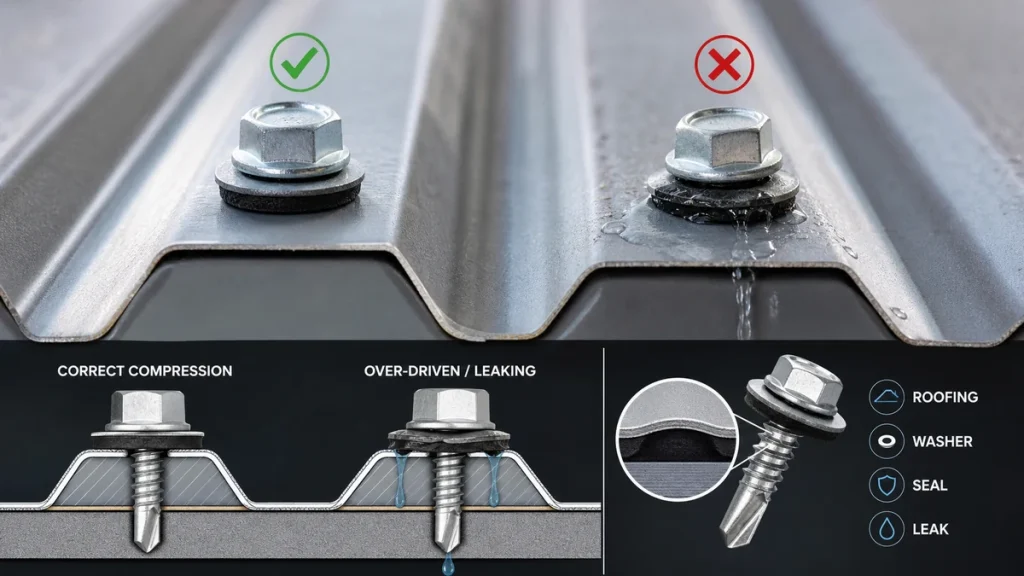
Why Do Self-Tapping Roofing Screws Leak Even When the Screw Length Looks Correct?

Why Do Self-Tapping Roofing Screws Leak Even When the Screw Length Looks Correct?

Direct answer: Correct screw length does not guarantee a watertight metal-roof connection. Self tapping roofing screws can leak because of incorrect washer compression, enlarged or stripped holes, insufficient thread engagement, panel movement, or an unsuitable coating-and-washer system. Buyers should diagnose the complete installed connection—including panel profile, support thickness, point type, washer condition, and exposure—rather than […]

What Is the Difference Between Self Drilling and Self Tapping Screws?

What Is the Difference Between Self Drilling and Self Tapping Screws?

Direct Answer: A self-drilling screw has a drill-shaped point that creates a hole and then forms mating threads in a suitable material. A self-tapping screw forms or cuts mating threads but may require a correctly sized pilot hole. Selection depends on substrate type and thickness, joint stack, point geometry, installation tool, finish and application testing—not […]

Frequently Asked Questions

Are these screws suitable for molded plastic parts?

They can be suitable for ductile plastics when the screw profile, pilot hole and thread engagement limit radial stress. Brittle plastics may crack or strip, so confirm the hole design and test insertion torque and pull-out performance in the actual material.

When would a thread-cutting or self-drilling screw be a better alternative?

A thread-cutting screw may be preferable when chip removal is acceptable or the material is better suited to a cut thread. A self-drilling screw is useful when the assembly must penetrate sheet metal without a separately prepared hole; it is not automatically the right choice for molded parts or pre-drilled assemblies.

Does self-tapping mean the screw will work in any material without a pilot hole?

No. Self-tapping describes the screw's ability to create or form threads during installation, but the required hole condition still depends on the material, screw geometry and joint design. Using no pilot hole, or using an unsuitable hole diameter, can cause cracking, high driving torque or stripped threads.

Can the joint be disassembled and reassembled repeatedly?

That depends on the base material and the thread formed during the first installation. Repeated servicing can damage threads in plastic, thin sheet or wood-based material, so verify the required number of assembly cycles and consider a captive insert or another reusable fastening method if servicing is important.

What information should accompany a purchasing enquiry?

Provide the base material, hole condition or pilot-hole diameter, material thickness, required grip range, head and drive style, environment, and installation method. Also state whether the joint must resist vibration, pull-out, repeated removal or surface marking, and ask which samples and inspection information can be supplied for approval.

Leave Your Message

Tell us the base material, pilot hole size or hole condition, and the required screw size or joint thickness. If available, include the head style, drive recess, coating preference and installation method so the inquiry can be reviewed against the actual assembly.