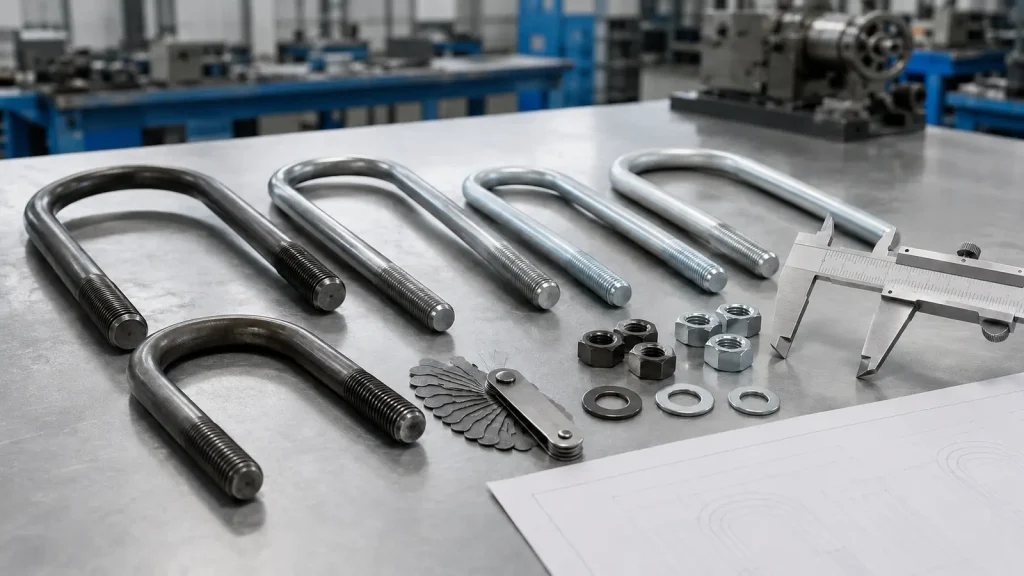
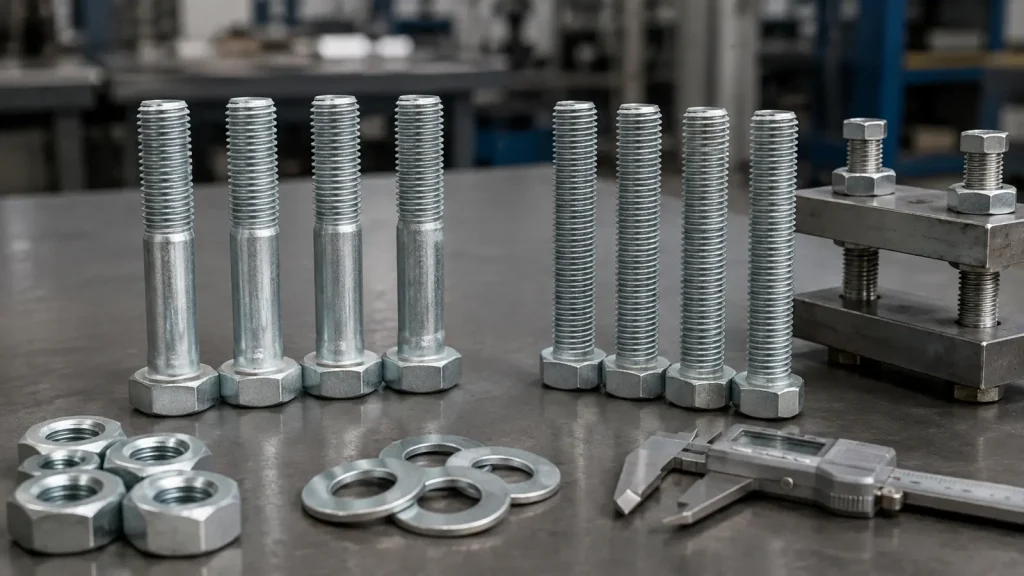
The useful distinction is between a standard bolt-and-nut set and an application-specific set. A standard set may work for general steel connections, equipment fixing, or maintenance stock. An application-specific set needs tighter confirmation because the joint may involve concrete anchoring, pipe supports, slotted holes, vibration, outdoor exposure, or a specified tightening method.
This matters because the accessories affect performance. A washer changes bearing area, a nut must match the thread and strength class, and a coating can affect fit and corrosion resistance. Treat the set as one assembled fastening system rather than separate line items chosen independently.
Start with the joint, not the bolt name. Confirm the material being fastened, hole condition, clamping requirement, exposure environment, and whether the set is for new assembly, repair, or replacement. A bolt set for a structural steel connection may need different washers and finish from a set used on machinery guards or pipe clamps.
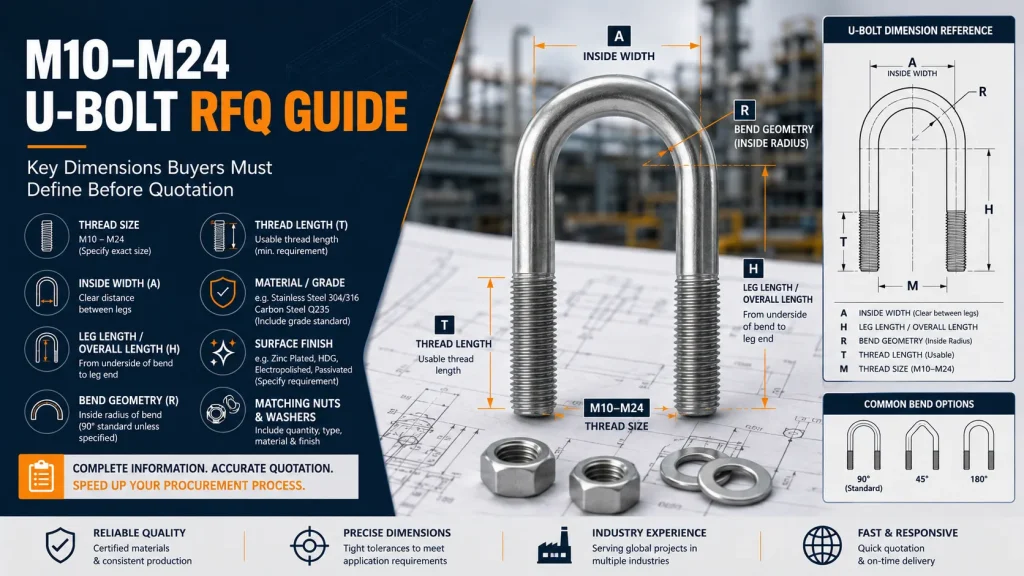
Define the thread and dimensions clearly. Buyers often send only the diameter and quantity, but length, thread pitch, thread length, head style, nut type, and washer arrangement can change the usable assembly. If replacing an existing fastener, photos and measured samples reduce the chance of ordering a set that cannot be installed.
Choose material, strength class, and surface treatment together. Higher strength is not automatically better if the mating parts, coating, or installation method are not compatible. For outdoor or damp environments, confirm the corrosion protection required and check that nuts still run correctly after coating.
Avoid mixing standards unless the interchange has been checked. DIN, ISO, ASTM, and project-specific requirements can differ in head dimensions, thread details, washer types, and markings. For an inquiry to Hebei Wotu Fastener Manufacturing Co., Ltd., send the standard or drawing if available, plus the complete set composition and intended application.