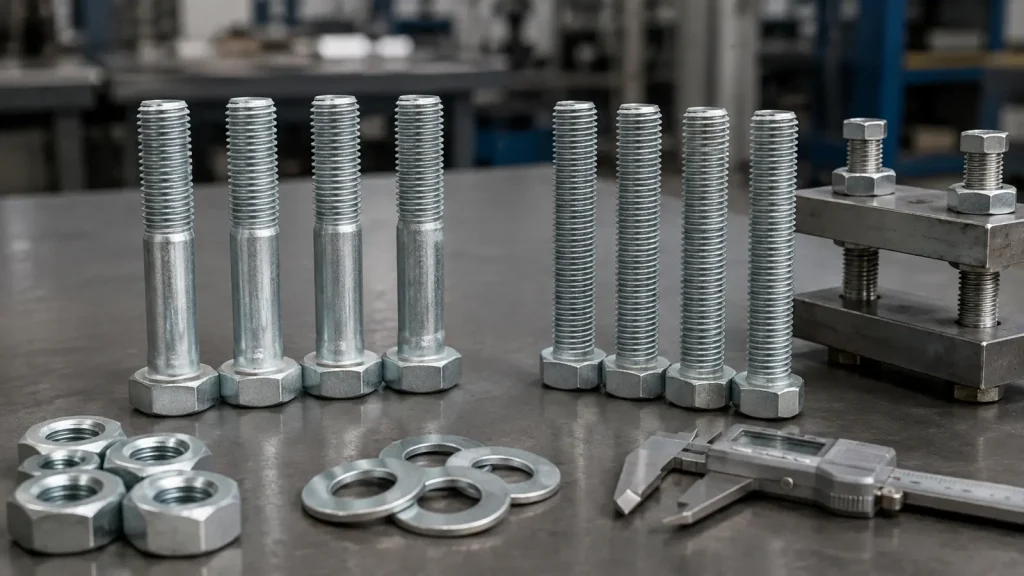
Concrete Bolts Selection Guide | Hebei Wotu Fastener Manufacturing Co., Ltd.

Concrete Bolts for Concrete Fixings

Concrete bolts secure equipment, frames, brackets and structural components to concrete, but the right choice depends on how the load reaches the substrate. Start with the connection type: a cast-in anchor installed before the pour is different from a post-installed mechanical anchor or a concrete screw used after the concrete has cured.

The main buying decision is not simply bolt diameter. Check the load direction, concrete condition, embedment, edge distance, installation access and exposure to moisture or chemicals so the fastener matches the actual connection.

Related Products

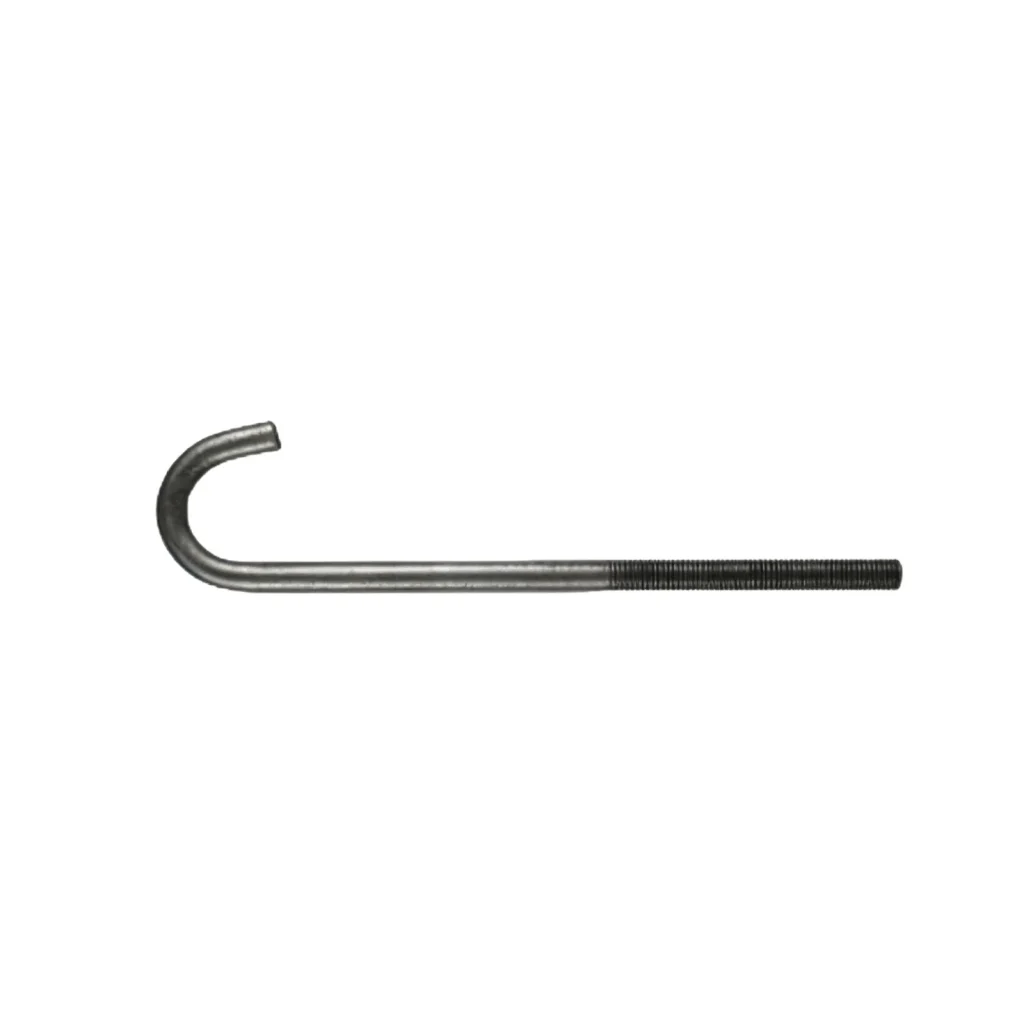
7-letter, 9-letter L-shaped anchor bolt (Chinese national standard GB/T799-1988 embedded anchor screw)

7-letter, 9-letter L-shaped anchor bolt (Chinese national standard GB/T799-1988 embedded anchor screw)

Brand: Wotu Surface: Natural black oxide treatment, customized hot-dip galvanized, zinc plated as required Specifications: Follow Chinese national standard GB/T799-1988, in stock M12-M48, total length 120mm~1500mm, nonstandard customized diameter, bending length, total screw length available Matching: Nuts, flat washers and spring washers of the same specification can be supplied in complete sets. Packaging: Bundling and packaging, using wooden pallets and film-wrapped export packaging in large quantities

Read More
U-bolt ( / U-bolt, M10/M12/M16/M20/M24 multiple specifications)

U-bolt ( / U-bolt, M10/M12/M16/M20/M24 multiple specifications)

Brand: Wotu Surface: natural black oxide / hot-dip galvanized / blue-white zinc plated, multiple processes available Specifications: Based on common industry drawing parameters, suitable for pipe diameter 25mm~139.7mm, screw diameter M10~M24, total length can be nonstandard customized Matching: can be matched with nut, flat washer and spring washer of the same specifications for complete shipment Packaging: Bundling and packaging + 25kg export carton, full-container wooden pallet wrapped with film, supports private-label export packaging

Read More
Hex nut DIN934-1987 (A/B accuracy classification)

Hex nut DIN934-1987 (A/B accuracy classification)

Brand: Wotu Standard basis: German standard DIN934-1987, metric coarse thread/fine thread universal thread Surface: 304 stainless steel Specifications: M6~M24 full range of specifications Supporting equipment: same specification bolts, flat washer, spring washer complete set of shipment Packaging: 25kg standard carton, whole wooden pallet packaging

Read More
Hex thin nut

Hex thin nut

Brand: Wotu Surface: zinc plated Specifications: in stock M8~M64 full standard specifications, covering precision, machinery, and steel structure full size range, supporting nonstandard tooth pitch and customized thickness Matching: Can be matched with bolts of corresponding specifications, flat washer, spring washer complete set of shipment Packing: packed in 25kg cartons and packed on wooden pallets.

Read More
Hex nut (Chinese national standard GB52-1976)

Hex nut (Chinese national standard GB52-1976)

Brand: Wotu Surface: 304 stainless steel Specifications: in stock M6~M24 full standard metric specifications, supports nonstandard pitch, thickening/customized Matching: Can be matched with bolts of corresponding specifications, flat washer, spring washer complete set of supporting shipment Packaging: 25kg cartons, whole wooden pallets

Read More
Hex flange nut (Chinese national standard GB/T6177.1-2000)

Hex flange nut (Chinese national standard GB/T6177.1-2000)

Brand: Wotu Surface: zinc plated Specifications: in stockM6/M8/M10/M12/M14/M16/M20 Chinese national standardfull range of specifications, support nonstandard thickness, tooth pitch customized Matching: can be matched with bolts of the same specification, flat washer, spring washer complete set of shipment Packaging: 25kg cartons, whole wooden pallets

Read More

Concrete bolt options for different fixing conditions

Concrete bolt selection

When comparing concrete bolt options, review the anchor style, base-material compatibility, load direction, embedment and edge-distance requirements first. Then confirm thread dimensions, nut and washer compatibility, material, surface finish, installation method and any available technical documentation for the intended application.

Criterion What To Check Why It Matters Buyer Tip
Anchor type and installation method Confirm whether the application needs a wedge anchor, sleeve anchor, concrete screw, chemical anchor, or cast-in bolt, and review the required installation method. Different anchor types suit different loads, base materials, installation sequences, and chances of later removal. Ask: Which anchor type is specified for this concrete condition, and what installation steps must the site follow?
Bolt diameter, length, and effective embedment Compare the drawing or engineer’s requirement with the bolt diameter, total length, thread length, washer space, and embedment into sound concrete. A bolt that is too short may not develop the required hold, while excess length can interfere with the fixture or installation area. Send the fixture thickness and required embedment for confirmation before ordering.
Concrete condition and installation location Check the concrete strength and condition, plus edge distance, spacing, cracks, reinforcement, and any holes already present. Cracked or damaged concrete and tight edge spacing can change the suitable anchor choice and reduce reliable installation space. Ask the project engineer or supplier to review a marked-up base-material and hole-location drawing.
Corrosion protection for the environment Compare the bolt material or coating with exposure to moisture, outdoor conditions, chemicals, salt, or dissimilar metals. The wrong corrosion protection can shorten service life and may create installation or compatibility problems. Describe the exposure clearly and ask which finish or material is appropriate for the service environment.
Thread and fixture compatibility Verify thread form, nut and washer fit, thread length, and whether the bolt passes through the fixture without obstruction. Mismatched threads or unsuitable hardware can prevent proper tightening and leave the connection improperly supported. Provide the mating nut or fixture drawing and ask for confirmation of thread and washer compatibility.

Match the anchor to the concrete, load and installation method

Cast-in anchor bolts are usually considered when the bolt position can be planned before concrete placement and a projecting threaded connection is required. Post-installed anchors are more suitable for existing slabs, walls or foundations, but their performance depends on the concrete condition, hole preparation, embedment and installation method.

Mechanical expansion anchors grip the concrete through expansion, while concrete screws form engagement with the drilled hole. The practical distinction matters because spacing, edge distance, vibration, removability and installation control can affect which system is appropriate for the job.

Define the connection before requesting a quotation. State whether the fastener will secure a steel base, guardrail, pipe support, machinery frame, racking component or another item, and identify whether the load is mainly tension, shear or a combination. A bolt suitable for a lightly loaded bracket may not suit a vibrating or heavily loaded base connection.

Confirm the concrete conditions and geometry. New construction may allow cast-in bolts, whereas retrofit work may require post-installed anchors. Provide the concrete type or strength information if available, the available thickness, the distance to edges, the spacing between anchors and any restrictions on drilling depth. Missing this information can lead to an anchor that cannot be installed safely or that conflicts with reinforcement.

Match the material and finish to the environment. Indoor dry service, outdoor exposure, coastal air, buried areas and chemically aggressive locations can call for different corrosion considerations. Also confirm the thread form, nut and washer arrangement, visible thread length and whether the connection must be removable. Do not assume a galvanized or stainless finish is interchangeable with every base material or site condition.

Before ordering, send a drawing or clear connection description together with the required size range, quantity, material or coating preference and delivery destination. Ask which anchor type, installation limits and inspection information the supplier can support. The article Anchor Bolts: 7 Ordering Errors That Cause Site Rework is useful for checking common specification gaps before approval.


Criteria Importance Description Example Options
Installation timing Critical because the construction stage determines which anchor systems are feasible. Cast-in anchors are positioned before concrete placement, while post-installed anchors and concrete screws are fitted after the concrete has cured. A foundation planned from drawings may use cast-in bolts; an existing slab for a new equipment frame may require a post-installed option.
Load and connection demand Critical for avoiding a fastener that is suitable for a bracket but inadequate for a loaded or vibrating assembly. Review tension, shear and combined loading, along with vibration and the stiffness of the attached component. A light sign bracket and a machinery base can require different anchor approaches even when both are fixed to concrete.
Concrete geometry and anchor layout Critical because slab thickness, embedment, edge distance and anchor spacing limit the usable options. Check the available concrete depth and the position of reinforcement, edges and nearby anchors before confirming the fastener. An anchor layout close to a slab edge may need a different system or revised spacing from one located near the centre.
Material and surface finish Important where moisture, outdoor exposure, coastal air or chemicals could affect corrosion resistance. Match the fastener material and coating to the service environment and consider compatibility with the attached component and hardware. An indoor dry fixing may have different material requirements from an outdoor or chemically exposed connection.
Installation and future removal Important for projects with limited access, inspection requirements or a need to replace the attached equipment. Compare drilling access, installation control, nut and washer arrangement, visible thread length and whether the connection should be removable. A removable equipment frame may favour a threaded anchor arrangement that permits later maintenance, while a permanent fixing may have different priorities.

Product Selection

Related Options

For a steel base or equipment frame fixed to an existing concrete slab, the key priority is a connection that fits the slab thickness, anchor spacing, edge distances and expected tension and shear loads. Compare suitable anchor types against those site constraints rather than selecting by bolt size alone.

Blog Articles / Reviews

Anchor Bolts: 7 Ordering Errors That Cause Site Rework

Anchor Bolts: 7 Ordering Errors That Cause Site Rework

ost anchor bolt ordering errors come from incomplete drawings, unclear dimensions, unsuitable material or coating choices, undefined tolerances, and mismatched nuts or washers. These mistakes affect steel fabricators, EPC contractors, equipment installers, importers, and distributors because anchor bolts are usually embedded before the connected structure arrives on site. Once concrete has cured, even a small […]

Why Do U Bolts Loosen in Pipe Supports? 6 Causes and Prevention Methods

Why Do U Bolts Loosen in Pipe Supports? 6 Causes and Prevention Methods

U bolts usually loosen in pipe supports because the connection loses clamping force, receives continuous vibration, restricts thermal pipe movement, uses an incorrectly sized U bolt, experiences surface settlement, or suffers from corrosion and inadequate inspection. This issue affects EPC contractors, pipe installers, industrial maintenance teams, equipment manufacturers and fastener distributors working with water, oil […]

DIN 931 vs DIN 933 Hex Bolts: What Should Buyers Confirm Before Bulk Ordering?

DIN 931 vs DIN 933 Hex Bolts: What Should Buyers Confirm Before Bulk Ordering?

DIN 931-style half-thread and DIN 933-style full-thread hex bolts should not be selected from diameter and overall length alone. The practical choice depends on the joint stack, required grip, location of the thread transition, available nut engagement, mating hardware, material or property requirement, coating system and governing product specification. A half-thread bolt is not automatically […]

The Widespread Application of Hot-Dip Galvanized Bolts in Daily Life

The Widespread Application of Hot-Dip Galvanized Bolts in Daily Life

Hot-dip galvanized bolts are widely used in daily life, especially due to their advantages, which have led to their rapid development in the market and widespread consumer appeal. So what are the specific advantages of hot-dip galvanized bolts in use? Today, Hebei Wotu Fastener Manufacturing Co., Ltd. will discuss this with you. 1. Due to […]

The Widespread Application of Hot-Dip Galvanized Bolts in Daily Life

The Widespread Application of Hot-Dip Galvanized Bolts in Daily Life

Hot-dip galvanized bolts are widely used in daily life, especially due to their advantages, which have led to their rapid development in the market and widespread consumer appeal. So what are the specific advantages of hot-dip galvanized bolts in use? Today, Hebei Wotu Fastener Manufacturing Co., Ltd. will explain. 1. Due to its special surface […]

Applications of Anchor Bolts

Applications of Anchor Bolts

Fixed anchor bolts, also known as short anchor bolts, are cast in with the foundation and used to secure equipment that does not experience strong vibration or impact. 1. Fixed anchor bolts, also known as short anchor bolts, are cast in with the foundation and used to secure equipment that does not experience strong vibration […]

Frequently Asked Questions

Are these suitable for fixing equipment to an existing concrete slab?

Post-installed mechanical anchors or concrete screws are commonly considered when the slab is already cured and drilling is possible. The choice depends on the equipment load, concrete condition, slab thickness, anchor spacing, edge distance and installation method.

Should I use a concrete screw or an expansion anchor?

Concrete screws engage with the drilled hole and may be convenient for some lighter or removable fixings. Expansion anchors create a mechanical grip in the concrete, but they require the correct hole, embedment and clearance from edges; neither option should be selected by diameter alone.

Is a larger diameter always the stronger choice?

No. Connection performance also depends on embedment, concrete condition, load direction, spacing, edge distance and installation quality. A larger fastener may be unsuitable if the slab is too thin or the anchor is too close to an edge.

What information should I include in a quotation request?

Describe the attached component, such as a base plate, guardrail, pipe support or machinery frame, and state the required size range and quantity. Also provide the concrete condition, load type if known, available thickness, exposure environment, preferred material or coating, thread requirements and delivery destination.

When are cast-in anchors a better fit than post-installed anchors?

Cast-in anchors suit new concrete work where the bolt position can be planned before the pour and a projecting threaded connection is needed. Post-installed anchors are more practical for retrofit work, but the existing concrete and drilling constraints must be checked before selection.

Leave Your Message

For an enquiry, provide the application or attached component, the required size and quantity, and the concrete condition or installation setting. Include any material, coating, load or delivery requirements that affect the selection.