| Thread size and pitch match between the bolt and flange nut |
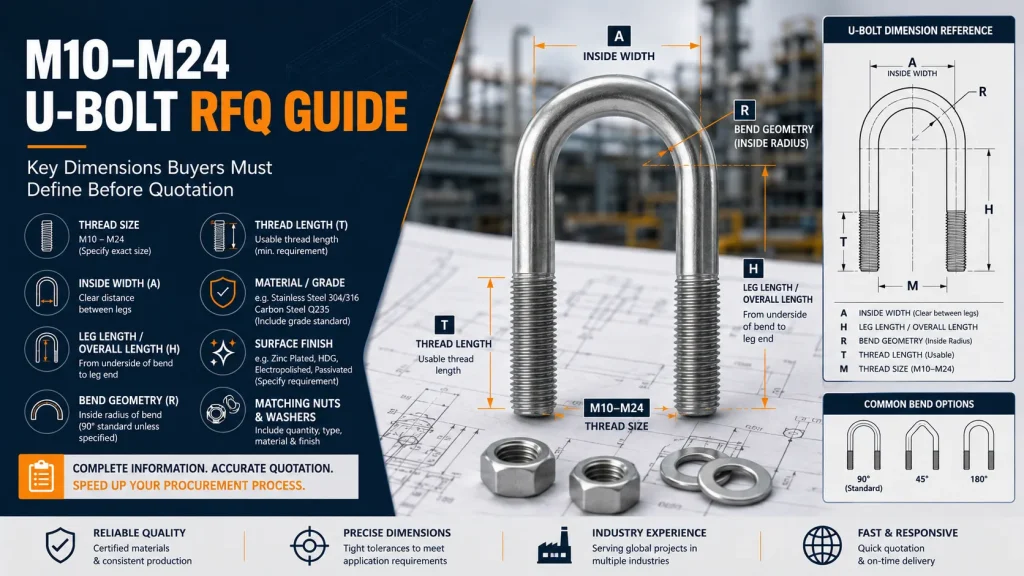
Confirm the bolt diameter, thread pitch, and thread standard on both parts before ordering them as a set. |
A flange nut that starts but does not fully run down the bolt can gall, strip, or give a false sense of clamp load. |
Ask: “Can you confirm the exact thread standard and pitch for both the flange nut and the matching bolt?” |
| Flange face style and bearing surface |
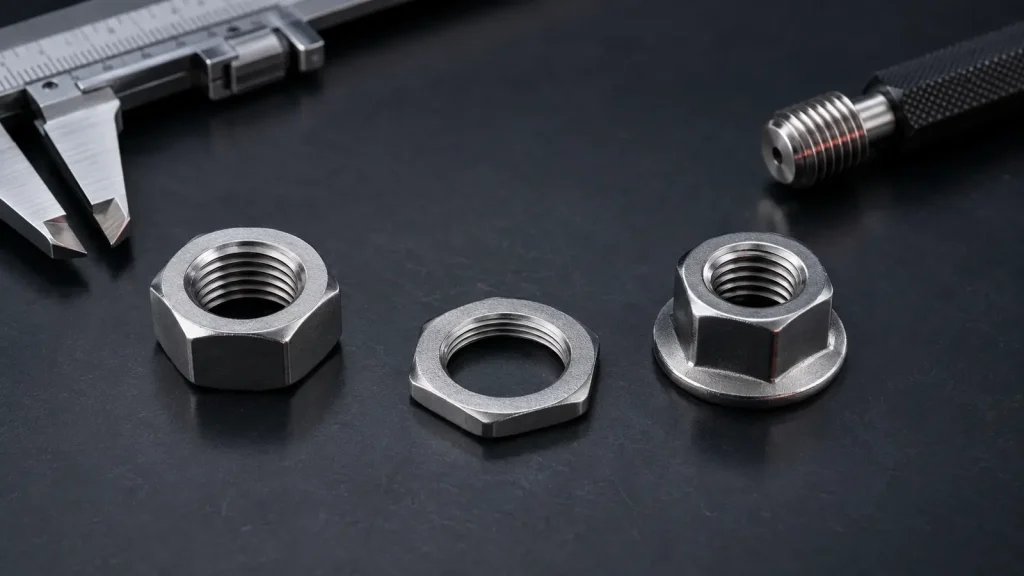
Identify whether the nut needs a smooth flange face or a serrated flange face, and check the mating material surface. |
A smooth flange spreads load without biting into the surface, while a serrated flange can resist loosening but may mark coatings or softer materials. |
Ask: “Is the flange nut serrated or non-serrated, and is it suitable for the surface finish on our assembly?” |
| Bolt length and usable thread engagement |
Compare grip thickness, washer use, nut height, and the amount of bolt thread available after tightening. |
Too little engagement weakens the joint; too much extra thread can interfere with nearby parts or increase assembly time. |
Ask: “Given our clamped thickness, what bolt length leaves proper thread engagement with this flange nut?” |
| Strength grade and material compatibility |
Match the bolt grade and nut grade, and confirm the base material and heat treatment requirements if the joint carries load. |
A high-strength bolt paired with an unsuitable nut can fail at the threads before the joint reaches the intended clamp force. |
Ask: “Which bolt grade and flange nut grade are intended to be used together for this assembly?” |
| Coating, plating, and friction behavior |
Confirm the surface finish on both parts and whether tightening torque guidance changes with that finish. |
Zinc plating, black oxide, hot-dip galvanizing, and other finishes can change corrosion resistance, thread fit, and clamp load at a given torque. |
Ask: “What finish is supplied on the bolt and flange nut, and should our tightening torque be adjusted for it?” |